Canada's Great Unsolved Mysteries: Historical Enigmas & Secrets
Dive into Canada's most captivating unsolved mysteries. Explore chilling historical enigmas, forgotten secrets, and unexplained events that continue to baffle experts.
Whispers from the North: Unearthing Canada’s Great Unsolved Mysteries
Imagine a land renowned for its politeness, its vast, serene landscapes, and its maple-infused charm. Now, peel back that veneer of tranquility, and you’ll discover a mosaic of chilling enigmas, unsolved puzzles that continue to haunt historians, detectives, and dreamers alike. Canada, it turns out, is a treasure trove of the unexplained, a silent keeper of secrets buried deep in its wilderness, its urban legends, and its icy waters. From vanished expeditions to phantom ships, the great unsolved mysteries in Canadian history beckon us to look closer, to question what we think we know, and to confront the unsettling possibility that some truths may simply be lost to time. Are you ready to dive into the shadows of the True North?
The Lost Franklin Expedition: Icy Graves and Vanished Ships
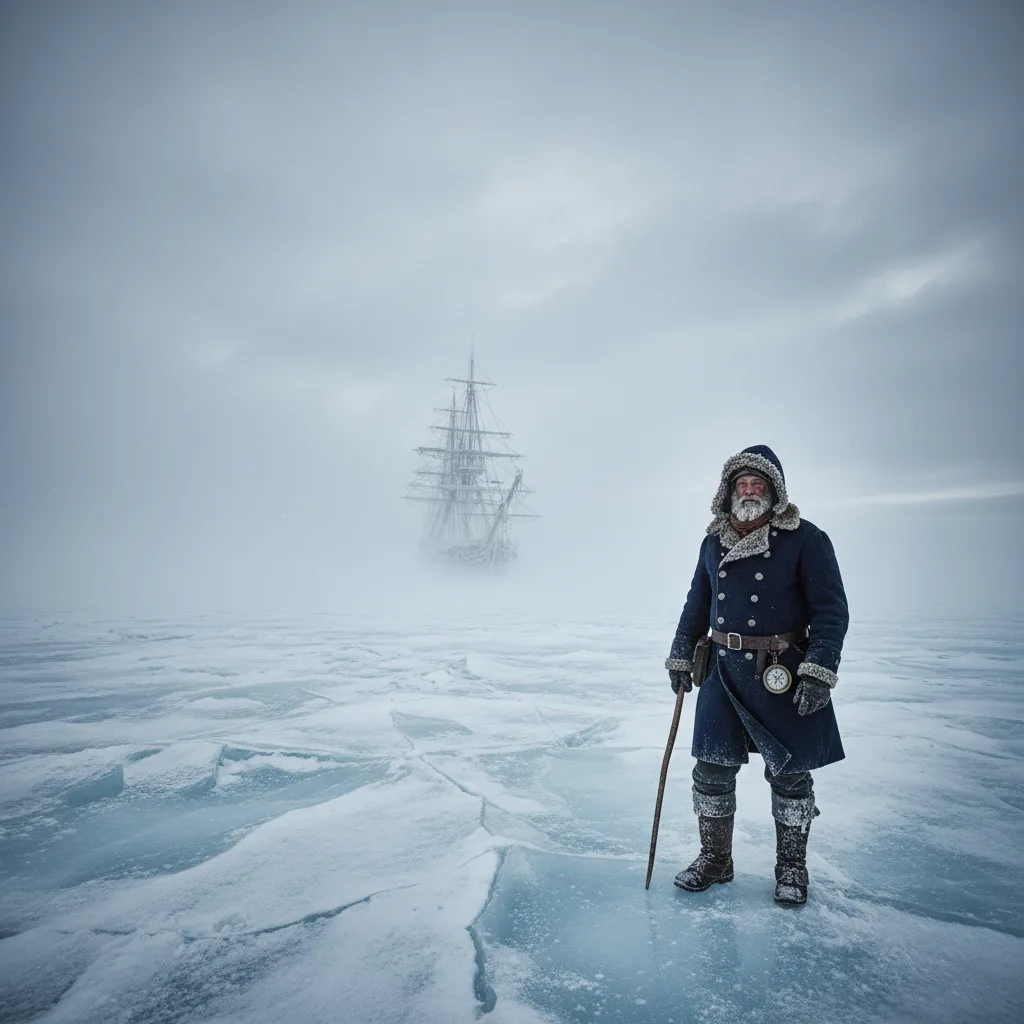
Perhaps no Canadian mystery grips the imagination quite like the ill-fated Franklin Expedition. In May 1845, Sir John Franklin, a seasoned Arctic explorer, set sail from England with 128 officers and men aboard two state-of-the-art ships, HMS Erebus and HMS Terror. Their mission: to chart the final, elusive stretch of the Northwest Passage, a sea route connecting the Atlantic and Pacific oceans through the Arctic Archipelago. They were equipped for years, boasting a steam-powered propulsion system and reinforced hulls. Yet, after being last seen by whalers in July 1845, they vanished without a trace, swallowed whole by the unforgiving Arctic.
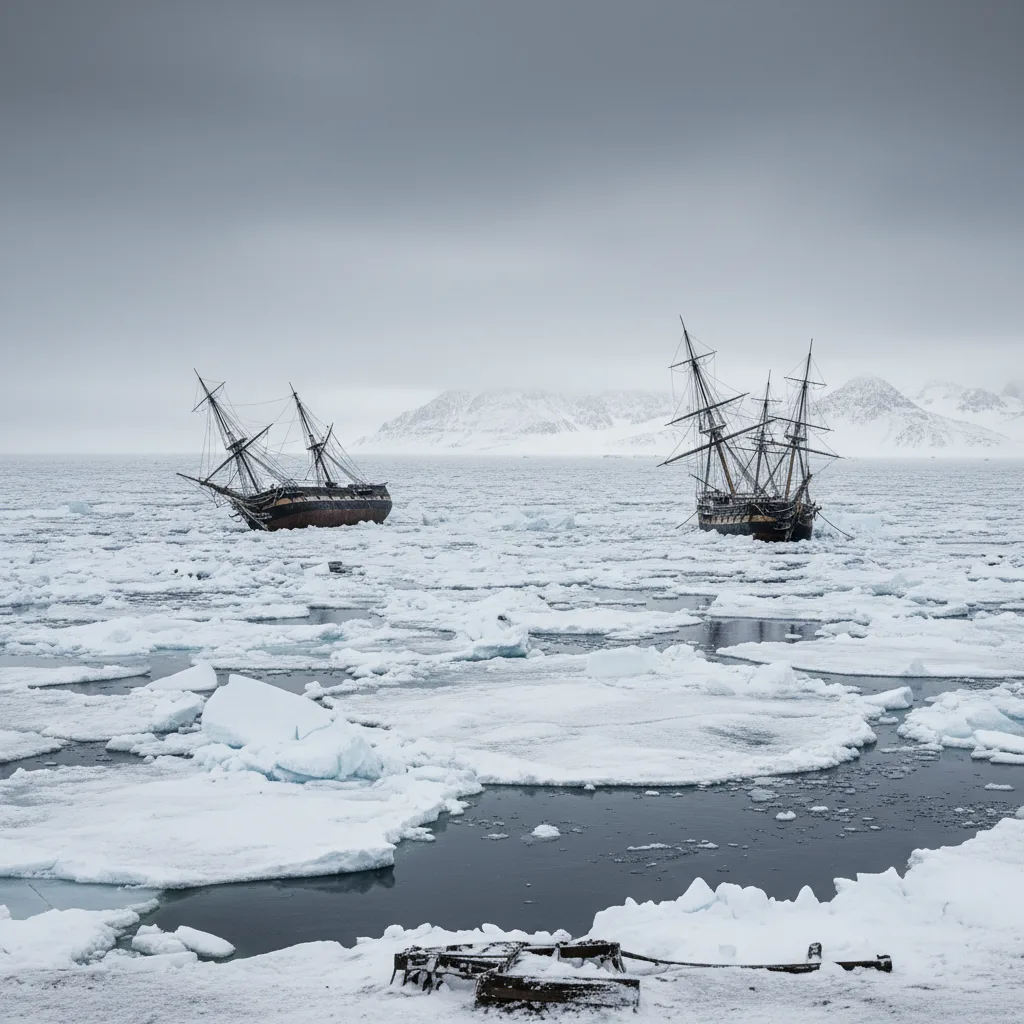
Decades of search efforts yielded only scattered clues: a few graves, a note detailing their abandonment of the ice-bound ships in April 1848, and disturbing evidence of desperation, including cannibalism. The exact sequence of events, the cause of their total demise, and the final resting places of most of the crew remained a haunting question. Was it lead poisoning from improperly soldered cans, tuberculosis, scurvy, or a combination of all these factors exacerbated by the extreme conditions?
The mystery endured for nearly 170 years until modern technology offered a breakthrough. In 2014, Parks Canada divers located the wreck of HMS Erebus off King William Island. Just two years later, in 2016, a research team discovered HMS Terror in an astonishingly preserved state in Terror Bay. While these discoveries have provided invaluable archaeological insights, the full story of what transpired in those final, desperate years – the decisions made, the exact cause of death for each man, and the ultimate fate of the expedition’s logbooks and charts – remains tantalizingly incomplete, leaving us to piece together a tragedy from fragments.
The Disappearance of Ambrose Small: A Theatrical Vanishing Act
Imagine a man who literally vanishes into thin air after making a fortune. That’s the baffling case of Ambrose Small, a prominent Canadian theatre magnate. On December 2, 1919, Small sold his entire theatre empire, including Toronto’s Grand Opera House, for a staggering $1.7 million (over $25 million in today’s currency). He deposited a large sum of money, had lunch with his wife, and then – poof – he was gone. Last seen in his Toronto office, Small left behind his wealth, his wife, and a life of privilege, never to be heard from or seen again.

The initial investigation was a circus of theories. Was he kidnapped for ransom? Murdered by a disgruntled employee or a business rival? Did he stage his own disappearance to escape an unhappy marriage or flee with a mistress? His wife, Theresa, initially offered a reward of $50,000, then later became a suspect herself, though no evidence ever materialized against her. The police followed countless leads across Canada and the United States, chasing down reported sightings that always led to dead ends.
What makes Small’s disappearance so compelling is the absolute lack of any credible trace. No body was ever found, no ransom note ever delivered, no confession ever made. The case became Canada’s first missing person’s case to gain widespread national attention, symbolizing the dark underbelly that could exist beneath the glittering facade of wealth and success. Ambrose Small remains a ghost in Canadian history, a phantom of the stage who took his final, unscripted bow into the unknown.
The Ghost Ship of Northumberland Strait: A Maritime Mirage?
For centuries, sailors, fishermen, and coastal residents along the Northumberland Strait – separating Prince Edward Island from Nova Scotia and New Brunswick – have reported sightings of a spectral vessel: the Ghost Ship of Northumberland Strait. This phantom schooner is consistently described as a beautiful, three-masted ship, often seen with all sails set, glowing eerily, and frequently appearing to be on fire.
The legend dates back to at least the 18th century, with numerous eyewitness accounts over generations. What makes this particular ghost story unique is the sheer volume and consistency of sightings, often by multiple credible witnesses simultaneously. Crucially, the ship nearly always appears just before a major storm, leading some to believe it’s a harbinger of bad weather or a warning from the deep. Yet, despite its fiery appearance, no wreckage or debris is ever found after it vanishes.
Skeptics propose natural explanations: phosphorescence, atmospheric refraction, or even the reflection of distant lights. However, the vivid detail, the apparent movement, and the sheer number of independent accounts over hundreds of years continue to defy easy scientific dismissal. Is it a collective hallucination, a natural phenomenon yet to be fully understood, or the spectral echo of a forgotten maritime tragedy, forever sailing the pre-storm waters of the Strait? The mystery ship remains a captivating part of Atlantic Canadian folklore, a shimmering question mark against the twilight sky.
The Vanished Village of Anjikuni: A Chilling Arctic Enigma
 In November 1930, trapper **Joe Labelle** stumbled upon one of the most unsettling and **great unsolved mysteries in Canadian history** in the desolate Arctic tundra. While seeking shelter near Lake Anjikuni, Nunavut, Labelle discovered an entire Inuit village utterly deserted. It wasn't just empty; it was as if its inhabitants had simply evaporated. He found fires still burning, pots of food simmering over them, tools lying where they'd been dropped, and even clothes left neatly folded. There were no signs of a struggle, no tracks leading away from the village in the fresh snow.
What made the scene even more macabre were the sled dogs, found starved to death, tied to posts. Even more chilling, several graves in the nearby cemetery had been disturbed, their stones removed, and bodies seemingly gone. Labelle reported the horrifying scene to the RCMP, who launched an investigation. However, despite extensive searches, not a single villager was ever found, nor was any credible explanation for their mass disappearance ever uncovered.
While some official reports have cast doubt on the veracity and details of Labelle’s account, citing exaggerations or conflated stories, the legend of the vanished Anjikuni village persists in Canadian lore. What force, natural or otherwise, could cause an entire community to abandon their homes so abruptly, leaving behind all their possessions, and then disappear without a trace into the vast, unforgiving Arctic? The chilling silence of Anjikuni continues to echo, a testament to the profound unknowns that lurk in Canada’s remotest corners.
The Mystery of the Oak Island Money Pit: A Treasure Hunter’s Obsession
Off the coast of Nova Scotia lies a small, unassuming island that has captured the imagination of treasure hunters for over two centuries: Oak Island. The legend began in 1795 when three teenage boys discovered a circular depression and an old ship’s block hanging from a tree limb. Believing it to be a pirate’s treasure pit, they began to dig, only to uncover a series of ingeniously designed booby traps: layers of logs, platforms, and, most famously, flood tunnels that inundate the pit with seawater from the ocean.
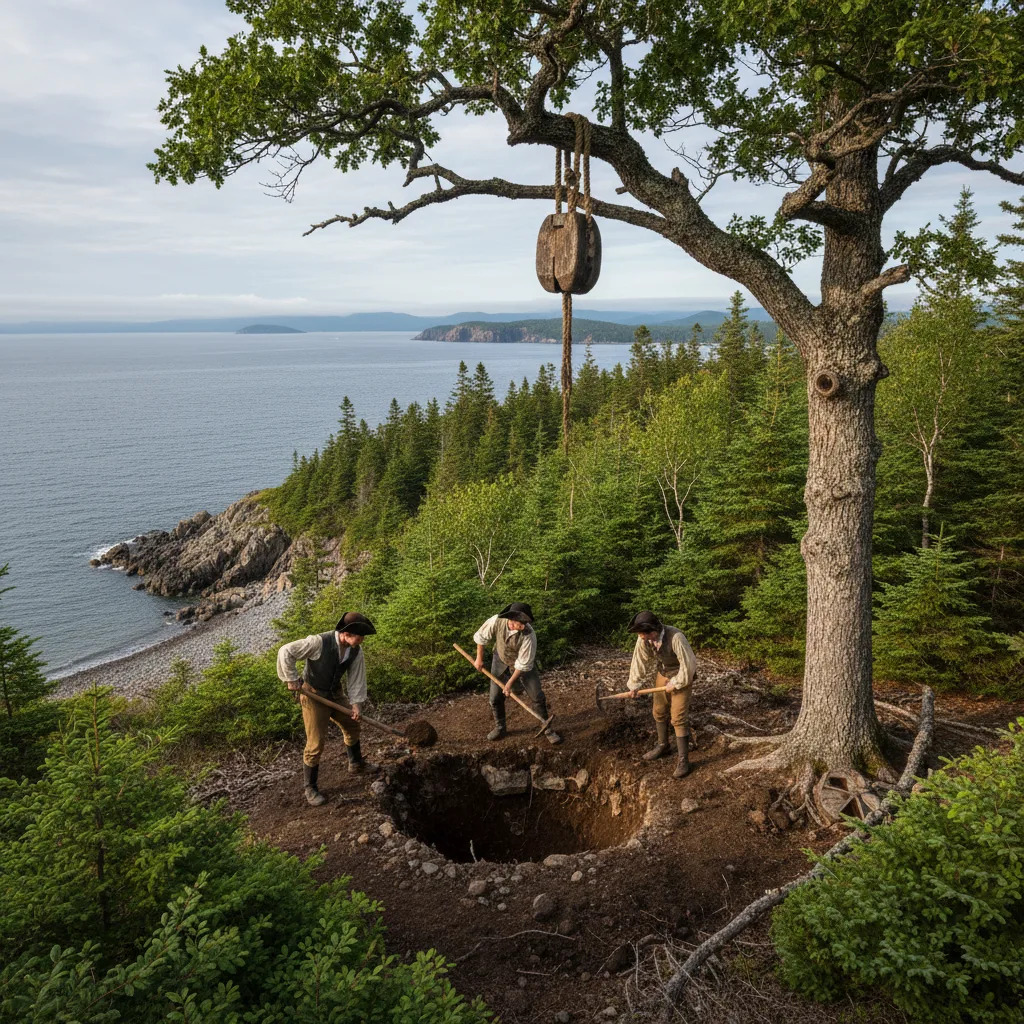
Countless expeditions have since attempted to reach the bottom of the “Money Pit,” pouring millions of dollars and countless hours into the quest. Evidence found over the years includes coconut fibres (not native to Nova Scotia), pieces of old parchment, a stone inscribed with cryptic symbols (translated by some as “Forty feet below, two million pounds are buried”), and even fragments of human bone. Yet, despite massive excavations, drilling, and even the use of coffer dams, the main treasure, if it exists, has remained elusive.
The Oak Island mystery has claimed at least six lives and driven many to financial ruin, earning it a reputation as a cursed site. Theories about what lies beneath are as varied as they are wild: Captain Kidd’s treasure, Marie Antoinette’s jewels, Shakespearean manuscripts, or even the Holy Grail. The sheer complexity of the pit’s construction suggests a monumental effort, far beyond a simple pirate’s cache. What incredible secret lies buried deep within Oak Island, protected by such elaborate and deadly defenses? The island continues to guard its secrets, a testament to human ingenuity and enduring obsession.
The Babes in the Woods: A Haunting Cold Case in Stanley Park
In a country known for its natural beauty, few mysteries are as heartbreaking and unsettling as the “Babes in the Woods” case. On January 15, 1953, a groundskeeper in Vancouver’s iconic Stanley Park discovered the skeletal remains of two young children. The scene was grim: tucked beneath a woman’s rain scarf and an old blanket lay the bodies of two boys, estimated to be between 6 and 8 years old. Both had suffered severe blows to the head, likely from an axe.
Despite an intensive investigation, the identity of the children has remained a profound mystery for over 70 years. No missing persons reports matched their description, and their dental records yielded no clues. The children were dressed in distinctive, but common, winter attire, and a small, rusted axe was found nearby. The case baffled detectives, who were unable to determine who the boys were, who committed the horrific crime, or why.
For decades, the “Babes in the Woods” have symbolized the tragic failure to give names to victims and bring justice to the perpetrators. Modern forensic techniques, including DNA analysis, have been applied to the case in recent years, offering a glimmer of hope. In 2022, Vancouver police confirmed that DNA had revealed the boys were likely half-brothers. While this offers a potential new avenue for investigation, the fundamental questions – who were these children, and who brutally murdered them in Stanley Park – remain among the most poignant and great unsolved mysteries in Canadian history.
Conclusion
From the frozen silence of the Arctic to the bustling streets of Toronto, Canada’s landscape is etched with stories that defy explanation. These great unsolved mysteries in Canadian history are more than just cold cases or historical footnotes; they are narratives that challenge our understanding of human limits, the power of nature, and the darker currents that sometimes run beneath the surface of society. They remind us that even in an age of advanced forensics and digital information, some truths remain stubbornly out of reach, lost in the mists of time or concealed by the vast, unforgiving wilderness. These enduring enigmas continue to fascinate, to provoke thought, and to whisper cautionary tales from the past, ensuring that Canada’s secrets will keep us captivated for generations to come.
You might also like:
👉 Biggest Unsolved Mysteries in History: Ancient Enigmas & Modern Puzzles
👉 Biggest Unsolved Crimes in US History: Mysteries That Endure