Solar Flares: Beyond 'Minor Satellite Glitches' on Earth
Space weather was once seen as mere scientific curiosity, causing only minor satellite glitches. Discover how its potential disruption is far greater.
The Sun’s temper: space weather affects us all
Space weather is not just a distant phenomenon. For years, many have considered solar flares and geomagnetic storms to be primarily scientific curiosities. They questioned if these events truly affected life on Earth, beyond minor satellite glitches. This perspective often overlooked the wider impacts on our technological world. However, research reveals a different picture. The potential disruption is far greater than commonly imagined. Space weather can affect technology, human operations, and even health. It could plunge cities into darkness, disrupt global communication, and endanger space travelers. The Sun, our life-giver, has a temper that can reach right to our doorstep.
The unseen shield and its limits
On August 28, 1859, a monumental solar flare erupted from the Sun, visible even without a telescope. This wasn’t just a pretty light show. Just 17 hours later, a massive geomagnetic storm, now known as the Carrington Event, slammed into Earth. Telegraph systems across North America and Europe failed. Some telegraph operators reported receiving electric shocks. Others saw their equipment burst into flames, as documented in historical accounts compiled by Richard Carrington himself.
This event explains the basic mechanics of space weather. Our Sun constantly ejects a stream of charged particles called the solar wind. Sometimes, it sends out much larger bursts. These include solar flares, which are intense radiation bursts. It also sends coronal mass ejections (CMEs), which are billions of tons of plasma. Earth has a powerful magnetic field, the magnetosphere, which usually deflects most of these particles. Our atmosphere provides a second layer of defense.
When a powerful CME hits, it can compress the magnetosphere. This sends ripples of energy into our planet’s magnetic field. These disturbances create geomagnetic storms. The more intense the storm, the more our protective shield gets rattled. This is where the “unseen” becomes very real.
When the Sun gets angry, our systems suffer
The most dramatic evidence of space weather’s terrestrial impact came on March 13, 1989. A relatively moderate geomagnetic storm, originating from a CME days earlier, reached Earth. Within minutes, the entire Hydro-Québec power grid in Canada collapsed, plunging 6 million people into darkness for nine hours. This incident, studied in detail by Daniel Boteler of Natural Resources Canada, showed how vulnerable modern systems are.
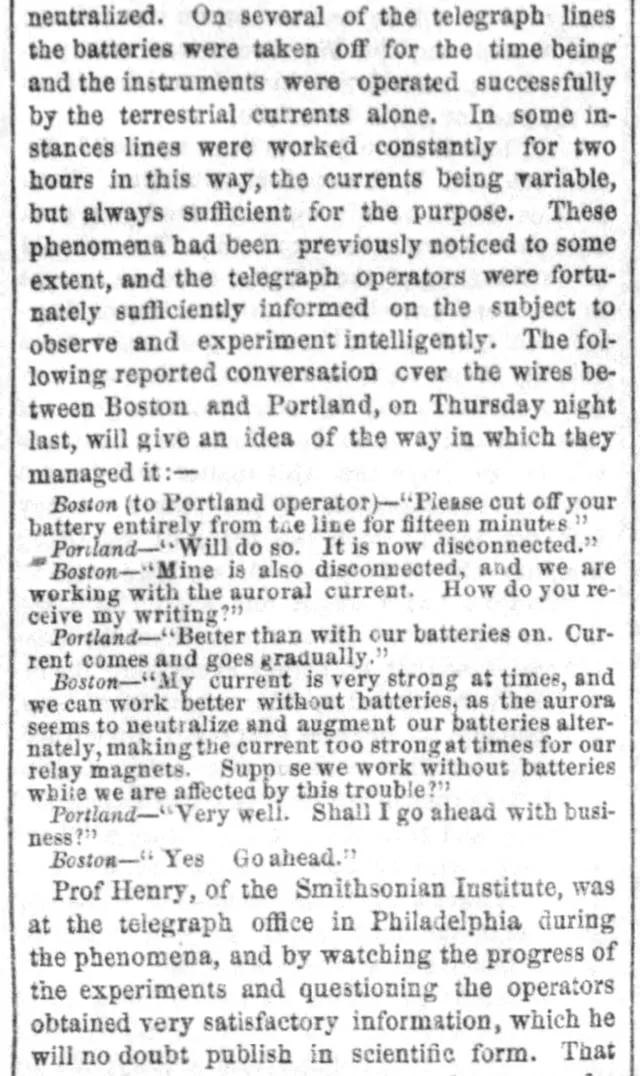
During the 1859 Carrington Event, the most powerful solar storm on record, telegraph systems across North America and Europe failed, with some operators reporting electric shocks and equipment bursting into flames. (Source: reddit.com)
The mechanism is clear: geomagnetic storms induce electric currents in long conductors, like power lines. These geomagnetically induced currents (GICs) can overload transformers. The 1989 Quebec blackout cost the utility company an estimated $10 million in repairs and lost revenue. Modern grids, with their connected nature, are even more easily affected. A 2013 report by Lloyd’s of London estimated the cost of a Carrington-level event today. It could cause up to $2.6 trillion in global economic losses.
Beyond power grids, space weather affects our satellite systems. GPS signals can become inaccurate during geomagnetic storms, affecting everything from navigation to precision agriculture. High-frequency radio communications, important for aviation and emergency services, can black out. A strong solar flare on July 14, 2000, known as the Bastille Day event, caused widespread radio blackouts. This greatly affected satellite operations and communications for several hours, as documented by NASA.
A 2017 Space Weather study found that most satellite anomalies linked directly to space weather events. These aren’t minor glitches. They represent a major weakness for a society more and more dependent on satellite-based services. The more we depend on these systems, the more exposed we become.
Beyond the grid: how space weather touches human health
While infrastructure effects are clearly known, space weather’s direct impact on human health is more complex and less understood. What’s certain is the risk to individuals outside Earth’s protective atmosphere. Astronauts on the International Space Station (ISS) face constant radiation exposure. This comes from solar energetic particles (SEPs) and galactic cosmic rays (GCRs). NASA sets strict limits on their lifetime radiation dose to reduce cancer risk.
A 2013 Health Physics study by NASA’s Frank Cucinotta and his team pointed to increased risks. Astronauts on long missions, like a trip to Mars, face higher cancer and central nervous system damage. These missions would take them beyond the relative safety of Earth’s magnetosphere. This makes understanding and predicting space weather important for future space exploration. It’s not just about equipment; it’s about human lives.
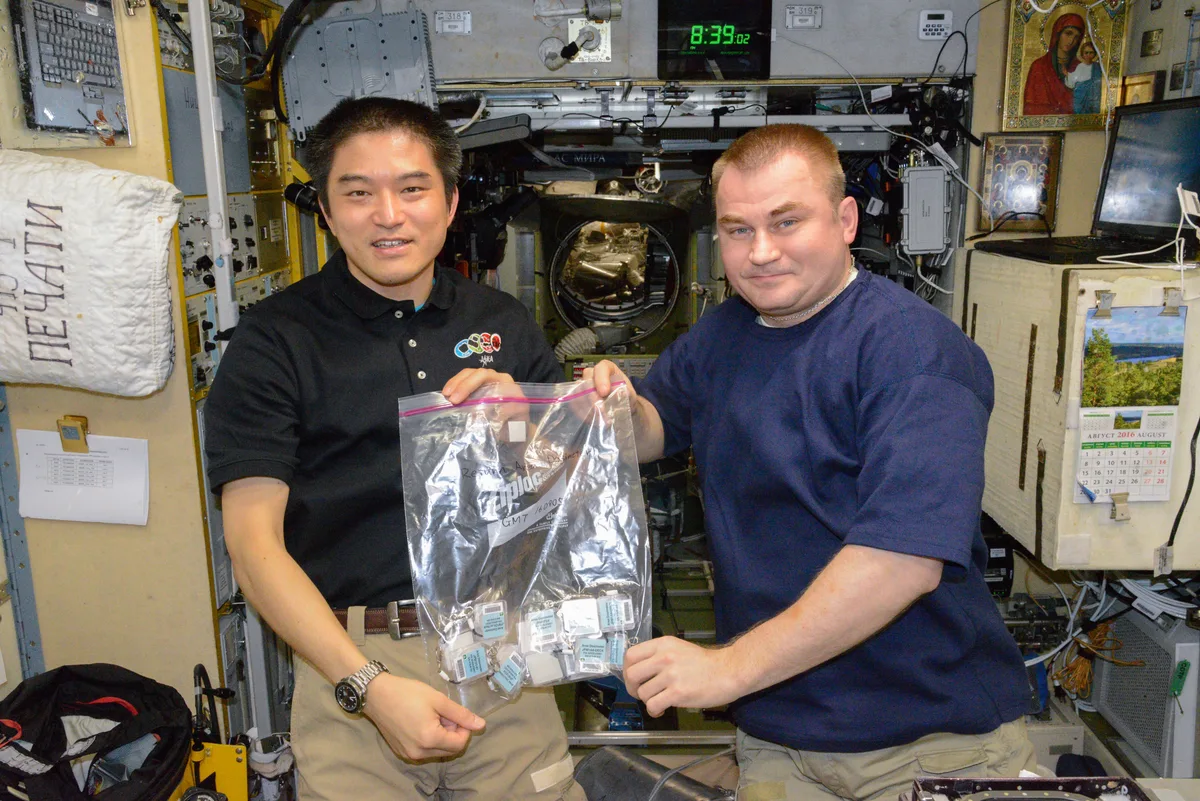
Astronauts aboard the International Space Station (ISS) face constant exposure to solar energetic particles and galactic cosmic rays, necessitating strict lifetime radiation dose limits set by NASA to mitigate cancer risks during their missions.
Airline pilots and cabin crew also experience higher radiation levels. This is especially true on polar routes, where Earth’s magnetic field offers less protection. The Federal Aviation Administration (FAA) and the European Aviation Safety Agency (EASA) guide aircrews on monitoring radiation exposure. A typical transatlantic flight exposes individuals to radiation equivalent to several chest X-rays. During a strong solar energetic particle event, this exposure can jump significantly. The European Commission’s EURADOS working group has published much research on this workplace risk.
What surprised me most was new and debated research on space weather’s indirect health effects here on Earth. Some studies suggest a link between geomagnetic activity and heart-related events, especially in sensitive groups. For example, a 2019 Journal of Atmospheric and Solar-Terrestrial Physics review by L. P. Golovkina and others examined this connection. It showed how geomagnetic storms might affect human body systems, including blood pressure and heart rate variability. The suggested cause involves direct electrical influence on body processes or indirect effects through stress hormones.
It’s important to be clear: these findings mostly show a relationship, not a direct cause. They do not prove a direct cause-and-effect link. Many factors influence human health. Still, these correlations are seen consistently in different studies, even if the effect is small. This suggests a subtle interaction we are just starting to understand. The Sun’s activity might be a very minor background factor in our daily biology.
Preparing for the next big storm
Governments and agencies worldwide are addressing this seriously. The U.S. National Oceanic and Atmospheric Administration (NOAA) operates the Space Weather Prediction Center (SWPC). They provide real-time monitoring and forecasts, warning critical infrastructure operators. The European Space Agency (ESA) also runs a specific Space Safety Programme. Their goal is to better predict and prepare for these events. This includes creating new models and using advanced space-based sensors.
Future efforts aim to make infrastructure stronger. Power grid operators are looking for ways to strengthen transformers and apply protective measures. This involves better monitoring of GICs and creating procedures for temporary grid adjustments during severe storms. The goal is not to eliminate all impact, but to reduce widespread failures. For space missions, better shielding and early warning systems are most important.
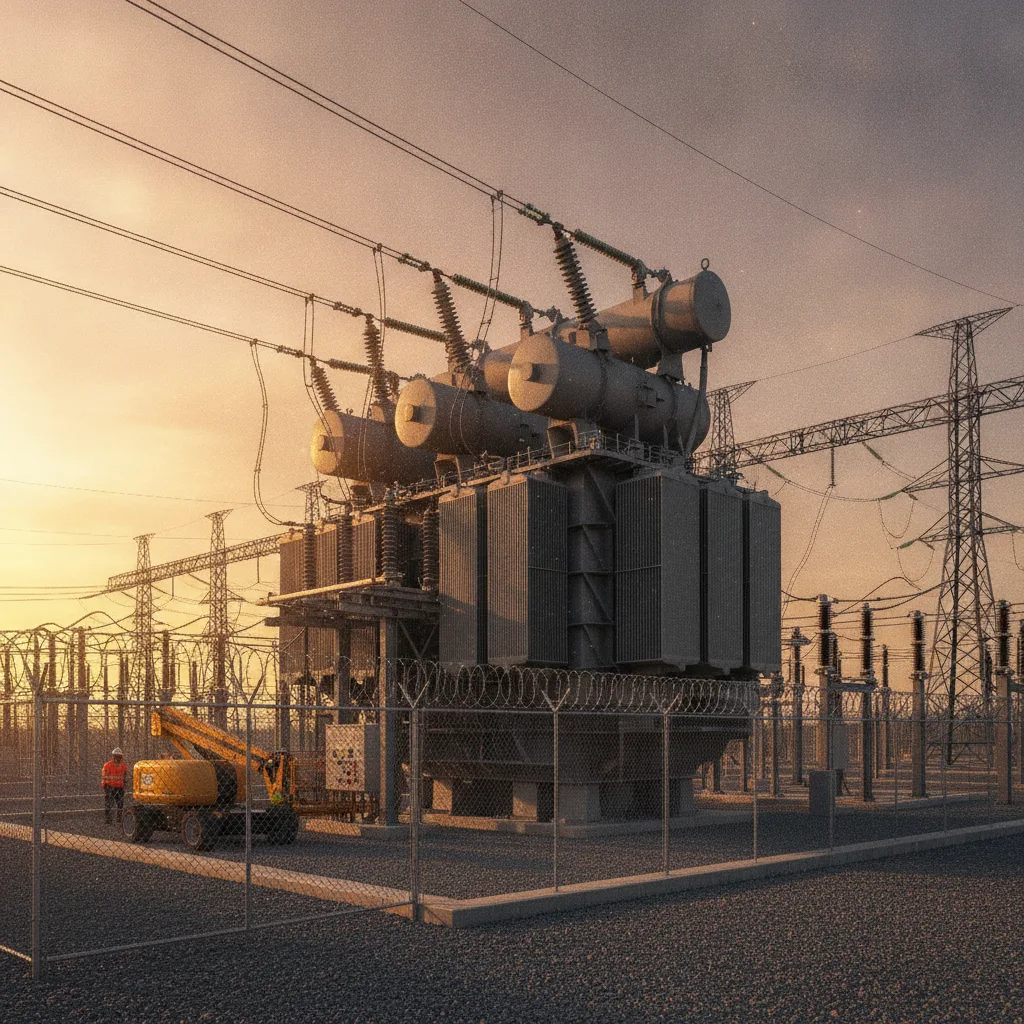
Massive transformers are vital components of our electrical grids, but they are vulnerable to Geomagnetically Induced Currents (GICs) from severe space weather events. Engineers are actively working to strengthen these critical assets to prevent widespread power outages during future solar storms. (AI-generated illustration)
The work to understand space weather and its human impact continues. We’re improving predictions. We’re learning more about the minor ways it interacts with our planet and our bodies. This isn’t about fear. It’s about preparation based on knowledge. We live on a planet constantly bathed in the Sun’s energy. Understanding its entire range, both life-giving and disruptive, is important for our future.
FAQ
Can space weather cause natural disasters on Earth like earthquakes or volcanoes? No, there is no evidence that directly links space weather events to terrestrial natural disasters. The energy involved in even the largest geomagnetic storms is not enough to trigger geological events deep within Earth.
How does Earth protect us from space weather radiation? Earth has a strong magnetic field that turns away most charged particles from the Sun. Our atmosphere then absorbs much of the remaining radiation. This acts as a second protective layer for those on the ground.
What is the biggest potential threat from a major space weather event today? The biggest threat is a large-scale, long-lasting power grid failure. This could lead to huge economic disruption. It could also cause communication blackouts and breakdowns of essential services like water treatment and transportation.
Are smaller space weather events common, and do they affect us? Yes, smaller geomagnetic storms and solar flares happen frequently. These can cause small disruptions to radio communications and GPS signals. They also add to the background radiation air travelers experience.

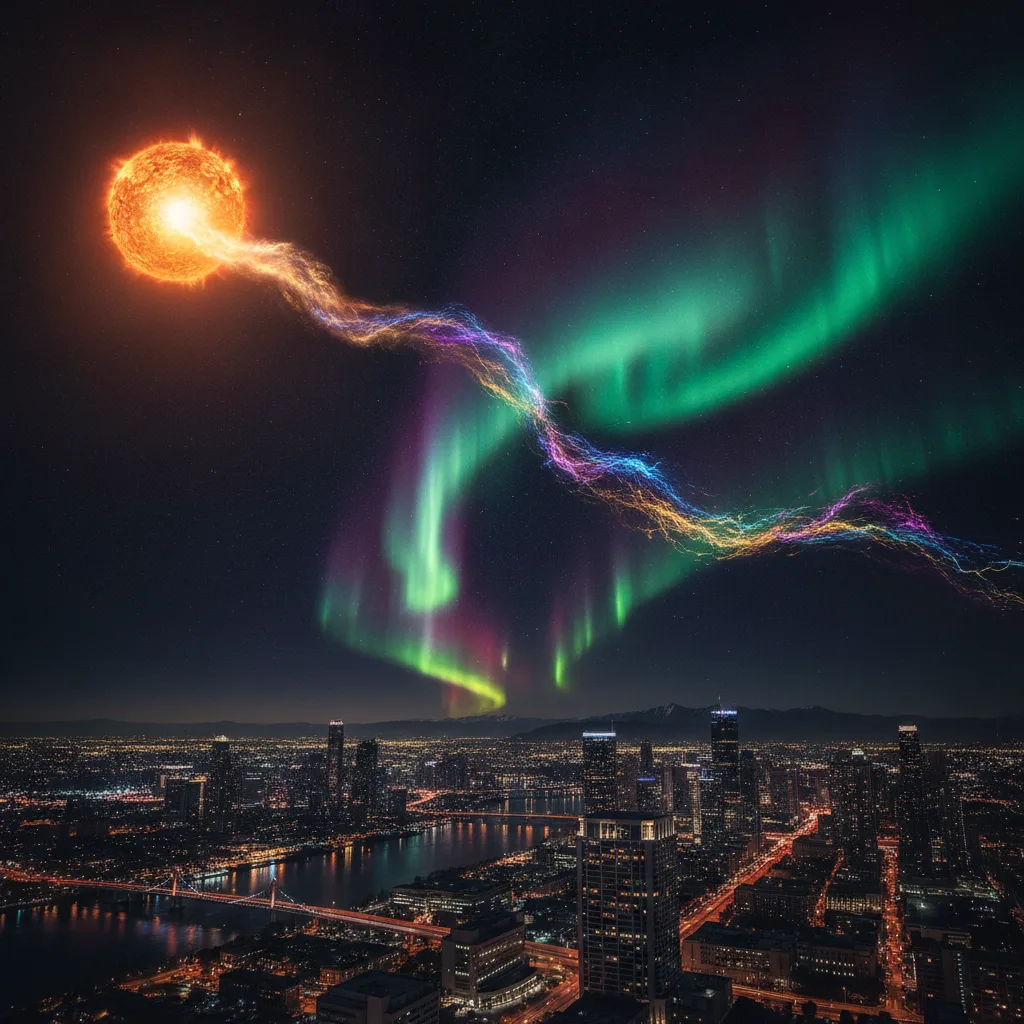
The breathtaking Aurora Borealis, or Northern Lights, is a direct visual result of Earth's magnetic field interacting with charged particles from the Sun. This natural light show demonstrates how our planet's protective magnetic shield channels solar energy, preventing it from reaching the surface. (Source: wallpaper.cam)
You might also like:
👉 US Space Force 2026: Data Control, Not Laser Cannons
👉 Unexplained Mysteries of Science: Cosmos, Quantum & Beyond