Space Colonization: The Grand Illusion & Earth's Real Solutions
Is space colonization a grand illusion? We challenge the narrative of Mars as humanity's 'Plan B,' questioning if it's the real answer to Earth's climate and resource crises.
The Grand Illusion: Space Colonization Is Not the Answer
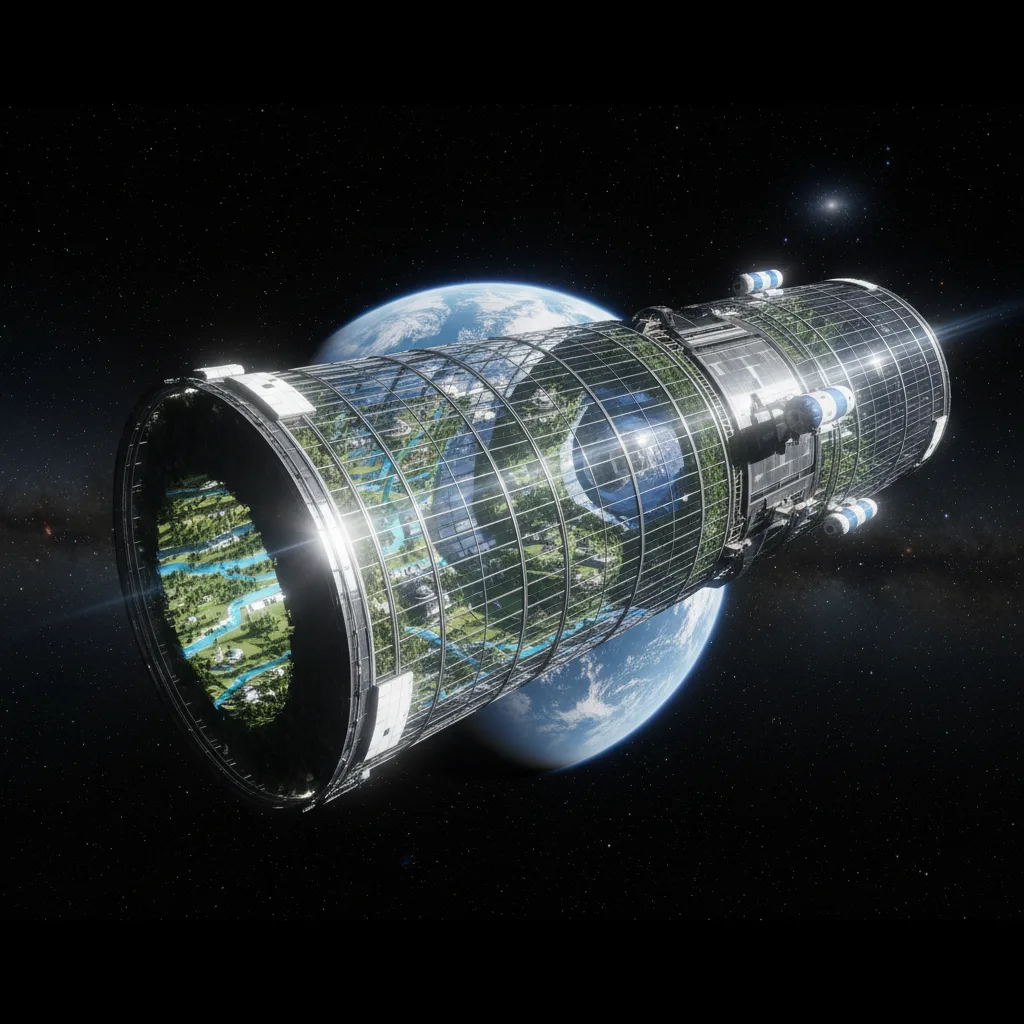
The narrative of space exploration, particularly the dream of colonizing other planets, often feels like a preordained future. We are consistently told that humanity’s destiny lies among the stars, touted as a “Plan B” for a ailing Earth, an escape from dwindling resources, climate catastrophe, or even species-ending asteroid impacts. Figures like Elon Musk advocate for making humanity multi-planetary, casting Mars as our next great frontier. Jeff Bezos envisions O’Neill cylinders—vast, sun-powered space habitats—as future homes for millions, free from Earth’s gravity. It’s a compelling vision, rich with adventure and the promise of infinite expansion, a story that has captivated us since the dawn of the space age.
This vision, however, is not destiny; it’s a fantasy—a dangerous distraction masquerading as technological hope. The notion that we can simply relocate our problems to Mars or orbital colonies is not merely naive. It represents a profound misunderstanding of our current challenges and the immutable laws of physics and biology. While the romance of space holds undeniable power, the stark realities indicate that prioritizing off-world salvation is a critical error. It diverts invaluable resources and attention from the pressing, solvable issues on our home planet.
The escape fantasy
A prevalent belief, frequently championed by space billionaires and their adherents, posits that space colonization serves as humanity’s ultimate insurance policy. Earth, they contend, is fragile; thus, we must expand to survive. This perspective implies that our present environmental crises, resource scarcities, and even political tensions are mere planetary inconveniences, readily resolved by simply acquiring more planets. It’s an alluring proposition—a reset button, a fresh start.
Consider that premise for a moment. If humanity proves so inept at managing its own planet—a world teeming with life, shielded by a perfect atmosphere, and bathed in accessible sunlight—what rational basis exists for believing we would fare better on a harsh, airless Martian rock or confined within an artificial habitat? This is not an insurance policy; it is an immense act of self-deception. Environmental philosopher Bill McKibben has consistently critiqued this escapist mindset, asserting, “If you can’t run a planet, you don’t get to run a galaxy.” His argument is incisive: Earth’s problems are not merely external threats; they are manifestations of our choices, our consumption patterns, and our leadership failures.
The concept of “resource scarcity” frequently underpins the colonization argument. We hear alarmist claims of depleting rare earths, water, and breathable air. The reality, however, is far more nuanced. Reports from organizations like the United Nations Environment Programme reveal that the core issue is not a global deficit of resources, but rather egregious mismanagement, inequitable distribution, and unsustainable consumption, particularly within affluent nations. We squander enormous quantities of food, energy, and materials. Devoting immense financial and intellectual capital to extract speculative resources from distant asteroids, rather than innovating sustainable practices or fostering equity here on Earth, appears less like genuine progress and more like an evasion of our true responsibilities.
Life support: an unbearable cost
Proponents of colonization frequently cite advances in life support, closed-loop recycling, and habitat construction as evidence that we can engineer our survival in space. They discuss converting Martian regolith into building materials and extracting water ice from polar caps. Indeed, engineers consistently push the boundaries of what’s possible.
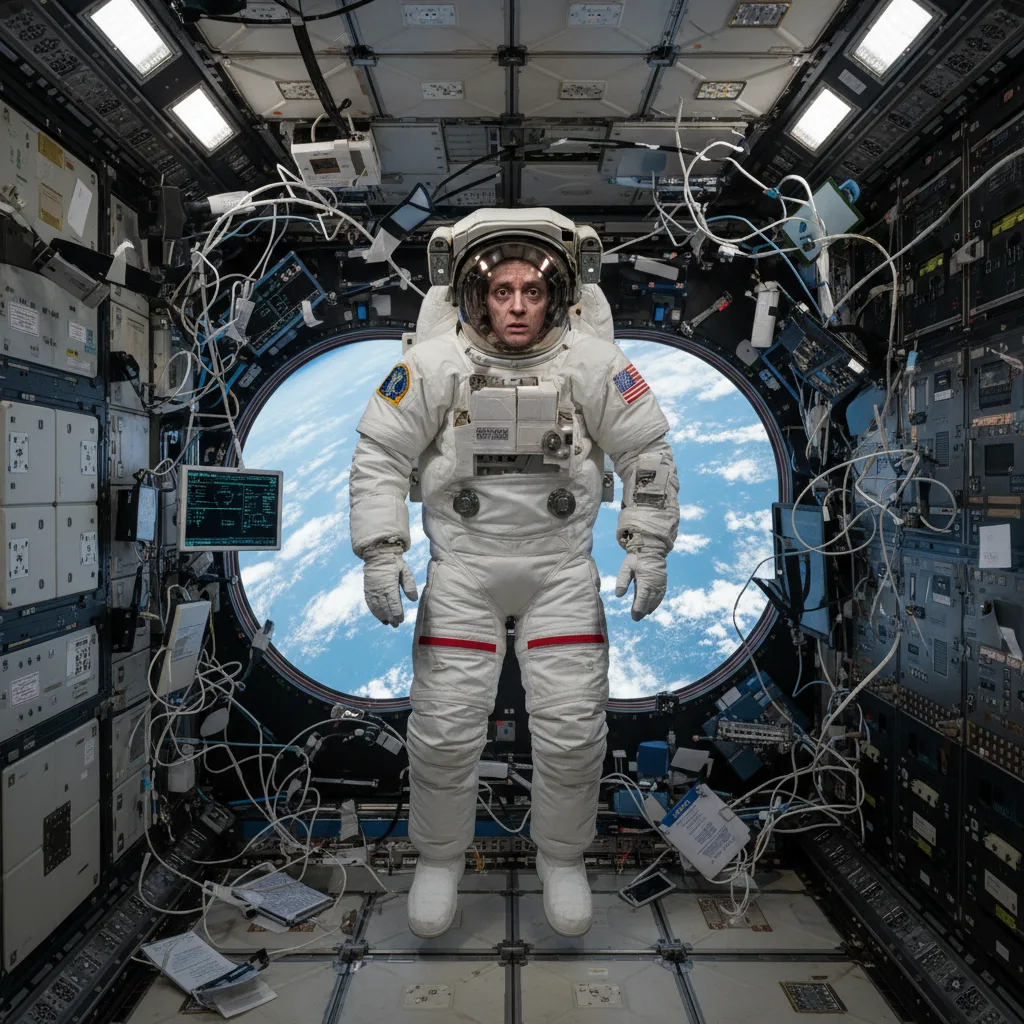
Yet, our biology—an incredibly complex system honed over billions of years of evolution—remains intrinsically linked to Earth. Microgravity, for example, is not merely an annoyance; it is a profoundly damaging force. Astronauts on the International Space Station rapidly lose bone density and muscle mass, and experience significant cardiovascular changes. Their vision frequently deteriorates, a condition known as Space-Associated Neuro-ocular Syndrome (SANS), potentially due to intracranial fluid shifts. Dr. Susan Bailey, a radiation expert at Colorado State University, has conducted extensive research on space radiation’s effects on astronaut telomeres, identifying genetic damage and accelerated aging even on relatively short missions. Beyond Earth’s magnetic field and atmospheric shield, radiation levels become far more lethal, rendering long-term habitation an almost insurmountable challenge. These are conditions that fundamentally alter human bodies, and not beneficially.
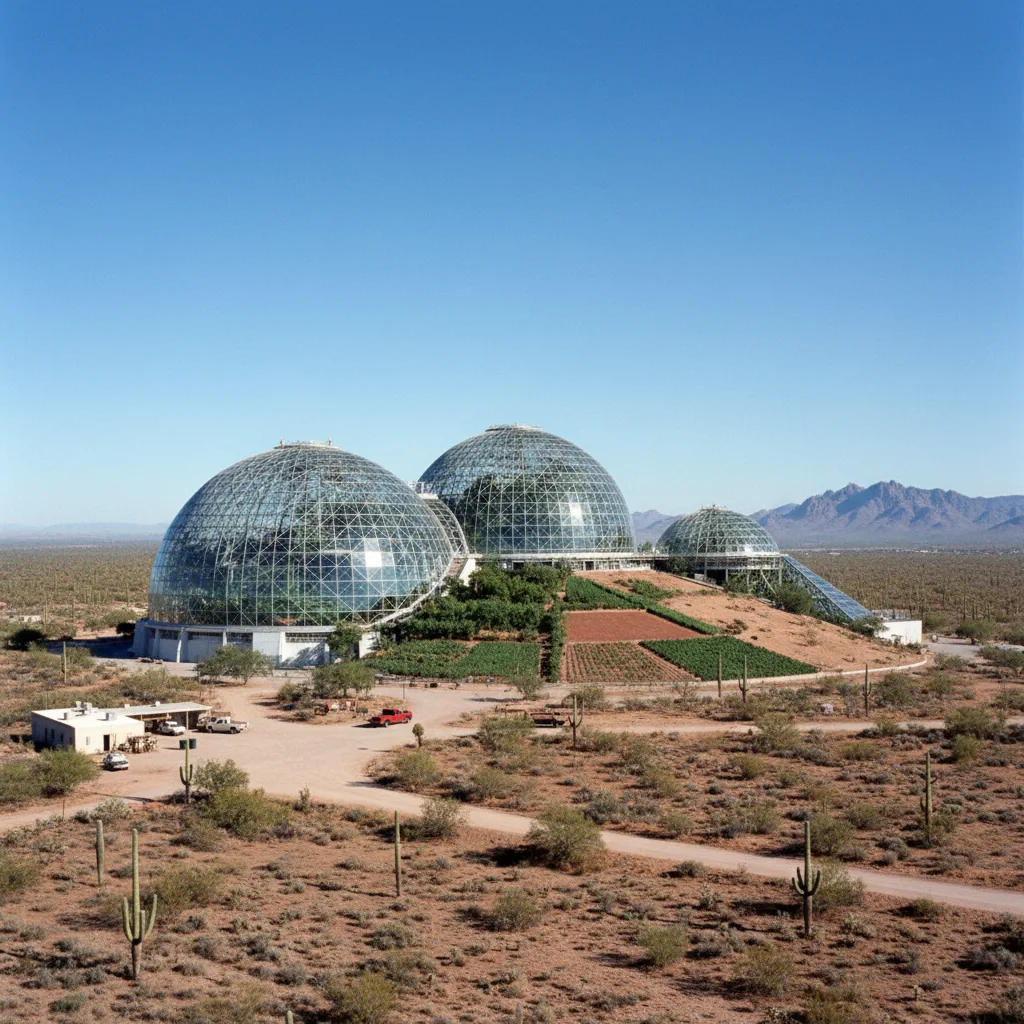
A more fundamental obstacle is the creation of a truly self-sustaining, closed ecosystem. Consider Biosphere 2. This ambitious Arizona project, launched in the early 1990s, attempted to replicate Earth’s biosphere within a sealed environment to study self-sufficiency for space settlement. It encompassed oceans, rainforests, deserts, and even human inhabitants. Despite its colossal cost—an estimated $200 million in 1991—and the expertise of its scientists, it notably failed. Oxygen levels plummeted, carbon dioxide surged, and food production faltered. The “biospherians” ultimately required external oxygen and intervention. If replicating Earth’s delicate balance proves so incredibly difficult on Earth, under optimal conditions, what prospect exists for success on Mars? There, every atom of oxygen, every drop of water, every calorie of food must either originate from Earth or be meticulously manufactured and recycled in an alien environment. This is not merely difficult; it underscores the astonishing complexity of life itself.
Beyond the physical, we must acknowledge the psychological toll. Extended periods of isolation, confinement, the perpetual threat of equipment failure, and the profound monotony of an alien, sterile environment exact a heavy price. While studies from Antarctic research stations and protracted submarine missions offer insights, space colonization would introduce an unprecedented level of psychological challenge. The mental resilience required not merely to survive, but to flourish and construct a society under such duress, is entirely unproven. We aim not just to transport individuals, but to transplant an entire society.
The astronomical cost
The financial case for space colonization frequently hinges on the promise of more affordable rocket launches and the eventual self-sufficiency of off-world settlements, possibly financed by asteroid mining. SpaceX’s Starship, for instance, seeks to drastically reduce the cost of orbital mass delivery, with Elon Musk proposing potential costs as low as $2 million per launch to Low Earth Orbit (LEO) once fully operational. While this figure appears impressive,
A Martian mission, however, represents a challenge far exceeding LEO. Reaching Mars demands colossal amounts of fuel, meticulous orbital calculations, and years of transit. Even with Starship, the expense of launching a fully equipped, human-rated mission to Mars, capable of establishing even a rudimentary base, would still run into the billions, if not trillions, of dollars. This cost encompasses not only the rocket but also the entire support infrastructure: habitats, power plants, life support systems, scientific instruments, and years of supplies, all engineered for autonomous operation in a brutal environment.
The sheer industrial effort involved is staggering. Planetary physicist Dr. Phil Metzger, formerly with NASA’s Kennedy Space Center, has frequently discussed the “industrial bootstrapping” essential for space settlement. This entails manufacturing everything from scratch on another planet—tools, spare parts, solar panels, even fundamental structural components. This is no mere hobby project; it is the construction of an entire industrial economy in miniature, under conditions that would render Earth’s most severe environments benign by comparison. The initial investment would be truly immense, dwarfing even the largest terrestrial undertakings. Who, precisely, would finance this? Taxpayers? Private investors anticipating returns that might not materialize for centuries, if ever?
Furthermore, what business model supports this endeavor? Tourism for the ultra-wealthy? Asteroid mining, while theoretically offering valuable minerals, confronts enormous practical obstacles. Locating suitable asteroids, developing the technology for access, extracting resources, processing them in space, and then transporting them back to Earth (or to a space colony) in an economically viable manner remains entirely speculative. The initial investment required to develop these capabilities would be colossal, with highly uncertain returns, rendering it a high-risk speculation rather than a prudent financial strategy for funding mass colonization. For every dollar allocated to fantasizing about Martian cities, how many could be invested in tangible, immediate improvements to human life on Earth?
A moral void in the cosmos
The drive for space colonization is not merely a technical and economic challenge; it carries profound ethical and societal implications frequently overlooked in the rush to the stars. The term “colonization” itself evokes a troubling history of exploitation, resource appropriation, and the imposition of power. Who would claim ownership in space? How would these new settlements be governed? Would the same inequalities and injustices plaguing Earth simply be replicated and exacerbated in a new cosmic arena?
The Outer Space Treaty of 1967 proclaimed space the “province of all mankind,” prohibiting national claims. However, this Cold War-era document is largely ill-equipped for the advent of private companies and a commercial gold rush. Absent a clear, global accord, the potential for conflict over extraterrestrial resources or strategic locations is substantial. We would not merely be exporting humans; we would be exporting our political systems, our economic ambitions, and our historical tendencies.
Perhaps the most critical ethical question concerns priorities. Is it justifiable to funnel trillions of dollars into developing off-world settlements when billions on Earth lack clean water, adequate food, basic healthcare, or education? As climate change threatens to displace millions and fundamentally alter life on our planet, is our optimal response to prepare an escape route for a privileged few? Dr. Mae Jemison, the first African American woman in space, has frequently questioned this approach, asserting that genuine leadership entails resolving Earth’s problems, not abandoning them. “Space exploration is about doing things that haven’t been done before,” she stated, “but we have to make sure that it’s for everyone, and that it helps us here on Earth.”
Some contend that expanding into space is a moral imperative for species survival, a safeguard against extinction events. They invoke the “Great Filter” concept—the hypothesis that some barrier prevents most intelligent civilizations from reaching advanced stages. But what if the Great Filter is not an asteroid or a gamma-ray burst, but rather our own inability to live sustainably, to overcome internal conflicts, and to competently manage our collective future? If so, transplanting our dysfunctional patterns to another planet merely guarantees that the filter will eventually manifest elsewhere.
Earth’s horizon, not the dust of Mars
To be clear: This argument is not against space exploration itself. Quite the contrary. The pursuit of scientific knowledge, understanding our universe, and the technological advancements spurred by space programs are undeniably valuable endeavors. Satellites provide crucial data for climate monitoring, disaster prediction, and global communication. Telescopes like James Webb expand the boundaries of our cosmic understanding. Robotic probes exploring distant worlds offer profound insights into planetary formation and the potential for extraterrestrial life. This form of exploration enriches and inspires us, delivering tangible benefits back to Earth.
Colonization, however—the establishment of permanent, self-sustaining human settlements off-world—is an entirely distinct ambition. It constitutes a colossal misdirection of resources, talent, and focus at a juncture when humanity confronts acute threats on Earth. Imagine if the trillions of dollars earmarked for Martian cities and lunar bases were instead channeled towards genuinely resolving our climate crisis, developing sustainable energy and resource management, eradicating poverty, or curing diseases.
The innovation required to render a barren planet habitable pales in comparison to the innovation necessary to make our existing livable planet truly sustainable for all. We do not need a “Plan B” when “Plan A” is remediable and, arguably, our sole viable option. The genuine frontier is not outward into the cold vacuum of space; it is inward, towards understanding ourselves, our intricate planetary ecosystem, and how to coexist harmoniously within its beautiful, finite boundaries. Our endeavors should focus on forging a thriving, equitable future on the world we already inhabit, rather than attempting to escape it. This is the challenge that truly demands our collective genius, our resources, and our complete attention.
Frequently Asked Questions
Is space colonization essential for species survival? While theoretically spreading humanity across multiple celestial bodies could mitigate the risk of a single extinction event, this argument often overlooks our capacity for self-destruction. If we cannot effectively manage our current planet, establishing new, far more fragile colonies may simply perpetuate our issues. Prioritizing Earth’s sustainability offers a more immediate and viable path to ensure species survival.
What is the potential of asteroid mining for resources? Asteroid mining presents a theoretical prospect for valuable resources, yet it faces immense technological, logistical, and economic hurdles. It necessitates colossal upfront investment for uncertain returns, with no clear timeline for profitability. Emphasizing efficient resource utilization and recycling on Earth, alongside developing truly circular economies, provides a more practical and immediate solution to resource scarcity.
Do space programs foster innovation? Indeed, space exploration has historically been a potent catalyst for innovation, yielding technologies such as GPS, satellite communication, and advanced medical devices. However, this innovation primarily stems from scientific exploration and research, not inherently from the specific objective of colonization. We can continue to reap the benefits of space-driven innovation by concentrating on scientific missions and Earth-observing satellites without undertaking the immense, problematic endeavor of off-world settlements.
Does this article advocate against all space endeavors? Absolutely not. Scientific space exploration, robotic missions, and Earth-observing satellites are invaluable for comprehending our universe, safeguarding our planet, and advancing technology. My critique is directed specifically at the ambition of colonization—the establishment of permanent, self-sustaining human settlements beyond Earth. This objective, I contend, is currently unsustainable, unethical, and ultimately a distraction given the urgent challenges confronting humanity on our home planet.
You might also like:
👉 Sustainable Futures: Investment, Cybersecurity & Future of Work
👉 Unexplained Mysteries of Science: Cosmos, Quantum & Beyond