
The $546 Billion Space Race: Private Money, Global Rivalries
A new space race is underway, driven by private money and global rivalries. Global spending on space jumped 16% to $546 billion in 2023 alone.
Space: A New Race to the Stars
Space used to be simple: governments launched rockets. Not anymore. Today, a wild mix of private money and global rivalries is pushing humanity further into the cosmos than ever. In 2023, global spending on space hit an estimated $546 billion. This was a 16% jump from the year before, according to the Space Foundation. This isn’t just growth; it’s a major change. We’ve moved from state-run missions to a busy market of companies and countries.
For decades, government agencies dominated space exploration. Think NASA, the European Space Agency (ESA), and Russia’s Roscosmos. These groups chased science, national pride, and Cold War tech superiority. Their missions went everywhere: moon landings, robotic probes to distant planets. The International Space Station (ISS) showed how countries could work together in low Earth orbit.
Now, private companies like SpaceX, Blue Origin, and Rocket Lab are changing how we get to space. They cut launch costs and build reusable rockets. At the same time, China, India, and Japan have strengthened their own space programs. Their goals reach beyond Earth orbit, aiming for the Moon and Mars. This new mix of players wants science, money, and strategic power.
Space for sale: cheaper, faster, wider access
In 2023, SpaceX launched 98 successful orbital missions. That’s more than all other launch providers put together. The company’s reusable Falcon 9 rocket greatly reduces launch costs. This means more satellites, experiments, and even private citizens can now reach orbit.
Cheaper launches open up space to everyone. Small satellite companies can now launch constellations for Earth observation, communication, and climate monitoring. Planet Labs, for instance, runs a huge network of Earth-imaging satellites. Its data helps with agriculture, disaster response, and urban planning. This wider access encourages new ideas.
Private companies also build and run things in orbit. Axiom Space, based in Houston, is building commercial modules for the International Space Station. Eventually, Axiom plans to detach these modules. They will form a standalone commercial space station, showing private companies operating space stations.
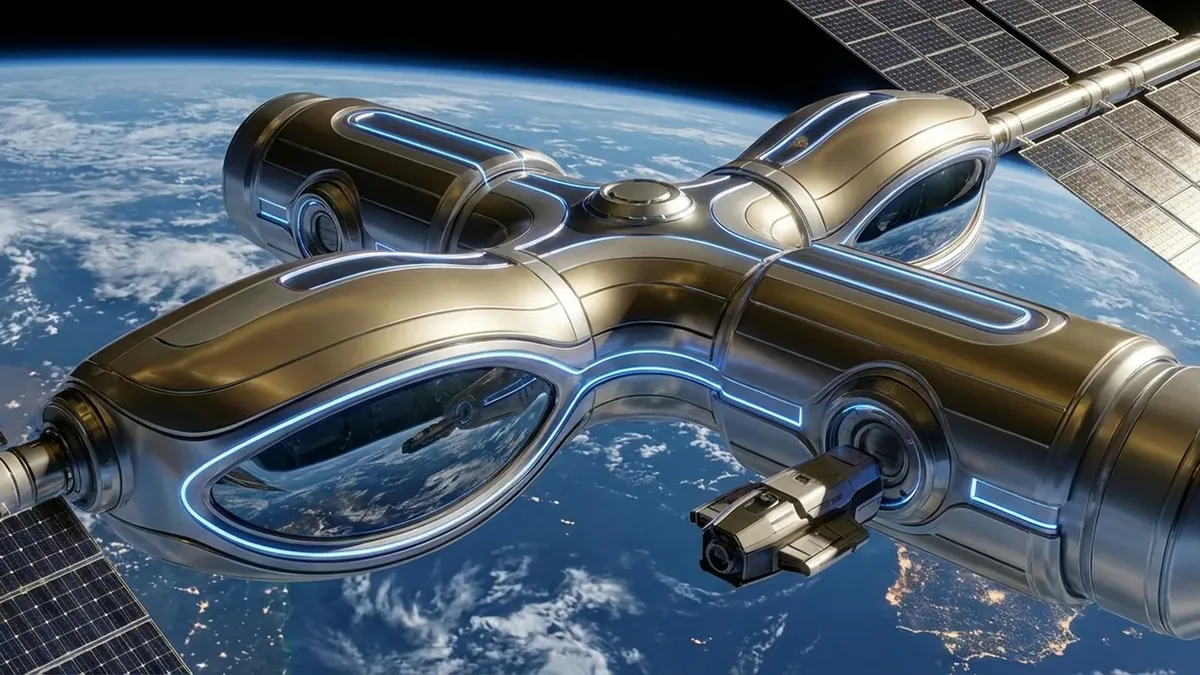
Axiom Space is actively developing the first commercial modules for the International Space Station, with plans for them to eventually detach and form a standalone private space station. This pioneering effort highlights the growing trend of private companies building and operating space infrastructure. (Source: onoff.gr)
Large satellite constellations for global internet are a big trend. SpaceX’s Starlink project has launched over 6,000 satellites into low Earth orbit since 2019. OneWeb and Amazon’s Project Kuiper are launching similar networks. These constellations want to bring fast internet to forgotten corners of the globe.
Space tourism is now real, at least for the wealthy few. Virgin Galactic offers suborbital flights, taking paying customers to the edge of space. Blue Origin’s New Shepard rocket does similar short trips. SpaceX has even flown private citizens on multi-day orbital missions aboard its Crew Dragon capsule. These ventures show a new market for personal space travel is starting.
Back to the Moon, and beyond
NASA’s Artemis program wants to send humans back to the Moon by 2026, starting a new age of lunar exploration. The program aims to build a long-term human presence there. It involves the Orion spacecraft and the Gateway lunar orbital outpost. It also includes commercial partners like SpaceX and Blue Origin for Human Landing Systems (HLS). This effort lays groundwork for future Mars missions.
China also has big plans for lunar exploration. The China National Space Administration (CNSA) is building the International Lunar Research Station (ILRS). This project wants to build a permanent base on the Moon’s south pole by the 2030s. Roscosmos officials say Russia wants to help with the ILRS.
Finding lunar resources, especially water ice, is a main reason for Moon missions. Water ice can become breathable oxygen and rocket fuel. This resource is vital for keeping a lunar base going and making deep space missions possible. Groups like the Lunar Surface Innovation Consortium are looking into ways to use resources found on the Moon.
Robot missions keep teaching us more about Mars. NASA’s Perseverance rover collects rock and soil samples, hunting for signs of ancient microbial life. China’s Tianwen-1 mission successfully sent its Zhurong rover to the Martian surface in 2021. These missions clear the path for humans to explore the Red Planet someday.
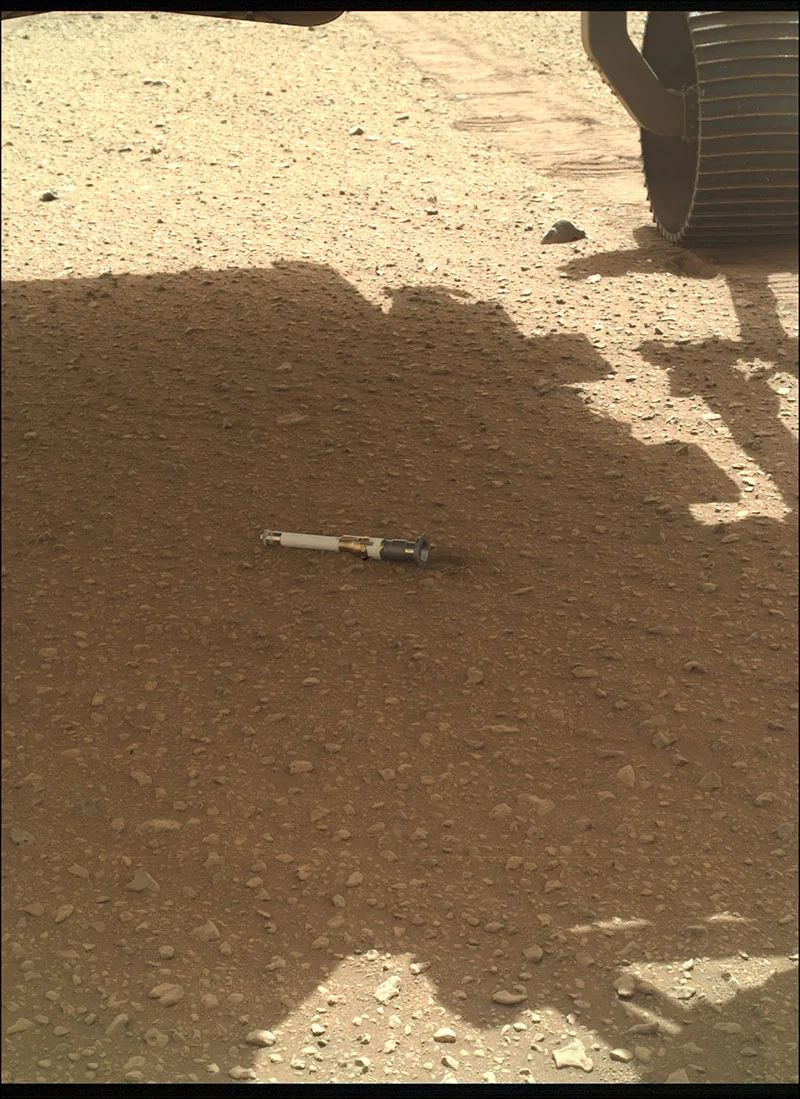
NASA's Perseverance rover has been exploring Jezero Crater on Mars since February 2021, collecting rock and soil samples in its search for signs of ancient microbial life. These samples are intended for future return to Earth, paving the way for human exploration of the Red Planet. (Source: nasa.gov)
Planetary defense is getting more attention. The NASA Planetary Defense Coordination Office watches objects near Earth. Its goal is to find and track dangerous asteroids and comets. The DART mission in 2022 successfully showed how to deflect asteroids. This proved we can protect Earth.
Who’s in charge? and what’s next?
In 2022, China launched its third Tiangong space station module, Mengtian, finishing its own space station. This makes China a major space power with a working human spaceflight system. The Tiangong station runs science experiments and supports long crew stays. It gives China its own choice, separate from the old ISS.
More independent space powers are creating a space world with many players. In 2023, India’s Chandrayaan-3 mission landed a rover on the Moon’s south pole. This made India the fourth nation to achieve a lunar soft landing. Japan’s Smart Lander for Investigating Moon (SLIM) landed precisely on the Moon in 2024. These wins show nations getting better at space.
Space debris is still a big problem for all spacefaring nations. The European Space Agency’s Space Debris Office tracks thousands of dead satellites and old rocket parts. Collisions in orbit create more debris, endangering working spacecraft. Countries are trying to develop ways to clean up debris and set rules to prevent more.
Countries are both cooperating and competing, shaping today’s space politics. The US-led Artemis Accords set rules for lunar exploration. Over 30 nations have signed these, pushing for openness and peace in space. China’s ILRS initiative gives another way for countries to work together on the Moon.
Looking ahead, space exploration goes past the Moon and Mars. NASA’s Psyche spacecraft, for example, targets metal-rich asteroids, looking at mining them. Ideas for space-based solar power, which would beam energy to Earth, are being developed. These bold ideas show that space isn’t just a frontier; it’s becoming an important part of Earth’s future.
FAQ
What drives current space exploration? Private innovation and reusable rockets are greatly reducing launch costs. This lets more commercial and scientific missions happen. Plus, renewed global competition encourages big investment and ambition among nations.
Which countries lead space exploration? The United States, China, the European Union, India, and Japan are major players. Each has strong national space programs and big plans for the Moon and deep space.
What do private companies do? Companies like SpaceX, Blue Origin, and Axiom Space build rockets, satellites, and space stations. They make space more accessible, commercialize orbital activities, and make space tourism happen.
What’s the biggest challenge for space exploration? Space debris is a growing threat to orbital operations and satellites. Solving this problem and keeping space usable long-term is a big worry for everyone in space.
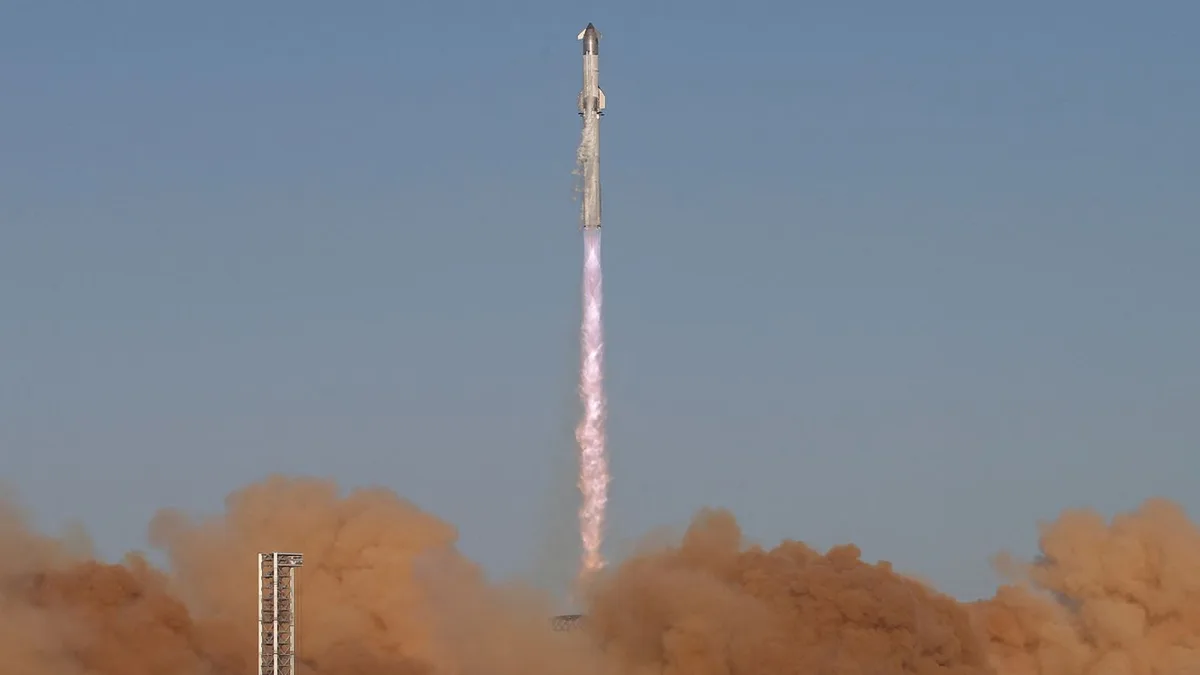
SpaceX's Starship, seen here during a test flight, is designed to be a fully reusable super heavy-lift launch vehicle and spacecraft. It aims to make space travel and colonization more accessible and affordable, with ambitious plans for lunar and Martian missions. (Source: cnn.com)
You might also like:
👉 Space Colonization: The Grand Illusion & Earth’s Real Solutions
👉 Unexplained Mysteries of Science: Cosmos, Quantum & Beyond