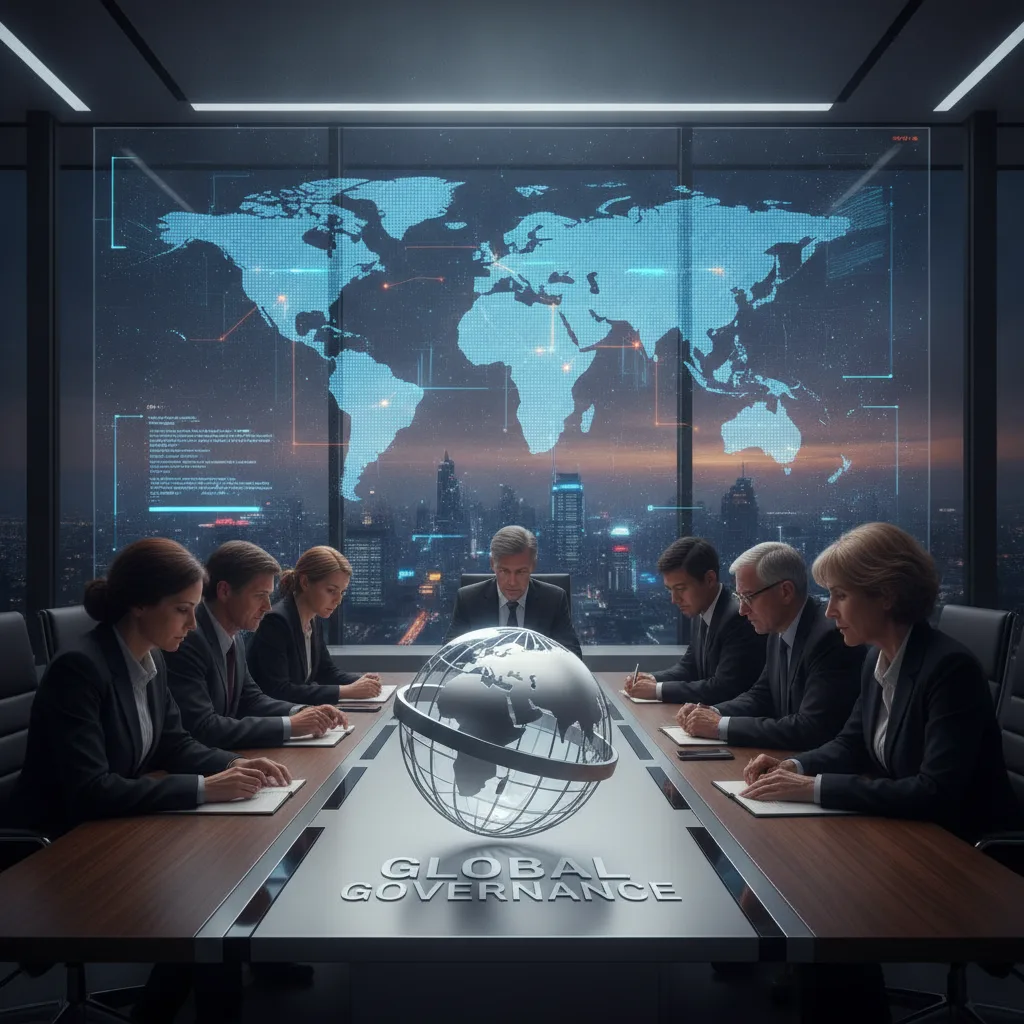
Post-WWII Order at Risk: WEF 2023 Warns of State Collapse
Nationalism weakens post-WWII institutions. The 2023 Global Risks Report warns of 'state collapse' and 'geopolitical confrontation'.
Managing global governance in a fragmented era
Global cooperation is declining. Nationalism is rising, and it is weakening the institutions built after World War II. Countries now prioritize their own challenges over working together. The World Economic Forum’s 2023 Global Risks Report confirms this trend. It identifies “state collapse” and “geopolitical confrontation” as major long-term threats.
Global governance refers to how countries and other groups manage shared problems. This includes official organizations and unwritten rules. These systems address issues that cross national borders. There is no world government. Instead, everyone relies on voluntary teamwork.
This system aims to solve shared global problems. Examples include climate change, pandemics, and maintaining economic stability. Its goal is to provide public benefits for everyone. The United Nations is central to this entire structure.
How international cooperation changes
Global governance is not a new concept. Its current form developed after 1945. The UN Charter established rules for state independence and collective security. This plan sought to prevent future world wars. It also promoted cooperation on financial and social matters.
The World Trade Organization (WTO) creates rules for international commerce. The International Monetary Fund (IMF) and World Bank manage global financial stability. These groups exemplify multilateralism. Member countries support them. Their effectiveness depends on the commitment of those members.
Recently, agreement and dedication have decreased. The 2022 UN General Assembly showed deep divisions. Countries struggled to agree on responses to many crises. Ambassador Anya Sharma, former Indian envoy to the UN, highlighted this issue. She stated in a 2023 interview, “The post-war consensus is breaking apart.”
Key players and their goals
Countries remain the primary players in global governance. They have legal independence and control territory. Their national interests often guide their interactions with international groups. The United States, China, and the European Union are significant examples.
Intergovernmental organizations (IGOs) help countries collaborate. The UN Security Council, with its five permanent members, holds real influence. The G7 and G20 groups bring together major economies. They coordinate policies on global financial issues. However, their decisions are not legally binding.
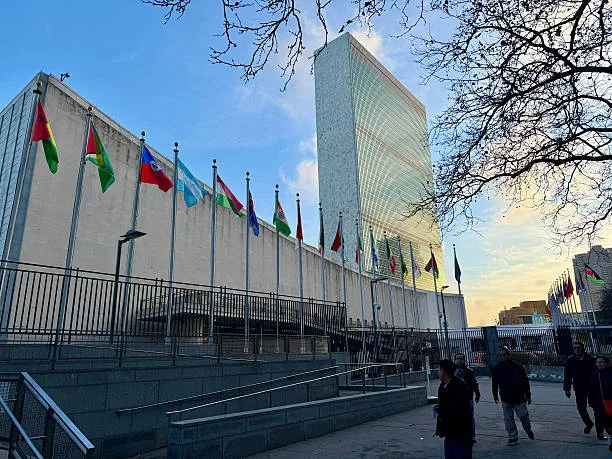
The iconic United Nations Headquarters in New York City, a symbol of global cooperation and multilateralism. Established in 1945, the UN is central to managing shared global problems and preventing future world wars, as outlined in its foundational Charter. (Source: gettyimages.in)
Groups that are not states also play a vital role. Multinational corporations (MNCs) influence global trade and investment rules. Companies like Amazon and Apple impact labor standards and data privacy worldwide. Non-governmental organizations (NGOs) advocate for specific issues. Amnesty International, for instance, champions human rights.
These different groups pursue varied objectives. Countries seek security and economic prosperity. IGOs aim to solve problems collectively. NGOs often advocate for ethical causes. All these interactions create complex political dynamics, frequently resulting in power struggles.
Major challenges to working together
Climate change presents a huge challenge for global governance. The 2015 Paris Agreement set goals for reducing emissions. Many signatory countries are unable to meet their pledges. A 2023 UN Environment Programme report confirmed insufficient progress. Global temperatures continue to rise.
The COVID-19 pandemic revealed weaknesses in global health management. The World Health Organization (WHO) faced criticism for its response. Vaccine nationalism hindered fair distribution. Wealthier countries acquired doses first. This left many poorer nations vulnerable.
Cybersecurity threats also demand international cooperation. State-sponsored hacking and ransomware attacks are widespread. There is no agreement on rules for cyber warfare. Talks for a UN treaty have stalled since 2018. This leaves digital systems open to attack.
Trade disputes are intensifying, harming the WTO. Its appellate body, which resolves disputes, became ineffective in 2019. This occurred because member countries did not appoint new judges. Dr. Alistair Finch, Director of the Geneva Institute for International Studies, called it “a significant blow to global trade law.” These problems underscore the difficulty of international collaboration.
Geopolitical rivalries and organizational stress
Competition among major powers significantly weakens global governance. The US-China rivalry impacts UN bodies. Both countries seek to influence international rules and organizations. Their disagreements often lead to stalemates. This prevents effective crisis responses.
Russia’s full invasion of Ukraine in 2022 directly violated international law. It also paralyzed the UN Security Council. Russia, a permanent member, used its veto. This stopped the UN from taking strong action against its own attack. It exposed the council’s inherent flaws.
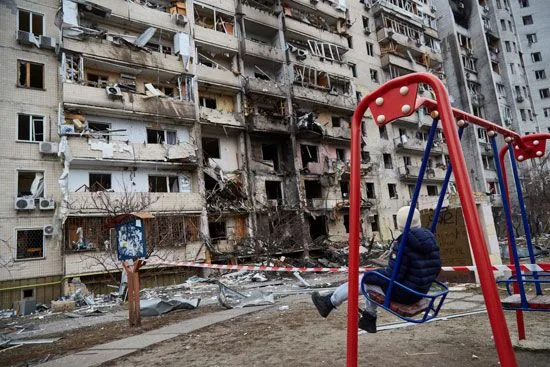
Russia's full-scale invasion of Ukraine in February 2022 not only violated international law but also exposed critical flaws in global governance, particularly paralyzing the UN Security Council due to Russia's veto power, preventing strong international action. (Source: britannica.com)
Trust in multilateral institutions has declined. A 2023 Edelman Trust Barometer study showed this trend. Public trust in global institutions fell 5% since 2020. This indicates widespread doubt about international teamwork. Many citizens feel these bodies do not represent them.
Regional groups are also gaining influence. The European Union acts as a strong rule-maker. The African Union is increasingly vocal on issues across Africa. These regional efforts sometimes bypass traditional international forums. They show a shift towards local control.
The future of global problem solving
Global governance faces a difficult transition. Old institutions must adapt to new circumstances. There is frequent discussion about reforming the UN Security Council. Ideas include adding more members or changing veto powers. However, no consensus has been reached.
New ways of working together are also emerging. Temporary groups address specific problems. The Global Alliance for Vaccines and Immunization (GAVI) is a good example. It brings together public and private partners. These flexible arrangements may become more common.
Technology brings both challenges and opportunities. Urgent global discussions are needed for Artificial Intelligence rules. Digital tools can also increase transparency and public engagement. This might make international groups more accountable.
Despite all the divisions, global solutions are still critically needed. Climate change and future pandemics do not respect borders. Working together is essential. The key question is whether leaders will find the resolve to build these solutions. Their decisions will shape our future.
Frequently asked questions
What is global governance? Global governance describes how international issues are managed. It includes rules, groups, and methods. These address problems that cross national borders.
Is global governance a world government? No, it is not. Global governance has no central authority and relies on voluntary teamwork. Countries maintain their independence.
Who are the main actors? The main actors are countries, organizations like the UN, and non-state groups. Non-state groups include NGOs and large corporations.
What are its biggest challenges? Major challenges include geopolitical rivalries, rising nationalism, and limitations within institutions. Climate change and pandemics also create significant problems.
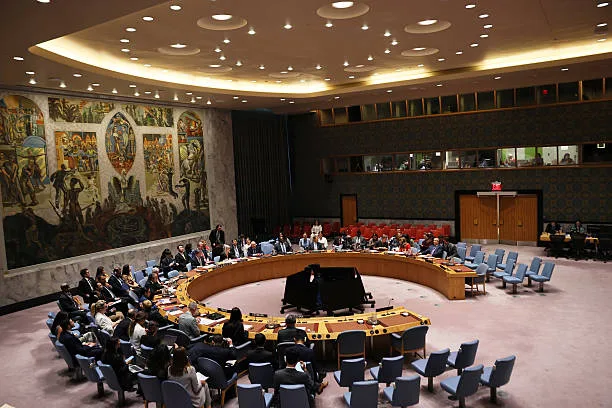
The iconic UN Security Council chamber, located at the United Nations Headquarters in New York City, is where the 15 member states debate and vote on resolutions concerning international peace and security. Discussions about reforming its structure, including veto powers and membership, are central to the future of global governance. (Source: gettyimages.in)
You might also like:
👉 US-China: $664B Trade Masks Zero-Sum Global Power Struggle
👉 1918: When Four Empires Collapsed and Europe Changed Forever