
US-China: $664B Trade Masks Zero-Sum Global Power Struggle
US-China relations, with $664 billion in 2023 bilateral trade, are more complex than a zero-sum fight for global dominance.
US-China: More Than Just a Clash
US-China relations are often described as heading for unavoidable conflict. Bilateral trade reached $664 billion in 2023. This figure suggests a relationship more complex than mere rivalry. Many think the two powers are locked in a zero-sum fight for global dominance, driven by ideology. But that idea, while partly true, misses the point. It ignores the deep economic ties and the political pressures leaders face at home.
The competition between the US and China plays out in the Indo-Pacific region. It holds vital shipping lanes, key tech supply chains, and much of the world’s people. The South China Sea and Taiwan Strait are major hotspots.
The United States is a democratic republic. It has led the world since World War II, pushing for open markets and a liberal international order. Its foreign policy often leans on alliances and global institutions. China, a Communist Party-led state, has grown fast economically and militarily since the late 20th century. It wants national rejuvenation and more regional and global sway.
For decades, the US and China grew more economically linked. The US kept its post-war security alliances in Asia. China’s rise brought new economic and military facts. This created clear ideological and strategic differences between them.
Trade: Deeper Than We Think
The US-China trade war started in July 2018. The Trump administration put tariffs on Chinese goods. Many saw this as a clear move to “decouple” the two economies. They thought it would hurt China’s economic rise and shift supply chains. But US Census Bureau data tells a more complex story.
Tariffs didn’t stop trade volumes from staying high. US trade with China hit a record $690.6 billion in 2022, the US Census Bureau reported. This shows that economic forces and business interests fight against full decoupling. American consumers and businesses still lean heavily on Chinese manufacturing.
Some sectors prove this ongoing interdependence. China controls the supply of many key minerals, like rare earths. In 2023, the US Geological Survey said China made 70% of the world’s rare earth elements. These materials are vital for high-tech industries, from electric cars to defense systems. This dependence makes a full break incredibly hard.

Rare earth elements, a group of 17 metallic elements, are crucial for modern technologies from smartphones and electric vehicles to defense systems. China currently dominates their global production, supplying about 70% of the world's rare earth elements in 2023, highlighting a key point of economic interdependence and geopolitical leverage. (Source: nbcnews.com)
Many US businesses still push for engagement. A 2023 US-China Business Council survey found 80% of American companies in China were profitable. They also felt good about their long-term future in the Chinese market. This shows businesses want to keep ties, not cut them. It reveals a gap between political talk and business reality.
Yes, competition exists in key tech areas. The US put strict export controls on advanced semiconductors and chip-making gear. The CHIPS and Science Act of 2022 wants to boost US chip manufacturing. This is a strategic move to rely less on foreign supply chains. Companies like Huawei faced big limits in the US market. This shows a focused effort on national security within the wider economic link.
Taiwan: Not Just Land, But Chips
When then-Speaker Nancy Pelosi visited Taiwan on August 2, 2022, tensions spiked in the Taiwan Strait. Most people see Taiwan as the ultimate flashpoint for US-China relations. They often view it as just a land dispute or an ideological fight over who’s in charge. China calls Taiwan a “sacred and inalienable” part of its territory. This is a long-held view of the Chinese Communist Party. The US keeps “strategic ambiguity,” meaning it neither fully backs nor rejects Taiwan’s independence.
But Taiwan’s strategic value goes far beyond land claims. It plays a vital role in the global economy. Taiwan Semiconductor Manufacturing Company (TSMC) makes more chips than anyone else. TSMC produces over 90% of the world’s most advanced semiconductors. These chips run everything: smartphones, AI servers, and military gear.
A conflict in the Taiwan Strait would wreck the global economy. Former US Secretary of State Mike Pompeo said in 2020 that Taiwan plays a critical role. He stressed its importance to global trade and tech progress. This economic side often gets less notice than the rivalry itself. It gives everyone a strong reason to calm things down.
Taiwan also sits on key shipping lanes, not just chips. These lanes link East Asia to the rest of the world. A disruption there would ripple through global trade. This makes Strait stability a big worry for countries far away. Japan, South Korea, and other major trading nations rely on these routes. Their economic safety ties directly to how things stay in the Taiwan Strait.

The Taiwan Semiconductor Manufacturing Company (TSMC) is the world's largest contract chipmaker, producing over 90% of the most advanced semiconductors vital for global technology. Its immense facilities are at the heart of Taiwan's strategic importance in the US-China geopolitical landscape. (Source: gettyimages.com)
The US commitment to Taiwan, though strategically unclear, also links to its wider Indo-Pacific alliances. If the US abandoned Taiwan, it would hurt trust with allies like Japan and South Korea. These alliances are core to US regional security. So, the issue isn’t just Taiwan. It’s about the whole regional security setup.
Home Fronts and the Future
Both US President Joe Biden and Chinese President Xi Jinping face big pressures at home. These pressures shape their foreign policy. Many think leaders act only on national strategic interests. But internal politics hugely affect how countries behave on the world stage.
In the US, a tough stance on China usually gets support from both parties. Congress’s voting records show wide agreement on laws to counter China’s influence. For instance, the Uyghur Forced Labor Prevention Act passed with huge bipartisan majorities. This means a firm position on China helps American leaders politically. It draws in many voters and political groups.
In China, President Xi Jinping’s “common prosperity” drive and nationalistic talk appeal to people at home. Brookings Institute scholar Ryan Hass says these policies cement Xi’s power. They also boost the CCP’s legitimacy by showing strength and promoting national pride. Chinese public opinion, molded by state media, largely backs a strong stand against foreign meddling. This makes any perceived concession a political risk for Xi.
These internal forces mess with purely rational strategic plans. Leaders must weigh national security against their own political survival and legitimacy at home. This sometimes makes them more confrontational than they might otherwise be. It suggests that solving US-China tensions means understanding their home contexts.
Despite tensions, the future isn’t just about conflict. Both nations face global challenges that demand cooperation. Climate change is a clear example. Former US climate envoy John Kerry stressed the need for US-China teamwork on climate action. He said global climate goals are impossible without it. This shared concern could open a key path for talks.
Washington and Beijing’s choices in the next few years will shape this century. Home political needs will sway these decisions as much as big strategic plans. The facts point to a future of selective competition and unavoidable interdependence.
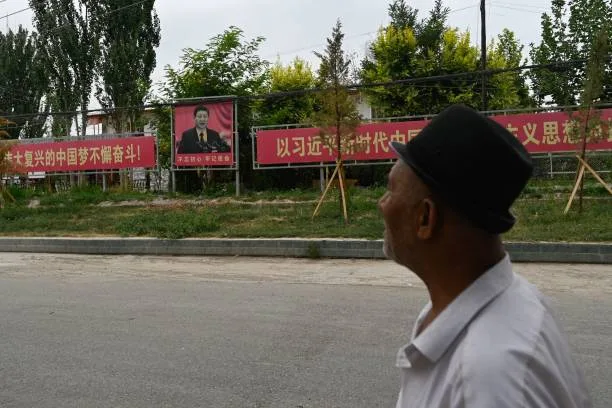
Chinese President Xi Jinping is a central figure in the geopolitical landscape, with his 'common prosperity' drive and nationalistic rhetoric playing a key role in shaping China's foreign policy and cementing his domestic power. (Source: gettyimages.ie)
FAQ
What is “decoupling”? Decoupling means cutting or ending economic links between two countries. For the US and China, it involves trying to split supply chains and limit trade in some areas. The goal is often to rely less on the other nation’s economy.
Why is Taiwan so important to the global economy? Taiwan is vital because it makes most of the world’s advanced semiconductors. These chips are key parts for almost all modern electronics and tech. If Taiwan’s chip production stopped, it would cause a huge global economic crisis.
Are there areas where the US and China still cooperate? Yes, even with geopolitical tensions, the US and China still work together on some issues. Climate change is a big area where both nations see the need for joint action. They also keep diplomatic talks going and discuss global health and non-proliferation.

Taiwan is a self-governing island democracy whose geopolitical status is a major point of contention between the US and China, largely due to its critical role in global semiconductor manufacturing. Its strategic location and advanced tech industry make it a flashpoint in international relations. (Source: gettyimages.com)
You might also like:
👉 The $546 Billion Space Race: Private Money, Global Rivalries
👉 Economic Sanctions: Why They Often Fail to Achieve Goals
👉 Understanding Energy Independence: Security, Economy, Future