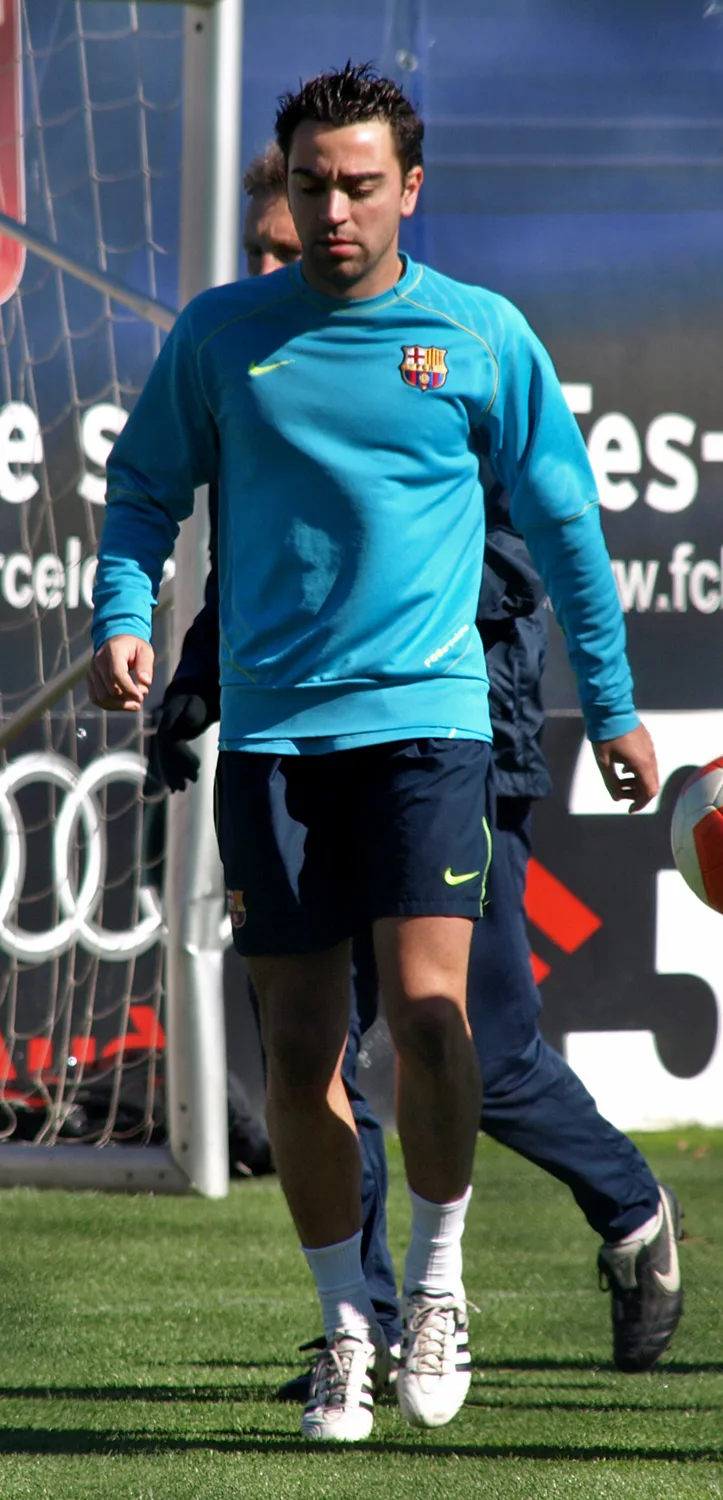
Xavi Hernández: Mind-Bending Facts About a Football Maestro
Explore the incredible mind of Xavi Hernández, comparing his football genius to the human brain's complex processing. Discover mind-bending facts about this legendary maestro.
Unlocking the Matrix: Mind-Bending Facts About Xavi Hernández
Imagine, for a moment, the human brain. A squishy, three-pound universe humming with electrical impulses, processing roughly 11 million bits of information every single second. Now, picture that same brain, but instead of navigating a grocery store or deciphering a tax form, it’s operating on a vast, green rectangle, with 21 other highly motivated individuals, a spherical object, and 90 minutes ticking away. This isn’t just football; it’s a real-time, high-stakes computation problem, an organic supercomputer at full throttle. And if you wanted to find the ultimate architect, the human algorithm who consistently solved this problem with impossible elegance, you’d find yourself staring at Xavi Hernández. Understanding the facts about Xavi isn’t just about his statistics; it’s about dissecting a mind that redefined spatial awareness and ball control, a player who made the beautiful game look less like sport and more like a perfectly choreographed ballet of physics and foresight.
The Origin Story: La Masia’s Prodigy and the Invisible Thread
 Before he was the midfield maestro, before the World Cup, before the Champions League titles piled up like priceless artifacts, Xavi was simply Xavi. Born in Terrassa, Catalonia, in 1980, his journey began in the most hallowed halls of football education: La Masia, Barcelona's famed youth academy. Here's the thing nobody tells you: La Masia wasn't just a football school; it was a philosophy incubator, a place where children were taught not just to kick a ball, but to *think* the game. They learned to play in specific positions, yes, but more importantly, they learned to play *with each other*, often without explicit instruction. It was like a jazz ensemble where every musician inherently understood the rhythm and melody of their bandmates, even before the first note.
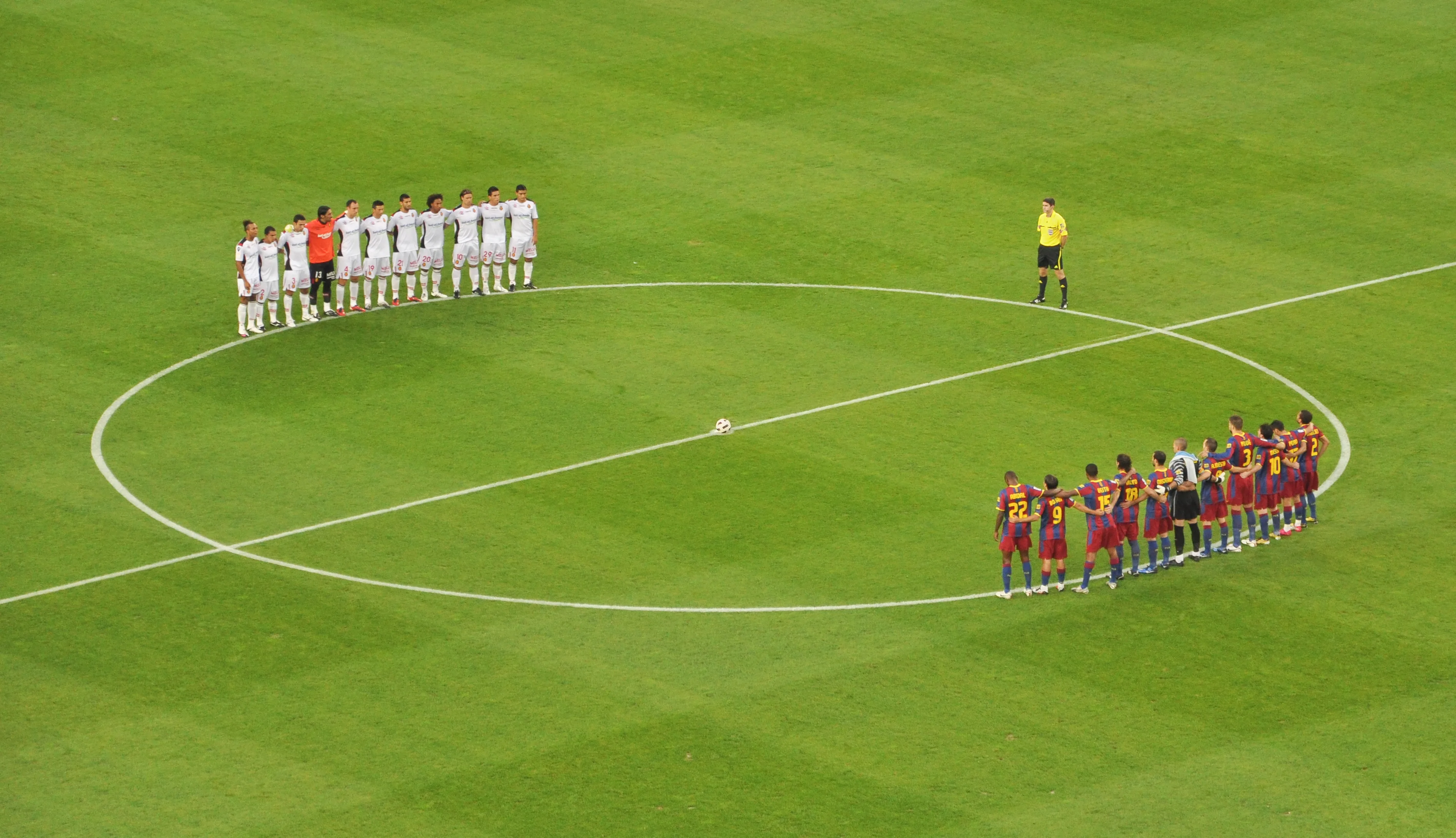
Xavi joined La Masia at age 11, a tiny, unassuming kid who immediately stood out for his ability to see passes others couldn’t even imagine. His coaches quickly recognized his preternatural talent for finding space and dictating tempo. While other kids might sprint and dribble with flash, Xavi gravitated towards the quiet art of possession, the almost invisible thread that connected every player on the pitch. He wasn’t the fastest, nor the strongest, but he could receive a ball under pressure and release it in a single, fluid motion, almost as if the ball was merely an extension of his own thought. This wasn’t just practice; it was an immersion into a unique footballing dialect, one that Xavi would eventually speak more fluently than anyone else. He ascended through every age group, from Juvenil A to Barcelona B, making his first-team debut under Louis van Gaal in August 1998, scoring against Mallorca in the Spanish Super Cup. From that moment, the invisible thread became visibly woven into the fabric of Barcelona.
The Midfield Metronome: Orchestrating Barcelona’s Golden Age
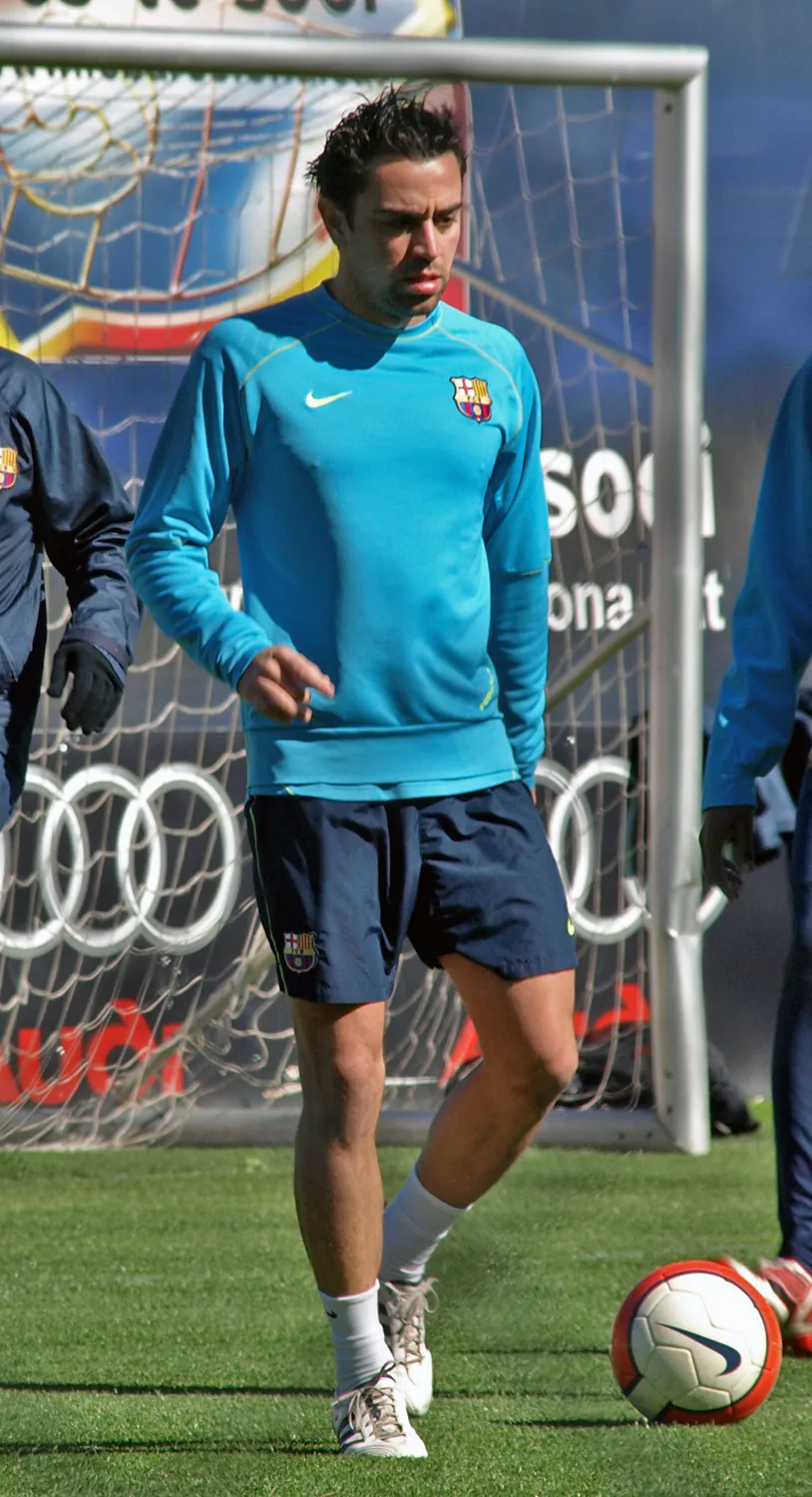 To understand Xavi the player, you have to appreciate the concept of the "metronome." Not just a time-keeping device, but something that provides a steady, unwavering beat, allowing all other elements to align around it. Xavi was Barcelona's human metronome. He wasn't about flashy step-overs or thunderous long shots; his genius lay in the almost monotonous perfection of his passing. During Barcelona's golden era under Pep Guardiola, a period of unprecedented dominance from 2008 to 2012, Xavi was the heart of the "tiki-taka" style, a relentless, intricate passing game designed to suffocate opponents through possession.
His vision was legendary, often compared to a chess grandmaster seeing 10 moves ahead. He specialized in what we might call “pre-assist” passes – the pass before the assist, which unlocked the defense, creating the conditions for the final killer ball. Think of it like a master chef preparing ingredients: Xavi didn’t always plate the dish, but he perfectly chopped, seasoned, and arranged everything so that the next person could easily create a masterpiece. He possessed an uncanny ability to receive the ball with his body already oriented towards his next pass, often a first-time touch that would accelerate play or switch the point of attack with surgical precision. During the 2008-09 season, for instance, Xavi completed a staggering 2,897 passes in La Liga alone, a record that underscored his central role in Barcelona’s intricate web. He rarely lost the ball, often boasting a pass completion rate upwards of 90%, even in the most congested areas of the pitch. This wasn’t just accuracy; it was control, a relentless assertion of dominance through the sheer denial of possession to the opposition.
A Trophy Cabinet for the Ages: Xavi’s Unprecedented Success
 If you were to construct a hypothetical Mount Rushmore of footballing achievements, Xavi’s face would need to be carved in granite, probably with a perpetually calm, slightly knowing smile. His career was a relentless cascade of silverware, a testament to both his individual brilliance and his role as the linchpin of generation-defining teams. With Barcelona, he amassed 25 major trophies, an astonishing haul that includes 8 La Liga titles and 4 UEFA Champions League crowns. His Champions League victories spanned 2006, 2009, 2011, and 2015, showcasing incredible longevity at the very pinnacle of European football.
But the story doesn’t end there. Xavi wasn’t just a club legend; he was a national hero. For Spain, he was the engine room of the greatest international team of all time, winning the UEFA European Championship in 2008 and 2012, sandwiched by the ultimate prize: the FIFA World Cup in 2010. His performance in the 2008 Euro final, where he assisted Fernando Torres’s winning goal, earned him the Player of the Tournament award. In the 2010 World Cup final against the Netherlands, he covered more ground than any other player on the pitch, orchestrating Spain’s patient, relentless attack. Here’s the kicker: between 2008 and 2012, Xavi won 15 major trophies with club and country. That’s a trophy every three months on average. It wasn’t just success; it was a sustained period of unparalleled dominance, built on the foundation of his unwavering control and precise execution. He was consistently nominated for the Ballon d’Or, finishing third in 2009, 2010, and 2011, a remarkable feat given that his genius was often subtle, overshadowed by the goal-scoring exploits of teammates like Lionel Messi.
The Silent Leader: Beyond the Pass, the Persona
While Xavi’s passing ability garnered the headlines, his leadership style was a masterclass in quiet influence, a stark contrast to the often bombastic figures who dominate the modern game. He wasn’t a player who screamed or gestured wildly; instead, he led by example, through his unwavering commitment to the team’s philosophy and his almost hypnotic control of the game’s rhythm. He was the embodiment of Barcelona’s values on the pitch, a living manual of “how to play the Barça way.” He was the captain of Barcelona from 2014 until his departure in 2015, a role he earned through years of dedicated service and an almost innate understanding of the club’s DNA.
His leadership extended beyond the armband. He was a mentor to younger players, a calming presence in moments of chaos, and a tactical guide for his teammates, often making subtle adjustments with a look or a nod. Think of it like a seasoned conductor in an orchestra: they don’t need to shout to guide the musicians; their subtle cues, their understanding of the score, and their presence alone command respect and precision. Xavi’s footballing intelligence was so profound that teammates often looked to him for guidance even when the coach’s instructions were clear. He was the on-field interpreter of the tactical plan, ensuring every player understood their role in the intricate tapestry of “tiki-taka.” This isn’t just a fact about Xavi; it’s a profound insight into how true leadership can manifest itself, not through volume, but through an almost telepathic understanding of the game and an unwavering commitment to collective excellence.
From Pitch to Sidelines: Xavi’s Managerial Evolution
After an illustrious playing career at Barcelona, Xavi took his talents to Qatar, joining Al Sadd in 2015. This wasn’t just a retirement cruise; it was a strategic move that allowed him to transition into coaching, first as a player-coach and then fully as manager in 2019. In Qatar, he quickly demonstrated that his tactical acumen wasn’t limited to the confines of the pitch. He led Al Sadd to an array of titles, including the Qatar Stars League in 2021, and multiple domestic cups, implementing a possession-based, attacking style that bore the unmistakable hallmarks of his playing philosophy. It was a successful apprenticeship, a proving ground for his return to the grand stage.
In November 2021, the call from Barcelona came. The club was in turmoil, financially strained, and languishing in mid-table. Xavi’s return was heralded as a homecoming, a spiritual rekindling of the club’s identity. His task was monumental: to restore Barcelona’s footballing soul, to bring back the “tiki-taka” principles, and to stabilize a team that had lost its way. He immediately imposed strict standards, both on and off the pitch, emphasizing discipline, hard work, and, crucially, an unwavering commitment to the club’s style of play. While his initial tenure was a rebuilding phase, he secured the La Liga title in the 2022-23 season, demonstrating that his footballing philosophy could still yield tangible success, even in challenging circumstances. His journey from the pitch to the sidelines is a fascinating study in the transfer of genius, proving that some minds are simply built to understand and orchestrate the beautiful game, regardless of their role.
The Xavi Effect: A Legacy Beyond Trophies and Tactics
The ultimate measure of a player’s greatness isn’t just the number of trophies they lift, but the indelible mark they leave on the sport itself. Xavi Hernández’s legacy, often referred to as the “Xavi Effect,” transcends his individual statistics and even his managerial achievements. He, alongside Andrés Iniesta and Sergio Busquets, formed the midfield trident that perfected the art of “tiki-taka,” influencing an entire generation of footballers and coaches. Before Xavi, the role of a central midfielder was often about breaking up play or delivering the killer pass. Xavi redefined it, making the central midfielder the brain of the team, the orchestrator who controlled the tempo, dictated the rhythm, and built attacks from deep.
His style emphasized intelligence over athleticism, precision over power. He proved that you could dominate football not by out-muscling opponents, but by out-thinking them, by moving the ball with such speed and accuracy that they simply couldn’t get near it. Coaches around the world studied Barcelona’s system, trying to replicate the intricate passing patterns and the suffocating possession game that Xavi spearheaded. Children in academies from Tokyo to Timbuktu were suddenly encouraged to play short, quick passes, to always look for the next option, to value possession above all else. His impact is visible in the modern game, where more teams prioritize technically gifted midfielders who can distribute the ball and maintain control. The facts about Xavi aren’t just historical footnotes; they are the blueprints for a style of football that continues to evolve, a testament to a mind that saw the pitch not as a battleground, but as a canvas for intricate, beautiful, and utterly dominant artistry. He didn’t just play the game; he fundamentally altered its operating system.
FAQ: Essential Facts About Xavi
Q1: What is Xavi’s full name? A1: His full name is Xavier Hernández Creus.
Q2: How many Champions League titles did Xavi win as a player? A2: Xavi won 4 UEFA Champions League titles with Barcelona as a player (2006, 2009, 2011, 2015).
Q3: What is Xavi’s primary football philosophy, both as a player and manager? A3: Xavi’s philosophy is deeply rooted in Barcelona’s “tiki-taka” style, emphasizing possession-based football, intricate passing, spatial awareness, and attacking play with a strong focus on controlling the midfield.
Q4: Did Xavi ever play for a club other than Barcelona in Europe? A4: No, Xavi played his entire European club career with FC Barcelona. After leaving Barcelona in 2015, he played for Al Sadd in Qatar before retiring as a player.
You might also like:
👉 Human Brain vs. Computer: Unpacking the Analogy & Its Implications
👉 The Human Brain: Unraveling Its Mysteries & How It Works
👉 Simone Biles ADHD: Reshaping Sports, Stigma & Mental Health