
AI's $184 Billion Impact: Gaming Tech Trends for 2024
AI is revolutionizing gaming in 2024, from creation to play. The global market, despite a dip, hit $184 billion in 2023.
AI is changing gaming in 2024, affecting every part of game creation and how we play. This leads to more engaging worlds and custom experiences.
The global gaming frontier
In 2023, the global gaming market hit an estimated $184 billion. Newzoo’s “Global Games Market Report” shared this figure. It was a small dip from 2022, but still shows strong long-term growth. Sony, Microsoft, and Nintendo still lead console sales. PC gaming grows thanks to hardware from Nvidia and AMD. Mobile gaming, with Tencent and Apple at the front, earns the most. These companies always find new ways to keep players hooked.
Gaming tech used to be all about graphics and power. Cloud gaming got started in the late 2010s. VR and AR were small markets. Still, developers always looked for ways to make games more immersive and interactive. Now, these technologies are coming together. This sets up big changes for 2024.
AI changing development and play
AI is 2024’s biggest gaming tech trend. It changes game design, how players interact, and how studios work. The 2024 Game Developers Conference (GDC) report says 62% of developers are trying generative AI. They use it for concept art, assets, and code. This cuts studio development time and costs.
AI makes Non-Player Characters (NPCs) more realistic and adaptable. In games like “Grand Theft Auto VI,” rumors say AI will let NPCs react to player actions and environmental changes. This goes beyond simple scripts. Nvidia’s ACE (Avatar Cloud Engine) for Games helps developers add advanced AI. These models let players talk naturally with characters. You can have real conversations in the game.
AI also helps procedural content generation (PCG) build huge, unique game worlds. “No Man’s Sky” first showed off PCG. Now, AI models create more consistent, real-looking environments. This includes quests, dialogue, and music. Epic Games developers use AI in Unreal Engine 5. It helps them build detailed landscapes and character animations faster. Small teams can now make bigger games.

Nvidia's Avatar Cloud Engine (ACE) for Games is a suite of AI models designed to bring intelligent, conversational non-player characters (NPCs) to life, allowing for dynamic and natural interactions in virtual worlds. This technology is at the forefront of AI integration in gaming, promising more immersive and responsive game experiences by enabling real-time voice and animation. (Source: nvidianews.nvidia.com)
AI also makes game testing and customization better. AI agents can play games over and over to find bugs. They spot exploits much faster than people. Also, AI looks at how players behave. It changes game difficulty and content suggestions as you play. This creates a custom experience for everyone. A 2023 Unity study found AI customization boosted player retention by up to 15%.
Immersive experiences and cloud evolution
Immersive tech is moving forward in 2024. Virtual Reality (VR) keeps growing. Meta’s Quest 3, out late 2023, has better resolution and mixed reality. Sony’s PlayStation VR2 delivers great experiences on PlayStation 5. VR is still a niche, but new hardware makes it easier to get into. Games like “Beat Saber” and “Half-Life: Alyx” show what VR can do.
Apple’s Vision Pro, launched early 2024, brings Spatial Computing. It mixes digital content with the real world. It’s not just for gaming, but it raises the bar for immersive interaction. Developers are looking at games for this platform. Its high-resolution screens and easy interface could change AR gaming. Many in the industry see potential in its mixed reality game possibilities.
Cloud gaming services are growing. Microsoft’s Xbox Cloud Gaming has more titles. Nvidia’s GeForce NOW streams PC game libraries. Sony’s PlayStation Plus Premium offers cloud streaming. These services want to bring high-end gaming to phones, tablets, and smart TVs. Better internet and less lag help more people use them. Newzoo predicts cloud gaming will hit $11 billion by 2026.
Better server rendering cuts input lag. This helps cloud gaming compete with local hardware. Google, even after Stadia closed, helped advance cloud tech. Their streaming codec breakthroughs help today’s platforms. The goal is still smooth, high-quality player experiences.
The future of interactive worlds
Better rendering keeps improving how games look. Real-time ray tracing is now common in big games. Nvidia’s RTX GPUs and AMD’s Radeon RX series use it. Ray tracing makes light look real, creating amazing visuals with true reflections and shadows. Upscaling tech like Nvidia DLSS and AMD FSR also gets better. They render games at lower resolutions, then use AI to make them look sharp. This increases frame rates without losing visual quality. Intel’s XeSS does similar work.

Launched in early 2024, Apple's Vision Pro introduces 'Spatial Computing,' seamlessly blending digital content with the real world. Its high-resolution screens and intuitive interface are seen as a significant step forward for immersive interaction and potential AR gaming. (Source: wired.com)
Players now expect to play and save games across all devices. “Fortnite” and “Call of Duty” show this trend. Developers now build games with cross-platform play in mind. This builds bigger player communities. It also makes gaming easier for everyone.
The metaverse idea, though still new, affects gaming tech. Platforms like “Roblox” and “Fortnite Creative” let users make content. They create always-on online spaces. These platforms set up connected virtual worlds. Companies are putting money into tools for user-made experiences. This lets players become creators. It makes the line between playing and developing disappear.
Sustainability also matters more in gaming tech. Hardware makers build energy-efficient parts. Cloud gaming companies make server farms use less power. The Entertainment Software Association (ESA) points out industry efforts to cut gaming’s carbon footprint. This shows a growing environmental concern.
FAQ
What’s the biggest gaming tech trend in 2024? AI is the top trend. It changes game development, how players play, and how content gets made. AI tools make creation easier and gameplay more engaging.
Will cloud gaming replace traditional consoles? Not in 2024. Cloud gaming is an extra choice. It lets you play on many devices. But many players still like owning and getting top performance from dedicated hardware.
How does AI help game development? AI creates art, code, and dialogue. It also makes NPCs act more real. AI helps test games and customizes player experiences.
Are VR and AR finally going mainstream for gaming? They’re getting more popular but aren’t mainstream yet. New devices like Meta Quest 3 and Apple Vision Pro improve what they can do. They’re making immersive experiences easier to reach.
AI will only dig deeper into gaming tech. Expect smarter world generation. Player interactions will feel more natural. Cloud systems will get better, handling even bigger games. The future of gaming means more immersion, customization, and connection than ever before. It’s a promising future to play in.
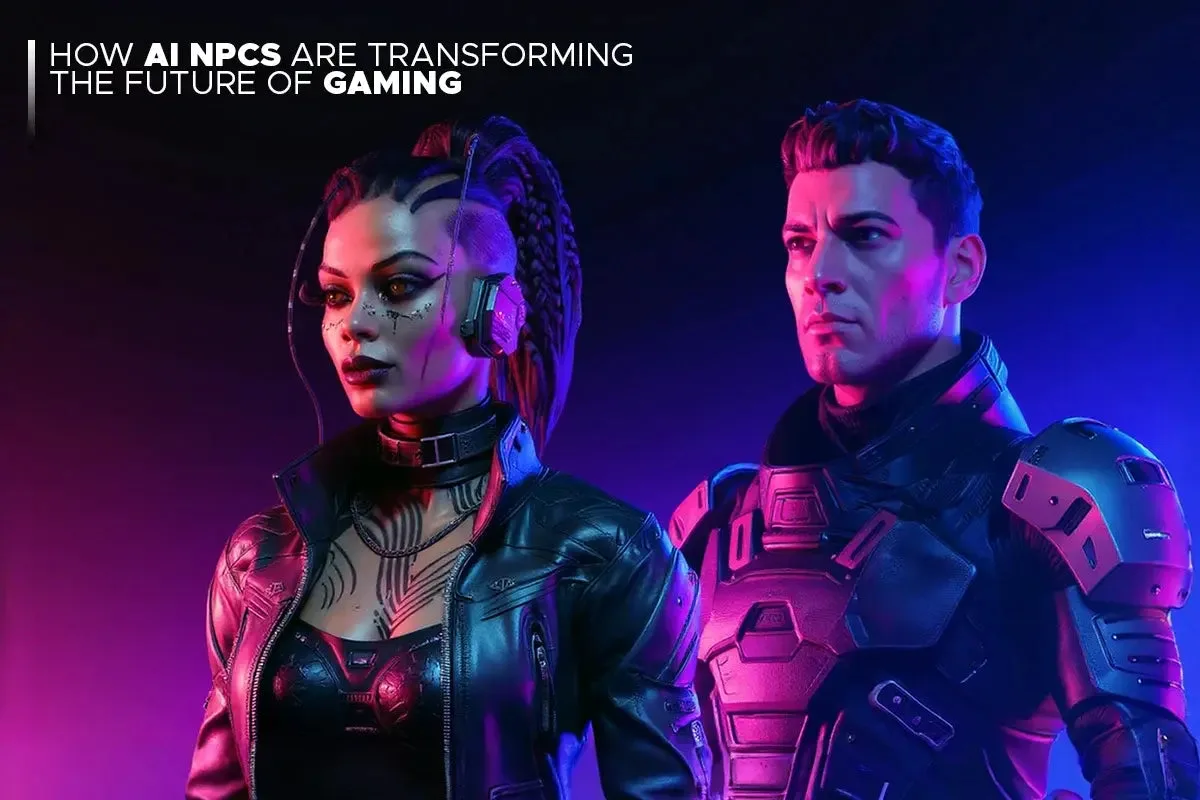
AI is revolutionizing game development by enabling the creation of highly realistic non-player characters (NPCs) with complex behaviors, dynamic interactions, and believable personalities, making game worlds more immersive and responsive for players. (Source: technoidinc.com)
You might also like:
👉 Virtual Reality Applications: Exploring VR’s Impact Across Industries