
AI's Real Danger: Why Design Flaws, Not Malice, Are the Threat
AI's primary safety challenges stem from mistakes, not malicious intent. The article explains why errors, not evil, cause huge consequences.
AI’s Real Safety Challenges: Beyond Killer Robots
AI’s primary safety challenges stem from mistakes, not malicious intent. AI safety is not a futuristic concept. It already impacts daily life in subtle, serious ways. We are not discussing AI becoming evil. We are discussing AI making errors with huge consequences.
Think of building a bridge. You don’t fear it collapsing out of malice. Instead, you worry about design flaws, material failures, or unexpected stresses. These make it unreliable and unsafe. AI is similar. Its failures stem from unexpected interactions, biased training data, or simply not working as intended in the real world.
AI’s hidden flaws
On March 18, 2018, a self-driving Uber test vehicle struck and killed Elaine Herzberg in Tempe, Arizona. This tragic incident showed a core problem. AI systems, even advanced ones, can fail in complex, real-world scenarios. The vehicle’s software first classified Herzberg as a bicyclist. Then it called her an unknown object, failing to predict her path correctly.
AI reliability means an AI system consistently performs its intended function under various conditions. It’s about predictability. It’s about consistency. AI safety, in contrast, focuses on preventing harm. This includes physical injury, financial loss, or unfair discrimination. A system can even be reliable in its errors, consistently making biased decisions, for instance.
Why AI goes wrong
AI systems learn from patterns in vast amounts of data. This learning process causes many safety and reliability issues. If the data is flawed, the AI inherits those flaws.
In 2018, researchers Joy Buolamwini and Timnit Gebru published the “Gender Shades” study from MIT Media Lab. They showed facial recognition systems from major tech companies had much higher error rates for darker-skinned women. This was true compared to lighter-skinned men. This was due to data bias: the training datasets contained fewer images of diverse faces. The AI learned to recognize certain demographics better than others.
Another challenge is lack of explainability, often called the “black box problem.” Complex AI models, especially advanced learning systems, make decisions in ways humans can’t see. We see the input and output, but tracing the intermediate steps is hard. The Defense Advanced Research Projects Agency (DARPA) launched its Explainable AI (XAI) program to fix this. They want to create AI systems that can explain their reasoning, trustworthiness, and implications.
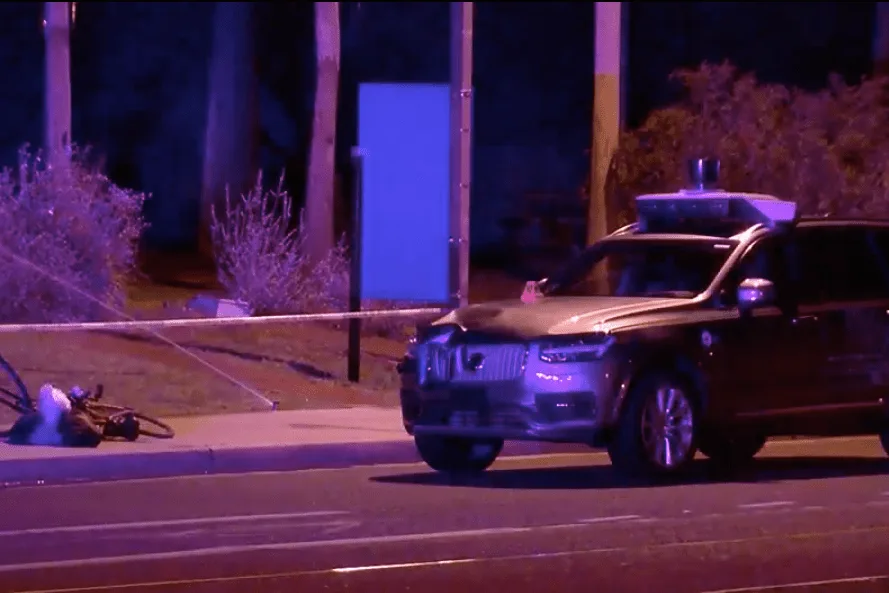
On March 18, 2018, a self-driving Uber test vehicle, a modified Volvo XC90, struck and killed Elaine Herzberg in Tempe, Arizona. This tragic incident highlighted the critical safety challenges of autonomous systems operating in complex real-world scenarios, demonstrating how AI errors can have devastating consequences. (Source: theverge.com)
AI systems can also be vulnerable to manipulative inputs. These are subtle, often imperceptible changes to input data, designed to trick an AI. A 2014 study co-authored by Ian Goodfellow showed this. Adding tiny, specifically crafted noise to a panda image could make a learning system classify it as a gibbon with high confidence. This shows a lack of resilience. AI can be easily fooled by inputs outside its expected training distribution. Such vulnerabilities risk autonomous driving or security systems.
Real risks from unreliable AI
Unreliable or unsafe AI has real consequences; they appear in critical sectors. In 2016, ProPublica investigated the COMPAS (Correctional Offender Management Profiling for Alternative Sanctions) algorithm used in US courtrooms. They found it was twice as likely to falsely flag Black defendants as future criminals. This was compared to white defendants. Conversely, it falsely flagged white defendants as low risk more often than Black defendants. This shows how bias in the system’s rules can perpetuate and amplify existing societal inequalities within the justice system.
In healthcare, AI promises breakthroughs but also risks. Early versions of IBM Watson Health, for instance, faced criticism. It provided unsafe and incorrect cancer treatment recommendations. A 2018 STAT News report detailed instances where physicians found the AI’s recommendations “wildly inaccurate” or potentially dangerous. This was partly due to limited training data and reliance on hypothetical patient cases. This highlights the need for rigorous testing and validation before deploying AI in life-critical applications.
Autonomous systems, from vehicles to drones, present direct physical safety risks. Beyond the Uber incident, predicting human behavior and environmental variables remains a big hurdle. Even small errors in perception or decision-making can be fatal. It’s like a skilled surgeon using faulty instruments. The expertise exists, but the tools fail.
Building safer AI: what we’re doing
Addressing AI reliability and safety needs a multi-pronged approach. This involves technical innovation, policy, and ethical considerations. The European Union leads this effort, passing the EU AI Act in March 2024. This landmark regulation categorizes AI systems by risk level. It imposes strict requirements on “high-risk” applications like those in critical infrastructure, healthcare, or law enforcement. These requirements include how data is managed, human oversight, transparency, and conformity assessments.

The European Parliament in Brussels, Belgium, is where the landmark EU AI Act was passed in March 2024. This groundbreaking regulation is the world's first comprehensive law on artificial intelligence, aiming to ensure the safety and reliability of AI systems across various sectors. (Source: gettyimages.ca)
Technically, we’re working to improve explainable AI (XAI). Researchers like Cynthia Rudin at Duke University advocate for inherently interpretable models. These are better than after-the-fact explanations of black-box systems. These models are designed from the ground up to be understandable. This makes it easier to identify and fix errors. For example, a medical AI might not just predict a diagnosis. It could also highlight the specific symptoms and patient history points that led to its conclusion.
Resilience testing is becoming standard practice. This involves actively performing proactive security testing on AI systems. Experts intentionally try to find flaws and break them, often using manipulative inputs. This helps developers identify vulnerabilities before deployment. Organizations like the National Institute of Standards and Technology (NIST) developed frameworks. One example is the NIST AI Risk Management Framework. These guide developers in managing AI risks throughout its lifecycle. It stresses transparency, validation, and accountability.
Finally, human oversight remains vital, especially in high-stakes applications. This isn’t about humans doing the AI’s job. It’s about providing human supervision for monitoring, intervention, and ultimate responsibility. It acknowledges AI is a powerful tool. Yet human judgment is still essential for ethical and safe deployment. Designing a skyscraper isn’t just about making it tall. It’s about earthquake proofing, fire safety, and exit routes.
The future of AI safety
AI is advancing fast, and its reliability and safety challenges keep changing. In November 2023, the UK hosted the AI Safety Summit at Bletchley Park. Global leaders met there to discuss risks from advanced AI. This event highlighted a growing international agreement on the need for teamwork. While this event highlighted a growing international agreement on the need for teamwork, agreeing on global standards and enforcement remains a complex diplomatic task.
One persistent challenge is making safety measures work for larger systems. AI models are getting larger and more general-purpose, like those behind advanced language systems. Their potential for unexpected behaviors or new, unforeseen abilities increases. Ensuring safety for such complex systems is a vastly different problem than for narrow, task-specific AIs. The sheer number of potential failure modes grows exponentially.
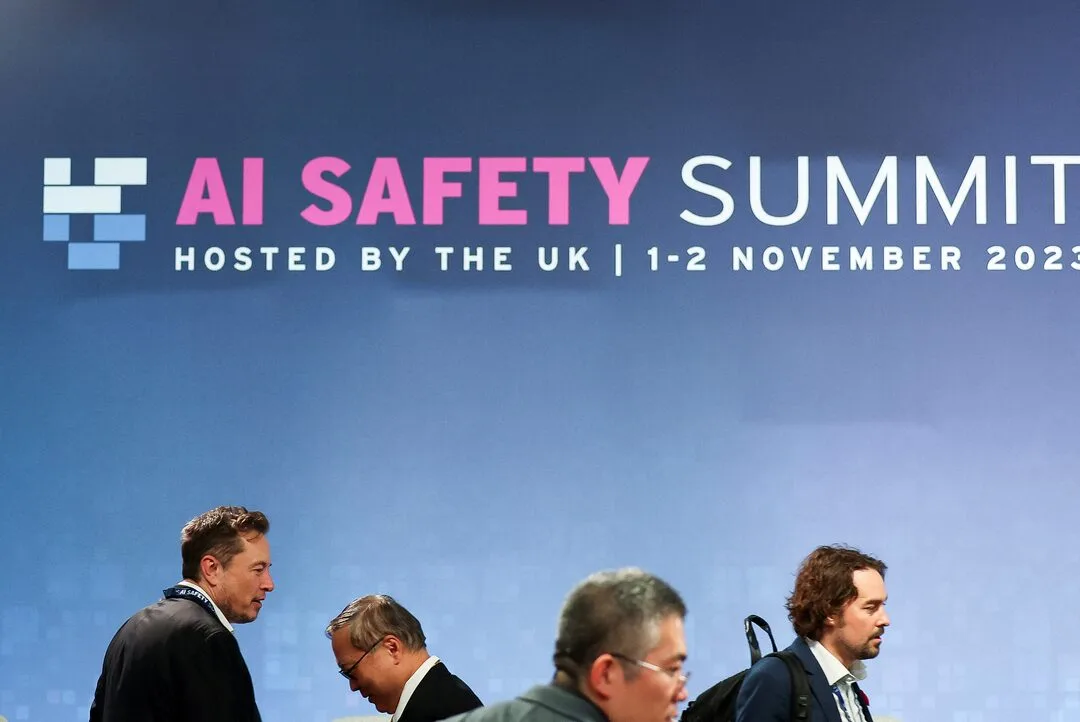
In November 2023, the UK hosted the first major global AI Safety Summit at Bletchley Park, the historic site where Allied codebreakers cracked the Enigma code during WWII. Global leaders gathered here to discuss the risks and governance of advanced AI, highlighting the growing international consensus on the need for collaborative safety efforts. (Source: reuters.com)
Another focus is developing better methods for checking and confirming AI systems. This involves creating rigorous testing environments and structured testing methods. These mathematically prove certain safety properties of AI systems. It’s a highly technical field, yet vital for ensuring AI behaves predictably in serious situations. Researchers are also exploring how AI can help itself become safer. They use AI techniques to monitor, test, and even fix other AI systems.
Ultimately, AI’s future safety depends on continuous research, proactive regulation, and a global commitment to responsible development. We must move beyond reactive fixes and build safety in from the ground up. This collective effort isn’t just about preventing disaster. It’s about shaping AI to truly serve humanity, making it a force for good, not a source of unpredictable harm.
FAQs
What’s the biggest misconception about AI safety? Many people incorrectly assume AI safety is primarily about AI becoming evil and taking control. The real, present danger lies in subtle errors, biases, and unintended consequences within AI systems. These lead to harm or unfair outcomes.
Can AI ever be 100% reliable? No, achieving 100% reliability for complex AI systems interacting with unpredictable real-world environments is practically impossible. Like any technology, AI operates with inherent limitations and probabilities of error. This is especially true when it faces novel situations outside its training data.
Who is responsible when AI makes a mistake? Determining responsibility is a complex legal and ethical challenge. It often falls to the developers, deployers, or operators of the AI system. This depends on factors like negligence, design flaws, or misuse. Regulations like the EU AI Act aim to clarify this liability.
What is the EU AI Act? The EU AI Act is a pioneering regulation from the European Union. It classifies AI systems by their potential risk level. It imposes strict requirements on “high-risk” AI. This focuses on transparency, human oversight, data quality, and conformity assessments. The goal is to ensure safety and ethical use across member states.

An AI-assisted surgical robot, such as the widely used da Vinci Surgical System, exemplifies a 'high-risk' AI application where rigorous testing and mathematical proof of safety are paramount. These complex systems require meticulous oversight to ensure predictable and safe operation during critical medical procedures. (Source: robotsguide.com)
You might also like:
👉 The Unseen Revolution: Exploring Robotics in Everyday Life Examples
👉 Predicting Stock Market Trends: ML & Sentiment Analysis Guide