The One Key Threshold That Could Break Earth's Climate
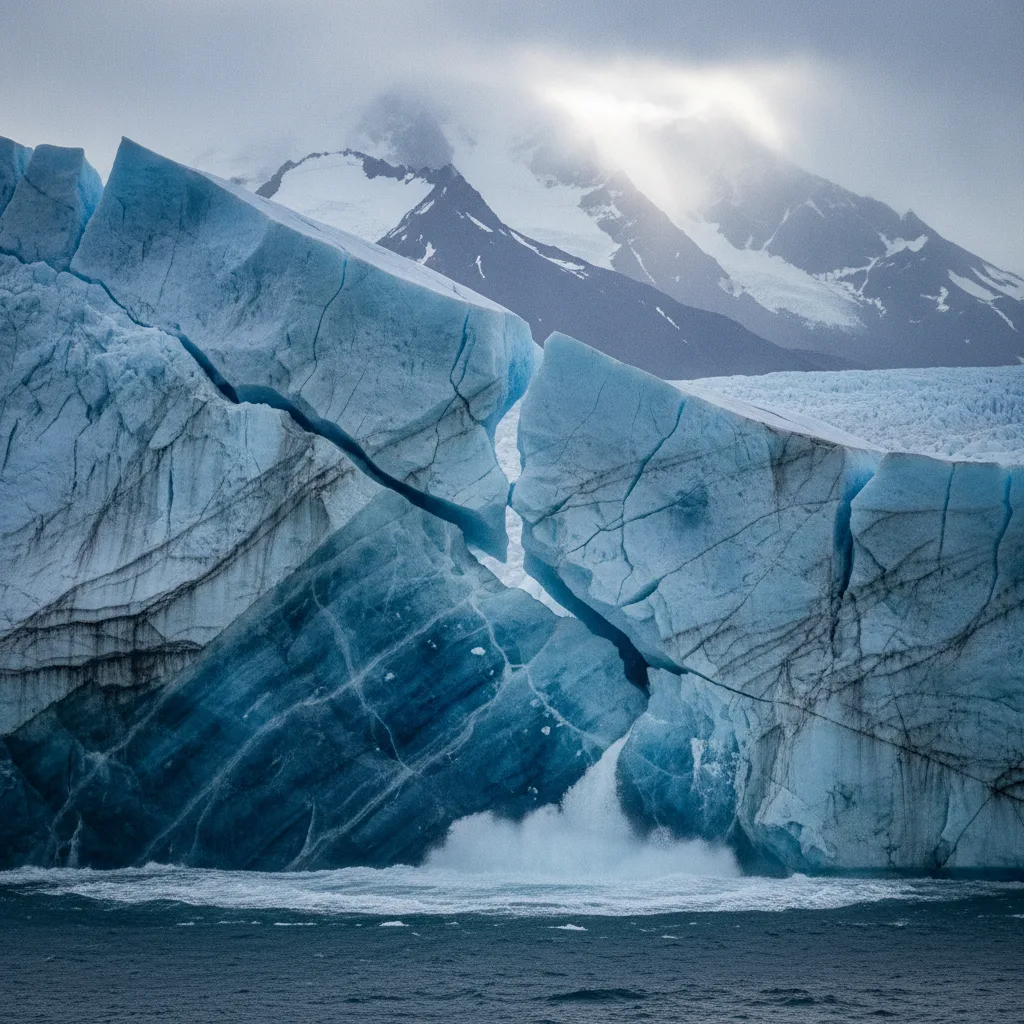
Climate tipping points are not distant cliffs but intricate thresholds. Crossing one can lead to large, often irreversible shifts in Earth's climate system.
Climate Tipping Points: A Closer Look
Climate tipping points are often misunderstood. I used to think of them as distant, theoretical cliffs. The idea was that we would warm the planet, hit a specific temperature, and a system would irreversibly change. However, my research into the science revealed a more intricate and concerning reality.
A climate tipping point describes a key threshold. If this threshold is crossed, it can lead to large, often irreversible shifts in Earth’s climate system. The idea became widely discussed in the early 2000s. It warned of sudden, non-linear changes. Scientists like Timothy Lenton at the University of Exeter have been leading this research for decades.
Many people, myself included, thought we had a clear margin to avoid these points. The common belief often focused on a global average temperature target, such as 1.5°C or 2°C. We believed staying below these targets would largely prevent the worst outcomes. However, the reality is more complicated.
The science of irreversible change
In 2008, Professor Timothy Lenton published an important paper in PNAS. He outlined 10 potential “tipping elements” in the Earth’s climate system. These included the Greenland Ice Sheet, the Amazon rainforest, and the Atlantic Meridional Overturning Circulation (AMOC). His work provided an important basis for understanding these processes.
A tipping point is not just a gradual decline. It involves positive feedback loops. For example, melting ice exposes darker land or ocean. This darker surface then absorbs more solar radiation. Increased absorption causes more warming, which in turn causes more melting. This feedback speeds up the process, moving the system past its stable state.
These changes happen in a specific way. It is not like flicking a switch. Instead, it is more like bending a stick. You can bend it quite far, and it will spring back. But push it just a little too far, and it snaps. That snap represents the irreversible shift.
Major tipping elements
Scientists have identified over 15 major climate tipping elements globally. Each one represents a large-scale natural system. Their breakdown could significantly alter regional or even global climate patterns. These systems are highly interconnected.
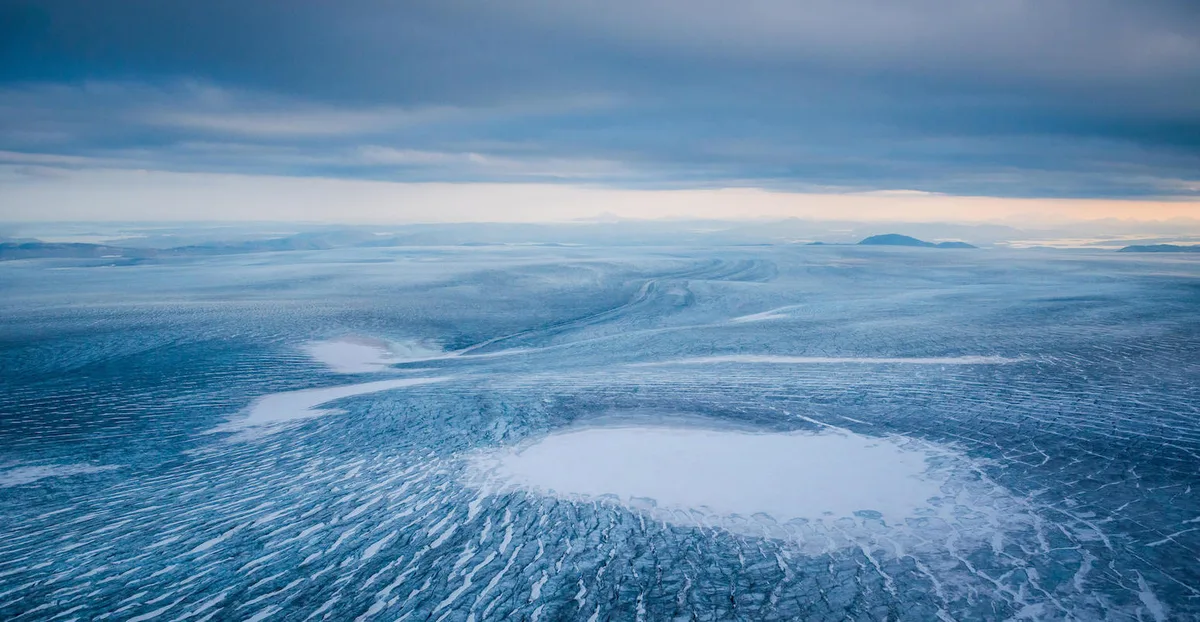
The Greenland Ice Sheet is one of the most critical 'tipping elements' identified by climate scientists, whose irreversible melt could significantly contribute to global sea-level rise and alter ocean currents. Its vast expanse is increasingly showing signs of melt ponds and exposed land, illustrating the positive feedback loops discussed in climate research. (Source: carbonbrief.org)
Consider the Greenland Ice Sheet. It holds enough water to raise global sea levels by over 7 meters. Its melt rate has dramatically accelerated since the 1990s. Recent studies, including one published in Nature in 2023, show parts of the ice sheet are becoming increasingly unstable.
The Amazon rainforest is another vital element. It is often called the “lungs of the Earth.” Deforestation and rising temperatures are pushing parts of it towards a savanna-like state. A 2021 study in Nature Climate Change showed that over 75% of the Amazon has lost its ability to recover. It now recovers more slowly from disturbances like drought.
The Atlantic Meridional Overturning Circulation (AMOC) is a massive system of ocean currents. It transports warm water northwards, influencing European weather. Paleoclimate data, discussed in the IPCC’s Sixth Assessment Report, indicates the AMOC has weakened significantly over the last century. Its collapse could lead to colder European winters and altered rainfall patterns globally.
Permafrost thaw in the Arctic is another major concern. Vast amounts of carbon are locked away in frozen soils. As permafrost thaws, microbes break down organic matter. This releases powerful greenhouse gases like carbon dioxide and methane into the atmosphere. The US National Snow and Ice Data Center reported record high Arctic temperatures in recent years, which speeds up this thaw.
The West Antarctic Ice Sheet is also a concern. Its stability rests on bedrock below sea level. Warm ocean currents can melt ice from underneath. This process, known as marine ice cliff instability, could lead to rapid, unstoppable ice loss. Research by NASA and others confirms a steady retreat of glaciers in this region. This could add meters to global sea levels.
How close are we to tipping points?
The 2023 Global Tipping Points Report, compiled by over 200 scientists, warned of immediate danger. Five major tipping points are already at risk of being crossed. These include the collapse of the Greenland and West Antarctic ice sheets. They also listed the widespread thawing of permafrost and the dieback of tropical coral reefs. This report highlighted the urgency of the situation.

Coral bleaching occurs when corals expel the symbiotic algae living in their tissues, turning them stark white. This phenomenon, often triggered by rising ocean temperatures, is a critical sign that tropical coral reefs are approaching a major climate tipping point. (Source: vecteezy.com)
Early scientific estimates for these thresholds were often conservative. They suggested we had more leeway, perhaps up to 2°C of warming, before significant risks. Recent scientific findings, like those in the IPCC’s AR6 report, show a serious situation. Many systems show signs of instability at current warming levels of around 1.2°C.
The understanding is clear: it is not a single, distant cliff. It is more like a series of unstable slopes. We are already on some of them, and approaching others. The uncertainty is not whether they exist, but precisely when they will tip. Dr. Johan Rockström of the Potsdam Institute for Climate Impact Research highlights this. He notes that the “safe operating space” for many Earth systems is shrinking rapidly.
For example, the threshold for the irreversible melt of the Greenland Ice Sheet might be as low as 1.5°C of warming. Some models even suggest it could be lower. We are currently at 1.2°C above pre-industrial levels. This leaves little room for error. The time to act is much shorter than previously thought.
Tipping point cascades
A 2020 study in Nature Communications explored how crossing one tipping point increases the likelihood of others. This concept is known as tipping point cascades. It highlights that these elements are not isolated. Instead, they are closely linked.
Imagine the West Antarctic Ice Sheet collapsing. This would raise sea levels globally. It would also likely increase freshwater input into the Southern Ocean. This influx could disrupt ocean currents, including parts of the AMOC. Changes in AMOC could then alter temperature and rainfall patterns in the Amazon.
This is not just a theoretical exercise. Research by Steffen et al. (2018) on “Trajectories of the Earth System in the Anthropocene” highlighted this risk. They proposed a “Hothouse Earth” scenario. In this scenario, multiple tipping points create a domino effect. This leads to a much warmer and less habitable planet. This could happen even if emissions were reduced.
The potential for rapid, non-linear global change is significant. This understanding reshapes how we view climate action. It is not just about avoiding individual disasters. It is about maintaining the overall stability of the Earth system. Once one domino falls, it becomes harder to stop the next.
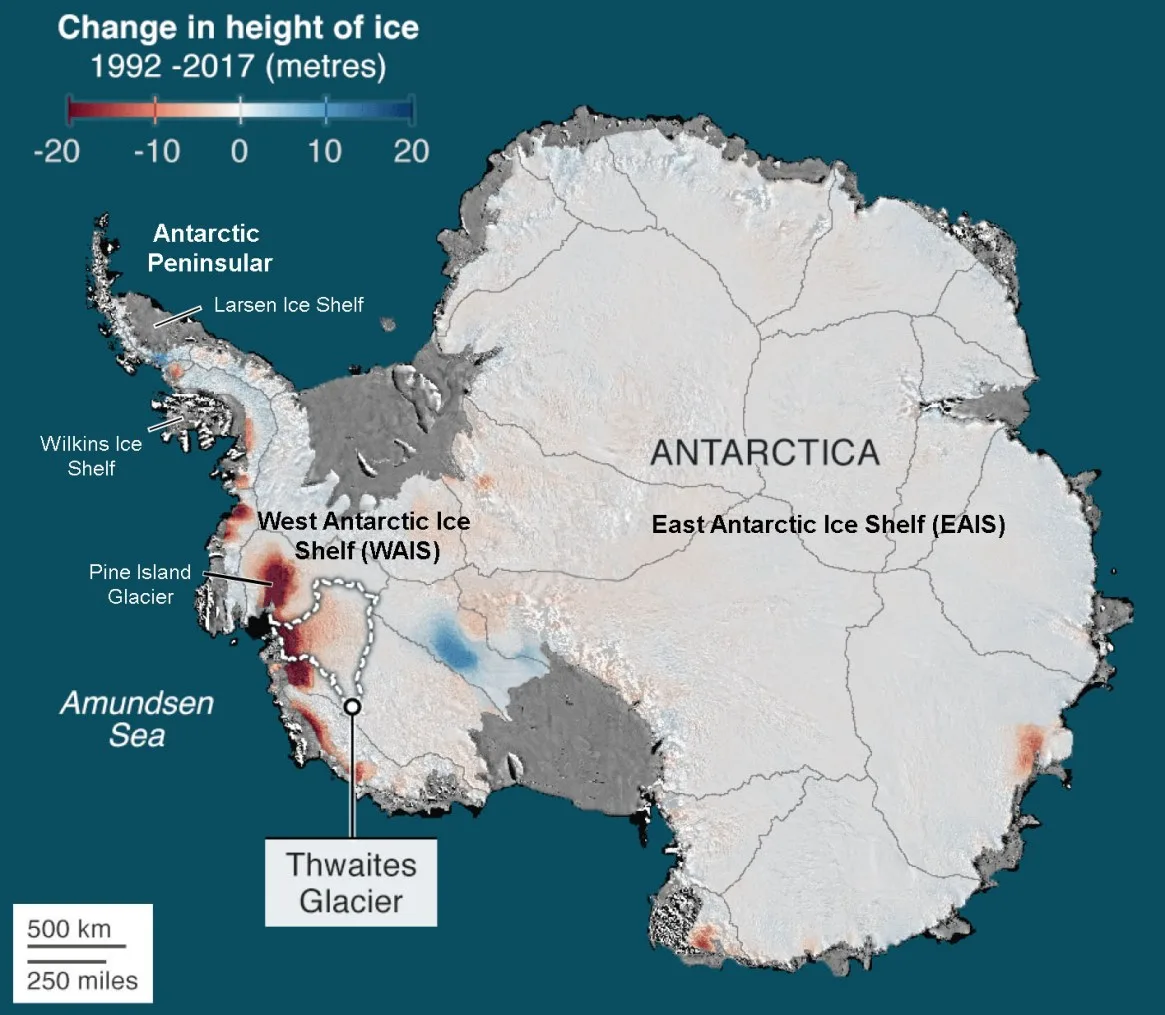
The West Antarctic Ice Sheet, particularly its Thwaites and Pine Island glaciers, is a critical component of global sea-level rise. Its potential collapse could raise sea levels globally and disrupt ocean currents, triggering further climate tipping points. (Source: climateandnature.org.nz)
What this means for our future
The meaning of this goes beyond climate models and scientific papers. Understanding climate tipping points significantly alters our approach to climate action. It shifts the focus from simply limiting warming to actively preserving Earth’s key natural systems. The stakes are very high.
This new understanding shows the urgent need for deep and rapid decarbonization. Every fraction of a degree of warming matters. Every avoided emission helps reduce the risk of crossing a threshold. It is not just about meeting targets. It is about giving vulnerable systems more time.
It also shows the need for adapting and building resilience. Even if we avoid the worst-case scenarios, some changes are already underway. Coastal communities need to plan for sea level rise. Agricultural systems must adapt to shifting weather patterns. This is not just a distant future problem; it is a current issue.
The science of tipping points also requires a wider understanding of risk. It means accepting that some changes might be unavoidable. It makes us focus on what we can control. We must drastically cut emissions, invest in research, and prepare for a future with less predictable climate. This is not a message of hopelessness. It is a call for informed and active steps.
Questions about climate tipping points
Q1: What is a climate tipping point? It is a key threshold in an Earth system. Crossing it leads to a large, often irreversible, and self-sustaining change. These changes can significantly alter regional or global climate.
Q2: Are we past any tipping points yet? Scientists believe we are very close to, or have already started, several tipping points. These include the irreversible melt of parts of the Greenland and West Antarctic ice sheets. Coral reef die-off is another strong candidate.
Q3: Can we stop a tipping point once it starts? Once a tipping point is crossed, the associated changes become self-sustaining. This means they will continue even if global warming is halted. Efforts to reduce emissions can slow the rate of change or prevent cascades.

Coastal communities globally are increasingly facing the direct consequences of sea level rise, including more frequent flooding, severe erosion, and saltwater intrusion, necessitating urgent adaptation measures and long-term planning for resilience. (Source: oehha.ca.gov)
Q4: How does this change climate action? This understanding shows extreme urgency for cutting emissions. It shows the need to avoid even small amounts of additional warming. It also emphasizes adapting and building resilience to potential unavoidable changes.
You might also like:
👉 1 Billion Urban Poor: How Cities Fight Climate Shocks