Baghdad Abbasid Caliphate: Beyond the Golden Age Myth
Explore the Baghdad Abbasid Caliphate, challenging the popular 'Golden Age' narrative. Uncover the complexities behind its intellectual brilliance, scientific discoveries, and cultural opulence, moving beyond conventional wisdom.
Baghdad Abbasid Caliphate: Beyond the Gilded Myth of a Golden Age
The conventional wisdom paints the Baghdad Abbasid Caliphate as the undisputed zenith of Islamic civilization – a “Golden Age” radiating unparalleled intellectual brilliance, scientific discovery, and cultural opulence. We are told of the legendary House of Wisdom, of scholars translating ancient texts, of advancements in medicine, mathematics, and astronomy that laid foundations for modern science. It’s a compelling narrative, one of a unified, prosperous empire fostering enlightenment. But what if this shimmering façade, while undeniably brilliant in parts, obscures a far more fragmented, politically precarious, and often brutal reality? What if the “Golden Age” was less a uniform era of universal prosperity and more a series of localized, often state-sponsored, intellectual explosions amidst a backdrop of profound political decay and social stratification?
This article proposes that to truly understand the Abbasid Caliphate, we must peel back the layers of romanticized history. While its contributions to human knowledge are undeniable, reducing the nearly five-century span (750-1258 CE) to a monolithic “golden age” is to ignore the internecine power struggles, the systematic erosion of central authority, the economic disparities, and the often-violent suppression of dissent that characterized much of its existence. The Abbasid era was a complex tapestry woven with threads of extraordinary innovation and deep-seated instability, a paradox of cultural efflorescence coinciding with political fragmentation.
The Mirage of Centralized Power: Baghdad’s Early Abbasid Zenith
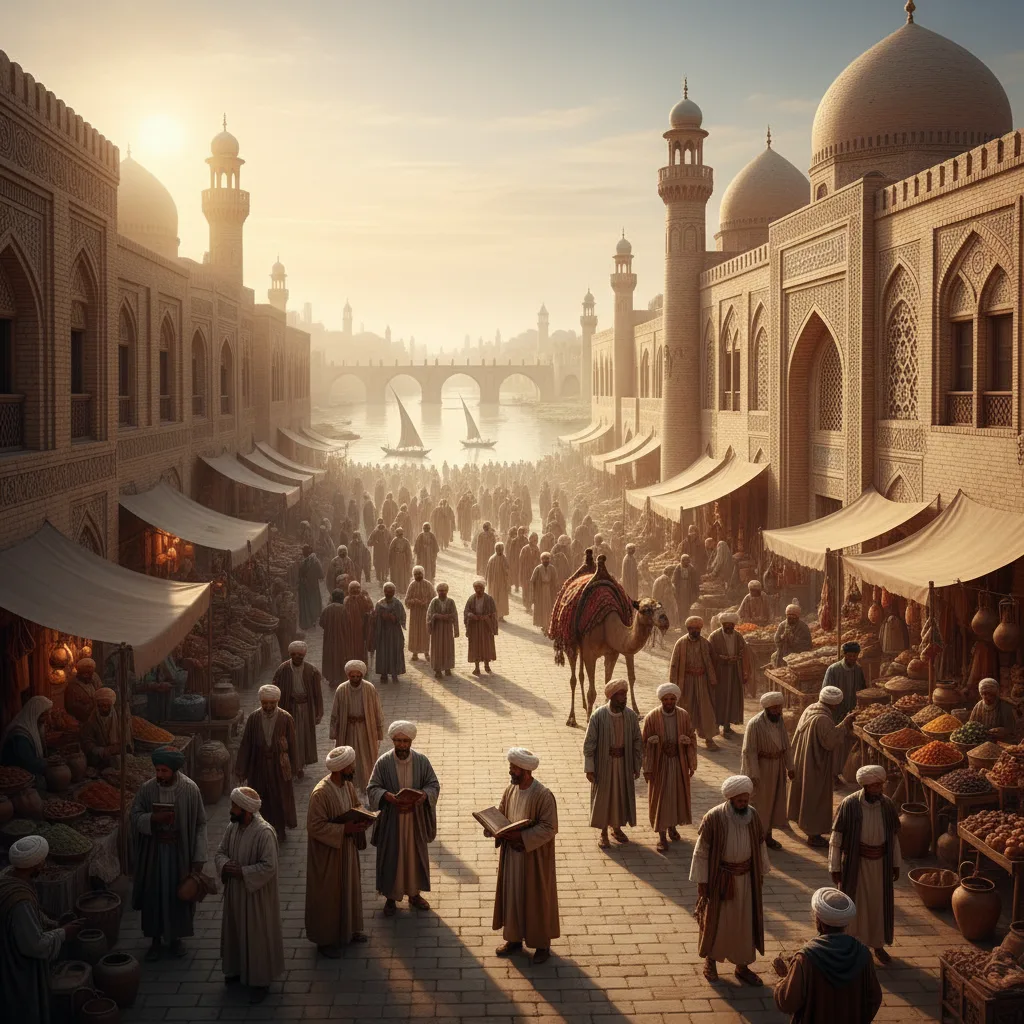
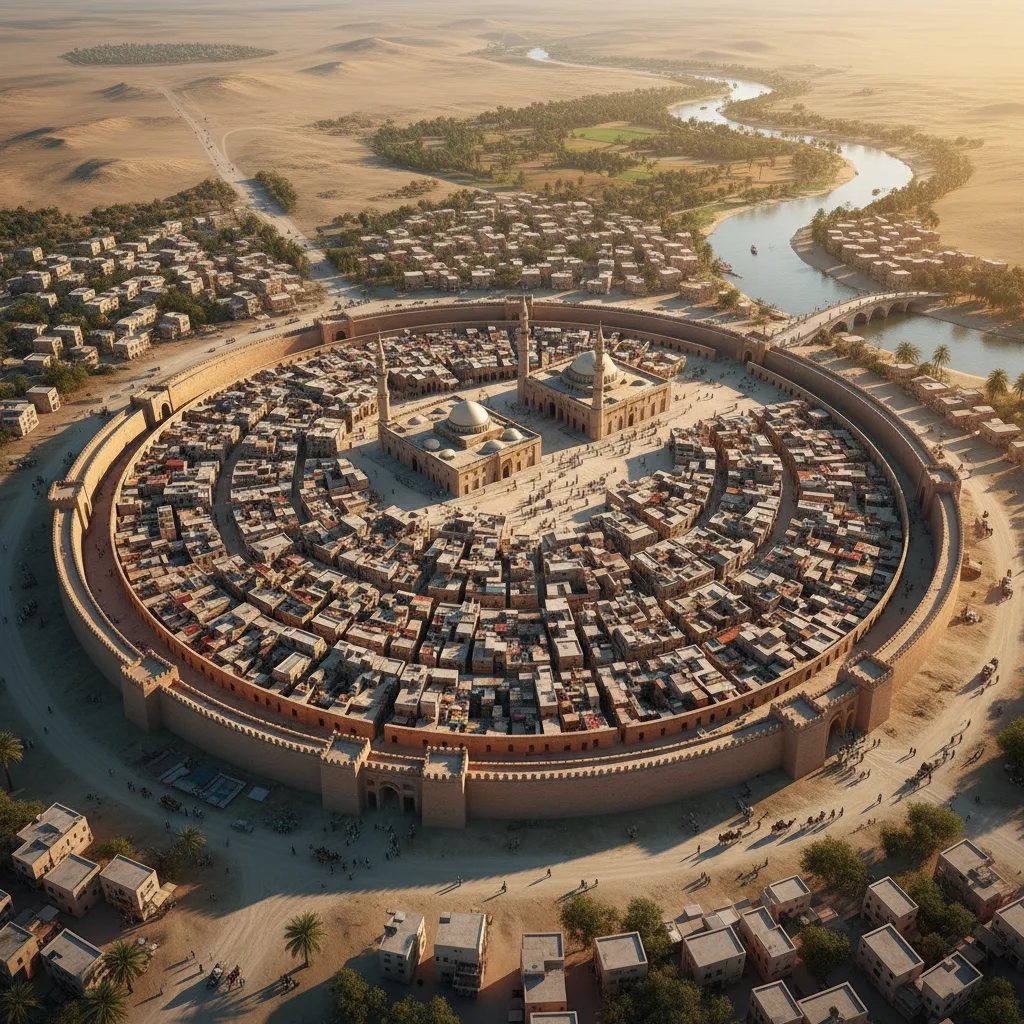
The establishment of the Abbasid Caliphate in 750 CE, following the violent overthrow of the Umayyads, marked a pivotal shift. The new dynasty strategically moved its capital from Damascus to the newly founded city of Baghdad in 762 CE, a deliberate act by Caliph al-Mansur to signal a fresh start and a more Persianate cultural orientation. Baghdad, the “Round City,” rapidly grew into a monumental metropolis, a global hub for trade, administration, and learning, strategically positioned between the Tigris and Euphrates. Under figures like Harun al-Rashid (r. 786-809 CE), whose court became the stuff of legend in One Thousand and One Nights, and his son al-Ma’mun (r. 813-833 CE), the Caliphate projected an image of immense power and wealth.
This early period saw the implementation of sophisticated bureaucratic systems, a vast postal network, and a formidable army. However, even during this ostensible zenith, cracks were forming. The Caliph’s authority, while outwardly strong, was frequently challenged by powerful viziers, ambitious generals, and the inherent difficulties of governing a vast, culturally diverse empire from a single center. The dramatic fall of the powerful Barmakid family under Harun al-Rashid, for instance, revealed the brutal fragility of political alliances and the Caliph’s absolute, often capricious, power. This wasn’t a stable, unified Golden Age, but a period of dynamic, often violent, consolidation where the Caliph’s command was asserted through force and political maneuvering, not inherent, universally accepted legitimacy.
The House of Wisdom: An Oasis, Not a Flood
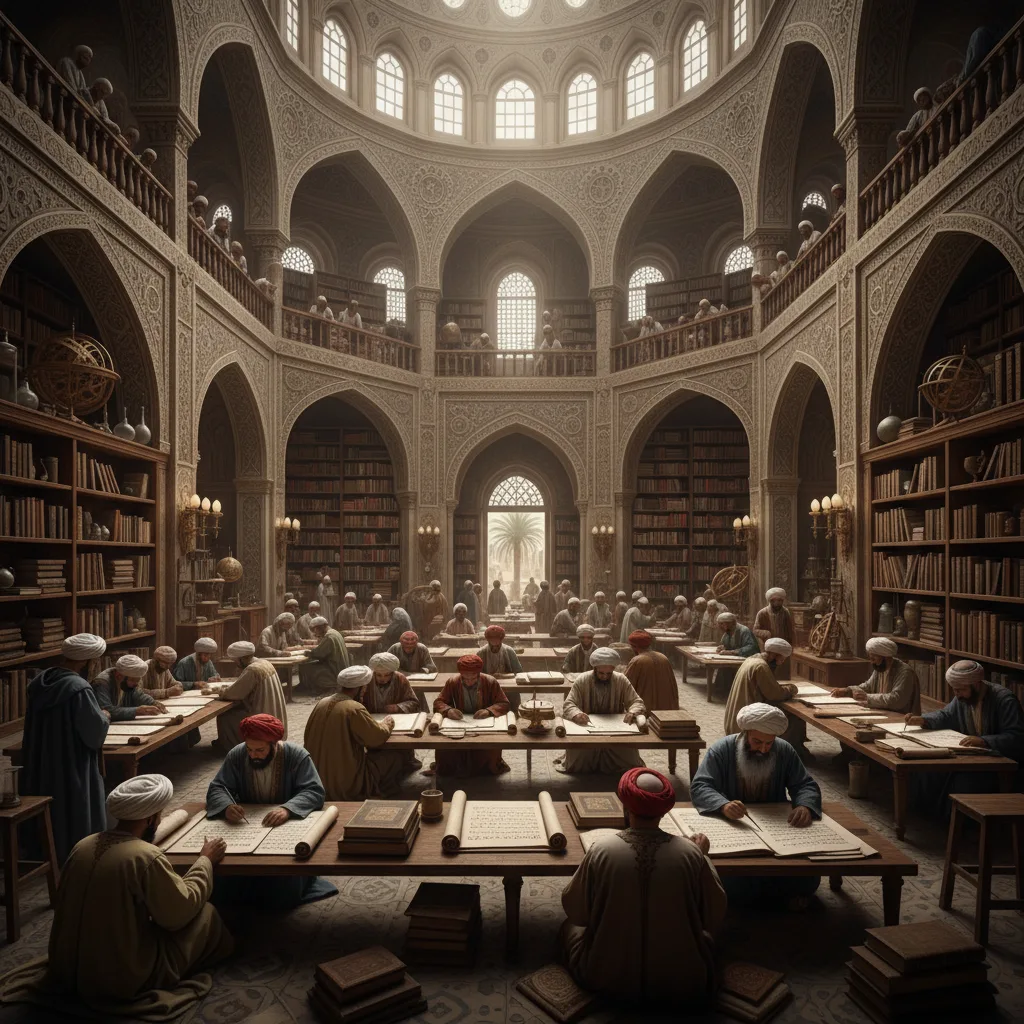
Perhaps the most enduring symbol of the Abbasid “Golden Age” is the House of Wisdom (Bayt al-Hikma) in Baghdad, traditionally credited to al-Ma’mun. It was undoubtedly a remarkable institution, serving as a library, translation bureau, and academy. Scholars, many of whom were Nestorian Christians, Sabians, or Zoroastrians, meticulously translated Greek, Persian, and Indian scientific and philosophical texts into Arabic. This monumental translation movement preserved ancient knowledge that might otherwise have been lost and provided the intellectual bedrock for original Abbasid contributions in medicine (e.g., Rhazes, Ibn Sina), mathematics (e.g., al-Khwarizmi and algebra), astronomy, and optics.
Yet, it’s crucial to contextualize this achievement. The House of Wisdom, while profoundly significant, was primarily a state-sponsored, elite institution. Its intellectual vibrancy was concentrated within a relatively small circle of scholars, funded by the Caliphs who saw value in prestige and practical applications like improved navigation or medical care for the ruling class. It wasn’t a widespread educational revolution permeating all levels of society. Furthermore, the intellectual flowering was not solely an Abbasid invention; it built upon centuries of Hellenistic, Persian, and Indian scholarship. The Abbasids were brilliant synthesizers and innovators, but the narrative often overlooks the foundational contributions from diverse cultures and the fact that this “oasis” of learning existed alongside widespread illiteracy and religious conservatism outside its walls. The brilliance was undeniable, but its reach was perhaps less universal than commonly portrayed.
The Decentralization Paradox: Waning Caliphal Authority and Regional Dynasties
The true challenge to the “Golden Age” narrative lies in the systematic erosion of the Caliph’s effective political power, a process that began surprisingly early and accelerated dramatically from the 9th century onwards. While Baghdad remained a cultural and symbolic center, the Caliphate as a unified political entity fragmented into a patchwork of autonomous and semi-autonomous regional dynasties. The Samanids in Persia and Transoxiana (819-999 CE), the Tulunids and Ikhshidids in Egypt and Syria (868-969 CE), and most significantly, the Buyids in Iraq and Persia (945-1055 CE), all asserted their independence.
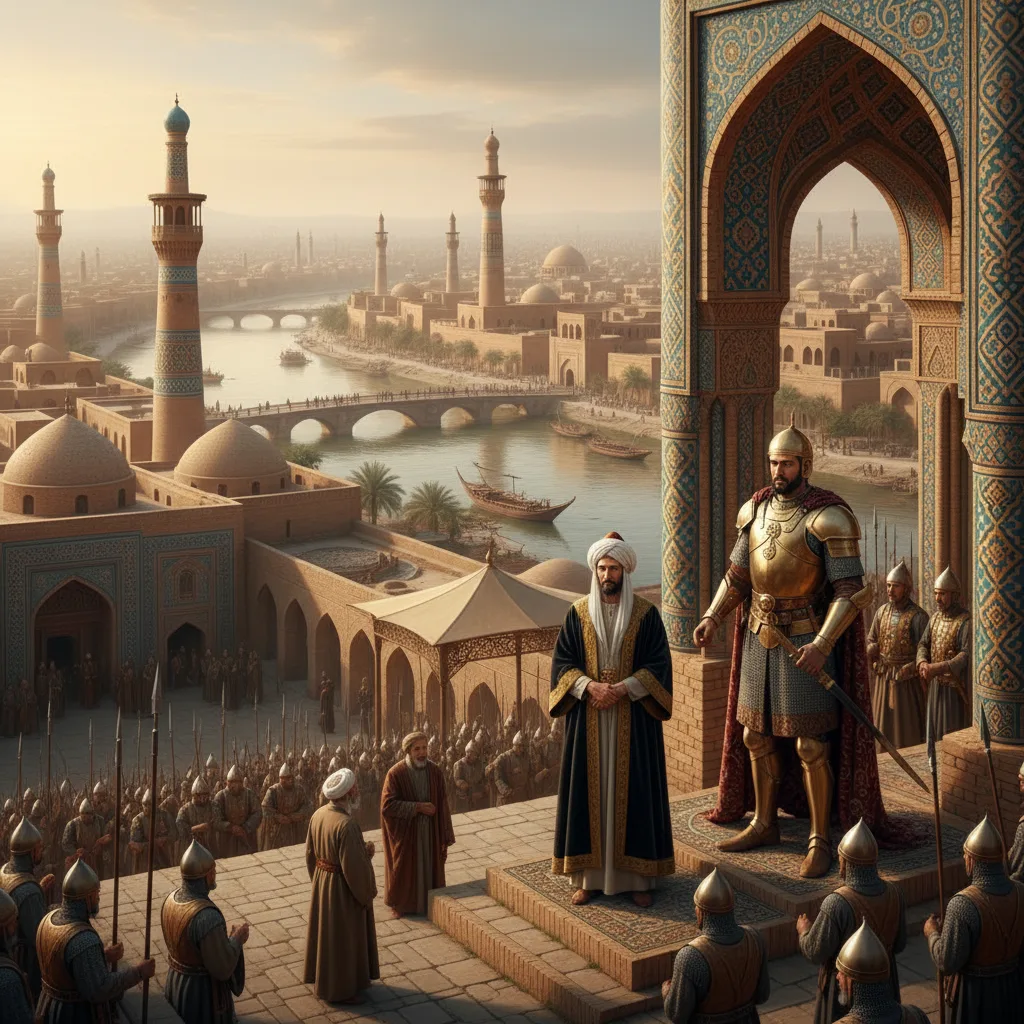
The Buyid takeover of Baghdad in 945 CE was a watershed moment. The Caliph, al-Mustakfi, was stripped of all temporal authority, reduced to a religious figurehead, a mere puppet in the hands of the Buyid amir al-umara (commander of commanders). Coins were minted with Buyid names alongside the Caliph’s, and the Friday sermon (khutbah) acknowledged Buyid rule. This wasn’t a “decline” into chaos but a profound transformation of political power. The Caliphate, in its original sense of a unified political-religious empire, effectively ceased to exist, even as the Caliphate institution itself persisted. Later, the Seljuk Turks (1055 CE onwards) would replace the Buyids, nominally restoring the Caliph’s dignity but retaining political control, further cementing the Caliph’s symbolic rather than executive role. This sustained period of political impotence challenges any notion of a uniformly “golden” era of centralized imperial strength.
Economic Realities: Beyond Silk and Spices
The Abbasid Caliphate is often celebrated for its vibrant economy, fueled by extensive trade networks stretching from China to the Mediterranean. Baghdad, Basra, and Cairo became hubs for luxury goods: silk, spices, ceramics, and precious metals. Agricultural innovations, such as advanced irrigation techniques and the introduction of new crops like sugar cane and citrus fruits, boosted productivity. The common use of coinage, standardized weights, and complex financial instruments like sakk (cheques) points to a sophisticated commercial system.
However, this narrative of widespread prosperity needs scrutiny. The immense wealth generated was not evenly distributed. Historical records and archaeological evidence suggest vast disparities, with the ruling elite and merchant class accumulating enormous riches, while the majority of the population, particularly farmers and laborers, often lived in precarious conditions. Taxation, while necessary for imperial projects, could be burdensome and exploitative, leading to peasant revolts. Furthermore, the very trade routes that brought wealth were vulnerable to disruption from internal conflicts, banditry, and external pressures. Famines, plagues, and urban unrest were recurring features of the Abbasid landscape, demonstrating that economic vibrancy for some did not equate to universal stability or well-being. The “golden” glow of Baghdad’s markets often obscured the stark economic realities faced by its ordinary citizens.
The End and Its Echoes: A Legacy Reconsidered
The Mongol sack of Baghdad in 1258 CE, led by Hulagu Khan, is frequently cited as the catastrophic end of the Abbasid Caliphate and, by extension, the “Golden Age.” The destruction of libraries, the massacre of inhabitants, and the execution of the last Caliph, al-Musta’sim, were undeniably horrific events. However, to frame this as the destruction of a powerful empire is to misunderstand the Caliphate’s true status by that point. As previously argued, the Caliph’s political authority had been largely ceremonial for centuries, first under the Buyids and then the Seljuks.
The Mongol invasion was a brutal final act for an institution that had long been politically moribund. Its impact was devastating locally, but it didn’t obliterate a thriving, unified empire. Rather, it accelerated changes already in motion, dispersing scholars and knowledge, paradoxically leading to the diffusion of Abbasid intellectual heritage to new centers like Cairo and Damascus. The enduring legacy of the Abbasid Caliphate, therefore, is not one of uninterrupted political dominance but of remarkable intellectual and cultural resilience. It’s a testament to how human ingenuity and scholarly pursuit can flourish even amidst profound political instability and fragmentation. The “Golden Age” was not a monolithic block of time, but rather a series of brilliant, often localized, sparks against a complex and frequently challenging backdrop.
FAQ Section
Q1: Was the Abbasid Caliphate truly a “Golden Age”? A1: While the Abbasid era witnessed unparalleled intellectual and cultural advancements, particularly in science, philosophy, and art, labeling it a uniform “Golden Age” over its entire 500-year span is an oversimplification. It was a period marked by both extraordinary progress and significant political fragmentation, economic disparities, and social unrest.
Q2: How much power did the Caliphs actually hold in the later periods? A2: From the mid-10th century onwards, the Caliphs’ effective political power drastically diminished. Dynasties like the Buyids and later the Seljuks seized temporal authority, reducing the Caliph to a largely symbolic religious figurehead, even though he retained immense spiritual prestige.
Q3: What was the role of non-Muslims in Abbasid intellectual life? A3: Non-Muslim scholars, including Christians (Nestorians), Sabians, and Zoroastrians, played a crucial and often leading role in the Abbasid intellectual flourishing, particularly in the translation movement and in fields like medicine and philosophy. Their contributions were integral to the era’s scholarly achievements.
Q4: Did the Mongol invasion really “destroy” the Caliphate? A4: The Mongol sack of Baghdad in 1258 CE was a catastrophic event that ended the Abbasid Caliphate institution. However, the Caliphate’s political power had been largely nominal for centuries prior. The invasion was the brutal final act for a system that had long since lost its centralized temporal authority, rather than the destruction of a powerful, unified empire.
The Baghdad Abbasid Caliphate demands a more nuanced reading than the popular “Golden Age” trope allows. It was undeniably a crucible of unparalleled intellectual and artistic innovation, a period where human knowledge was not just preserved but profoundly expanded. But this brilliance coexisted with a persistent, and ultimately successful, decentralization of political power, leading to a Caliphate that was often a mere shadow of its former administrative self. Economic prosperity, while impressive, was unevenly distributed, and social stability was frequently threatened. So, what does this really mean for our understanding of history? It means that progress is rarely linear, that “golden ages” are often far from uniform, and that the grand narratives we construct can obscure the intricate, often contradictory, realities of the past. It forces us to acknowledge that human achievement can surge even amidst profound political decay, and that the legacy of an era is often far more complex than a single, shining epithet can convey.
You might also like:
👉 Ancient Egypt Timeline: Unveiling Its Rise, Golden Ages & Fall
👉 Ancient Rome: Rise, Fall, & Legacy of a Great Empire
👉 Medieval Empires: Power, Culture, and Lasting Global Impact