
Eleanor Roosevelt's 1908 Fear: How Baby Safety Evolved
In 1908, Eleanor Roosevelt worried about infant safety. Learn how dangers like wide crib slats led to the specialized products we rely on today.
Baby Safety: A History of Progress
In the early 20th century, infant life was fragile. In 1908, Eleanor Roosevelt held her newborn son, Elliott, in their New York City home. She worried constantly. Like many mothers then, she knew how fragile infant life was. Diseases were rampant. Accidents at home were frequent, often fatal. No specialized products existed to ease her fears.
The early 20th century brought constant dangers for infants. Cribs often had wide slat spacing. This posed entrapment hazards. Household chemicals were stored openly. Electrical outlets were exposed. Parents relied on vigilance and makeshift solutions, like tying babies into high chairs. Infant accident deaths remained high across the United States.
Pediatricians and public health officials saw these silent threats. They pushed for general home safety. Yet specific products were rare. The common belief suggested only constant adult supervision could protect children. This left parents with an enormous, often overwhelming, burden.
Early protections
In 1933, American inventor Jean Ames developed an early child safety seat for cars. It was a simple booster. It elevated a child so they could see out the window. Ames, a mother herself, knew children needed to stay contained during travel. Her patent described a seat with a harness. This was a new idea for the time.
Ames’ invention wasn’t primarily for crash protection. Its main purpose was to keep children from moving freely inside the car. This basic design was an important first step. It showed that children needed special equipment in a dangerous environment.
Later, in 1962, British inventor Leonard Rivkin created a rear-facing car seat. He designed it to mimic a cosmonaut’s capsule. This distributed crash forces more effectively. Rivkin worked with Volvo to prevent injuries. His “Child Seat” was among the first truly safety-focused car restraints.
These early designs weren’t widely adopted. They lacked uniform standards or mandatory use. Most parents still held their children or let them ride unrestrained. Despite this, these individual efforts paved the way for future safety rules.

In 1933, American inventor Jean Ames patented an early child safety seat. This simple booster, designed primarily to keep children contained and allow them to see out the window, was a pioneering step in specialized infant travel equipment, predating modern crash-protection designs. (AI-generated illustration)
Rules and science: the push for safety
By the 1960s, child injury rates stayed alarmingly high. Car accidents were a leading cause of death. Crib designs caused countless injuries and fatalities. Public awareness grew. Advocacy groups and concerned medical professionals pushed for change.
In 1966, the National Traffic and Motor Vehicle Safety Act became law in the United States. This act let the federal government set safety standards for vehicles. It specifically included child restraints. This was an important turning point.
The National Highway Traffic Safety Administration (NHTSA) formed in 1970. It began enforcing these standards. In 1971, NHTSA issued its first federal standard for child car seats: FMVSS 213. This standard required crash testing and performance rules. Car seats could no longer be simple boosters.
Around the same time, the Consumer Product Safety Commission (CPSC) formed in 1972. Its job was to protect people from unreasonable risks of injury from consumer products. The CPSC turned its attention to other baby products. Cribs became a major focus.
In 1973, the CPSC issued its first federal standard for cribs. This standard fixed big problems like slat spacing, mattress support, and hardware strength. It aimed to prevent trapped heads and falls. These government actions greatly changed how baby products were designed and sold.
Home safety and watching over
Improved product standards then led to a focus on home safety. Parents still faced daily hazards from common household items. This led to specialized “child-proofing” products. These items aimed to modify the home, not just the baby’s gear.
One early item was the cabinet latch. Simple plastic or magnetic devices stopped toddlers from opening cupboards. They kept cleaning supplies, medicines, and sharp objects out of reach. These small, cheap items offered big protection.
Outlet covers became another important safety product. They blocked electrical sockets. This prevented shocks and burns. These plastic plugs became common in homes with young children. Safety gates also became common. They blocked stairways and dangerous rooms, creating safe zones for curious toddlers.
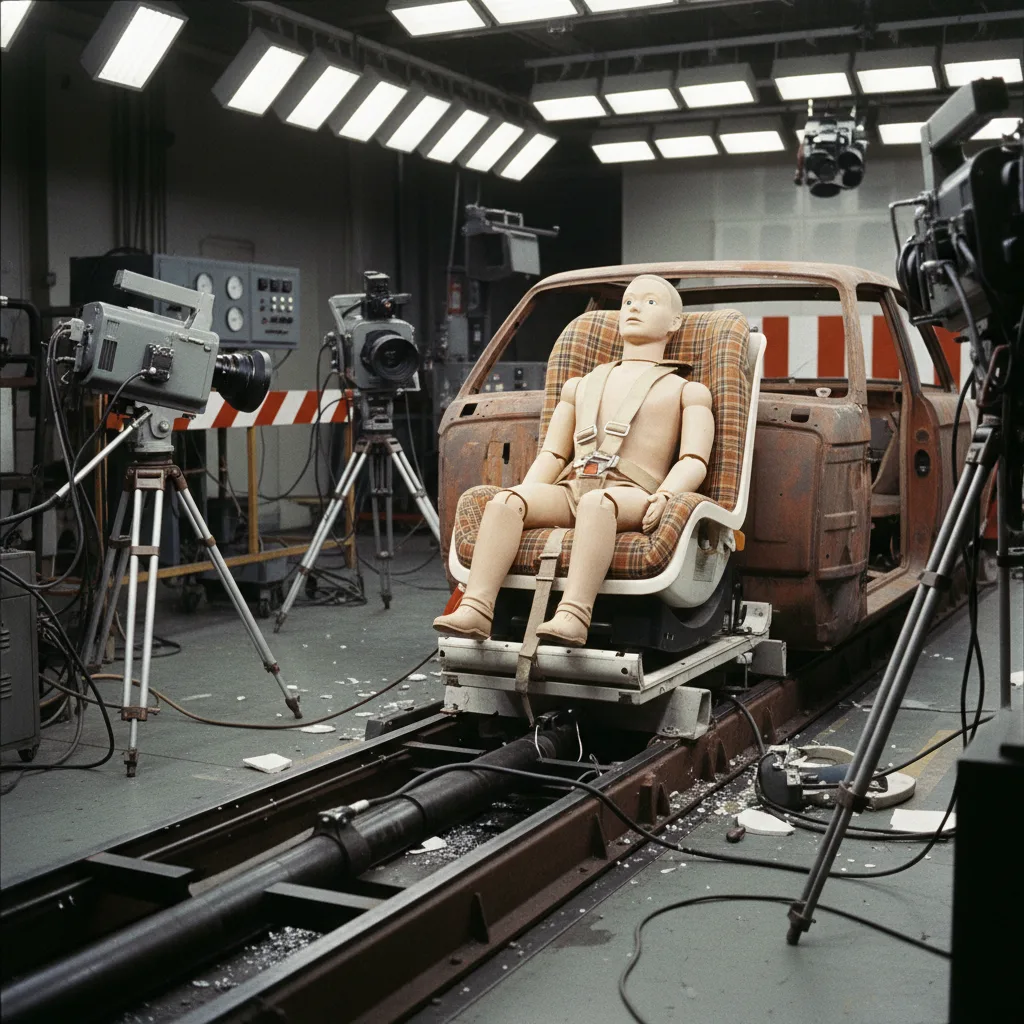
The National Highway Traffic Safety Administration (NHTSA) issued its first federal standard for child car seats, FMVSS 213, in 1971, mandating rigorous crash testing. This marked a pivotal shift from simple boosters to performance-regulated safety devices. (AI-generated illustration)
The late 1980s saw baby monitors become widespread. Early models were audio-only. They used radio frequencies to send a baby’s sounds to a parent in another room. This let parents hear cries without constant physical presence. It offered a new way to watch remotely.
In the 1990s, video monitors entered the market. These devices added a visual component. They let parents see their sleeping or playing child. They provided more peace of mind. Both audio and video monitors became standard baby registry items. They changed parental supervision for many families.
Smart guardians: tech steps in
The 21st century saw an increase in technology for baby safety. Traditional products started adding digital features. Connectivity became an important part. Parents wanted more data and greater convenience.
Smart baby monitors became common. These devices connected to home Wi-Fi networks. They offered high-definition video, two-way audio, and temperature sensors. Many sent alerts straight to smartphones. The Nanit Pro Camera, for example, tracks sleep patterns and breathing motion.
Wearable tech also emerged for infants. Devices like the Owlet Smart Sock monitor a baby’s heart rate and oxygen levels. They alert parents if readings fall outside normal ranges. These products aim to give early warnings for potential health issues. They offer an extra layer of reassurance for anxious parents.
Connected home safety systems also grew. Smart plugs, door sensors, and motion detectors could link to a central app. Parents could monitor their entire home remotely. This created a connected system for child protection.
These smart products offer many new features. They provide detailed information and constant connectivity. Still, these tools also raise questions about data privacy and over-reliance on technology. Finding the right balance between new tools and parental intuition is a major challenge.
The ongoing work of safety
The progress of baby safety products is ongoing. New threats emerge. Existing products demand continuous improvement. Manufacturers constantly update designs based on new research. They respond to changing safety standards.
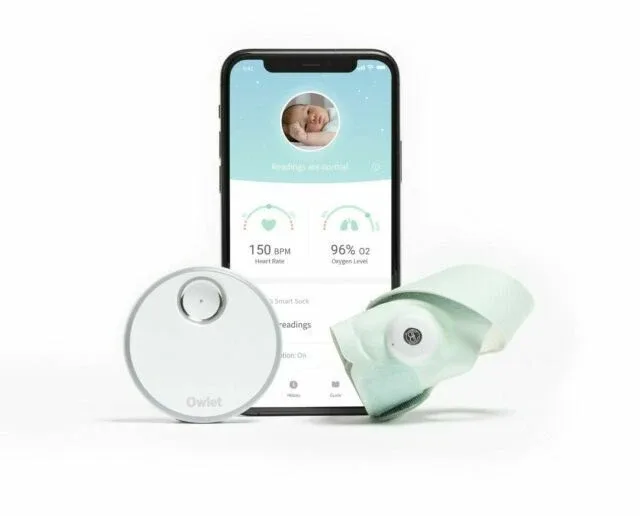
The Owlet Smart Sock is a pioneering piece of wearable technology for infants, designed to monitor a baby's heart rate and oxygen levels, providing real-time alerts to parents if readings fall outside normal ranges. (Source: ebay.com)
Organizations like the CPSC and NHTSA continue their crucial work. They issue recalls and update regulations. They ensure products meet tough safety rules. Their efforts protect millions of children each year.
Parents also play an important role. They must stay informed about product recalls and best practices. Education campaigns, like the “Back to Sleep” initiative from the American Academy of Pediatrics, save lives. This campaign significantly reduced Sudden Infant Death Syndrome (SIDS) by promoting safe sleep environments.
The future will likely see more personalized safety solutions. AI could predict potential hazards based on a child’s developmental stage. Smart homes could adapt their environment automatically for infant safety. Our aim stays the same: make the world as safe as possible for every child. This continued effort ensures future generations can truly grow and thrive.
FAQ
Q: When did car seats become mandatory? A: Child restraint laws began emerging in the United States in the early 1980s. Tennessee was the first state to mandate car seat use in 1977. All other states followed by 1985.
Q: What are the most important baby safety products for a new parent? A: Important items include a certified car seat, a safe crib meeting current CPSC standards, smoke detectors, carbon monoxide detectors, and safety gates for stairs. Outlet covers and cabinet latches are also important for home child-proofing.
Q: How often should I check for product recalls? A: Parents should regularly check the Consumer Product Safety Commission (CPSC) website for recalls. Register new products with manufacturers to get direct recall notifications. This keeps families informed about potential hazards.
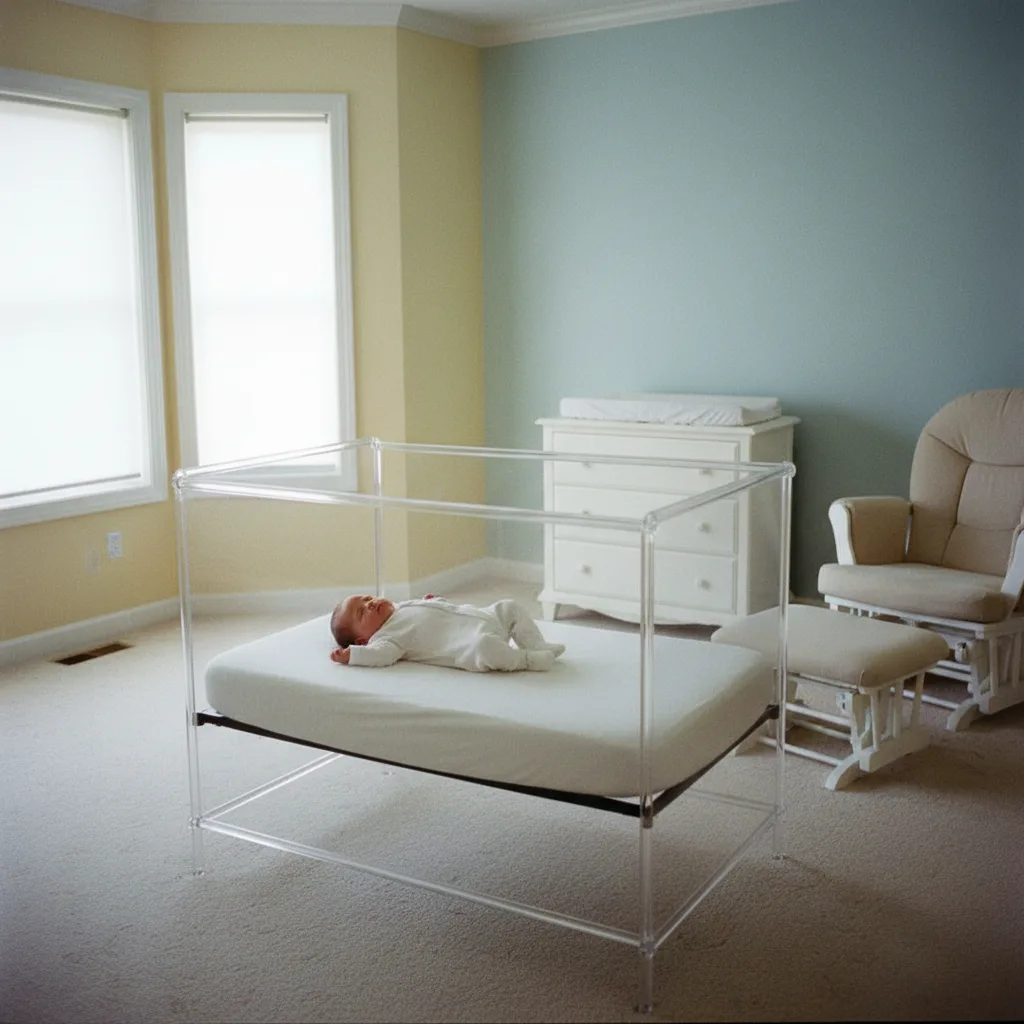
The "Back to Sleep" campaign, launched in 1994 by the American Academy of Pediatrics and other health organizations, dramatically reduced Sudden Infant Death Syndrome (SIDS) rates by over 50%. It educated parents on safe sleep practices, emphasizing placing infants on their backs in a clear crib. (AI-generated illustration)
You might also like:
👉 Significant Medical Breakthroughs: A Journey Through Medicine History
👉 Virtual Reality in Healthcare: Revolutionizing Medicine & Patient Care