New York's Iconic Inventions: Innovations That Shaped the World
Discover the groundbreaking inventions born in New York, from skyscrapers to global communication. Explore how NYC's innovative spirit shaped modern life and technology.
The Empire of Innovation: Famous Inventions from New York That Shaped the World
Imagine a world without skyscrapers, instant global communication, personal photography, or even air conditioning. It’s a stark, almost unrecognizable vision, isn’t it? Yet, these were once mere dreams, brought to tangible reality by brilliant minds often toiling within the vibrant, relentless crucible of New York. From the bustling streets of Manhattan to the industrial heartlands upstate, many of the world’s most famous inventions from New York didn’t just solve problems; they fundamentally reshaped human civilization, propelling us into the modern era.
New York has always been a magnet for ambition, a melting pot where necessity truly was the mother of invention. It fostered an environment where groundbreaking ideas could take root, be tested, and then flourish, spreading their influence across continents. Join us on a journey through time as we uncover the stories behind some of the most transformative creations born from the Empire State’s relentless spirit of ingenuity.
The Sky’s the Limit (or Not): New York’s Unseen Architect
Gaze upon the iconic skyline of New York City, a breathtaking vertical tapestry of steel and glass that pierces the clouds. It’s a testament to human ambition, an architectural marvel that defines the very essence of urban living. But how did these colossal structures become possible? For centuries, buildings were limited in height by the sheer impracticality of climbing endless flights of stairs. Imagine residing on the 30th floor with no mechanical assistance – it was simply unthinkable for residential or commercial purposes.
The solution, deceptively simple yet utterly revolutionary, arrived not from a visionary architect, but from a quiet mechanic whose invention would literally lift civilization to new heights. Without his ingenious device, the very concept of the modern skyscraper, and thus the silhouette of cities like New York, would remain forever grounded. What was this game-changing invention, and who was the man behind it?
Elevating Ambition: Elisha Otis and the Safety Breakthrough
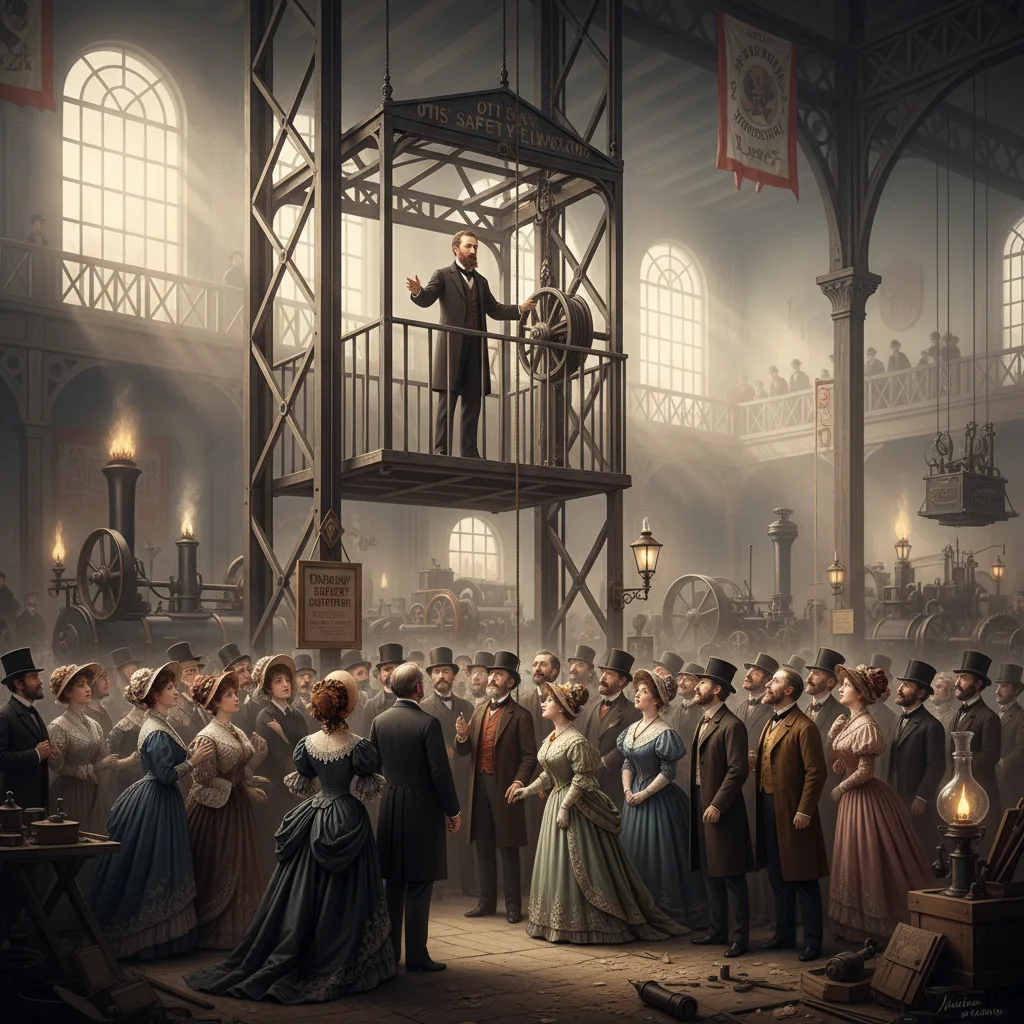
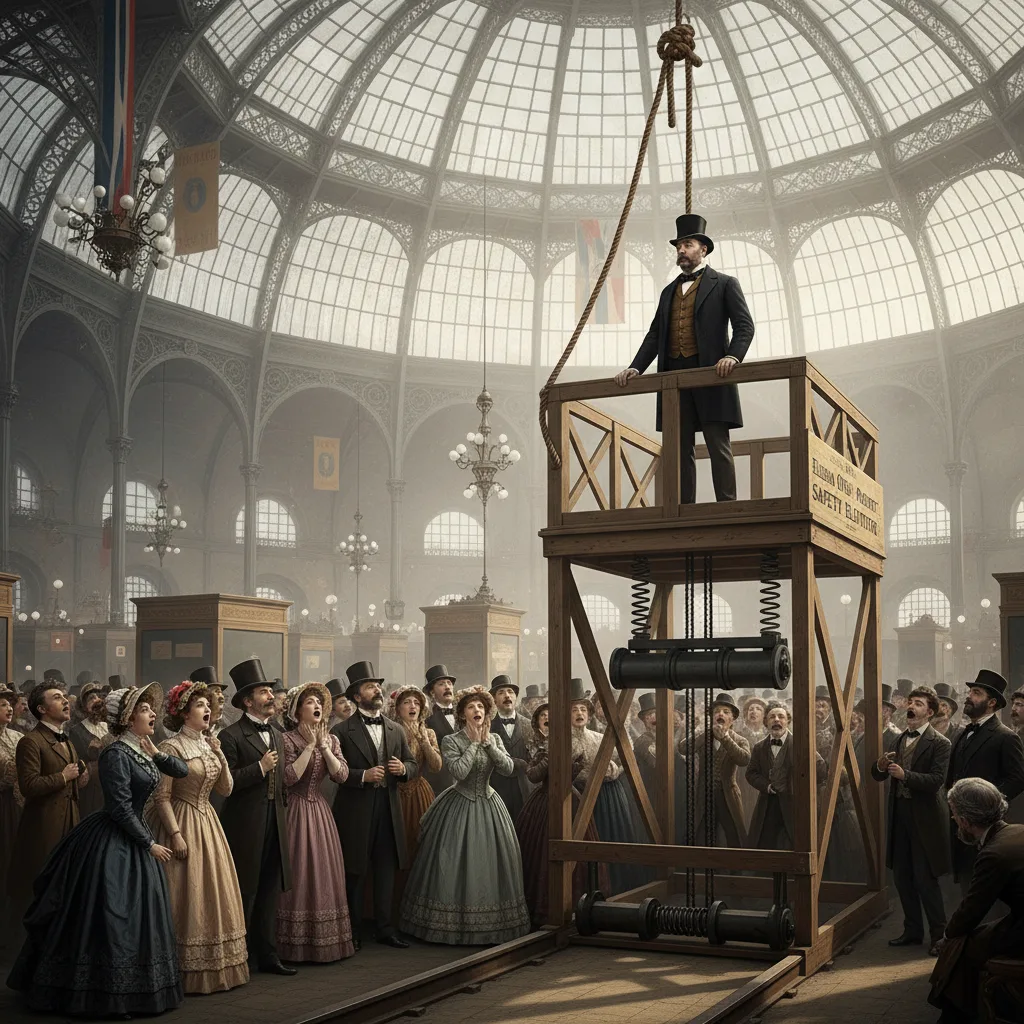
In 1853, at the Crystal Palace Exposition in New York City, Elisha Graves Otis, a master mechanic from Yonkers, New York, performed a demonstration that would forever alter urban landscapes. Standing on a platform high above a captivated crowd, he ordered the rope holding his crude elevator aloft to be cut. Gasps turned to cheers as the platform, instead of crashing, stopped abruptly, held secure by a clever spring-loaded safety brake of his own design. This wasn’t just an elevator; it was the safety elevator, an invention that transformed vertical transportation from a perilous gamble into a reliable, everyday convenience.
Otis’s invention liberated architecture from horizontal constraints, making higher floors not only accessible but desirable. Suddenly, the most valuable real estate was no longer just at street level, but soaring towards the sky. His company, founded in Yonkers, quickly became synonymous with the technology, enabling the construction boom that would define the American metropolis and reshape skylines around the globe, starting right here in New York. The world would never look down on a tall building the same way again.
Bridging Distances: Samuel Morse and the Dawn of Instant Communication
Before the digital age, before telephones, and even before widespread mail delivery, communication across vast distances was a slow, arduous affair. Messages traveled at the speed of horse, ship, or foot, often taking weeks or months to reach their destination. This changed dramatically in the 19th century, thanks to a frustrated painter and an invention he meticulously developed in his New York City studio. Samuel F. B. Morse, initially a portrait artist, became obsessed with the idea of transmitting messages electrically.
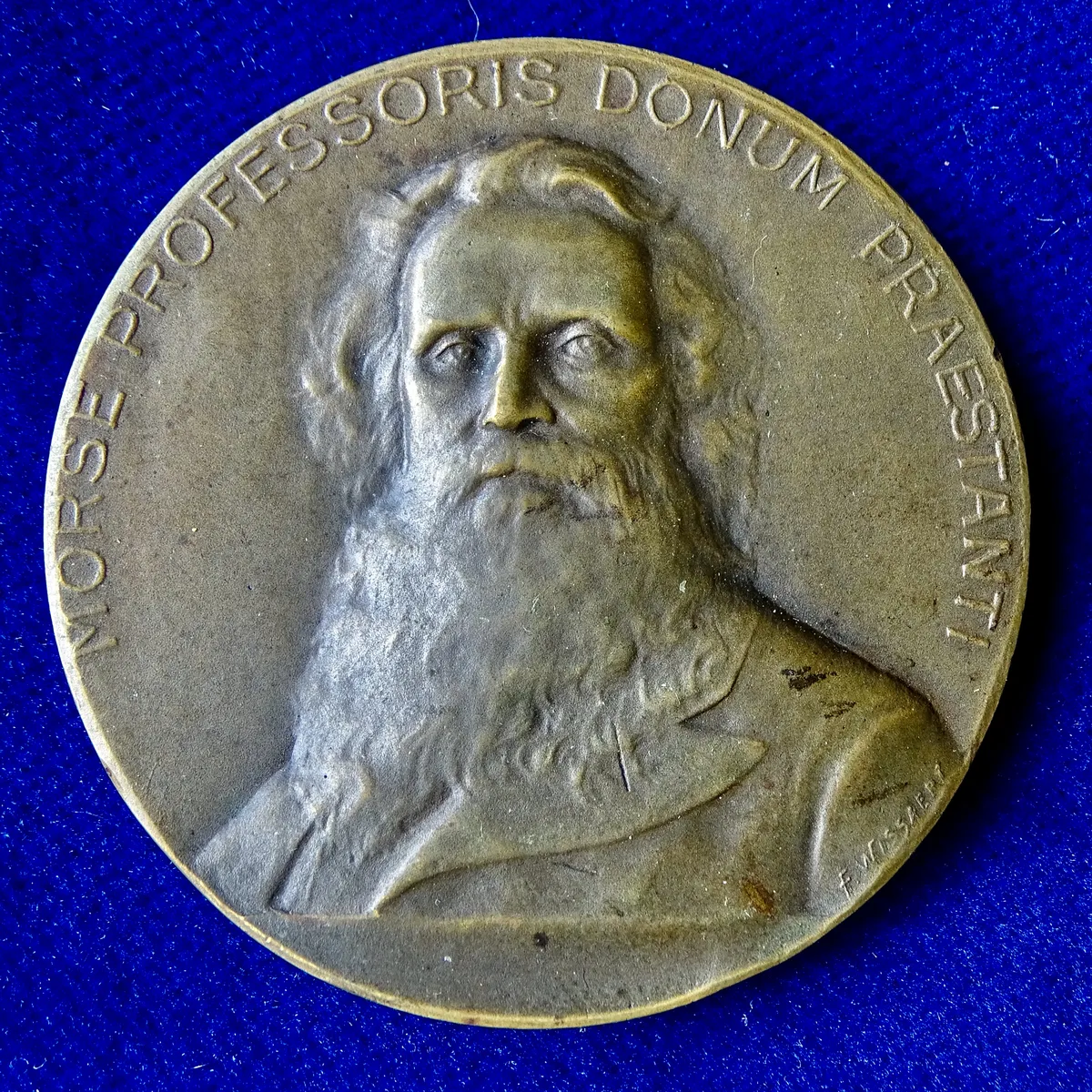 Working tirelessly in his laboratory at New York University, Morse, along with his assistant Alfred Vail, developed the **electric telegraph** and, crucially, the **Morse Code** — a revolutionary system of dots and dashes that could encode language for electrical transmission. On May 24, 1844, the first official telegraph message, "What hath God wrought," was sent from Washington D.C. to Baltimore. While this famous transmission wasn't *from* New York, the invention's development was deeply rooted in NYC, and the city quickly became a central hub for the burgeoning telegraph industry, forever shrinking the world and accelerating the pace of news, commerce, and war.
The World in Your Pocket: George Eastman and the Kodak Revolution
For centuries, photography was a specialized, cumbersome art form, requiring heavy equipment, dangerous chemicals, and considerable expertise. It was a pursuit for professionals, far removed from the grasp of the average person. That all changed thanks to a visionary from Rochester, New York, who believed that capturing life’s moments should be simple and accessible to everyone. George Eastman, a bank clerk with an inventive mind, set out to democratize photography.
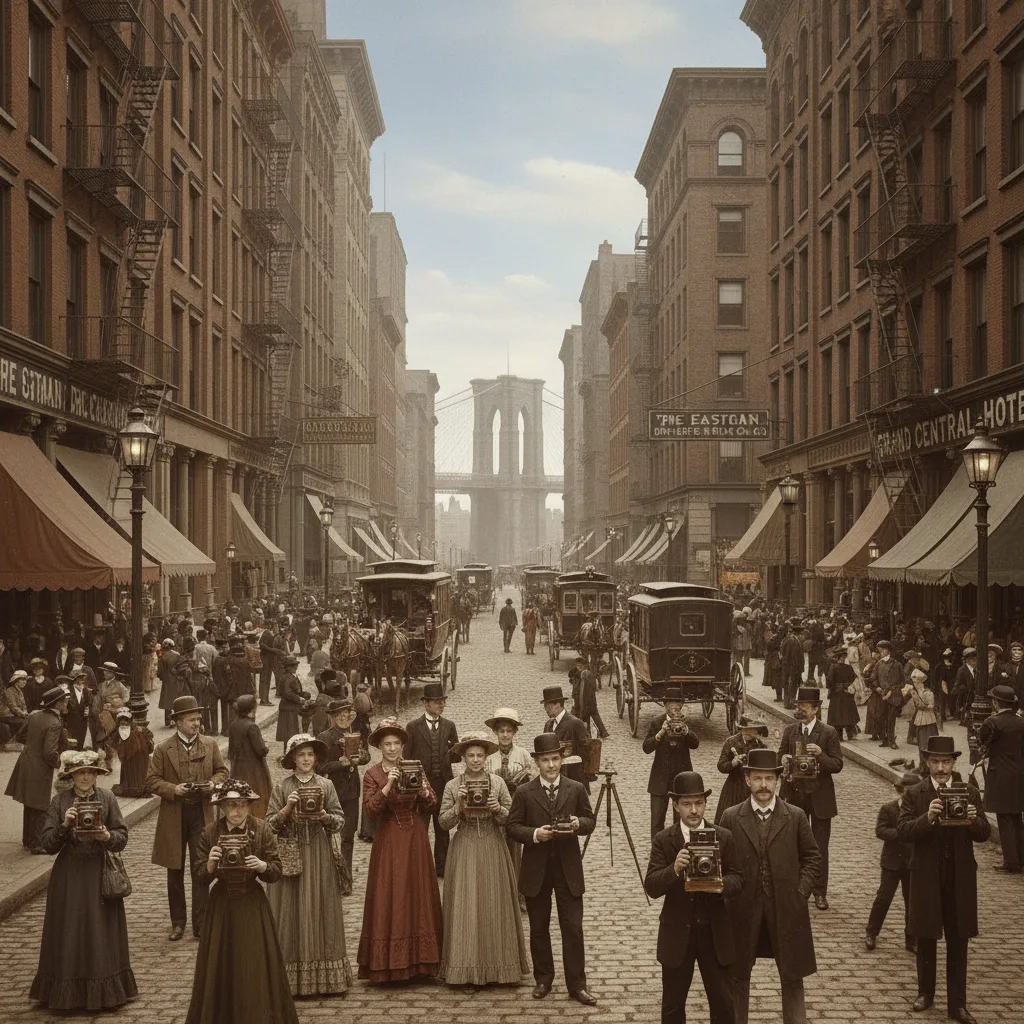
In 1888, Eastman introduced the Kodak camera, a simple box camera pre-loaded with a roll of flexible film, another of his innovations. His revolutionary slogan, “You Push the Button, We Do the Rest,” perfectly encapsulated his mission. Users would simply take their pictures, send the entire camera back to the Eastman Kodak Company in Rochester, and receive it back loaded with new film, along with their developed prints. This invention didn’t just create a new product; it created a new pastime, a new way for individuals to document their lives, and a new industry that made photography a global phenomenon, all stemming from New York State.
Mastering the Climate: Willis Carrier and the Invention of Modern Comfort
Imagine working, living, or even just existing in the sweltering, humid summers of New York before the advent of modern climate control. Industrial processes suffered, comfort was a luxury, and productivity plummeted. This oppressive reality began to change in 1902 when Willis Carrier, a brilliant engineer working for the Buffalo Forge Company in Brooklyn, New York, was tasked with solving a humidity problem at a Brooklyn printing plant. The fluctuating temperature and humidity were causing paper to expand and contract, misaligning ink colors.
Carrier’s solution was an ingenious system that not only controlled temperature but also humidity, laying the foundation for modern air conditioning. His “Apparatus for Treating Air” was initially designed for industrial applications, revolutionizing manufacturing processes in textiles, tobacco, and printing. But its impact quickly spread, transforming theaters, department stores, and eventually homes, making previously unbearable climates livable and driving population shifts to warmer regions. Born from a practical problem in Brooklyn, Carrier’s invention reshaped architecture, industry, and human comfort on a global scale.
Illuminating Progress: Thomas Edison and New York’s Electric Dawn
The late 19th century was a time of gaslight and flickering oil lamps, casting shadows over a world on the cusp of a technological explosion. While Thomas Edison famously perfected the practical incandescent light bulb at his laboratory in Menlo Park, New Jersey, it was in New York City that his most audacious vision for electrification truly came to life. Edison wasn’t just selling a bulb; he was selling an entire system for delivering reliable, affordable electricity to homes and businesses.
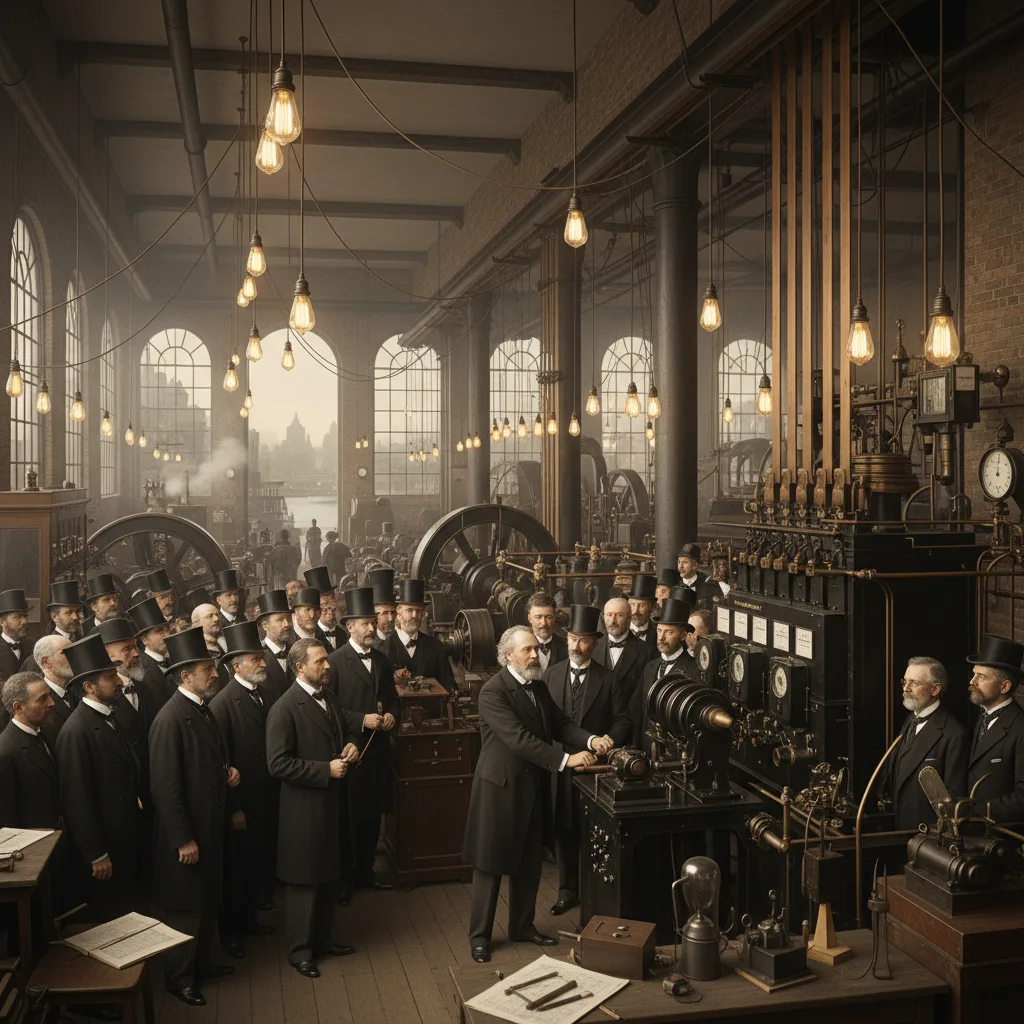
On September 4, 1882, a momentous day in human history, Edison flipped the switch at the Pearl Street Station in lower Manhattan, inaugurating the world’s first central power plant supplying electricity to customers. This New York invention was a monumental undertaking, involving the laying of miles of underground wires and the development of generators, meters, and switches. Pearl Street Station didn’t just provide electric light to 82 customers; it demonstrated the viability of a centralized electrical grid, sparking a revolution that would power factories, transportation, and every facet of modern life, turning night into day and forever changing the urban landscape of New York and beyond.
The Invisible Empire: Frank McNamara and the Birth of the Credit Card in New York
Beyond the tangible marvels of machinery and infrastructure, New York has also been the birthplace of “social inventions” that fundamentally altered our daily lives. Imagine a world where every transaction required cash, where the convenience of “buying now, paying later” was almost non-existent. This was the reality until a fateful evening in 1949 when New York businessman Frank McNamara found himself in a predicament at a Manhattan restaurant: he had forgotten his wallet. The embarrassment sparked an idea that would revolutionize personal finance and consumerism.
The following year, in 1950, McNamara launched the Diners Club Card in New York City. Initially, it was a simple cardboard card that allowed a dozen of his friends to charge meals at 14 participating New York restaurants. It quickly expanded, offering convenience and a new form of credit that transcended individual establishments. This wasn’t just a payment method; it was the world’s first multi-purpose charge card, laying the groundwork for the modern credit card industry. From a simple solution to a forgotten wallet, New York gave birth to a financial instrument that would reshape global commerce and consumer behavior, creating an invisible empire of purchasing power.
Conclusion
From the structural integrity of our tallest buildings to the instantaneous flow of information, from the comfort of conditioned air to the very light that illuminates our lives, and even the invisible currency that drives our economy, the legacy of famous inventions from New York is profound and pervasive. These aren’t just isolated breakthroughs; they are interconnected threads in the vast tapestry of human progress, each invention building upon the last, often within the very streets and minds of the Empire State. New York, a beacon of relentless energy and ambition, continues to be a fertile ground for innovation, reminding us that the next world-changing idea might just be brewing in a lab or a bustling office building, ready to redefine our future.
You might also like:
👉 History of World-Changing Inventions: Human Ingenuity & Impact
👉 100 Most Influential People: Shapers of Human History & Future
👉 The Unseen Architects: Unveiling the 10 Most Important People in US History