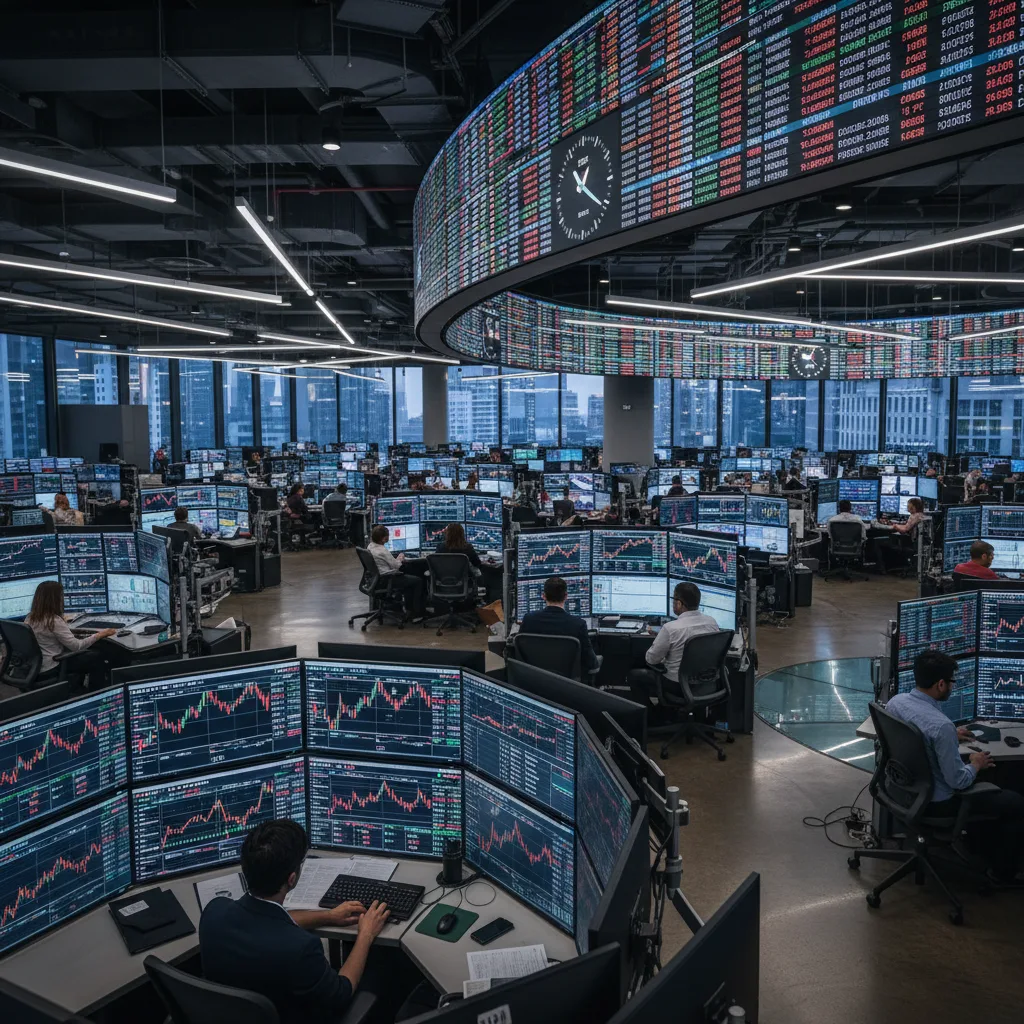
Geopolitics & Financial Markets: Unmasking Global Impact
Uncover the profound link between global geopolitics and financial market volatility. Learn how international events cause immediate shifts in oil prices, gold, and economic stability.
Beyond the Ticker: Unmasking How Geopolitics Affects Financial Markets
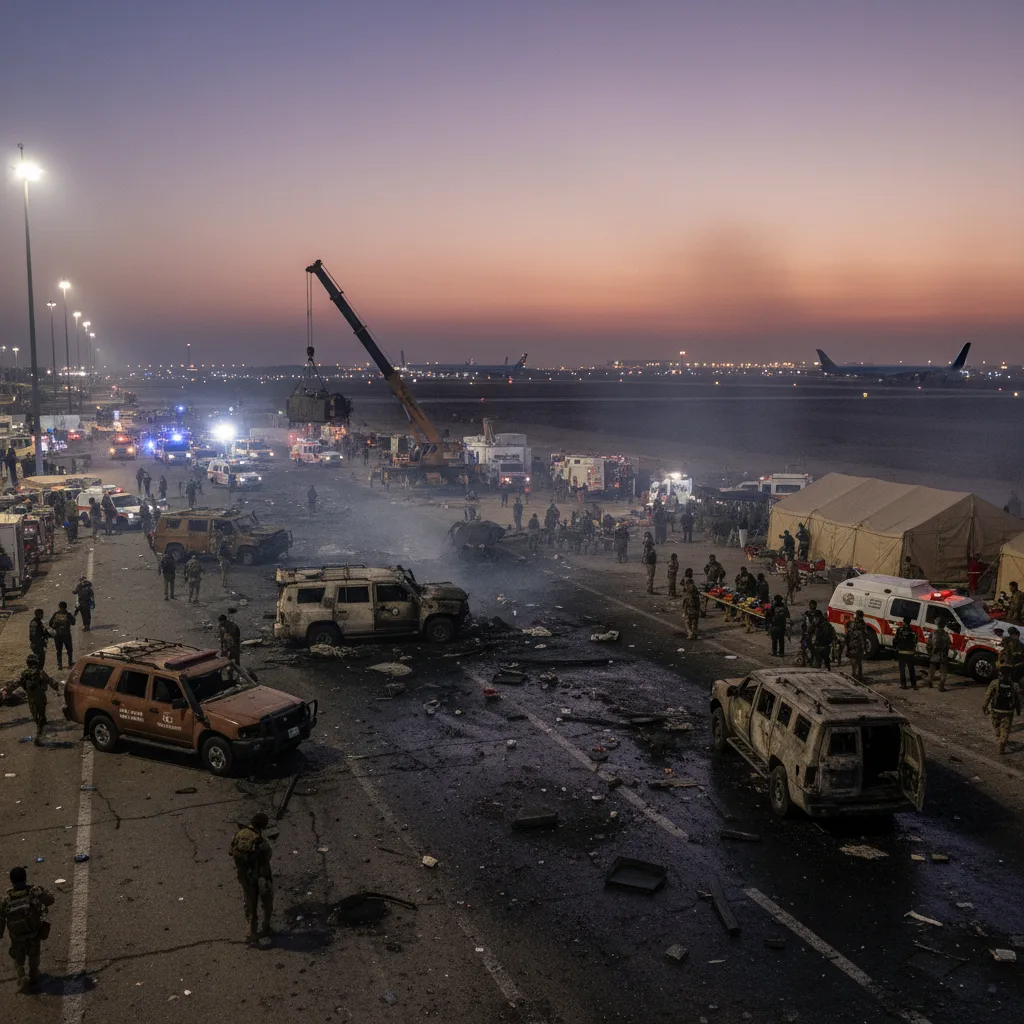
January 3, 2020. A date barely registered by most, yet in the pre-dawn hours, the world’s financial arteries twitched with a violent spasm. As news broke of a targeted U.S. drone strike near Baghdad International Airport, eliminating Iranian General Qassem Soleimani, the seemingly distant sands of Iraq sent immediate shockwaves through global markets. Oil prices surged by over 4%, gold, the traditional safe haven, spiked, and stock futures across Asia and Europe dipped sharply. This wasn’t a mere blip; it was a stark, real-time demonstration of how geopolitics affects financial markets, a truth often obscured by economic data and corporate earnings reports. The invisible hand of state power, often brutal and unpredictable, frequently dictates the fortunes of billions, far more profoundly than many analysts publicly acknowledge. This is a story of power, vulnerability, and the intricate, often weaponized, dance between nations and capital.
The Immediate Shockwave: When Diplomacy Fails, Markets Tremble
The Soleimani strike wasn’t an isolated incident; it was a microcosm of a larger, systemic vulnerability. Imagine a scenario: a sudden, unexpected naval confrontation in the South China Sea, or a state-sponsored cyberattack crippling a major financial exchange. What happens then? The answer is immediate, volatile re-pricing of assets. Investor sentiment, often a fragile construct, shatters. During the initial days of Russia’s full-scale invasion of Ukraine in February 2022, the Moscow Exchange halted trading, bond yields for European nations bordering Russia widened, and the price of Brent crude oil soared past $100 a barrel for the first time since 2014. Global equities, from New York to Tokyo, plunged. This wasn’t just about Ukraine; it was about the fundamental re-evaluation of systemic risk, the cost of unforeseen conflict.

The speed of information in our hyper-connected world amplifies these initial shocks. A tweet from a head of state, an unverified intelligence leak, or even a misspoken diplomatic phrase can trigger algorithmic trading frenzies. In August 2018, when then-President Trump tweeted about imposing tariffs on Turkish steel and aluminum, the Turkish lira immediately plummeted, exacerbating a brewing currency crisis. The reaction was not based on fundamental economic shifts but on a perceived change in geopolitical posture. These events underscore a critical, often underappreciated fact: markets are not purely rational entities driven by supply and demand. They are psychological battlegrounds, exquisitely sensitive to the whispers and shouts of geopolitical power plays.
The Geopolitical Risk Premium: A Silent Tax on Capital
Beyond the immediate volatility, geopolitics imposes a more insidious, long-term burden: the geopolitical risk premium. This is an additional return investors demand for holding assets in regions or sectors deemed susceptible to political instability, conflict, or adverse policy shifts. It’s a silent tax, baked into everything from sovereign bond yields to equity valuations, and it can subtly but significantly alter the flow of global capital. For instance, after Russia’s annexation of Crimea in 2014, and especially following the 2022 invasion, the cost of borrowing for certain Eastern European nations, though not directly involved in the conflict, demonstrably increased. Investors perceived an elevated regional risk.
Consider the energy sector. Companies operating in politically volatile regions like parts of the Middle East or Africa must factor in the higher probability of supply disruptions, nationalization, or civil unrest. This translates to higher insurance costs, greater security expenditures, and a demand for higher projected returns to compensate for the inherent instability. Similarly, technology firms reliant on complex global supply chains, particularly those with significant operations in areas of escalating U.S.-China tensions, face an elevated risk premium. This phenomenon isn’t always visible in daily price movements but manifests in long-term capital allocation decisions, diverting investment away from perceived hotspots and towards safer havens, thereby shaping global economic development.
Sanctions and Embargoes: Economic Warfare by Other Means
Perhaps the most direct and calculable way how geopolitics affects financial markets is through sanctions and embargoes. These are not merely diplomatic tools; they are sophisticated instruments of economic warfare designed to inflict financial pain and alter state behavior. The repercussions are far-reaching, impacting specific companies, entire sectors, and even the global financial plumbing. Following the 2022 invasion of Ukraine, a coalition of Western nations imposed unprecedented sanctions on Russia, including the freezing of approximately $300 billion of its central bank’s foreign currency reserves and the exclusion of several Russian banks from the SWIFT international payment system.
 The impact was immediate and severe. The Russian ruble plummeted, inflation soared, and major foreign companies, from Shell to McDonald's, exited the market en masse. For Western companies, compliance became a complex, costly endeavor, forcing divestitures and supply chain reconfigurations. Consider the U.S. sanctions against Chinese tech giant Huawei, initiated in 2019. By placing Huawei on the Entity List, the U.S. restricted its access to critical American technology, crippling its smartphone and network equipment businesses. This move not only devastated Huawei’s revenue but also sent ripples through the global semiconductor industry, illustrating how targeted geopolitical measures can reshape entire technological ecosystems and create new market leaders or cripple existing ones.
Trade Wars and Supply Chain Disruptions: The Globalized Domino Effect
The late 2010s ushered in an era of renewed trade tensions, prominently featuring the U.S.-China trade war. This wasn’t just about tariffs; it was a geopolitical struggle for economic dominance, with profound implications for global financial markets. In 2018, the Trump administration imposed Section 301 tariffs on hundreds of billions of dollars worth of Chinese goods, ranging from electronics to machinery, prompting retaliatory tariffs from Beijing on U.S. agricultural products and other exports. The immediate effect was a slowdown in global trade, impacting corporate earnings for multinationals like Apple, which faced higher production costs and reduced demand in China, and American farmers, who saw soybean exports to China plummet.
Beyond direct tariffs, the trade war highlighted the fragility of globalized supply chains. Companies that had optimized for cost efficiency by concentrating production in single locations, often China, suddenly faced immense geopolitical risk. The pandemic-induced supply chain shocks further exposed these vulnerabilities. Now, a trend towards “de-risking” or “friend-shoring” is emerging, where companies diversify their manufacturing bases to politically aligned nations or even bring production back home. This shift, driven by geopolitical considerations rather than pure economic efficiency, requires massive capital expenditure, re-drawing global investment maps and creating new opportunities in some regions while diminishing others.
Energy Geopolitics: The Oil Shock’s Enduring Legacy
Few areas illustrate the direct link between geopolitics and financial markets as starkly as energy. The price of oil, natural gas, and other commodities is intrinsically tied to global power dynamics, regional conflicts, and resource control. The 1973 OPEC oil embargo, a direct response to U.S. support for Israel, quadrupled crude oil prices, triggering a global recession and reshaping energy policy for decades. More recently, Russia’s weaponization of natural gas supplies to Europe in 2022, following its invasion of Ukraine, sent European energy prices soaring to unprecedented levels, sparking an energy crisis that fueled inflation and threatened industrial output across the continent.

Events in critical energy chokepoints, such as the Strait of Hormuz or the Suez Canal, also carry immense market implications. A blockage or military escalation in these narrow passages, through which vast quantities of oil and gas transit daily, could trigger an immediate, dramatic spike in energy prices, impacting everything from transport costs to manufacturing inputs. The sabotage of the Nord Stream pipelines in September 2022, though its perpetrator remains debated, served as a chilling reminder of the vulnerability of critical energy infrastructure to geopolitical interference, fundamentally altering Europe’s energy security landscape and driving investment into alternative sources and supply routes.
Cyber Warfare and Data Sovereignty: The Digital Battleground
The 21st century has introduced a new, insidious front in geopolitical competition: cyberspace. State-sponsored cyberattacks, ranging from espionage to disruptive assaults on critical infrastructure, now pose a significant threat to financial markets. The 2016 cyberattack on the Bangladesh Bank, where hackers attempted to steal nearly $1 billion using the SWIFT network, underscored the vulnerability of global financial systems. While much of the stolen funds were recovered, the incident exposed a chilling reality: a successful, coordinated attack could potentially trigger a systemic financial crisis.
Beyond direct attacks, the concept of data sovereignty is emerging as a critical geopolitical battleground. Nations are increasingly demanding that data generated within their borders be stored and processed locally, leading to the fragmentation of the global internet and creating complex compliance challenges for multinational tech companies. China’s cybersecurity laws, for instance, impose strict data localization requirements, influencing how companies like Google and Apple operate within its market. This geopolitical push for data control impacts investment in data centers, cloud services, and cybersecurity firms, creating new market opportunities for some while imposing significant operational hurdles and costs for others.
Currency as a Weapon: Devaluation, Hegemony, and the Dollar’s Dominance
Currency, often perceived as a neutral medium of exchange, is in fact a potent geopolitical tool. Nations can deliberately devalue their currency to boost exports, as China has been accused of doing, sparking trade tensions. More profoundly, the struggle for currency hegemony shapes global finance. The U.S. dollar’s role as the world’s primary reserve currency and the dominant medium for international trade grants Washington immense geopolitical leverage, enabling it to impose sanctions and project power globally. However, this dominance is increasingly challenged.
 China's Belt and Road Initiative, for example, aims to promote the use of the Chinese yuan in international transactions, slowly chipping away at dollar supremacy. Furthermore, Russia's demand for "unfriendly" nations to pay for its natural gas in rubles in 2022 was a direct attempt to bolster its currency and circumvent Western sanctions. The rise of central bank digital currencies (CBDCs) also introduces a new dimension. A digital yuan, for instance, could offer an alternative to the dollar-dominated SWIFT system, potentially facilitating transactions outside the reach of U.S. oversight and further fragmenting the global financial landscape. These strategic currency maneuvers directly impact exchange rates, cross-border investment, and the stability of global financial systems.
The Rise of Geoeconomics and Investor Adaptation
The pervasive influence of geopolitics has given rise to the concept of geoeconomics: the use of economic tools to achieve geopolitical objectives. For investors and corporations, this means a fundamental shift in how risk is assessed and capital is allocated. The days when geopolitical concerns were confined to emerging markets or specific “hot zones” are over. Today, a robust understanding of international relations, diplomatic tensions, and power struggles is as crucial as analyzing balance sheets or interest rate forecasts. Major investment firms like BlackRock now publish extensive analyses of geopolitical risk, and specialized geopolitical intelligence firms are increasingly integrated into financial decision-making processes.
Companies are adapting by diversifying supply chains, “friend-shoring” production, and engaging in sophisticated scenario planning to anticipate potential disruptions. This strategic reorientation, driven by geopolitical imperatives, is reshaping industries from semiconductors to renewable energy. Investors are increasingly favoring assets in politically stable regions, diversifying portfolios across different geopolitical blocs, and scrutinizing the geopolitical exposure of their holdings. The intricate dance between nation-states and financial markets is no longer a peripheral concern; it is a central determinant of risk and return, demanding constant vigilance and a deeper, more nuanced understanding of the forces that truly move the world’s capital.
FAQ Section
Q1: What is geopolitical risk in financial markets? A1: Geopolitical risk refers to the potential for international relations, political instability, or conflict to negatively impact financial assets, investments, and economic stability. This can include events like wars, trade disputes, sanctions, cyberattacks, or significant policy shifts by major powers.
Q2: How can individual investors protect their portfolios from geopolitical events? A2: Individual investors can mitigate geopolitical risk through diversification across different asset classes (stocks, bonds, commodities), geographies, and sectors. Investing in traditional safe-haven assets like gold or certain government bonds, and maintaining a long-term perspective rather than reacting impulsively to short-term news, can also help.
Q3: Are all geopolitical events negative for financial markets? A3: While many geopolitical events introduce uncertainty and volatility, not all are universally negative. Certain sectors or assets might benefit, such as defense stocks during conflicts, cybersecurity firms after major hacks, or commodity producers during supply disruptions. However, the overall impact on market stability and investor confidence is often adverse.
Q4: What role do central banks play when geopolitics affects financial markets? A4: Central banks play a critical role in maintaining financial stability during geopolitical shocks. They can intervene to calm markets, provide liquidity, adjust interest rates, or implement currency stabilization measures to counteract the economic fallout from geopolitical events, though their powers are limited against sustained, severe shocks.
The narrative is clear: geopolitics is not a distant cousin of economics; it is its twin, often the dominant one. From the immediate shock of a drone strike to the silent tax of a risk premium, from the blunt force of sanctions to the subtle power of currency, the currents of global power directly sculpt the landscape of financial markets. Understanding this intricate relationship is no longer an academic exercise; it is a fundamental requirement for anyone seeking to navigate the volatile seas of global capital. The story of money and power is one, inextricably linked, constantly evolving, and endlessly revealing.
You might also like:
👉 Geopolitical Conflict: Impact on Global Markets & Economy
👉 Geopolitical Events: Impact on Stock Market & Investments
👉 Economic Sanctions: Impact on International Trade & Geopolitics