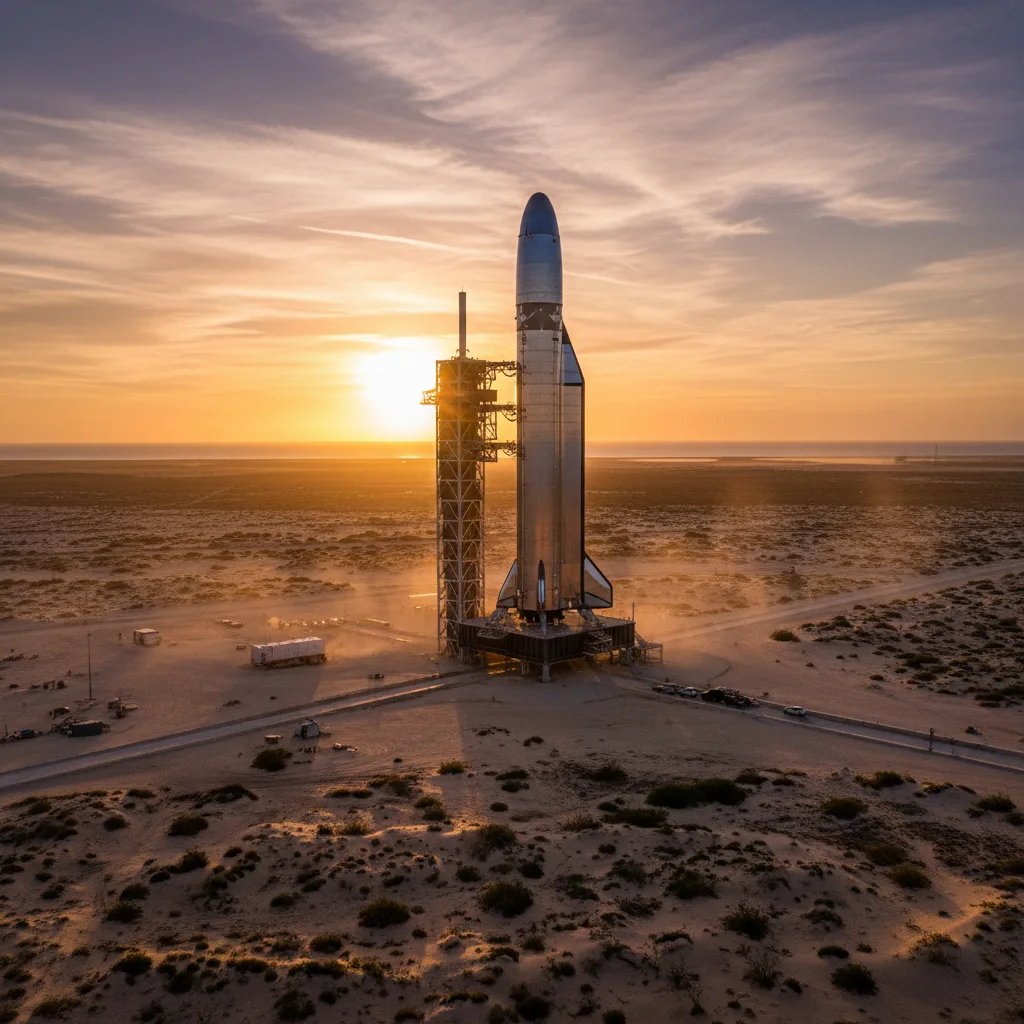
75,000 Years to Alpha Centauri? How We'll Cut the Trip
Reaching Alpha Centauri currently takes 75,000 years. Discover the ambitious science aiming to drastically cut interstellar travel times for humanity.
The ultimate journey: reaching other stars
Imagine a trip to Alpha Centauri, our nearest star. With today’s rockets, it would take 75,000 years. That’s the problem: space is vast, and we’re slow. Scientists are trying to cut journey times, hoping to send humans or robots to planets outside our solar system.
Space is huge. Alpha Centauri sits 4.37 light-years from Earth – 25 trillion miles. Even light takes over four years to cross that. Our fastest rockets, like the old Space Shuttle, hit 17,500 miles per hour. That’s nowhere near fast enough for a trip within a human lifetime.
Right now, we’re sticking to our own solar system. NASA’s Artemis program wants humans back on the Moon to stay. The Europa Clipper will search for life in Jupiter’s system. All these use today’s rockets. They show just how far we are from reaching other stars.
Beyond light speed: theoretical drives
Can we break the light-speed barrier? Theoretical physics offers ideas. In 1994, Dr. Miguel Alcubierre, a Mexican physicist, proposed the Alcubierre warp drive. His concept: a ship would compress space in front of it and expand space behind it. The ship itself wouldn’t move, staying inside a “warp bubble.” This would let it travel faster than light, without breaking local physics.
The Alcubierre drive is just theory, though. It needs huge amounts of “exotic matter” with negative energy. We’ve never seen such matter. NASA’s Eagleworks Laboratories has studied warp field math, with Dr. Harold White leading some of that work. A working warp drive is centuries away, even if it proves possible.
Wormholes are another theoretical shortcut. They’re like tunnels through spacetime, connecting two far-off points. Travel through one could slash journey times. Like warp drives, wormholes need exotic matter to stay stable. They’re purely speculative. Physicist Kip Thorne wrote about them in his general relativity work.
Almost light speed: more realistic options
Getting close to light speed is a more immediate goal. Fusion propulsion is a powerful alternative to chemical rockets. It uses the energy released when light atomic nuclei merge. Princeton Satellite Systems is developing a “Direct Fusion Drive.” This could send a ship to Saturn in just two years — a huge step up from today’s rockets.
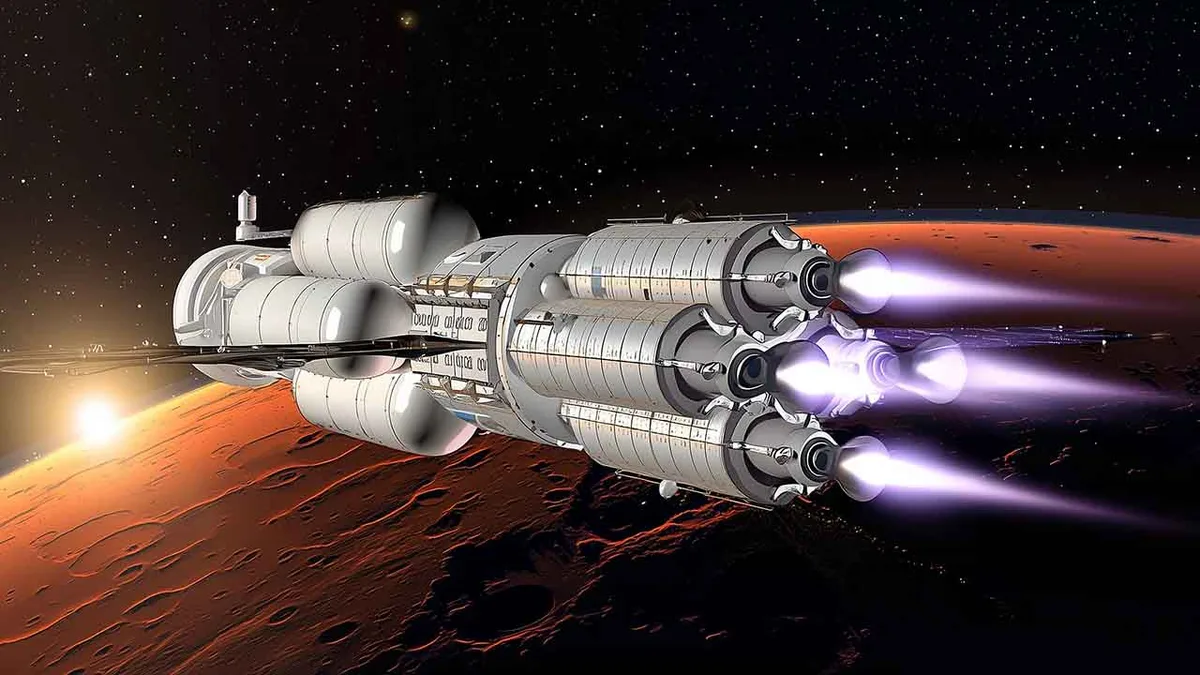
The Direct Fusion Drive, developed by Princeton Satellite Systems, is a promising fusion propulsion concept that could drastically cut space travel times, potentially sending a spacecraft to Saturn in just two years. (Source: altpropulsion.com)
Antimatter rockets are even more efficient. When antimatter and matter meet, they annihilate, turning mass directly into energy. This is 100% efficient, far better than nuclear fusion. For example, a gram of antimatter meeting a gram of matter releases the energy of a 20-kiloton nuclear bomb. Producing and storing antimatter is difficult. It is both expensive and hard to contain. NASA’s Advanced Propulsion Concepts program studies antimatter.
Light sails are a different approach. They use the push from photons, either from the sun or a powerful laser array. Project Breakthrough Starshot, a private effort, wants to send tiny probes to Alpha Centauri. These “nanocraft” would ride light sails pushed by ground-based lasers. Dr. Philip Lubin of UC Santa Barbara leads work on laser propulsion. He thinks this could get a probe to Alpha Centauri in 20 years.
Humans in deep space: surviving the trip
How would humans survive decades or centuries in space? One idea is a “generation ship.” This giant spacecraft would carry multiple generations. The first crew would die on the way, their great-great-grandchildren finishing the trip. It would need self-sustaining environments and stable societies. Experimental architect Dr. Rachel Armstrong studies their design.
Cryosleep, or suspended animation, is another option. It means freezing humans for decades or centuries, then waking them up at the destination. Today’s tech can preserve cells and tissues short-term. Freezing a whole human body is not yet possible. Groups like the Alcor Life Extension Foundation research cryopreservation. We still do not know how to reanimate someone.
Mind uploading, or digital consciousness, is a more radical idea. It means moving a human mind to a computer system. This digital mind could then travel through space, perhaps living in robot bodies or virtual worlds when it arrives. Nick Bostrom, a philosopher at Oxford, studies what this means. It raises deep questions about who we are and what it means to be human.
What we’d find: destinations and discoveries
Exoplanets are the main goal for future space travel. The Alpha Centauri system has Proxima Centauri b, a planet in its star’s habitable zone. We see it as a top candidate for life. The TRAPPIST-1 system also has several possibly habitable planets. These worlds would let us study alien life.
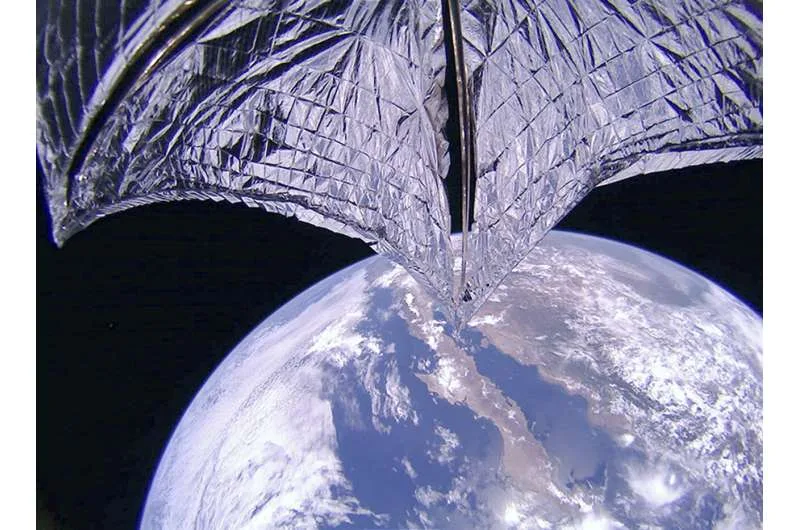
LightSail 2, a real-world solar sail spacecraft, demonstrates the principle of photon propulsion. It uses the subtle pressure of sunlight to slowly accelerate through space, offering a fuel-free method for future interstellar travel. (Source: phys.org)
Probes to other stars could collect priceless data. They’d analyze exoplanet atmospheres and surfaces. Missions might figure out how much life exists in the galaxy. They could even find new forms of matter or energy. These discoveries would change how we see the universe.
Talking to interstellar missions would be very slow. A message from Alpha Centauri would take over four years to reach Earth. That means no real-time control. Autonomous AI systems would be essential for making decisions. These systems would need to solve complex problems on their own. Dr. Steven Dick, a former NASA Chief Historian, wrote about what these discoveries would mean for society.
Questions you might have
What’s the fastest a spacecraft has ever traveled? NASA’s Parker Solar Probe is the fastest spacecraft. It reached speeds of 430,000 miles per hour during its solar flybys. This is still only a tiny fraction of the speed of light.
Are warp drives physically possible? The Alcubierre warp drive is theoretically consistent with Einstein’s general relativity. It requires exotic matter with negative energy density. This matter has never been observed and may not exist.
What is a generation ship? A generation ship is a hypothetical spacecraft designed for interstellar travel. It’s large enough to sustain human life for multiple generations. The original crew’s descendants would complete the journey.
The long game: preparing for a cosmic future
The challenges of future space travel are huge. They cover physics, engineering, and biology. Current research focuses on core technologies like advanced propulsion and life support. Investments from NASA and private ventures are vital.
Developing this will take centuries. It needs lasting international teamwork. Perhaps humanity’s future depends on our ability to explore beyond Earth. This cosmic future offers new scientific and philosophical insights. It’s the ultimate test of our curiosity and cleverness. What we learn out there could change everything we know about ourselves. It could also change our understanding of our place in the universe.
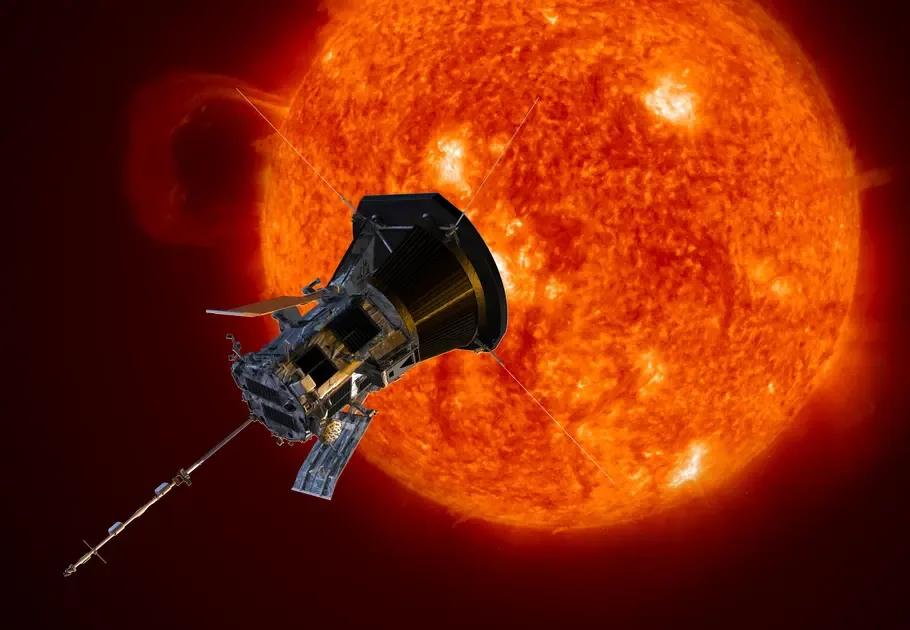
NASA's Parker Solar Probe is the fastest spacecraft ever built, reaching speeds over 430,000 miles per hour during its daring flybys of the Sun. Its mission provides crucial data on solar wind and the Sun's corona, pushing the boundaries of what's possible in space exploration. (Source: airandspace.si.edu)
You might also like:
👉 Space Colonization: The Grand Illusion & Earth’s Real Solutions
👉 The $546 Billion Space Race: Private Money, Global Rivalries
👉 The Unseen Revolution: Exploring Robotics in Everyday Life Examples