Unearthing Ancient Egypt's Lost Cities: Vanished Civilizations Revealed
Explore the captivating mystery of ancient Egypt's lost cities. Discover how entire civilizations vanished beneath sands or sea, and what secrets they hold.
Unearthing the Sands of Time: The Lost Cities of Ancient Egypt
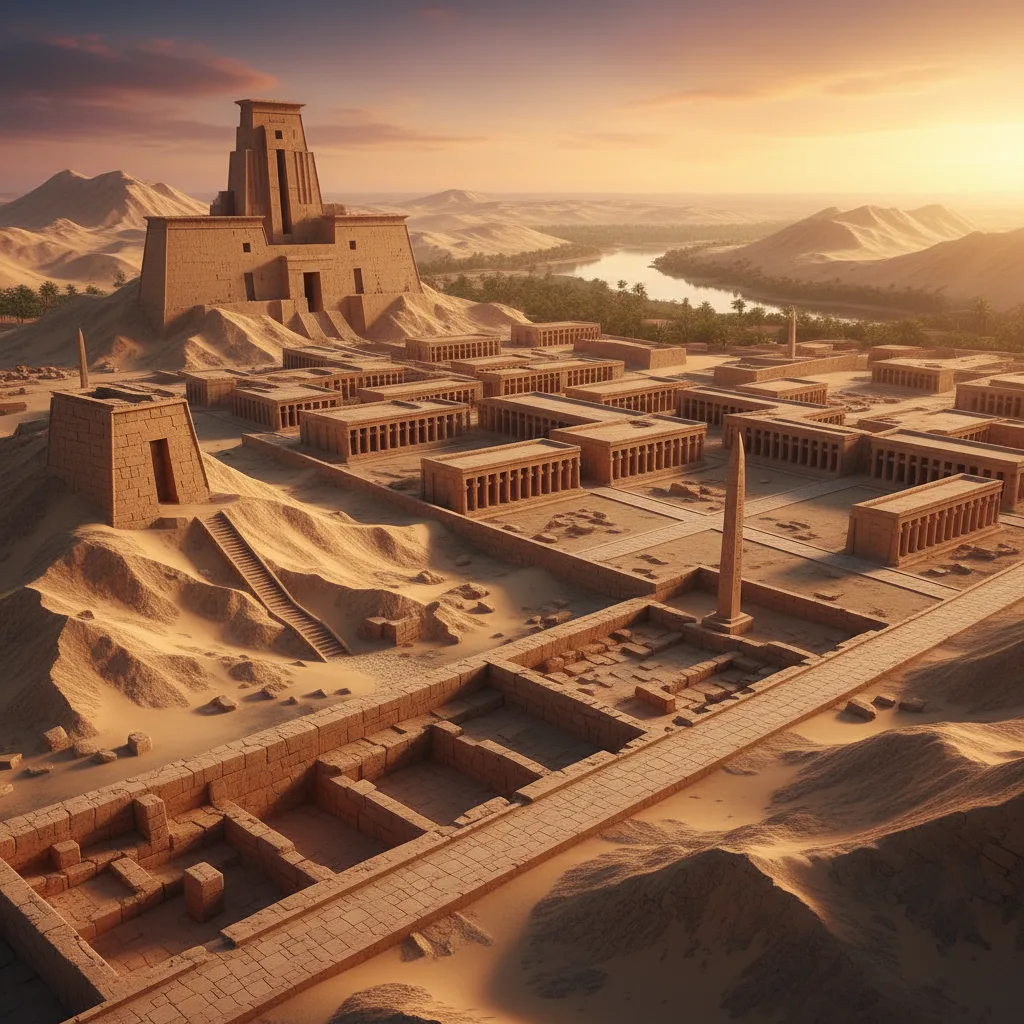
Imagine a civilization so grand, so enduring, that its monuments still pierce the sky millennia later. Now, imagine entire cities from that very civilization simply… vanishing. Not crumbling into dust, but disappearing beneath shifting sands, swallowed by the sea, or even deliberately erased from memory. This isn’t a fantasy; it’s the enthralling reality of the lost cities of ancient Egypt, places that once throbbed with life, power, and intrigue, only to be rediscovered centuries or even millennia later, whispering tales of forgotten pharaohs and untold secrets. For centuries, Egyptologists have scoured the vast landscapes along the Nile, driven by an insatiable curiosity to peel back the layers of sand and silt, revealing the heartbeat of a world we thought we knew. But what truly makes these vanished metropolises so captivating, and what incredible stories do they hold?
Akhetaten: The Heretic Pharaoh’s Fleeting Utopia
In the 14th century BCE, a pharaoh named Akhenaten dared to challenge millennia of tradition. He abandoned the polytheistic religion of his ancestors, promoting the worship of a single sun disk, the Aten. To solidify his radical vision, he did something unprecedented: he built an entirely new capital city from scratch, far from the influence of the powerful Amun priesthood in Thebes. This was Akhetaten, “Horizon of the Aten,” known today as Amarna.
Akhetaten was a marvel of planning and speed, constructed in just a few years. Stretching for miles along the east bank of the Nile, it boasted grand temples, royal palaces, administrative buildings, workshops, and extensive residential districts, all bathed in the light of the Aten. Akhenaten, his beautiful wife Nefertiti, and their six daughters presided over a city designed to be a living testament to their new faith. Its art style was revolutionary, depicting the royal family with an unprecedented naturalism, often engaging in intimate domestic scenes.
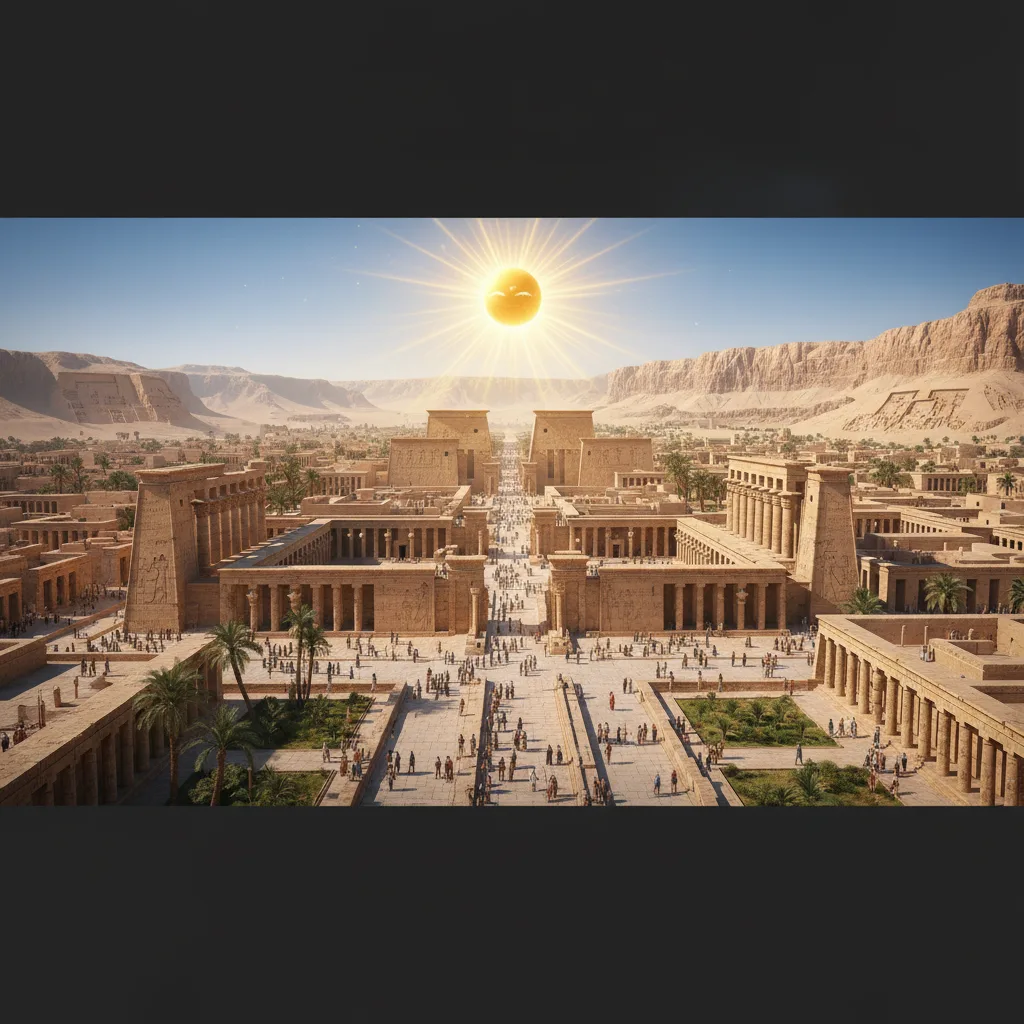
Yet, this vibrant city was destined for a tragically short life. After Akhenaten’s death, his religious revolution was swiftly undone. His successors, particularly Tutankhamun, abandoned Akhetaten, returning the capital and the state religion to Thebes. The city was systematically dismantled, its stones reused, its images defaced, and its very existence largely expunged from official records. For over 3,000 years, Akhetaten lay buried beneath the desert, a silent testament to a pharaoh’s audacious dream and its dramatic collapse. What other deliberate acts of erasure might have buried cities even deeper?
Per-Ramesses: The Delta’s Grand Capital on the Move
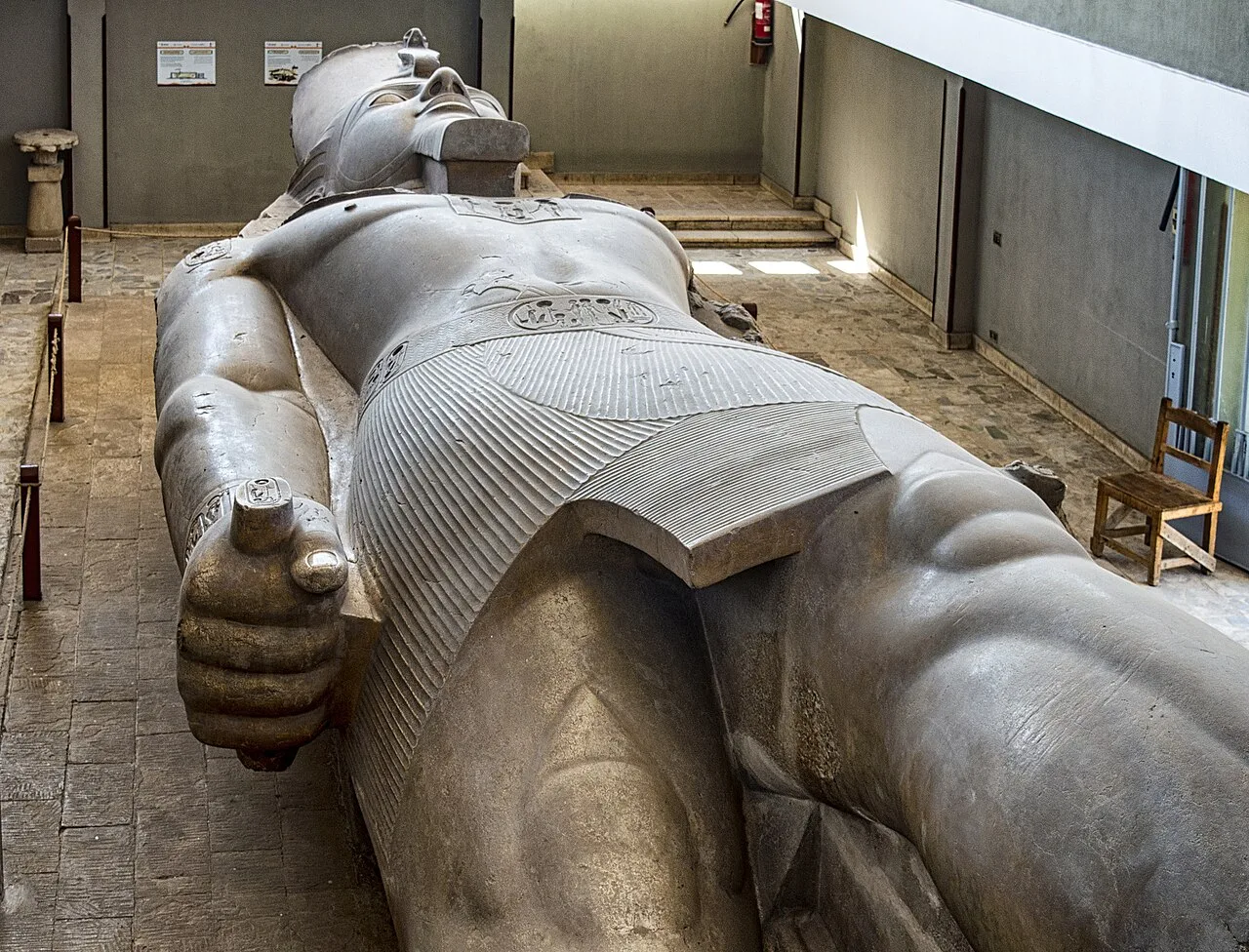 A colossal statue of Pharaoh Ramesses II, who built the magnificent capital city of Per-Ramesses in the Nile Delta. (Ahnaf Saber, CC BY 3.0)
When we think of the great pharaohs, Ramesses II, also known as Ramesses the Great, looms large. His reign (c. 1279–1213 BCE) was marked by monumental building projects, including a magnificent new capital city in the eastern Nile Delta: Per-Ramesses (“House of Ramesses”). This city was not merely a royal residence but a thriving administrative, military, and economic hub, strategically positioned to manage Egypt’s burgeoning empire in the Near East.
Per-Ramesses was enormous, boasting colossal temples, opulent palaces, vast barracks, bustling harbors, and even its own zoo. It was a cosmopolitan melting pot, home to Egyptians, Nubians, and Syrians, a testament to Ramesses’s power and influence. Texts describe its lakes and canals, its vibrant markets, and its magnificent statuary, some of which survive today, albeit relocated. The very scale of its construction was staggering, a testament to the pharaoh’s desire for eternal glory.
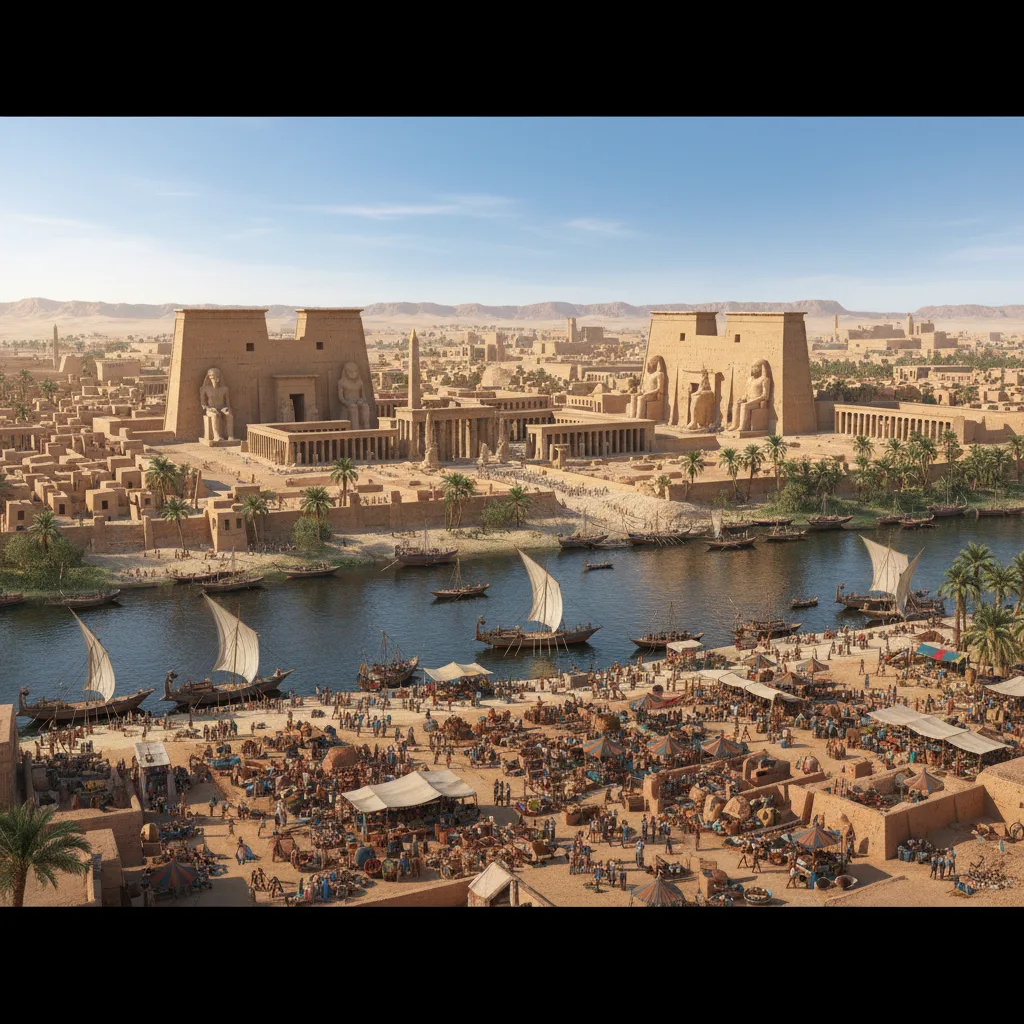
However, the mighty Nile, the very lifeblood of Egypt, proved to be Per-Ramesses’s undoing. Over centuries, the Pelusiac branch of the Nile, on which the city depended for its harbor and water supply, gradually shifted its course eastward. Without its vital artery, Per-Ramesses slowly declined. Its monumental stones were systematically quarried and transported, many ending up in the new capital of the 21st Dynasty, Tanis. The city didn’t vanish in a cataclysm but rather dissolved, its identity absorbed and its physical form repurposed, leaving archaeologists to piece together its ghost from scattered foundations and relocated monuments. But what if a city didn’t just fade, but was violently swallowed by the very waters that sustained it?
Thonis-Heracleion: Submerged Splendor of the Mediterranean
For millennia, tales circulated among ancient Greek historians and travelers of a rich port city called Heracleion, situated at the mouth of the Nile. Egyptian texts also spoke of Thonis, a major trading hub. For a long time, these were considered two separate cities, or perhaps even mythical places. Then, in the year 2000, marine archaeologist Franck Goddio and his team made an astonishing discovery in Abu Qir Bay, near Alexandria. They found it: a single, colossal city, submerged beneath the Mediterranean waves, that was both Thonis and Heracleion.
This was no small fishing village. Thonis-Heracleion was a vibrant, wealthy port city that flourished from the 6th to the 4th century BCE, serving as the primary gateway to Egypt for all Mediterranean trade. Its ruins reveal an incredible tableau: colossal statues of pharaohs and gods, sphinxes, hundreds of anchors, gold coins, and an astonishing array of perfectly preserved artifacts that had been resting on the seabed for over 1,200 years. Its temples, dedicated to Amun and Khonsu (Heracles to the Greeks), stood proudly before their watery demise.
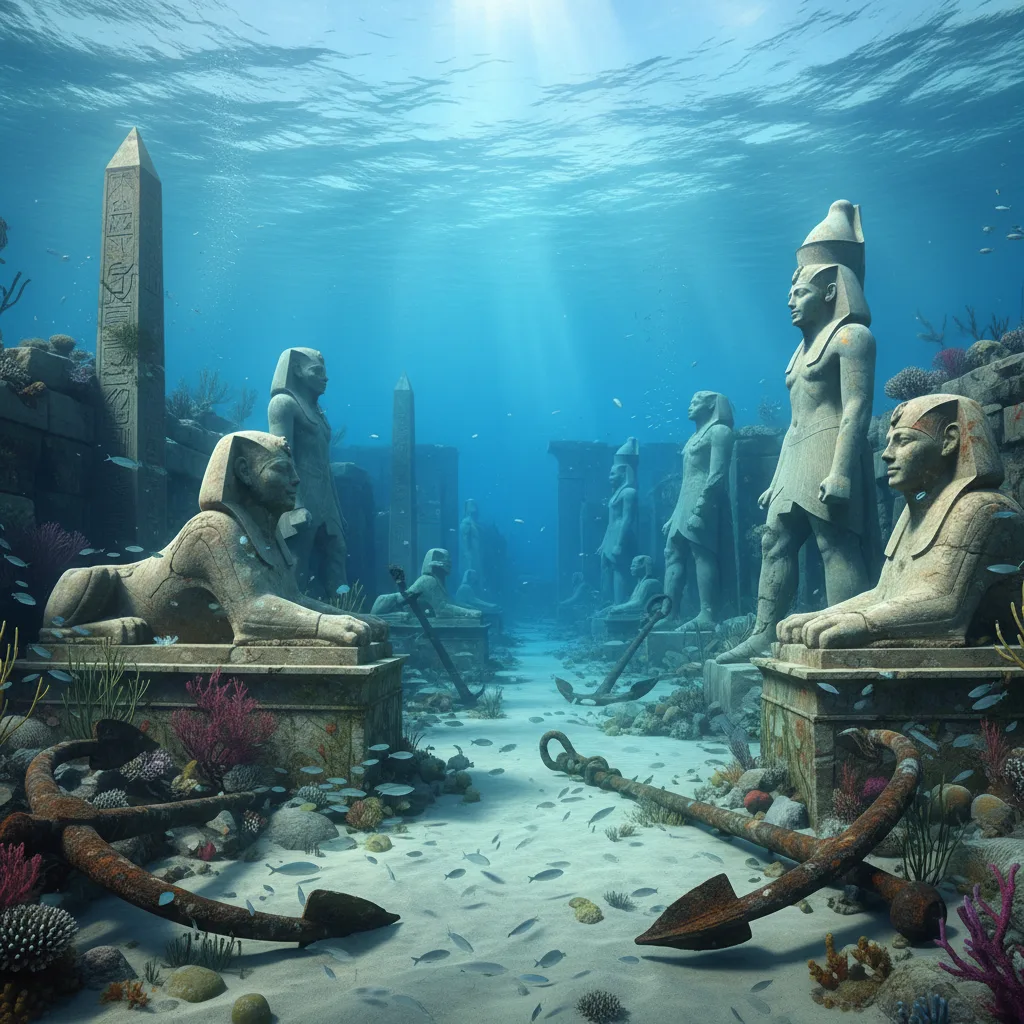
The city’s demise was not sudden but a slow process of subsidence, likely exacerbated by seismic activity and the instability of the waterlogged deltaic soil. Over centuries, the land beneath Thonis-Heracleion gradually sank, until the city slipped entirely beneath the waves, becoming a silent underwater museum. Its rediscovery has revolutionized our understanding of late dynastic Egypt’s interaction with the Greek world, offering a vivid glimpse into a cosmopolitan port that was once crucial to the ancient world’s economy. And yet, even as we uncover wonders beneath the sea, what other grand cities might still be hidden beneath the desert, waiting for the right moment to emerge?
The Lost Gold City of Luxor: Aten’s Rise and Fall
In April 2021, the world held its breath as famed Egyptian archaeologist Dr. Zahi Hawass announced a discovery he hailed as the most significant since Tutankhamun’s tomb: the unearthing of a complete, incredibly well-preserved ancient city near Luxor. Dubbed Djeser-Aten by its original inhabitants, and colloquially known as the “Lost Gold City of Luxor,” this massive administrative and industrial settlement dates back to the reign of Amenhotep III (c. 1391-1353 BCE), one of Egypt’s most powerful pharaohs.
This wasn’t just a collection of scattered ruins; it was a fully functional city, complete with houses, workshops, bakeries, administrative buildings, and even a cemetery. Its streets were still lined with walls several feet high, some containing ovens, pottery, and tools, offering an unprecedented snapshot of daily life in one of ancient Egypt’s wealthiest periods. Inscriptions found on wine jars confirmed the city’s date, linking it directly to Amenhotep III and his son, Akhenaten.
The city appears to have been abandoned shortly after Amenhotep III’s death, possibly during Akhenaten’s reign as he moved to Amarna, only to be briefly reoccupied and then largely forgotten. Its sheer size and state of preservation offer an unparalleled window into the royal court and the lives of ordinary citizens during the height of the New Kingdom. The discovery of Aten reminds us that even in the most thoroughly explored regions of Egypt, vast, complex urban landscapes still lie hidden, patiently awaiting their moment in the sun. But how do modern archaeologists even begin to locate such elusive treasures?
The Quest Continues: Modern Tools for Finding Lost Cities of Ancient Egypt
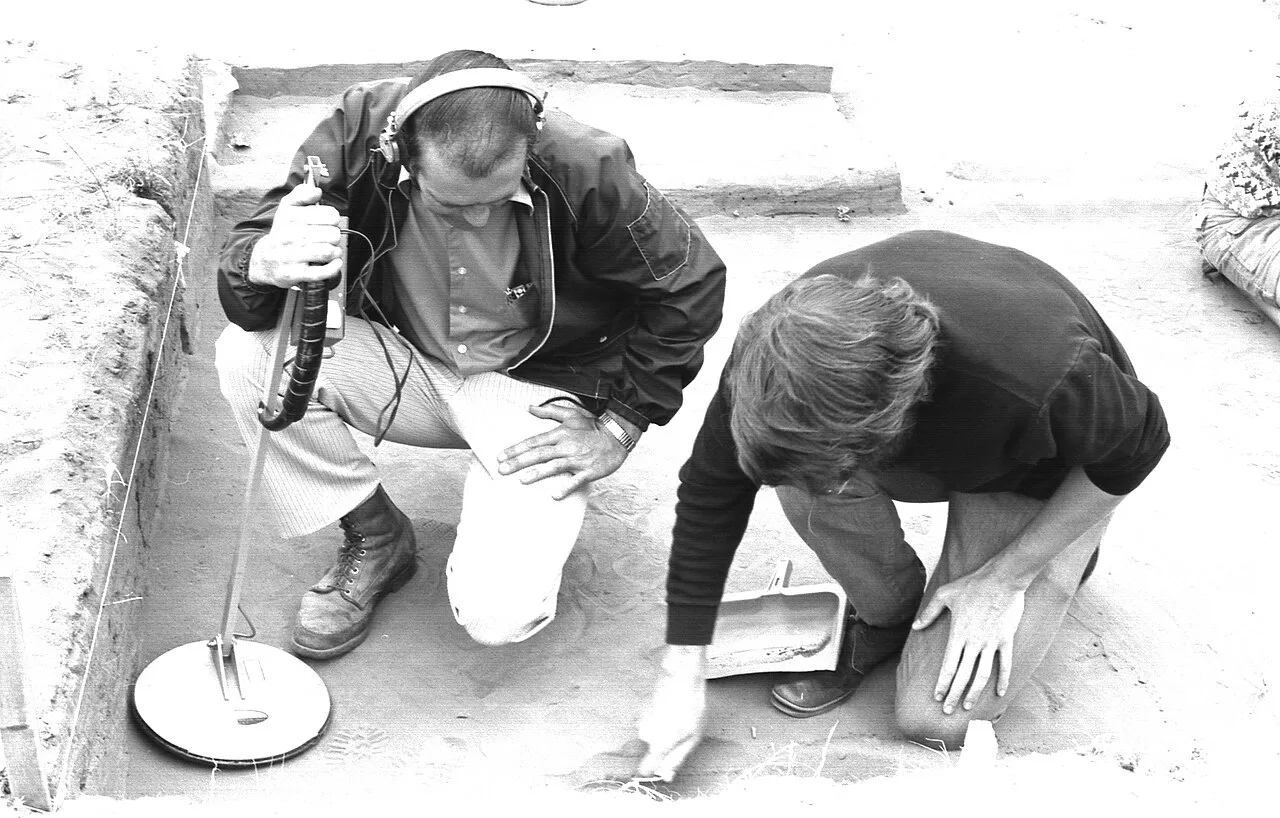 Archaeologists using Ground-Penetrating Radar (GPR) to map subsurface features, a key non-invasive technique for locating lost cities. (John Atherton, CC BY-SA 2.0)
The romantic image of the lone archaeologist with a pickaxe and brush still holds a certain charm, but the reality of finding lost cities of ancient Egypt in the 21st century involves cutting-edge technology. The vast, often featureless desert landscape, along with the deep alluvial deposits of the Nile Valley, makes traditional surface surveying incredibly challenging. This is where remote sensing and geophysical techniques become indispensable.
Archaeologists now employ satellite imagery to detect subtle changes in vegetation patterns or soil discoloration that might indicate buried structures. Lidar (Light Detection and Ranging) technology, which uses pulsed laser light to measure distances, can penetrate dense foliage and even shallow sand to create detailed topographical maps, revealing ancient canals, roads, and building foundations that are invisible from the ground. These aerial perspectives provide crucial clues, narrowing down vast search areas to promising targets.
Once potential sites are identified, ground-based surveys take over. Magnetometry measures minute variations in the Earth’s magnetic field, which can be altered by fired clay bricks, kilns, or even the pits and ditches of ancient settlements. Ground-Penetrating Radar (GPR) sends electromagnetic pulses into the ground and listens for reflections, creating a cross-sectional view of subsurface features without disturbing the soil. These non-invasive methods allow archaeologists to “see” beneath the surface, creating detailed maps of buried cities before a single shovel enters the ground, transforming the hunt for lost cities into a high-tech detective story.
Conclusion: Echoes from the Sands of Time
The lost cities of ancient Egypt are more than just archaeological sites; they are profound testaments to human ambition, ingenuity, and the relentless march of time. From the deliberately erased capital of Akhenaten to the river-abandoned grandeur of Per-Ramesses, the sea-swallowed port of Thonis-Heracleion, and the recently unearthed Gold City of Aten, each discovery peels back another layer of history, enriching our understanding of one of the world’s most enduring civilizations.
These vanished metropolises remind us of the dynamic nature of ancient Egypt – a land not static and unchanging, but constantly evolving, adapting, and occasionally, disappearing. The quest to find them continues, driven by advanced technology and an unyielding human curiosity. As archaeologists continue to push the boundaries of discovery, one thing remains clear: the sands and waters of Egypt still guard countless secrets, and the echoes of other forgotten cities are undoubtedly waiting to be heard. The story of ancient Egypt is far from over; it is still being written, one incredible discovery at a time.
You might also like:
👉 Ancient Egypt Timeline: Unveiling Its Rise, Golden Ages & Fall