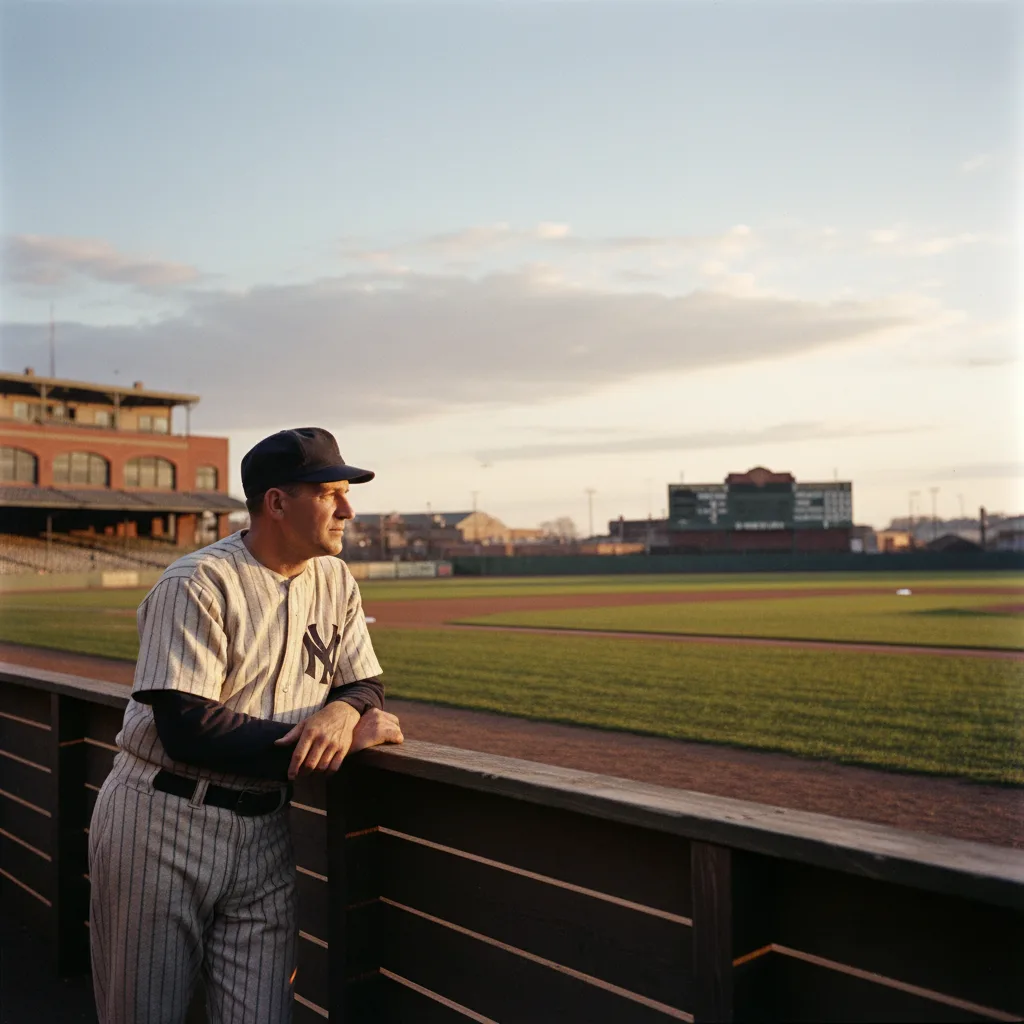
Lou Gehrig: Unmasking the Quiet Hero of Baseball History
Explore the enduring legacy of Lou Gehrig, baseball's 'Iron Horse,' whose legend was forged not just by records but by immense quiet fortitude and unseen strength in the face of tragedy.
Lou Gehrig: The Quiet Hero - Unmasking a Legend of Unseen Strength
Imagine a world where baseball’s “Iron Horse” didn’t just play 2,130 consecutive games, but continued for another decade, shattering records thought untouchable. Now, consider the alternative: a life cut tragically short, yet one that forged a legend not through thunderous grand slams, but through an almost unbearable quiet fortitude. Lou Gehrig, often overshadowed by the larger-than-life figures of his era, presents a paradox: a titan of the game whose greatest legacy might not be found in the box scores, but in the silent dignity he displayed in the face of an insurmountable foe. This investigation seeks to peel back the layers of myth and sentimentality, to reveal the true quiet hero behind the iconic farewell.
The Shadow of the Sultan: Lou Gehrig’s Formative Years and Ascent
Born Heinrich Ludwig Gehrig on June 19, 1903, in Manhattan, New York City, to German immigrant parents, Gehrig’s early life was marked by hardship and a steadfast work ethic. He was the only one of four children to survive past infancy, a grim reality that perhaps instilled in him an early appreciation for resilience. His prodigious athletic talent emerged at Columbia University, where he excelled in both football and baseball, catching the eye of legendary New York Yankees scout Paul Krichell. Gehrig signed with the Yankees in 1923 for a modest bonus, a decision that would forever link his destiny with the burgeoning dynasty.
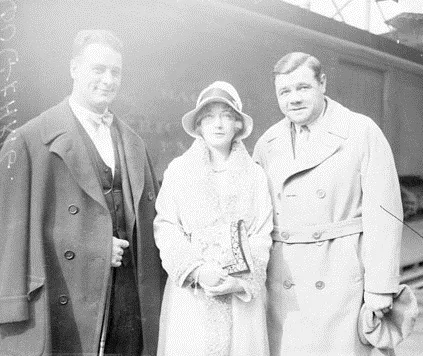 His arrival in the Bronx coincided with the peak of the **"Murderer's Row"** era, a lineup dominated by the flamboyant, larger-than-life presence of **Babe Ruth**. From the outset, Gehrig was destined to be the powerful, yet understated, counterpoint to Ruth's bombast. While Ruth commanded headlines with his theatrics and outsized personality, Gehrig quietly amassed an impressive batting average and RBI count, consistently driving in runs from the cleanup spot. This dynamic established a pattern that would define much of Gehrig's career: immense talent and consistent production often perceived as secondary to the spectacle of others.
The quiet professionalism was evident early. Despite his raw power, Gehrig was known for his disciplined approach at the plate and his unwavering dedication to the team. He wasn’t one for grand pronouncements or self-promotion; his actions on the field spoke volumes. This foundational period, spent in the shadow of a genuine celebrity, paradoxically forged the stoic resolve that would later become his hallmark. It instilled a sense of duty over personal glory, a quiet heroism that prioritized performance above all else.
The Iron Horse’s Unbroken Ride: A Testament to Durability
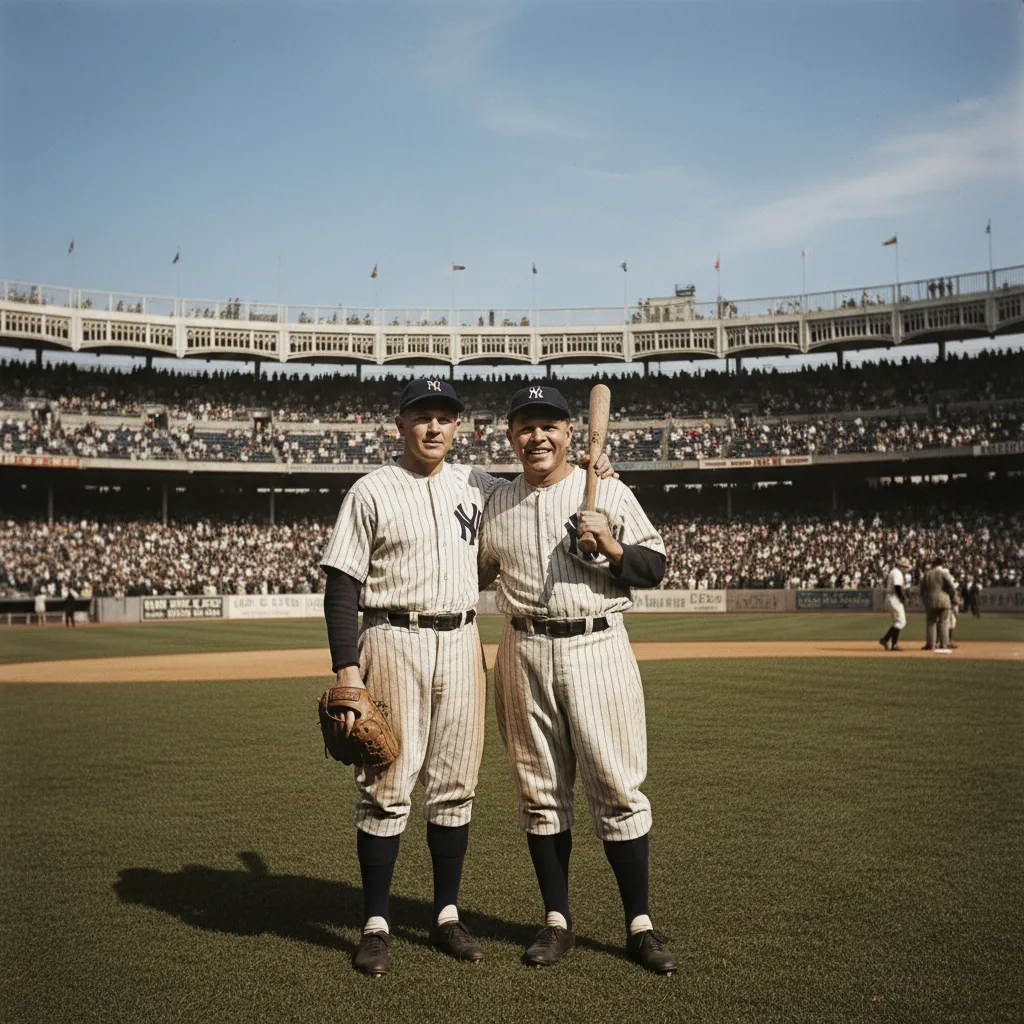
The legend of Lou Gehrig is inextricably linked to his astonishing record of 2,130 consecutive games played, a streak that began on June 1, 1925, and would stand for 56 years. This wasn’t merely a testament to physical endurance; it was a profound declaration of commitment. During this remarkable run, Gehrig endured a litany of injuries that would sideline lesser men: a broken thumb, multiple fractured fingers, a severe case of lumbago that forced him to bend over sideways while batting, and even a concussion from being hit by a pitch that caused him to collapse at the plate. He simply refused to sit out.
Contemporary accounts and medical records reveal a man who often played through excruciating pain, dismissing ailments with a shrug and a dose of aspirin. This relentless pursuit of availability wasn’t born of ego, but rather a deep-seated sense of responsibility to his team and the fans. It was a silent battle waged daily against his own body, a refusal to concede to weakness. This unyielding resolve earned him the moniker “The Iron Horse,” a title that perfectly encapsulated his rugged durability and tireless work ethic.
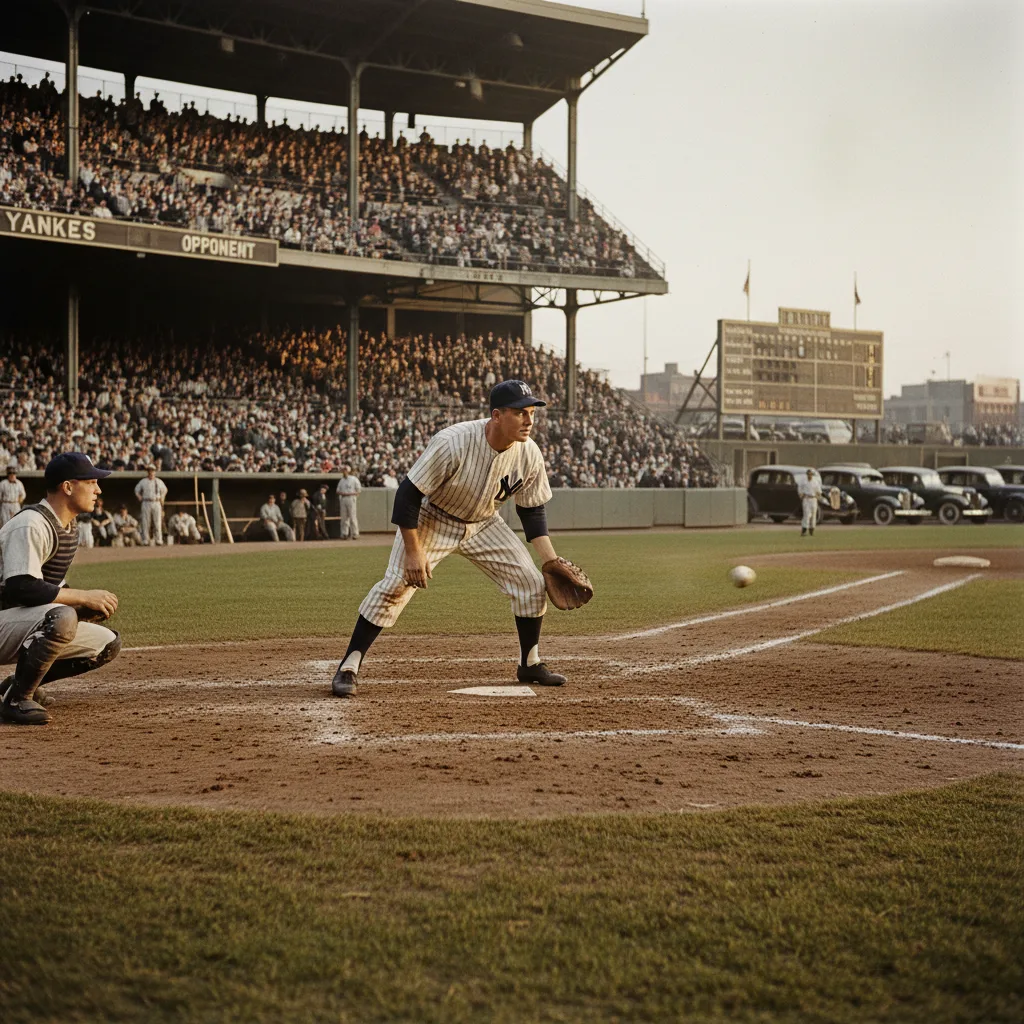
The streak became more than just a statistic; it was an embodiment of his character. It represented consistency, dependability, and an almost superhuman will. While the public marveled at the numbers, few understood the hidden toll. Each game played was a quiet victory over physical adversity, a private struggle that cemented his image as an unbreakable force. The streak, more than any home run, defined his unique brand of quiet heroism.
The Contradictions of a Champion: Power, Modesty, and Public Persona
Lou Gehrig’s on-field performance painted the picture of an unstoppable force. He finished his career with a .340 batting average, 493 home runs, and an astounding 1,995 RBIs, all while maintaining a quiet, almost shy demeanor off the field. He was a six-time World Series champion and the 1934 Triple Crown winner, yet he rarely sought the spotlight. This stark contrast between his thunderous power at the plate and his personal modesty created a unique public persona, one often misread as aloofness rather than genuine humility.
His relationship with the press was cordial but reserved. Unlike his gregarious teammate Babe Ruth, Gehrig preferred the company of his family, particularly his devoted mother, Christina Gehrig, and later, his wife, Eleanor Twitchell. He was a man of simple pleasures, content with a quiet evening rather than a raucous night out. This internal dichotomy – the titan of the diamond and the private, unassuming man – made him a fascinating, if sometimes enigmatic, figure. He achieved unparalleled success in a highly public arena, yet maintained a personal life largely shielded from the glare.
This quiet nature, however, also meant that many of his incredible achievements were often overshadowed. His 1936 MVP season, for instance, saw him bat .373 with 49 home runs and 152 RBIs, yet it often gets less historical emphasis than Ruth’s earlier, more dramatic exploits. Gehrig’s heroism wasn’t about grand gestures or self-aggrandizement; it was about the consistent, quiet delivery of excellence, a testament to a character that valued substance over flash.
The Whispers Begin: Unseen Struggles and Declining Performance
The first subtle, unsettling whispers of change began to emerge during the 1938 season. While Gehrig’s statistics remained respectable by ordinary standards – a .295 batting average, 29 home runs, and 114 RBIs – they represented a significant decline from his customary superhuman output. For a player who had consistently delivered .350+ averages, 40+ home runs, and 150+ RBIs for over a decade, these numbers were a glaring red flag to those who knew his capabilities intimately. Teammates, coaches, and even opponents began to notice a troubling shift in his physical abilities.
Accounts from that period describe Gehrig struggling with tasks that had once been effortless. He had difficulty tying his shoelaces, developed an uncharacteristic clumsiness on the field, and his once-effortless power seemed to wane. He struck out more frequently and struggled to run the bases with his usual speed. Yankees manager Joe McCarthy, a man not given to sentimentality, grew increasingly concerned, noticing the fatigue and loss of coordination that seemed to plague his usually indefatigable first baseman. These were not the signs of a player merely aging; they were indicators of something far more insidious at play.
By Spring Training 1939, the decline was undeniable. Gehrig’s once-powerful swing had become tentative, his throws across the diamond lacked their usual velocity, and his general demeanor was marked by an unusual weariness. He confessed to his wife, Eleanor, about feeling weak and unable to perform, a devastating admission for a man whose identity was so intertwined with his physical prowess. The public, largely unaware of the extent of his struggles, witnessed a legend slowly, inexplicably, fading. The Iron Horse was faltering, and no one, not even Gehrig himself, understood why.
The Diagnosis: A Silent Battle Unveiled
The true, devastating nature of Gehrig’s decline became horrifyingly clear in June 1939. After struggling through the first weeks of the season, recording only four hits in 28 at-bats and displaying profound physical limitations, Gehrig voluntarily benched himself on May 2, 1939, ending his consecutive games streak at 2,130. It was a decision that sent shockwaves through the baseball world, signaling that something was gravely wrong. Following an exhibition game in Seattle, his wife Eleanor urged him to seek a definitive medical opinion.
 On **June 19, 1939**, his 36th birthday, Gehrig traveled to the renowned **Mayo Clinic in Rochester, Minnesota**. There, after extensive examinations, **Dr. Paul O'Leary** delivered the crushing diagnosis: **Amyotrophic Lateral Sclerosis (ALS)**, a progressive neurodegenerative disease that attacks nerve cells in the brain and spinal cord. The news was a death sentence. At the time, ALS was a poorly understood and incurable condition, largely unknown to the general public.
The public announcement of his diagnosis on June 21, 1939, stunned the nation. Baseball fans grappled with the incomprehensible reality that their indestructible hero was facing an insurmountable foe. The disease, which would later become indelibly linked with his name as “Lou Gehrig’s Disease,” effectively ended his career and began his final, most challenging battle. The quiet hero, who had fought countless physical ailments in silence, was now confronting a terminal illness that would strip him of his strength, his voice, and ultimately, his life.
The Farewell: A Speech That Echoes Through Time
On July 4, 1939, a little over two weeks after his diagnosis was publicly confirmed, Lou Gehrig stood before a crowd of 61,808 at Yankee Stadium for a tribute day in his honor. Frail and visibly weakened, he delivered what would become one of the most iconic and poignant speeches in sports history. With a tremor in his voice, but an unmistakable dignity, he uttered the unforgettable words: “Fans, for the past two weeks you have been reading about a bad break. Yet today, I consider myself the luckiest man on the face of the earth.”
The power of that speech lay not in its length or oratorical flourish, but in its raw honesty and profound grace. Gehrig expressed gratitude for his teammates, his manager Joe McCarthy, his loving wife Eleanor, and the unwavering support of the fans. He acknowledged the grim reality of his situation but chose to focus on the blessings he had received. This wasn’t a man railing against fate; it was a man embracing his life, even as it slipped away. The silence of the stadium, punctuated by hushed sobs, amplified every word.
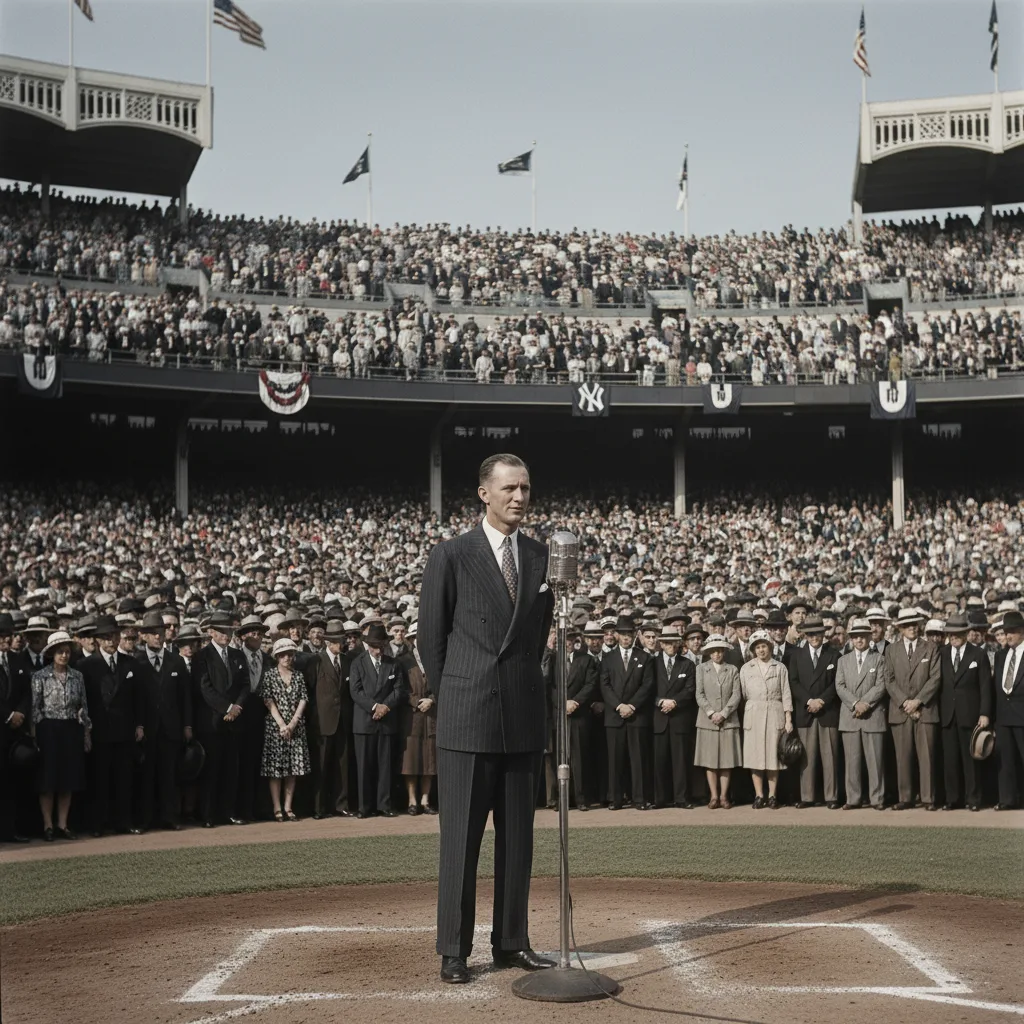
This farewell was a masterclass in quiet heroism. In a moment of unimaginable personal tragedy, Gehrig transcended self-pity, offering a message of hope and appreciation. His words not only cemented his legend but also brought an unprecedented level of public awareness to ALS. The speech, delivered by a man facing his mortality with such stoicism, forever etched his image into the American consciousness as the ultimate embodiment of courage under duress.
Beyond the Diamond: Lou Gehrig’s Enduring Legacy and the Fight Against ALS
Lou Gehrig’s life after baseball was tragically brief, but his commitment to public service and his enduring dignity continued to define him. In 1940, New York City Mayor Fiorello LaGuardia appointed him to the position of Parole Commissioner, a role he embraced with his characteristic conscientiousness. Despite his rapidly deteriorating physical condition, Gehrig dedicated himself to this new responsibility, demonstrating that his value extended far beyond the baseball diamond. He worked until his body simply could no longer function, displaying the same quiet resolve in this civic duty as he had in his athletic career.
He died on June 2, 1941, just shy of his 38th birthday, succumbing to the disease that now bears his name. His passing, while mourned deeply, ignited a legacy that continues to impact millions. By putting a human face to ALS, Gehrig inadvertently became the catalyst for global awareness and research efforts. The Lou Gehrig Memorial Award, established in 1955, honors MLB players who best exemplify his character and integrity. More significantly, organizations like the ALS Association tirelessly work to find a cure, with every fundraiser and research breakthrough standing as a testament to the man who first brought this devastating illness into the public consciousness.
His struggle and his grace in the face of it transformed a personal tragedy into a rallying cry for scientific advancement and compassionate care. Gehrig’s legacy is not just about baseball records; it is about the profound human spirit, the quiet strength that inspires generations to confront adversity, and the enduring power of a name to drive progress in the fight against disease.
The Unresolved Questions: What If and the Nature of Quiet Heroism
The story of Lou Gehrig inevitably leads to the haunting “what if.” What if ALS had not claimed him at the peak of his physical and mental prowess? Would he have surpassed Babe Ruth’s home run record? Would his career RBI total have become truly untouchable? These questions, while speculative, underscore the immense talent tragically cut short. Yet, perhaps the more profound “what if” lies in the nature of his heroism: What if he had been a more flamboyant, outspoken figure? Would his farewell speech have resonated with the same quiet power, or would it have been diluted by a lifetime of theatricality?
There remains a subtle tension in his public persona, particularly regarding the “luckiest man” declaration. Was it a genuine, heartfelt sentiment from a man who truly appreciated his life despite his fate, or was it a carefully constructed public facade designed to offer strength to others while masking profound despair? Investigative accounts suggest a complex truth: Gehrig was fundamentally a private man, yet he understood the public role he had to play. His unwavering dignity in the face of impending death was a conscious choice, a final act of service to the fans who adored him.
Ultimately, Lou Gehrig’s story compels us to reconsider the definition of heroism. It wasn’t forged in overt acts of rebellion or dramatic pronouncements, but in an almost relentless consistency, a stoic acceptance of fate, and an unyielding grace under unimaginable pressure. His was a heroism of quiet resolve, a strength found not in shouting, but in enduring. The questions he leaves behind are not about statistics, but about the profound capacity of the human spirit to find meaning and display dignity even when facing the ultimate darkness.
FAQ Section
Q1: What was Lou Gehrig’s full birth name? A1: Lou Gehrig’s full birth name was Heinrich Ludwig Gehrig. He was the son of German immigrants, and his name reflected his heritage.
Q2: How many consecutive games did Lou Gehrig play during his career? A2: Lou Gehrig played an astonishing 2,130 consecutive games for the New York Yankees. This record, which earned him the nickname “The Iron Horse,” stood for 56 years until broken by Cal Ripken Jr. in 1995.
Q3: What is ALS, and why is it sometimes called Lou Gehrig’s Disease? A3: ALS stands for Amyotrophic Lateral Sclerosis. It is a progressive neurodegenerative disease that affects nerve cells in the brain and spinal cord, leading to muscle weakness, paralysis, and eventually death. It is often called Lou Gehrig’s Disease because his highly publicized diagnosis and subsequent death brought significant public awareness to the previously little-known condition.
Q4: Did Lou Gehrig continue to work after his baseball career ended due to his diagnosis? A4: Yes, despite his rapidly declining health, Lou Gehrig took on a public service role. In 1940, he was appointed as a New York City Parole Commissioner by Mayor Fiorello LaGuardia, a position he held until his death in 1941, demonstrating his continued commitment to contribute even amidst his personal struggle.
Lou Gehrig’s narrative is a profound exploration of strength beyond the physical. His life, marked by unparalleled athletic achievement, was ultimately defined by the quiet dignity he displayed in the face of an insurmountable adversary. From the shadow of Babe Ruth to the devastating diagnosis of ALS, Gehrig consistently chose resolve over despair, humility over hubris. His legacy endures not just in baseball’s record books, but as a timeless testament to the human spirit’s capacity for grace under pressure, solidifying his place as an enduring quiet hero whose influence transcends the diamond, inspiring generations to confront their own challenges with unwavering courage.
You might also like:
👉 The Unseen Architects: Unveiling the 10 Most Important People in US History
👉 100 Most Influential People: Shapers of Human History & Future