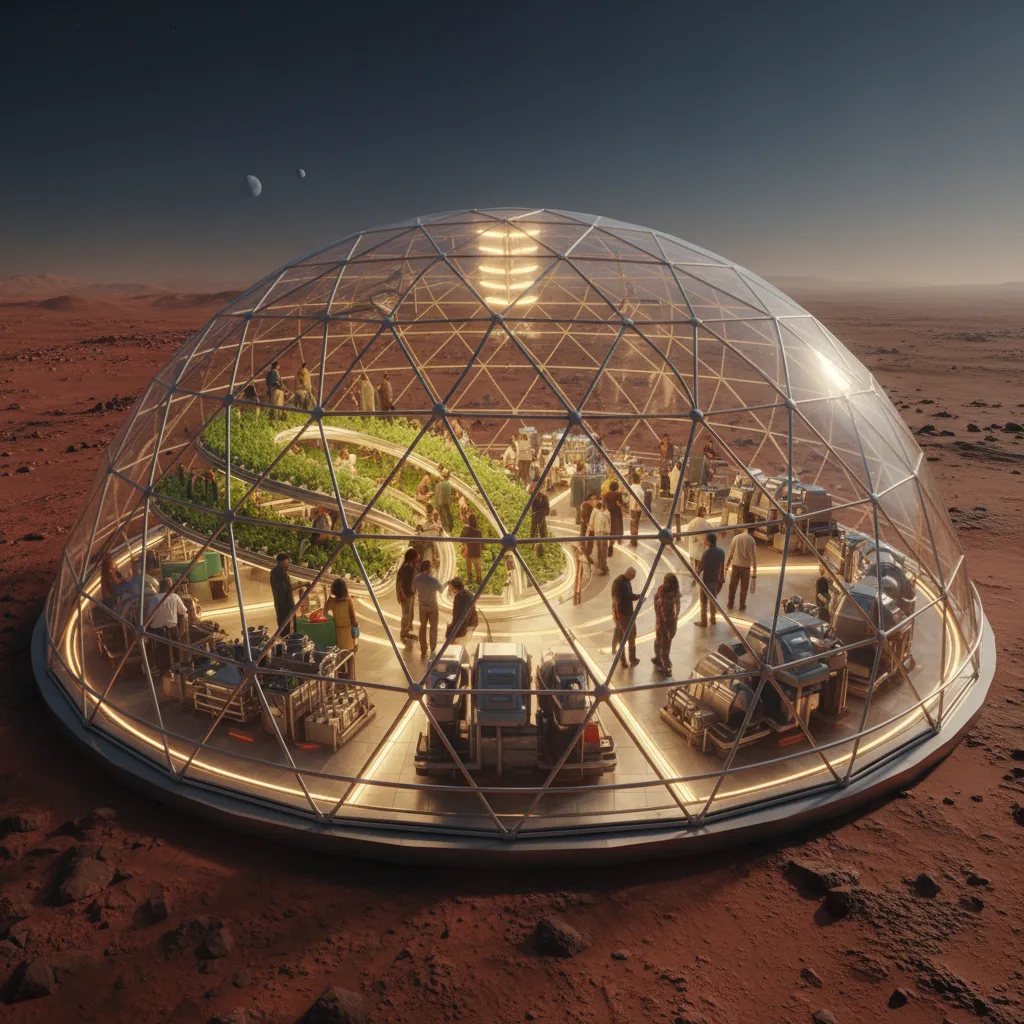
Martian Cities: Why Living on Mars Is Decades Away
Despite headlines painting imminent space colonization, the timeline for truly living off-world stretches far beyond what many assume, facing immense challenges.
Living Beyond Earth: A Reality Check
News headlines often paint a picture of imminent space colonization. We see concepts for vast Martian cities and lunar outposts, fueling public excitement. The hard facts, however, tell a different story. The timeline for truly living off-world stretches far beyond what many assume. Initial optimism, often fueled by science fiction, frequently overlooks immense challenges. A realistic assessment reveals the true complexity of these endeavors.
The biggest hurdles are not merely rocket power and basic survival. Instead, a complex web of engineering, biology, psychology, and economics presents challenges. Each discipline offers its own surprising and stubborn resistance. It is not just about getting to space. It is about staying there, thriving, and building a new civilization.
Who’s in space now?
As of 2024, over 80 countries operate space agencies. Only a handful possess independent launch capabilities. Major players include NASA, the European Space Agency (ESA), and Roscosmos. The China National Space Administration (CNSA) and the Japan Aerospace Exploration Agency (JAXA) are also key. These government agencies have historically driven exploration.
A significant shift occurred with the rise of private companies. SpaceX, led by Elon Musk, changed launch costs with reusable rockets like the Falcon 9. Blue Origin, founded by Jeff Bezos, also pursues ambitious goals for space access and infrastructure. Axiom Space aims to build and operate commercial space stations.
These entities collectively maintain a constant human presence in low Earth orbit aboard the International Space Station (ISS). They are also pushing towards returning humans to the Moon. Eventually, they plan to send crews to Mars. The current situation involves orbiting laboratories and robotic probes exploring distant worlds.
The Moon: Our next small step
NASA’s Artemis program aims to land humans on the Moon by late 2026 with the Artemis III mission. This mission marks the first human lunar landing since 1972. The goal isn’t just a visit. It’s to establish a long-term human presence and prepare for Mars.
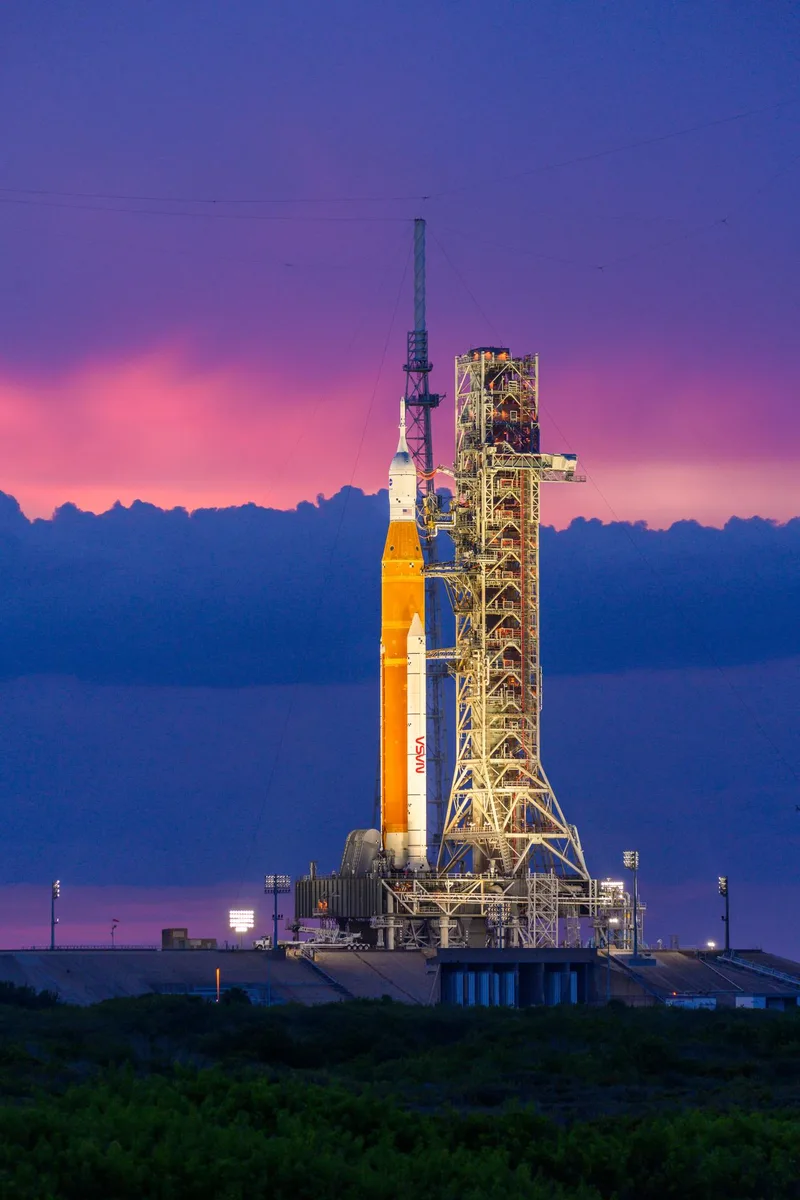
The Space Launch System (SLS) rocket is NASA's most powerful rocket ever built, designed to carry astronauts and cargo to the Moon as part of the Artemis program. Its successful uncrewed maiden flight, Artemis I, paved the way for future human missions to establish a long-term lunar presence. (Source: nasa.gov)
The sheer difficulty of lunar living is often underestimated. While the vacuum and cold are known challenges, regolith – lunar dust – presents a unique and debilitating problem. Regolith is abrasive, electrically charged, and gets everywhere. This dust damages equipment and potentially human lungs, as former astronaut Harrison Schmitt noted. Its insidious nature is greater than often perceived.
Radiation is a major factor. The Moon lacks a protective atmosphere and magnetic field. This exposes inhabitants to dangerous solar and cosmic radiation. Dr. Kris Lehnhardt, a scientist with NASA’s Human Research Program, emphasizes the ongoing research into mitigating these health risks. Developing effective radiation shielding for habitats remains a tough engineering challenge. It requires new materials and designs.
Mars: The far red dot
A one-way trip to Mars currently takes six to nine months, depending on orbital alignments. This lengthy journey introduces many challenges. They go far beyond those faced on the Moon. Radiation exposure intensifies during transit. The psychological impact of prolonged isolation and confinement becomes paramount.
Initial considerations often focus on rockets and landing. However, the human element might be the hardest part. Dr. Jennifer Fogarty, former Chief Scientist for NASA’s Human Research Program, highlights a key point. We need to understand how human bodies and minds adapt to extreme isolation. Group dynamics, mental health, and medical emergencies without immediate return options are profound concerns.
Establishing self-sufficiency on Mars is another huge task. Importing everything from Earth is unsustainable. The concept of In-Situ Resource Utilization (ISRU) is essential. This means using local Martian resources. For example, water ice can become propellant and breathable air, as advocated by organizations like the Mars Society. Developing reliable, autonomous systems for ISRU under Martian conditions is a significant hurdle.
Building a new world: The colonization conundrum
Maintaining even a small, isolated research station like Antarctica’s McMurdo requires constant resupply from Earth. True colonization means creating a self-sustaining outpost, one independent of regular Earth shipments. This is where engineering complexity becomes immense.
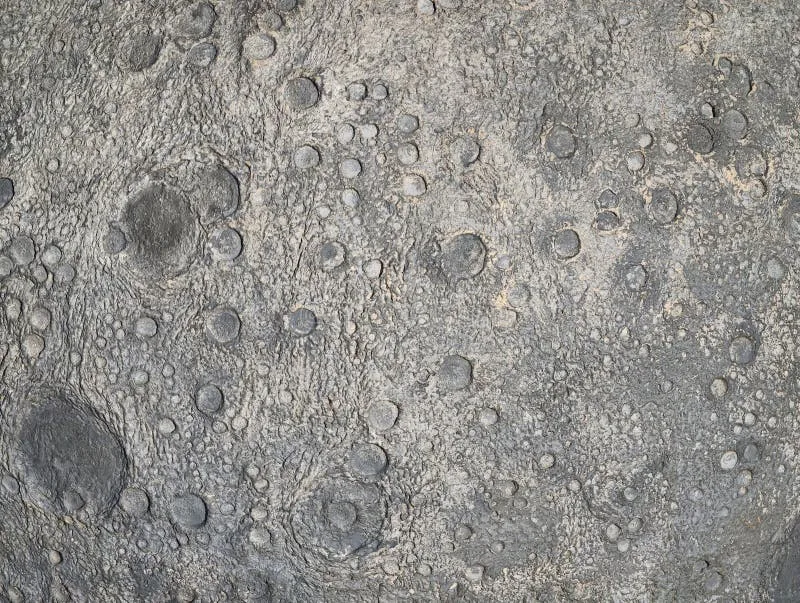
A magnified view of lunar regolith, or moon dust. This abrasive, electrically charged material poses significant challenges for future lunar missions, damaging equipment and potentially harming human lungs, as noted by former astronaut Harrison Schmitt. (Source: dreamstime.com)
Early visions often depict domed cities. The reality involves closed-loop life support systems. These systems recycle air, water, and waste with nearly 100% efficiency. Such systems are incredibly difficult to perfect and maintain, even on Earth. Dr. Robert Zubrin of the Mars Society often discusses the need for self-replicating robotic factories to build infrastructure. This technology is still largely theoretical.
Energy generation is another key piece. Solar power is viable. However, dust accumulation and limited sunlight during Martian dust storms or lunar nights pose problems. Nuclear power, while efficient, carries its own set of safety and political challenges. Building complex power grids in an alien environment presents unprecedented engineering tasks. This isn’t just about building a house; it’s about establishing an entire utility company from scratch.
Money and morals: Off-world living
The global space economy reached over $546 billion in 2023, according to the Space Foundation. This growth is largely driven by commercial satellites and launch services, not deep space colonization. Funding for true colonization efforts remains a significant challenge. Governments face budget constraints. Private companies need a compelling business case to justify the enormous investment.
Government agencies have historically led space efforts. However, there is a growing emphasis on public-private partnerships. Commercial ventures are expected to eventually drive colonization. Companies like SpaceX are investing heavily; yet, their current business model relies on Earth-based contracts. Creating an off-world economy that can sustain colonies is a far-off goal.
Ethical considerations are also emerging. The Outer Space Treaty of 1967 declares space as the “province of all mankind,” prohibiting national appropriation. Questions of resource ownership, planetary protection (avoiding contamination of other worlds), and governance for off-world settlements remain unresolved. Who will make the laws for a lunar city? This is a question with no easy answers, as detailed in reports from the United Nations Committee on the Peaceful Uses of Outer Space.
What’s next? Small steps to a big future
The International Space Station (ISS) will likely operate until 2030. It represents decades of international cooperation in low Earth orbit. This long-term presence has provided invaluable data on human adaptation to space. The next steps are not sudden leaps, but rather a series of carefully planned, incremental advancements.
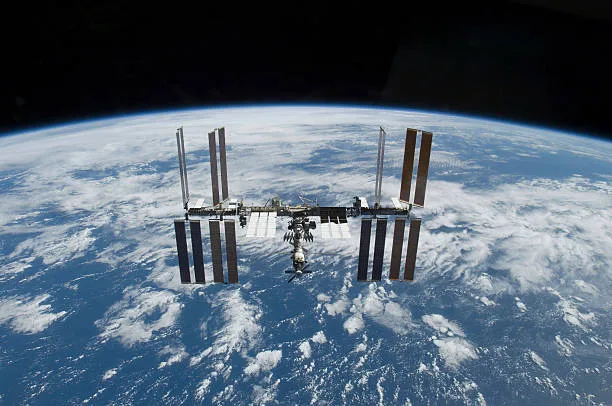
The International Space Station (ISS) has been a continuous human presence in low Earth orbit since 2000, providing invaluable data on human adaptation to space and demonstrating international cooperation. It is expected to operate until 2030, serving as a crucial stepping stone for future deep space missions. (Source: gettyimages.co.uk)
NASA’s Gateway lunar orbital outpost should complete later this decade. It will be a staging point for lunar missions and deep space travel. It won’t be a permanent home; instead, it will be a key piece of infrastructure. Private companies, like Axiom Space, are developing commercial modules for the ISS and future standalone stations. This commercialization of low Earth orbit marks a significant step.
An initial vision of immediate space cities was too simplistic. The future of space exploration and colonization requires human ingenuity and extreme patience. It will involve sustained international collaboration, continued private sector innovation, and dedicated scientific research. All this will help overcome the biological and technological hurdles. Living on Mars next decade is unlikely. However, foundations are steadily being built for a future where humanity might, eventually, call another world home.
FAQ
Q1: When will we live on the Moon? A permanent, self-sustaining human presence on the Moon is likely decades away, perhaps by the 2040s or 2050s. Initial outposts, like those planned by the Artemis program, will be research stations requiring significant Earth resupply.
Q2: Is Mars colonization realistic? Yes, it is realistic in the long term; however, it is incredibly challenging. The technological, biological, and psychological hurdles are immense, making sustained colonization a goal for the latter half of this century, at the earliest.
Q3: Who owns resources in space? The 1967 Outer Space Treaty prevents any nation from claiming sovereignty over celestial bodies. However, the legal framework for private companies to extract and own space resources is still under development and heavily debated internationally.
Q4: What’s the biggest challenge to space colonization? The biggest challenge isn’t just technology. It’s creating closed-loop, self-sustaining ecosystems that support human life independently of Earth. This involves mastering complex life support, resource utilization, and human behavioral dynamics for long durations.
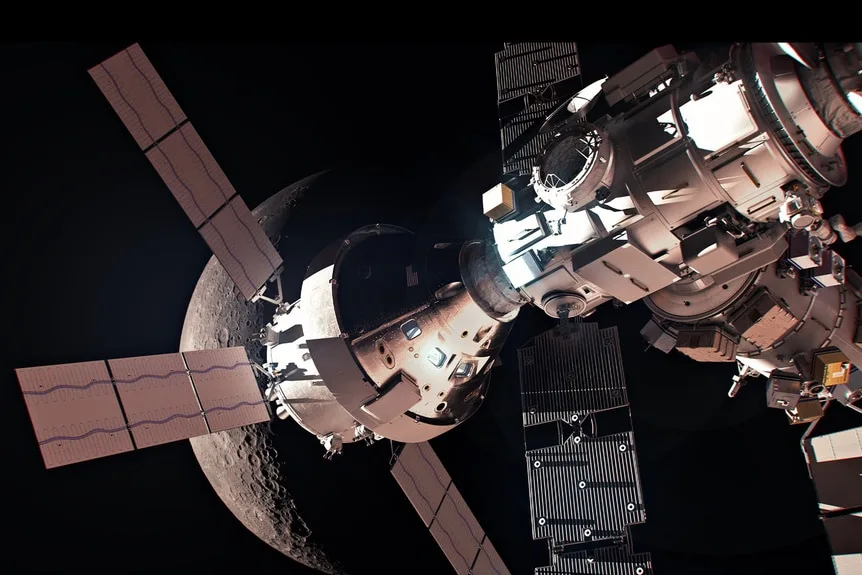
NASA's Gateway lunar orbital outpost, a critical component of the Artemis program, is designed to orbit the Moon and serve as a multi-purpose staging point for lunar surface missions and future deep space exploration. It is expected to be completed later this decade. (Source: syfy.com)
You might also like:
👉 Space Colonization: The Grand Illusion & Earth’s Real Solutions
👉 The $546 Billion Space Race: Private Money, Global Rivalries