
What's Truly Most Expensive & Valuable in the World?
Deconstruct conventional wisdom about value. Beyond diamonds and art, discover the world's most expensive and valuable assets, exploring diverse perspectives.
The Most Expensive and Valuable Thing in the World: A Contrarian Deconstruction
The conventional wisdom is as predictable as it is flawed: when asked about the most expensive and valuable thing in the world, minds invariably drift to the glittering and the grand. We picture the Pink Star Diamond, a flawless marvel fetching over $71 million at Sotheby’s in 2017. Or perhaps Leonardo da Vinci’s Salvator Mundi, controversially acquired for a staggering $450 million in 2017, shattering art market records. Some might cite the vast, shimmering reserves of gold held by central banks, or the seemingly boundless market capitalization of tech giants like Apple or NVIDIA. These are certainly expensive, demonstrably valuable in a transactional sense. Yet, this myopic focus on tangible assets or easily quantifiable market figures misses the fundamental truth. To truly understand what holds the ultimate, enduring value, we must look beyond the obvious, dissect the mechanisms of perceived worth, and challenge the very metrics we use to define “expensive” and “valuable.”
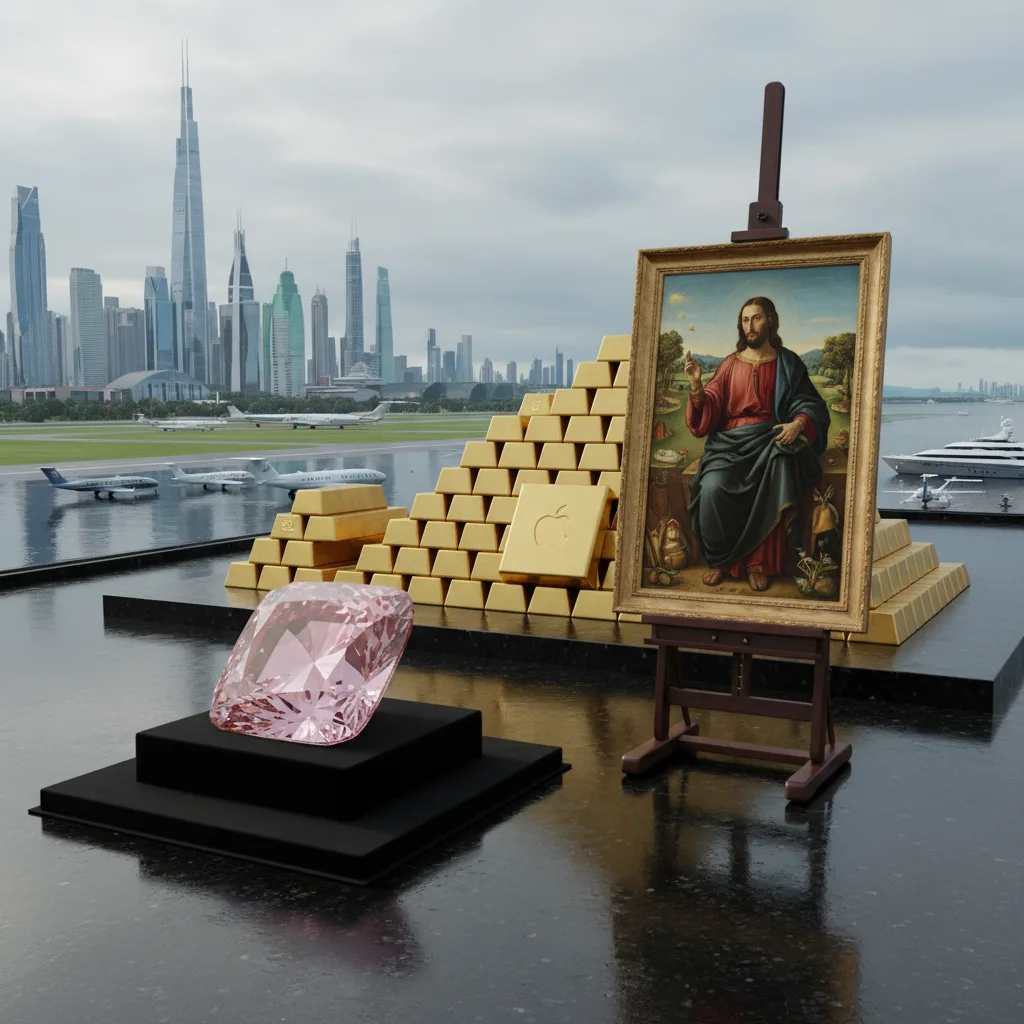
Challenging the Obvious: Gold, Diamonds, and the Illusion of Tangible Wealth
The reflex to identify gold, rare gemstones, or masterpieces of art as the pinnacle of value is deeply ingrained, a product of centuries of human aspiration and economic conditioning. Gold, historically a store of wealth, continues to be hoarded by nations and individuals alike. Its inherent properties – malleability, resistance to corrosion, and relative scarcity – have cemented its status. Diamonds, too, are peddled as symbols of everlasting love and luxury, their prices sustained by decades of shrewd marketing and supply control, notably by the De Beers cartel for much of the 20th century. A 2023 report by Bain & Company highlighted the resilience of the luxury market, with high-end watches and jewelry maintaining strong secondary market values, often appreciating.
However, this valuation is largely a construct, a testament to collective belief and controlled supply rather than intrinsic utility. What actual function does a diamond serve beyond adornment and industrial cutting? Gold, while useful in electronics, derives its exorbitant price primarily from its symbolic weight. These items are expensive because we agree they are, and because their availability is often manipulated. Their value is largely extrinsic, tied to market sentiment, geopolitical stability, and the whims of the ultra-rich. Consider the historical tulip mania of the 17th century, where a single tulip bulb could trade for the price of a house. The absurdity of such speculative bubbles underscores how easily perceived value can detach from any real-world utility or long-term intrinsic worth.
The Scarcity Myth: Debunking the Price Tags of Physical Rarity
The allure of the “most expensive” often hinges on extreme rarity. The Blue Moon Diamond, a 12.03-carat flawless blue diamond, sold for $48.4 million in 2015, its value driven by an almost inconceivable confluence of size, color, and purity. Similarly, the world of classic cars sees astronomical figures, like the 1962 Ferrari 250 GTO that commanded over $48 million at auction in 2018, its value amplified by its racing pedigree and the mere 36 units produced. These transactions are spectacular, undeniably expensive, and rooted in a scarcity that is, to a degree, natural.

Yet, this “natural” scarcity is often amplified or even manufactured. The diamond industry, for decades, meticulously managed supply to maintain high prices, creating an artificial scarcity narrative. The art market, while dealing with truly unique pieces, is famously opaque and susceptible to speculative bubbles, as seen with the post-2017 trajectory of the “Salvator Mundi,” whose authenticity and condition remain subjects of debate, casting a shadow over its record-breaking price. Data from Artnet’s Intelligence Report consistently shows that while the top tier of the art market soars, the broader market is far more volatile, indicating that these extreme prices are more about the unique status of a few pieces and the concentrated wealth of a few buyers than a universal valuation principle. The fundamental question remains: if a resource is truly abundant but its supply is artificially constrained, is its resulting high price a true reflection of its intrinsic value, or merely a testament to market manipulation?
Beyond Commodities: The Unquantifiable Value of Information and Data
To truly grasp the most valuable commodity, we must pivot from the tangible to the intangible. In the 21st century, the undisputed king is information, or more precisely, data. This isn’t a new concept, but its scale and ramifications are unprecedented. Companies like Google, Meta (Facebook), and Amazon don’t just sell products or services; they are fundamentally data enterprises. Their market capitalizations, collectively trillions of dollars, are not merely reflections of their physical assets or even their current revenue streams, but of their unparalleled ability to collect, process, analyze, and monetize vast quantities of user data.
Consider the economics of advertising. Global digital ad spending surpassed $600 billion in 2023, a market driven almost entirely by the precision targeting enabled by user data. Shoshana Zuboff, in “The Age of Surveillance Capitalism,” meticulously details how this “behavioral surplus” – the data exhaust of our digital lives – is extracted, refined, and used to predict and even modify human behavior. The value here isn’t just in the raw data itself, but in the predictive power it confers. A single individual’s browsing history, purchase patterns, and social connections, aggregated and analyzed, becomes a goldmine for advertisers, political campaigns, and even governments. The Cambridge Analytica scandal, while focused on political manipulation, starkly illustrated the immense value placed on micro-targeted influence, showing how data can be leveraged to shape public opinion and even electoral outcomes, a power far exceeding the cost of any single diamond or painting.
The Ultimate Non-Renewable: Time, Attention, and Cognitive Real Estate
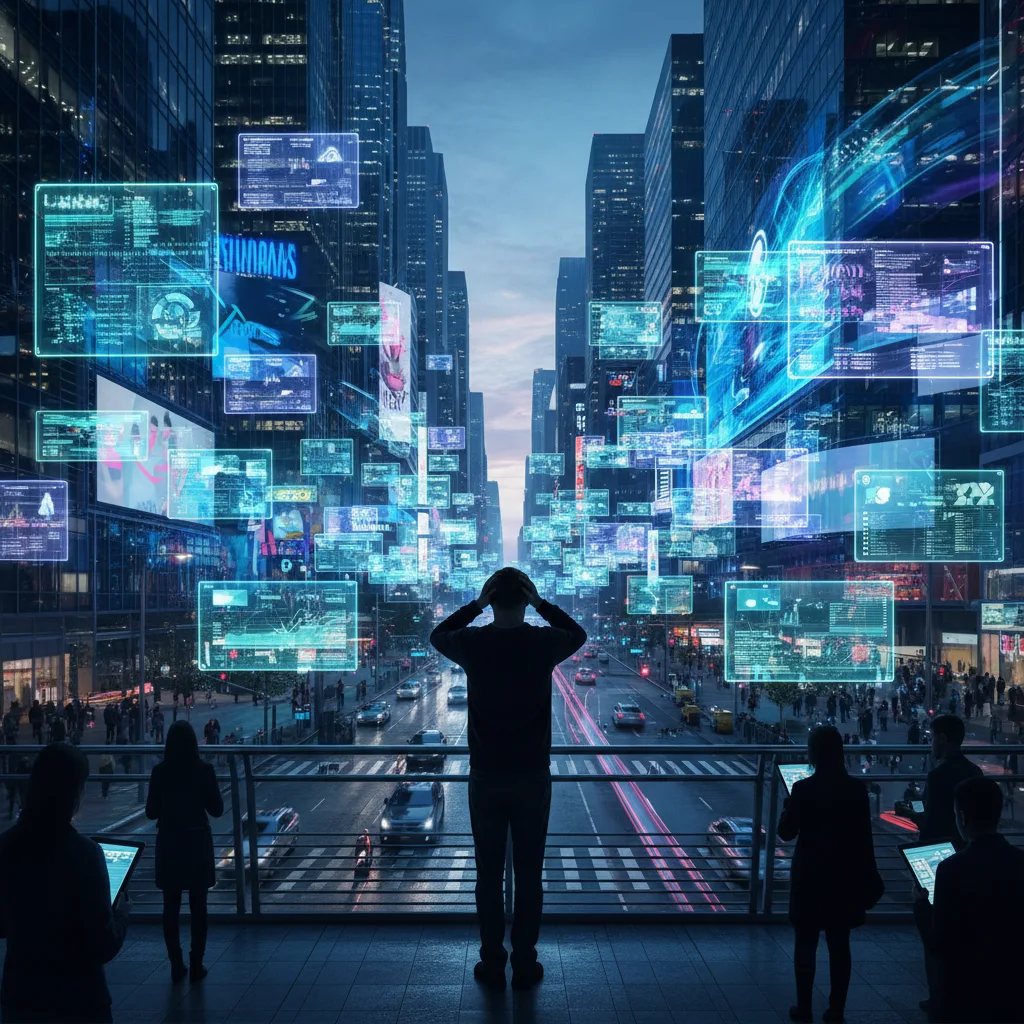
If data is the new oil, then attention is the new gold, and time its most precious vessel. In an era of infinite information and pervasive digital platforms, the ability to capture, hold, and direct human attention has become the ultimate economic battleground. Every notification, every endless scroll, every algorithmically curated feed is designed to maximize “time on app” and “engagement.” Companies like TikTok, with its hyper-addictive recommendation engine, are valued in the hundreds of billions not for physical products, but for their unparalleled capacity to monopolize billions of hours of human attention daily.
Economist Herbert Simon famously observed in 1971, “What information consumes is rather obvious: it consumes the attention of its recipients. Hence a wealth of information creates a poverty of attention.” This prescient insight is more relevant than ever. The average person spends over 7 hours daily interacting with digital media, according to DataReportal’s 2024 Digital Global Overview Report. This constant bombardment makes focused attention and undistracted time incredibly scarce and, by extension, profoundly valuable. High-net-worth individuals increasingly invest in “digital detox” retreats, personal assistants to manage their schedules, or even technologies designed to minimize interruptions – all to reclaim their time and attention. The ability to concentrate, to engage in “deep work,” or simply to experience uninterrupted leisure, is no longer a given; it is a luxury, a hard-won commodity that defines true autonomy in the 21st century.
The Geopolitical Chessboard: Control of Essential Resources and Strategic Advantage
Shifting our lens to the geopolitical scale, the most expensive and valuable things are not individual items, but the control over essential resources and strategic advantages that underpin national power and global stability. These are the levers of influence, the foundations of modern economies, and often, the flashpoints of international conflict. Consider rare earth elements, critical for everything from smartphones and electric vehicles to defense systems. China’s near-monopoly on their mining and processing gives it immense leverage, a strategic asset far more valuable than any individual commodity.
Another prime example is semiconductor manufacturing capability. The Taiwanese Semiconductor Manufacturing Company (TSMC) produces over 90% of the world’s most advanced chips, making Taiwan a crucial node in the global economy and a geopolitical hotbed. The US-China tech war is not just about trade; it’s a battle for technological supremacy, recognizing that control over advanced chip manufacturing translates directly into economic, military, and digital power. Furthermore, freshwater resources are rapidly emerging as a critical geopolitical asset. The United Nations estimates that by 2030, global demand for water will exceed supply by 40%. Regions like the Middle East and parts of Africa already face severe water stress, leading to potential conflicts over shared rivers and aquifers. These are not assets bought and sold on open markets like gold; their value is measured in national security, economic resilience, and the very survival of populations.
The Priceless Pursuit: Health, Longevity, and the Human Condition
Moving closer to the individual experience, what could be more valuable than health and longevity? The COVID-19 pandemic starkly illuminated the profound, almost incalculable value of human life and well-being. The global economic cost of the pandemic, estimated in trillions of dollars, pales in comparison to the loss of millions of lives and the widespread suffering. This crisis underscored that robust public health infrastructure, access to quality medical care, and scientific innovation in disease prevention and treatment are not mere expenditures, but investments in the most fundamental human capital.
The burgeoning “longevity economy” is a testament to this value. Companies like Altos Labs, backed by billionaires like Jeff Bezos and Yuri Milner, are investing billions into cellular rejuvenation programming, aiming to reverse disease and extend healthy human lifespan. The market for personalized medicine, gene therapies like CRISPR, and advanced diagnostics is exploding, with projections reaching hundreds of billions of dollars. This isn’t just about avoiding death, but about maximizing healthspan – the period of life spent in good health. The ability to maintain cognitive function, physical vitality, and freedom from chronic illness is, for many, the ultimate luxury, far surpassing the fleeting pleasure of material possessions. It represents the most profound form of self-investment, offering the chance to experience more time, more experiences, and more opportunities.
The Intangible Infrastructure: Trust, Reputation, and Social Capital
Underpinning every economic transaction, every political system, and every human interaction is an often-overlooked, yet utterly indispensable asset: trust. This isn’t a commodity you can buy or sell directly, but its presence or absence dictates the efficiency, stability, and very possibility of all other valuable exchanges. Reputation, whether for an individual, a corporation, or a nation, is the accumulated sum of perceived trustworthiness. Without it, contracts are worthless, currencies lose their backing, and social cohesion crumbles.
 Consider the spectacular collapse of Enron in 2001. Its market capitalization, once over \$60 billion, evaporated almost overnight when its reputation for honesty and transparent accounting was irrevocably shattered. The subsequent loss of investor trust cost billions and led to widespread regulatory reforms. On a national level, a country's **credit rating** is a direct reflection of global trust in its economic stability and fiscal responsibility. A downgrade can trigger capital flight and dramatically increase borrowing costs, impacting millions. In the digital age, cybersecurity breaches erode trust in institutions, while misinformation campaigns deliberately sow distrust in media and democratic processes. Francis Fukuyama's work on social capital highlights how trust, embedded in social networks and norms, is a vital ingredient for economic prosperity and democratic governance. Its erosion is an existential threat, making its preservation and cultivation arguably the most valuable collective endeavor.
The Most Expensive and Valuable Thing in the World: A Synthesis of Scarcity and Necessity
So, what is the most expensive and valuable thing in the world? It is not a singular object or a simple quantifiable asset. It is a complex, dynamic interplay of critical, non-renewable resources, both tangible and intangible, that are essential for human flourishing, national security, and collective well-being. It is the convergent value of clean water, breathable air, and stable climate – foundational elements increasingly under threat. It is the irreplaceable human capital of health, time, and attention, which, once squandered, cannot be fully reclaimed. It is the strategic control over the technological and natural resources that power modern civilization, alongside the unseen infrastructure of trust and social cohesion that allows societies to function.
The “most valuable” isn’t found in a vault or an auction house; it resides in the resilience of our ecosystems, the integrity of our institutions, the health of our populations, and the quality of our collective future. It is a value that cannot be commodified in isolation, but manifests in the presence of security, opportunity, and well-being. To truly understand its worth, we must shift our focus from individual acquisition to collective stewardship, from short-term gain to long-term sustainability.
FAQ Section
Q1: Is natural resource scarcity the primary driver of value for the “most valuable things”? A1: While scarcity certainly plays a role, especially for commodities like rare earth elements or freshwater, it’s often the necessity and irreplaceability of that resource, coupled with its strategic control or the human effort required to access/process it, that defines its ultimate value. Artificial scarcity, as seen with diamonds, demonstrates that market manipulation can also inflate prices independently of true necessity.
Q2: Can intangible assets truly be considered “the most valuable” alongside physical resources? A2: Absolutely. In the 21st century, intangible assets like data, information, attention, and trust are not merely abstract concepts; they are the fundamental drivers of economic power, political influence, and societal stability. Their impact on market capitalizations, geopolitical dynamics, and individual well-being is often more profound and far-reaching than that of many physical commodities.
Q3: How does individual perception influence what is deemed valuable? A3: Individual perception is a powerful, though often subjective, determinant of value. Luxury goods, art, and even personal time gain immense value because individuals and societies agree to assign them high worth, often driven by status, emotional connection, or a desire for distinction. However, this differs from the objective, foundational value of things like clean air or health, which are universally essential regardless of individual perception.
Q4: What role does technology play in redefining value? A4: Technology is a primary force in redefining value. It has made information infinitely reproducible, shifting value from scarcity of copies to scarcity of attention. It enables the unprecedented collection and analysis of data, creating new forms of economic power. Simultaneously, technological advancements in fields like biotechnology underscore the immense value of extending healthy human life and well-being.
Conclusion
The pursuit of the “most expensive and valuable thing in the world” reveals a fundamental tension between what we price and what we truly value. Our conventional metrics, fixated on monetary exchange and tangible luxury, often blind us to the foundational assets that underpin all human endeavor. The real treasures are not singular, static objects but dynamic, interconnected systems: the integrity of our planet’s life support systems, the health and potential of humanity, the invisible threads of trust that bind societies, and the precious, finite resource of our collective attention and time. Recognizing this complex truth is the first step toward safeguarding what genuinely matters.
You might also like:
👉 World’s Most Expensive Antiques: Priceless Treasures Unveiled
👉 World’s Most Expensive Buyable Items: Ultra-Luxury Guide
👉 Minimalism’s Impact: The Death of Detail in a Modern World