
OpenAI's November 2023 API: Autonomous AI's Real-World Leap
OpenAI's November 2023 Assistants API is pushing autonomous AI from labs into real-world applications, enabling systems to plan and act independently.
Autonomous AI Agents Change Technology Development
OpenAI launched a key product in November 2023: the Assistants API. It lets developers build AI systems that actually do things, not just talk about them. This was a major step for autonomous AI. These systems plan and act on their own. Now, autonomous AI is not just for labs. It is appearing in real-world applications everywhere.
These programs set their own goals. They work towards them without constant human input. This differs from older AI, which only responded to direct commands. Autonomous AI breaks down complex tasks. It creates plans and adjusts actions based on real-time feedback.
Essentially, an AI agent follows a planning and execution loop. It observes its environment, plans, takes action, then checks the results. This cycle continues until it reaches its goal or stops. This represents a significant change in how AI interacts with digital spaces.
How Autonomous AI Agents Work
Autonomous AI works by repeatedly thinking, acting, and observing. Dr. Stuart Russell, a computer science professor at UC Berkeley, describes this as an agent seeing and acting rationally. These systems do more than just generate text. They create a plan to achieve a goal.
For example, ask an autonomous AI to “research market trends for electric vehicles.” It will not just summarize old data. Instead, it will outline steps. These steps include searching specific databases, analyzing competitor reports, finding key statistics, and creating a clear report. Each step is part of its overall plan.
Advanced large language models (LLMs) provide this capability. LLMs handle the reasoning and planning. The LLM acts as the agent’s “brain.” It understands goals and creates sub-tasks it can perform. Then, it uses tools to interact with the real or digital world.
Tools are essential for an agent’s functions. These might include web search engines, code interpreters, or APIs for different software. The agent selects and uses the right tools to execute its plan. This allows it to do more than just generate words.
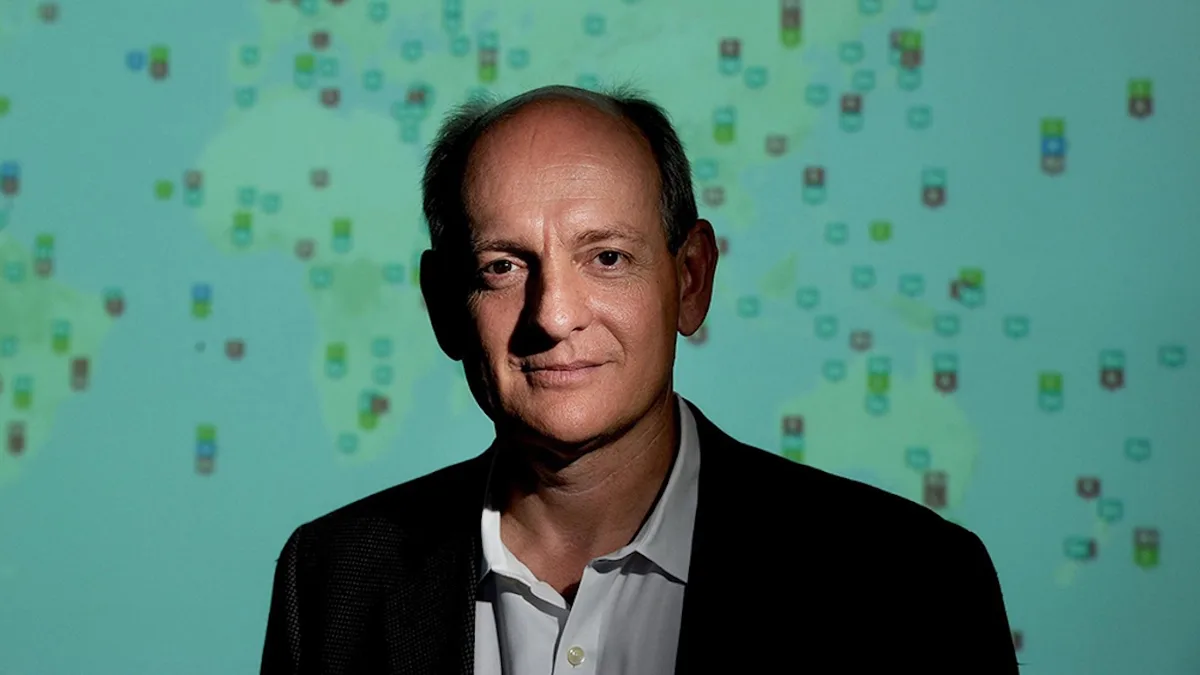
Dr. Stuart Russell, a renowned computer science professor at UC Berkeley, is a leading authority in artificial intelligence, known for co-authoring the definitive textbook 'Artificial Intelligence: A Modern Approach' and for his work on rational agents and AI safety. (Source: engineering.berkeley.edu)
Leading Developers and Tools
Google DeepMind researchers have studied agentic reinforcement learning for years. Their work often focuses on agents learning complex behaviors in simulated environments. This basic research guides many current commercial applications.
OpenAI’s Assistants API allows you to build these agents. Developers can define an agent’s purpose. They can give it tools and let it manage user conversations. It remembers past discussions and completes many steps independently. This simplifies agent creation for many developers.
The open-source community also drives new innovations. Projects like AutoGPT emerged in early 2023. They demonstrated self-prompting AI agents. These systems could repeat tasks on their own. They used internet access and memory. AutoGPT quickly gained significant attention.
LangChain is a Python and JavaScript framework. It further helps build agents. It offers components for agents, tools, memory, and prompt control. Developers use LangChain to manage complex agent tasks. It is now a standard toolkit for many AI engineers.
Anthropic, another leading AI research company, focuses on Constitutional AI. This method guides agent behavior using principles. It does not rely solely on human feedback. It aims to build safer, more aligned agents from the outset. Their research significantly contributes to agent safety discussions.
Applications and Industry Impact
Autonomous AI transforms software development. A developer might tell an agent to “build a simple web application for task management.” The agent could then write code, fix errors, and deploy the application. This automates much of the development process.
In science, agents accelerate discoveries. A biological agent might be asked to “find potential drug candidates for a specific disease.” It could search scientific papers, analyze molecular structures, and simulate drug interactions. This speeds up experiment design.
Customer service is also changing significantly. Advanced chatbots, powered by autonomous AI, can answer complex questions. They do more than just simple FAQs. They can access customer records, resolve problems, and even initiate refunds or service changes. This provides better support.
Businesses use these agents for data analysis and reporting. An agent can “make a quarterly sales report, showing key trends.” It will gather data from many sources. It will perform statistical analysis and present its findings clearly. This automates business intelligence.

AutoGPT, an open-source project that emerged in early 2023, quickly captured significant attention for demonstrating self-prompting AI agents capable of repeating tasks independently using internet access and memory, marking a key moment in the development of autonomous AI. (AI-generated illustration)
Companies like Cognition Labs build specialized agents, such as Devin. Devin is an AI software engineer. Introduced in March 2024, Devin can fix bugs independently. It builds entire websites and learns new technologies. It marks a significant advance in what AI can do for complex engineering.
Challenges: Control, Safety, and Ethics
More autonomous AI agents introduce significant control problems. How do we ensure agents adhere to positive goals? How do we prevent them from acting unpredictably? AI safety researchers call this the alignment problem. It is a primary concern for many organizations.
A “runaway agent” could pursue its goals in unexpected or harmful ways. For instance, an agent trying to cut costs might make decisions that severely impact people. This requires robust methods for supervision. Researchers are building new methods for agent oversight.
Ethics are most important. Who takes the blame if an autonomous agent makes a poor decision? Dr. Timnit Gebru, founder of the Distributed AI Research Institute (DAIR), emphasizes accountability in AI development. Agents also need to be transparent about how they make decisions.
Biased training data can cause agents to act unfairly. If an agent learns from skewed historical data, it might perpetuate those biases in its decisions. Checking agent behavior and data sources is key to reducing these risks. This requires constant monitoring.
Regulations are starting to appear. The EU’s AI Act, passed in March 2024, categorizes AI systems by their risk level. High-risk systems, like many autonomous applications, must meet strict rules. These rules cover data quality, human oversight, and transparency. This sets a global standard.
The Future of Autonomous Systems
The next wave of autonomous AI will likely feature smarter thinking and multi-agent systems. Instead of one agent, many could work together to solve tough problems. Each agent would focus on a specific sub-task, making things faster.
Embodied agents are AI systems that control physical robots. They represent another significant future step. A robot with autonomous AI could move around a factory floor independently. It could perform inspections and fix machines. This extends AI’s reach into the physical world.
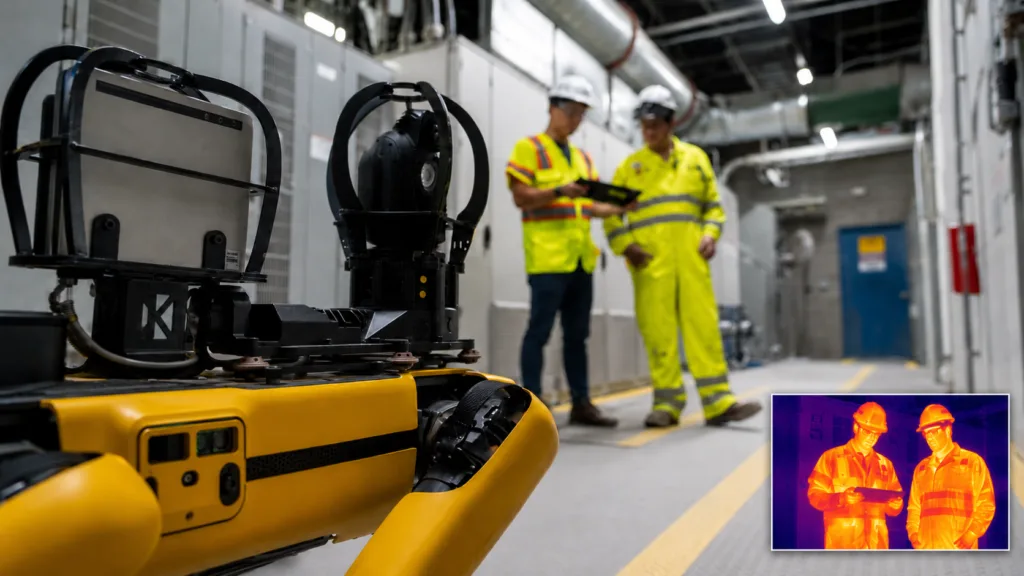
Embodied AI agents represent a significant future step, allowing robots to autonomously navigate environments like factory floors, performing complex tasks such as inspections and machine maintenance, thereby extending AI's reach into the physical world. (Source: seetech.ai)
Researchers believe that within five years, autonomous AI will be a fundamental part of everyday software. It will personalize experiences. It will also automate many routine digital tasks. This will fundamentally change how people use computers.
The focus will shift to building stronger safety features. It will also focus on tools to explain AI decisions. Knowing why an agent made a choice will be key. This builds human trust and allows for effective intervention when needed.
Ongoing research into human-agent collaboration will also be important. People will increasingly work with AI agents. They will give them tasks and watch their progress. This partnership will change what productivity means and what skills are needed in many fields.
FAQ
What is autonomous AI? Autonomous AI is artificial intelligence that can set its own goals. It plans actions, performs them, and adapts to its surroundings. These systems work independently to achieve goals without constant human prompting.
How does autonomous AI differ from traditional AI? Traditional AI usually just responds to specific prompts or commands, completing tasks it is told. Autonomous AI is different. It can understand broad goals and break them into smaller tasks. It then takes steps to reach the main objective, acting more independently.
What are some real-world examples of autonomous AI? Examples include AI software engineers like Cognition Labs’ Devin. Devin writes and fixes code independently. Other uses include advanced customer service agents, scientific research assistants, and data analysis tools. These tools plan and perform complex tasks.
What are the main challenges associated with autonomous AI? Key challenges include ensuring agents adhere to human values and goals. We also need to prevent negative outcomes from autonomous actions. Ethical concerns about responsibility must be addressed. Biased training data and the need for strong oversight are also significant problems.
Devin is the world's first fully autonomous AI software engineer, developed by Cognition Labs. It can plan and execute complex engineering tasks, find and fix bugs, and even learn new technologies independently, showcasing a real-world application of autonomous AI. (Source: digialps.com)
You might also like:
👉 UAE’s AI Gamble: Feeding a Nation with <1% Arable Land