Peter Thiel & Elon Musk: Architects of Tomorrow's Tech Empire
Explore the formative years of tech giants Peter Thiel and Elon Musk, from their PayPal origins to shaping the future of finance and technology. Discover their shared vision.
The Architects of Tomorrow: Exploring the Dynamic World of Peter Thiel and Elon Musk
 Imagine the late 1990s, a garage in Palo Alto, or perhaps a nondescript office building humming with the frantic energy of dial-up modems and nascent internet dreams. The air crackled with ambition, fueled by cheap pizza and the intoxicating scent of disruption. This wasn't just any startup; this was **Confinity**, a digital payments company, soon to merge with **X.com**. Within its walls, two figures, then relatively unknown outside a tight circle of tech enthusiasts, were already clashing, collaborating, and inadvertently laying the groundwork for much of the 21st-century tech landscape. Peter Thiel, the cerebral philosopher-king, and Elon Musk, the relentless, often unyielding visionary. To truly understand their intertwined saga, we must step back into that crucible of innovation, a place where ideas were forged in the white-hot intensity of the dot-com boom, and a legendary "Mafia" was about to be born.
The Genesis Moment: PayPal’s Fiery Birth
Our journey begins not with sleek rocket ships or autonomous vehicles, but with the clunky interface of early internet finance. In 1999, Peter Thiel co-founded Confinity, envisioning a secure digital wallet for Palm Pilots, a niche but prescient idea. Meanwhile, across the digital divide, Elon Musk launched X.com, an ambitious online bank aiming to revolutionize traditional finance. Their paths converged in March 2000, a merger born of necessity and shared ambition. The combined entity, eventually renamed PayPal, became a battleground of ideas. Thiel championed a robust, fraud-resistant system, emphasizing security and a strong internal culture. Musk, ever the expansionist, pushed for rapid growth and a broader suite of financial services. The tension was palpable, a creative friction that, in retrospect, was essential. This period, characterized by intense competition and rapid iteration, imbued both men with an unshakeable belief in the power of audacious goals and the necessity of speed.
The early days of PayPal were a masterclass in overcoming adversity. They faced skepticism from traditional banks, a constant barrage of fraud attempts, and the inherent challenges of building trust in a novel digital payment system. Thiel, with his background in philosophy and law, brought a rigorous analytical framework, often challenging conventional wisdom. Musk, with his engineering prowess and boundless energy, drove the operational engine, pushing teams to work faster, harder, and smarter. This forge, where they learned to navigate regulatory hurdles, scale infrastructure under immense pressure, and outmaneuver competitors, shaped their entrepreneurial DNA. It was here that they saw firsthand how a small, dedicated team could disrupt entrenched industries, a lesson that would echo through their subsequent ventures.
The PayPal Mafia’s Forge: Crafting a Legacy of Disruption
The term “PayPal Mafia” evokes images of shadowy figures, but its reality was far more vibrant: a tight-knit group of brilliant, often idiosyncratic individuals who built PayPal and then dispersed, seeding Silicon Valley with their talent and capital. Thiel, in particular, cultivated a culture of intellectual sparring and a profound skepticism towards conventional thinking. He famously asked job candidates, “What important truth do very few people agree with you on?” This question wasn’t just an interview quirk; it was a litmus test for the contrarian spirit he sought to foster. Musk, alongside his operational duties, was a key member, absorbing the lessons of network effects and the power of a cohesive, mission-driven team.
After eBay acquired PayPal for $1.5 billion in 2002, the Mafia truly began its reign. Instead of fading into corporate obscurity, they reinvested their newfound wealth and knowledge into a new generation of startups. This wasn’t merely about financial success; it was about a shared ethos—a belief that technology could solve fundamental human problems, that monopolies were often the result of genuine innovation, and that daring to be contrarian was often the path to true progress. The network of mutual support, advice, and investment among these alumni became a self-reinforcing engine of innovation, fundamentally altering the landscape of venture capital and entrepreneurship.
The Parting of Ways: Divergent Visions Post-Acquisition
The eBay acquisition marked a pivotal divergence in the trajectories of Peter Thiel and Elon Musk. For Thiel, the experience solidified his conviction that great companies are built from “zero to one,” creating entirely new categories, rather than incrementally improving existing ones. He grew disillusioned with the corporate culture of eBay, viewing it as a place where innovation was stifled. He immediately pivoted to venture capital, co-founding Founders Fund and launching Clarium Capital, a hedge fund. His focus became identifying and nurturing other “mavericks” who shared his ambition to build foundational technologies, often investing in companies that conventional VCs considered too risky or unconventional.
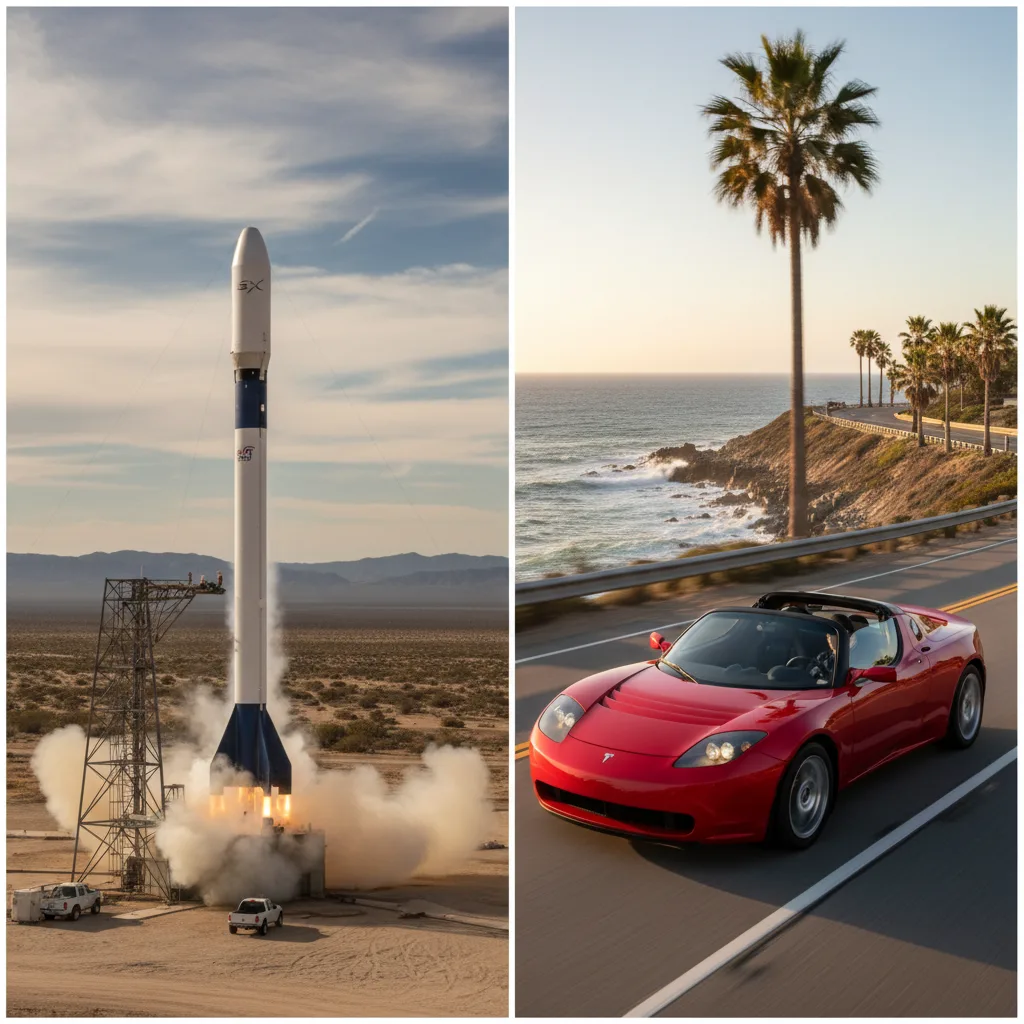
Musk, on the other hand, saw the PayPal windfall as fuel for his most audacious dreams. He didn’t just want to build companies; he wanted to change the course of humanity. Almost immediately, he plunged his entire PayPal fortune into two ventures that seemed utterly fantastical at the time: SpaceX, aimed at revolutionizing space travel, and Tesla Motors, dedicated to electric vehicles. His vision was not merely about profit, but about a grander mission—making humanity multi-planetary and transitioning the world to sustainable energy. Where Thiel sought to identify and empower founders building the future, Musk became the founder building the future himself, directly tackling some of the world’s most complex engineering and existential challenges.
The Mentorship & Investment Tapestry: Thiel’s Early Support for Elon Musk
Despite their distinct post-PayPal paths, the bond between Thiel and Musk remained, often manifesting as critical support. Thiel, a shrewd investor with an eye for transformative potential, became an early, crucial backer of Musk’s audacious new ventures. He famously contributed $100,000 to SpaceX’s Series A round in 2002, a significant sum for a fledgling rocket company that many dismissed as a pipe dream. This wasn’t just a friendly gesture; it was a strategic investment in a vision Thiel, despite his own different focus, recognized as profoundly important. He saw in Musk a rare combination of technical brilliance, relentless drive, and an almost irrational commitment to seemingly impossible goals.
Later, Thiel also participated in Tesla’s Series B round, reaffirming his belief in Musk’s ability to execute on a grand scale, even as the company navigated the treacherous early years of electric vehicle development. While not a hands-on mentor in the traditional sense, Thiel’s intellectual influence and early financial endorsements provided critical validation and runway for Musk during periods of immense skepticism and financial strain. His support underscored a fundamental understanding between the two: a shared disdain for incrementalism and a profound conviction that truly disruptive innovation often looks absurd at its inception. Thiel’s investments were not just capital; they were a vote of confidence from a fellow architect of the future.
Philosophical Echoes and Ideological Rifts: The Thiel-Musk Spectrum
Delving deeper, we uncover the complex interplay of shared philosophies and emerging ideological rifts between Peter Thiel and Elon Musk. Both men are ardent believers in technological progress as the primary driver of human advancement and share a pronounced skepticism of what they perceive as societal stagnation or “doom-loop thinking.” They both embrace contrarianism, challenging established norms and institutions. Thiel’s intellectual framework, deeply rooted in libertarian thought and a critique of “wokeness,” emphasizes the importance of individual freedom, strong founding principles, and the creation of defensible monopolies that genuinely innovate. He often laments the decline of true technological breakthroughs, seeing much of Silicon Valley as focused on incremental improvements rather than “zero to one” creations.
Musk, while often echoing Thiel’s anti-establishment sentiments, particularly regarding bureaucracy and regulation, projects a more populist and at times, chaotic, public persona. His focus on multi-planetary existence and sustainable energy transcends traditional political divides, appealing to a broader, albeit often polarized, audience. While Thiel operates with a more structured, philosophical critique of society, Musk engages in a more direct, often unfiltered, commentary on current events, social trends, and censorship. Their shared belief in progress is undeniable, yet the pathways they champion and the societal critiques they articulate reveal increasingly distinct ideological landscapes, one meticulously reasoned, the other often spontaneously expressed.
The Political Arena: Thiel as Kingmaker, Musk as Provocateur
The political engagement of Peter Thiel and Elon Musk offers a fascinating study in contrasting influence. Thiel has meticulously cultivated a role as a powerful, albeit often behind-the-scenes, kingmaker in conservative politics. He views politics as a critical lever for influencing technological progress and preserving the conditions necessary for innovation. His significant financial contributions to candidates like Blake Masters and J.D. Vance, and his strategic backing of figures who align with his vision of American renewal, demonstrate a calculated approach to shaping policy and cultural discourse. His 2016 Republican National Convention speech, advocating for Donald Trump, was a rare public foray into the political spotlight, revealing his conviction that a disruption of the political establishment was necessary.
Musk’s political engagement, particularly since his acquisition of Twitter (now X), has been far more direct, reactive, and often provocative. He has positioned himself as a free speech absolutist, using his platform to challenge perceived censorship and promote open discourse, often wading into highly contentious debates. Unlike Thiel’s strategic political investments, Musk’s pronouncements often feel extemporaneous, driven by immediate events or personal convictions. He has met with numerous world leaders and engaged directly with policy discussions, but his approach is less about systemic political engineering and more about leveraging his immense platform to influence public opinion and, at times, directly challenge government actions or policies he disagrees with.
The Future’s Frontier: AI, Longevity, and Beyond
As we peer into their current endeavors, it becomes clear that both Peter Thiel and Elon Musk remain fixated on humanity’s cutting edge, particularly in areas like artificial intelligence and biological augmentation. Thiel’s long-standing interest in AI is evident through his early involvement with Palantir Technologies, a data analytics company whose origins are steeped in counter-terrorism and intelligence. He continues to invest in AI startups, often with a focus on deep tech and foundational models, while simultaneously expressing cautious warnings about the existential risks of unchecked AI development. His venture capital firm, Founders Fund, actively seeks out companies pushing boundaries in fields like biotech and longevity, aiming to extend human lifespans and enhance cognitive abilities.
Musk, ever the grand implementer, is actively building the future through his companies. Neuralink aims to develop ultra-high bandwidth brain-machine interfaces, directly merging human consciousness with AI. Optimus, Tesla’s humanoid robot, represents another ambitious step towards a future where AI-powered machines perform physical labor. And, of course, the ongoing expansion of SpaceX and the pursuit of a multi-planetary civilization remains his paramount goal, a bold vision for humanity’s long-term survival. While Thiel seeks to understand and strategically invest in the future, Musk is actively engineering it, often pushing the boundaries of what is technologically feasible and ethically debated, embodying a direct, hands-on approach to shaping tomorrow.
The Enduring Legacy: Shaping the 21st Century
The combined and individual legacies of Peter Thiel and Elon Musk are monumental, having irrevocably shaped the technological, financial, and even political landscapes of the 21st century. From the foundational payment system of PayPal to the transformative innovations of SpaceX and Tesla, their influence is pervasive. Thiel’s philosophical approach to venture capital, encapsulated by Founders Fund, has inspired a generation of investors to seek out “hard problems” and contrarian bets, fostering a new era of deep tech entrepreneurship. His early and sustained belief in Musk’s radical visions provided critical oxygen for companies that might otherwise have failed.
Musk, through his relentless pursuit of seemingly impossible goals, has reignited humanity’s ambition for space exploration and accelerated the global transition to sustainable energy. He has proven that moonshot thinking, backed by sheer will and engineering genius, can yield world-changing results. While both figures are not without their controversies—their political leanings, business practices, and public statements often draw sharp criticism—their undeniable impact on innovation, capital allocation, and the very trajectory of human progress is a testament to their enduring, albeit complex, partnership and individual brilliance. They are, in essence, two sides of the same coin: one the intellectual architect and strategic enabler, the other the audacious builder and implementer, together pushing the boundaries of what humanity believes is possible.
FAQ Section
Q1: What was the primary conflict between Thiel and Musk at PayPal? A1: Their primary conflict stemmed from differing visions for PayPal’s operational strategy and future direction. Thiel advocated for a robust, fraud-resistant system with a strong engineering culture, while Musk pushed for rapid growth, broader financial services, and a shift of the company’s server infrastructure from Unix to Microsoft. This led to Musk’s temporary removal as CEO in 2000.
Q2: Did Peter Thiel invest in all of Elon Musk’s major ventures? A2: While Thiel was an early and significant investor in both SpaceX (Series A) and Tesla (Series B), providing crucial capital during their formative years, he did not invest in all of Musk’s subsequent ventures like SolarCity, The Boring Company, or Neuralink. His focus shifted more broadly into venture capital through Founders Fund.
Q3: How do their political philosophies differ? A3: Thiel is a prominent libertarian and conservative figure, focused on strategic political influence through funding candidates and advocating for policies that promote technological progress and individual freedom. Musk’s political philosophy is more eclectic and often appears to be a mix of libertarian principles (especially regarding free speech) and pragmatic, sometimes populist, views, often expressed directly and reactively on social media.
Q4: What is the “PayPal Mafia” and why is it significant? A4: The “PayPal Mafia” refers to a group of former PayPal employees and founders who went on to create or invest in highly successful technology companies after eBay acquired PayPal in 2002. Its significance lies in its incredible impact on Silicon Valley, demonstrating the power of shared experience, intellectual synergy, and mutual support in fostering a new generation of entrepreneurs and venture capitalists who shaped much of the modern tech industry.
Key Takeaways: Peter Thiel and Elon Musk’s journey, from the intense collaboration at PayPal to their divergent yet often intersecting paths, underscores a profound belief in radical technological innovation. Thiel’s intellectual rigor and strategic capital fueled Musk’s audacious visions, while Musk’s relentless execution brought those visions to life. Their combined impact on entrepreneurship, venture capital, and the future of technology is undeniable, showcasing how two distinct but equally brilliant minds can profoundly shape the world.
You might also like:
👉 The Unseen Architects: Unveiling the 10 Most Important People in US History
👉 100 Most Influential People: Shapers of Human History & Future