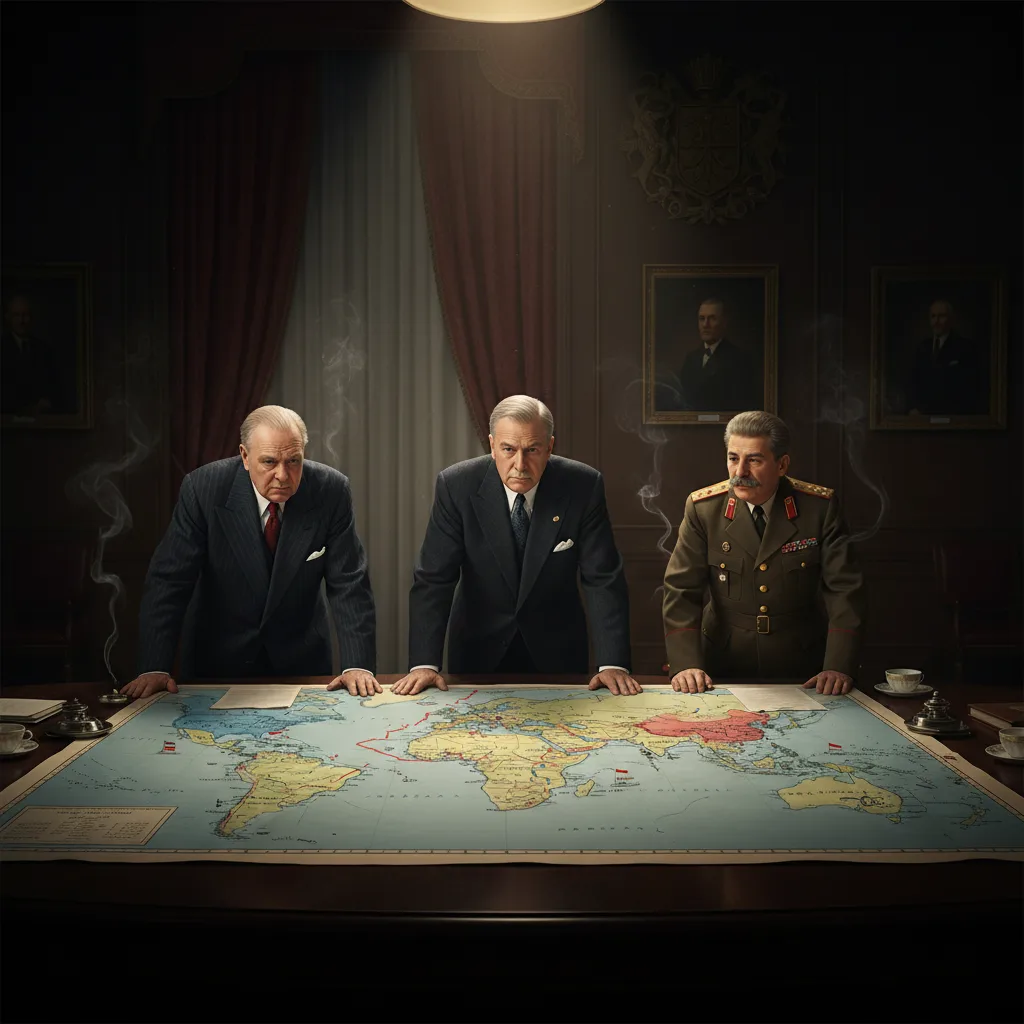
Not Just Two: How 1945 Reshaped Global Power Beyond US-USSR
The post-WWII world wasn't just a US-Soviet tug-of-war. After September 2, 1945, a complex multipolar future emerged, challenging colonial empires.
The world after 1945: more than two powers
World War II ended on September 2, 1945. But the world that followed wasn’t just a simple tug-of-war between two superpowers. While the US and Soviet Union certainly dominated, a complex, multipolar future was already taking root. This wasn’t a rigid, two-sided world. Many powerful, independent forces were already at work.
Before the war, colonial empires ruled much of the globe. Britain, France, Belgium, and the Netherlands controlled vast parts of Africa and Asia. European powers dictated international affairs. The United States mostly stayed isolated. The Soviet Union built its communist state. The war shattered this old order. It weakened colonial powers and empowered new players.
Cracks in bipolarity’s foundation
Right after the war, the US and Soviet Union became superpowers. Their ideological fight, capitalism versus communism, defined the next four decades. But this superpower rivalry wasn’t the only thing driving global change. Other geopolitical forces were already breaking down the old order. They pushed back against a purely two-sided world.
Decolonization is a prime example. India and Pakistan gained independence from British rule in August 1947, just two years after the war. This huge event, affecting hundreds of millions, came mostly from local nationalist movements, not superpower schemes. Historian A.J.P. Taylor noted Britain’s post-war economic exhaustion. This made keeping its empire impossible, no matter what the US or Soviets did. France also fought to keep Vietnam and Algeria. These struggles were rooted in colonial history, not just Cold War proxy battles.
Britain’s economic decline was another powerful, independent factor. Though victorious, Britain was deeply in debt, owing over £3 billion (about £120 billion today). Clement Attlee’s Labour government brought in austerity and nationalizations. This internal economic reality, not just Soviet expansion, forced Britain to withdraw from commitments. For example, Britain stopped supporting Greece and Turkey in 1947. This directly prompted the US Truman Doctrine. The shift in global financial power from London to Washington was a basic, non-bipolar change.
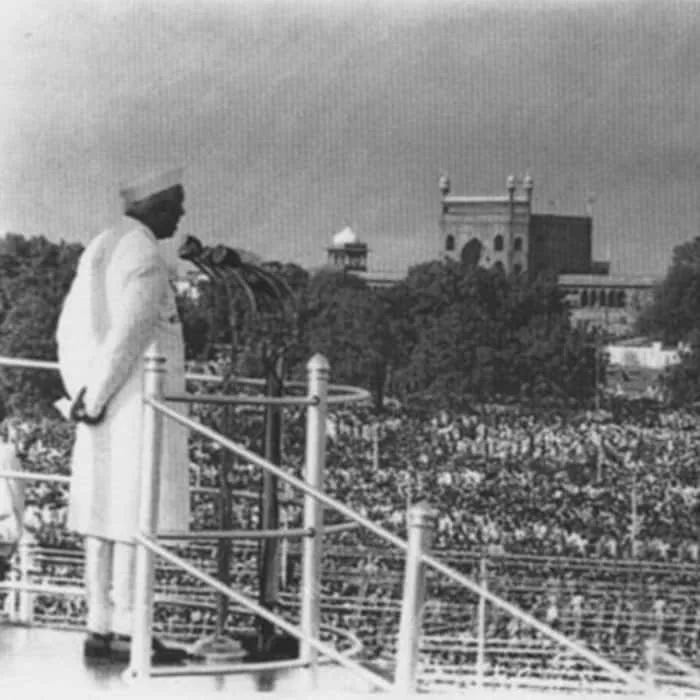
Jubilant crowds celebrate India's independence from British rule in August 1947, a pivotal moment that also led to the creation of Pakistan. This massive event, affecting hundreds of millions, was a prime example of decolonization, demonstrating how local nationalist movements and the weakening of colonial powers reshaped the world beyond the US-Soviet rivalry. (Source: india.com)
The rise of the non-aligned
The Cold War had many proxy conflicts. Yet, many newly independent nations deliberately avoided aligning with either superpower. This challenges the idea that every geopolitical move was a Cold War maneuver.
On April 18, 1955, leaders from 29 Asian and African countries met in Bandung, Indonesia. Indonesian President Sukarno championed a new vision. This Bandung Conference laid the groundwork for the Non-Aligned Movement (NAM). Members like India, Egypt, and Yugoslavia sought their own path. They rejected both US and Soviet dominance. Yugoslav President Josip Broz Tito, a communist, famously broke with Moscow in 1948. His nation became a founding NAM member, showing an independent path even inside the communist world.
Decolonization itself created a multipolar dynamic. In 1960 alone, the “Year of Africa,” seventeen African nations became independent. These new states often struggled with nation-building and economic development. They added dozens of sovereign voices to the international stage. Their collective votes in the UN General Assembly became a real force. They were often separate from either superpower bloc. This directly challenged any simple bipolar world view.
Economic power shifts and regional integration
Economic forces played a crucial role in the post-World War 2 era. These forces often came before or shaped military alliances. The Marshall Plan, started in 1948, poured over $13 billion (over $150 billion today) into Western European economies. US Secretary of State George C. Marshall proposed this aid to rebuild war-torn nations. This wasn’t just a Cold War tool; it created deep economic ties between Western Europe and the US. It laid the groundwork for Western Europe’s economic comeback, which then supported its political stability.
Japan’s post-war path also veered from a simple superpower script. Under American occupation until 1952, Japan underwent major reforms. Its later economic miracle turned it into a global industrial powerhouse, not just an American outpost in Asia. By the 1980s, Japan was challenging the US economically. This rise created a distinct economic power center in East Asia, separate from direct US-Soviet rivalry.
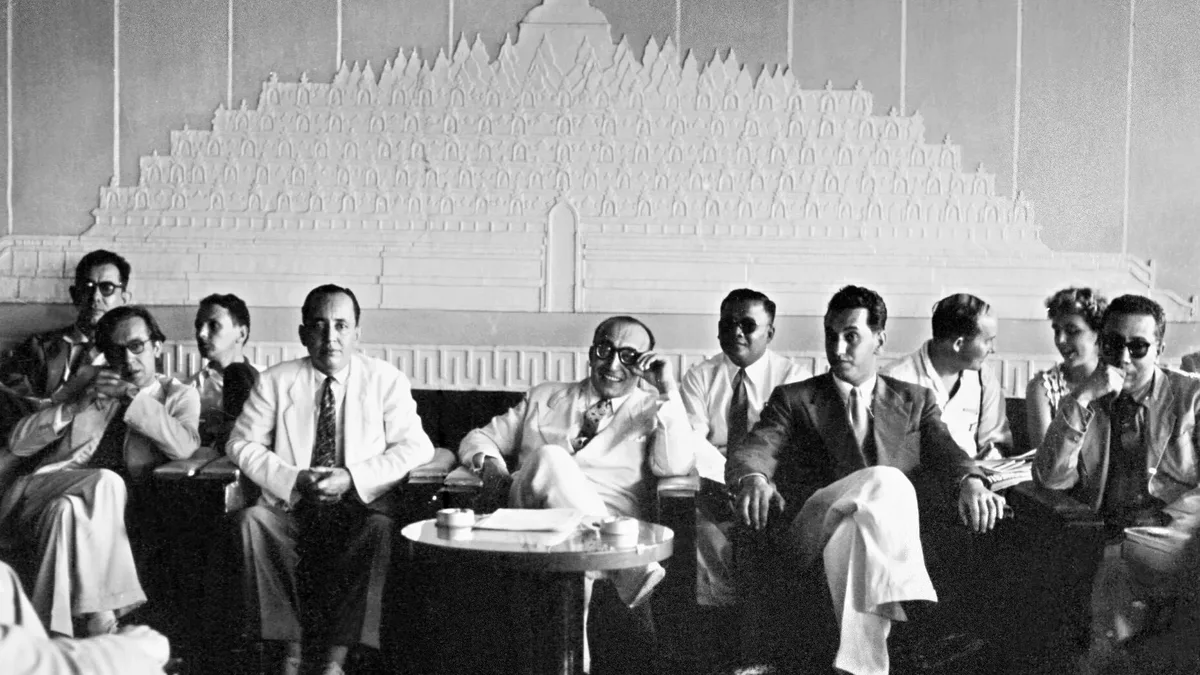
On April 18, 1955, leaders from 29 Asian and African countries gathered in Bandung, Indonesia, laying the groundwork for the Non-Aligned Movement and challenging the bipolar Cold War world order. (Source: middleeasteye.net)
Europe itself pursued integration beyond superpower orders. On April 18, 1951, six nations signed the Treaty of Paris, creating the European Coal and Steel Community. French Foreign Minister Robert Schuman championed this idea. Its goal: make future wars between France and Germany “not merely unthinkable, but materially impossible.” This eventually led to the European Economic Community in 1957. European integration showed a strong regional drive for peace and prosperity, carving out its own economic and political space.
Even inside the communist bloc, unity was an illusion. The Sino-Soviet split, starting in the late 1950s and growing through the 1960s, was a huge geopolitical event. Chinese leader Mao Zedong and Soviet Premier Nikita Khrushchev disagreed on ideology and national interests. This rupture shattered the idea of a unified communist front. China, a nuclear power by 1964, pursued its own foreign policy, famously opening relations with the US in 1972.
Lasting legacies and future impact
The Cold War certainly shaped institutions, alliances, and conflicts for decades. Its legacy includes the division of Korea and Germany. But the world after WW2 was never just a stage for two giants. The seeds of a multipolar order were planted right away. Newly independent nations asserted their sovereignty. Regional economic blocs formed. Major powers, even within alliances, pursued distinct national interests.
Today’s geopolitical situation reflects these earlier complexities. China has risen as an economic and military power. Russia has resurged. The European Union continues its integration. These all show a decentralized power structure. Non-state actors, like powerful multinational corporations or global terror networks, also hold significant sway. The concept of “complex interdependence,” proposed by scholars Robert Keohane and Joseph Nye, better describes this reality. Power flows through many channels, not just between two states. The post-WW2 era wasn’t just about two giants slugging it out. Many powerful, interconnected forces emerged simultaneously and independently.
Frequently asked questions
What was the main geopolitical shift after World War II? The main shift was the transition from a European-dominated colonial system to a world with two new superpowers. At the same time, dozens of newly independent nations and powerful economic blocs began to assert their influence.
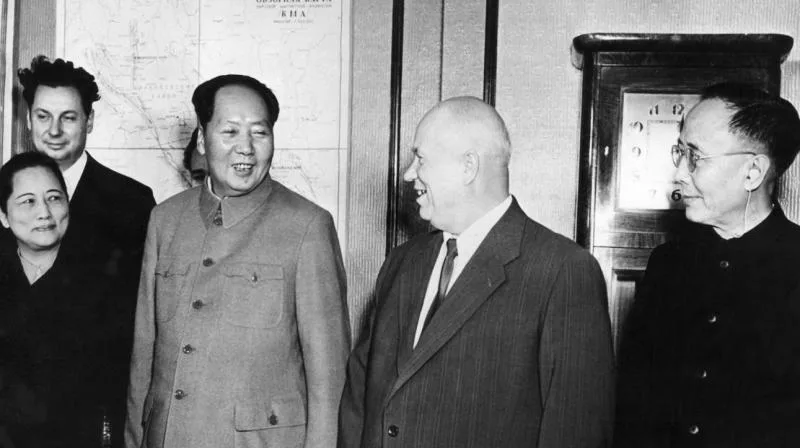
Chinese leader Mao Zedong and Soviet Premier Nikita Khrushchev, pictured here, personified the ideological and national interest disagreements that led to the Sino-Soviet split in the late 1950s and 1960s, shattering the illusion of a unified communist bloc. (Source: deccanchronicle.com)
How did decolonization change the global order? Decolonization created numerous new sovereign states. This greatly changed the membership and dynamics of international organizations like the United Nations. It introduced new voices and interests, challenging the dominance of Western powers and resisting a purely two-sided alignment.
Were economic factors as important as military ones in shaping post-WW2 geopolitics? Yes, economic factors were often equally, if not more, important. Plans like the Marshall Plan rebuilt economies and created integration. Japan’s economic rise and Europe’s economic community created powerful, independent power centers beyond military alliances.
Does the legacy of World War II still matter today? Absolutely. The institutions (UN, IMF, World Bank), borders, and power dynamics from after WW2 still shape international relations. The multipolar tendencies visible today are a direct continuation of forces set in motion during that period.
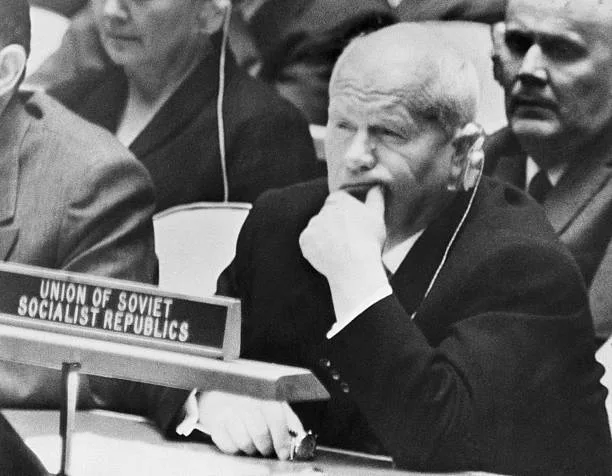
Established in 1945, the United Nations quickly became a central forum for newly independent nations emerging from decolonization, dramatically altering its membership and challenging the post-war global power dynamics. (Source: gettyimages.com)
You might also like:
👉 Economic Sanctions: Why They Often Fail to Achieve Goals
👉 The $546 Billion Space Race: Private Money, Global Rivalries
👉 Medieval Empires: Power, Culture, and Lasting Global Impact