
Space Travel: Earth's Best Investment, Not Mars
Space exploration isn't just about leaving Earth; it's about saving it. Discover how NASA, ESA, and CNSA's efforts enhance life right here, not on Mars.
Space travel: Our best investment for Earth
Space travel offers significant benefits to Earth. It is not merely about leaving our planet. Instead, it focuses on saving it. The greatest advantages will not be found on the Moon or Mars. They will emerge right here, enhancing our lives in ways we are only starting to grasp. This is an important reality.
Space exploration is no longer solely for governments. NASA, the European Space Agency (ESA), and China National Space Administration (CNSA) continue to manage large projects. However, private companies such as SpaceX, Blue Origin, and United Launch Alliance (ULA) are transforming the industry. They make space access more affordable and frequent. This new era allows more individuals and companies to reach orbit and beyond. This combination of collaboration and competition drives rapid innovation.
Protecting our planet with eyes in the sky
Satellites orbiting Earth provide critical observations of our planet. Since the 1970s, NASA’s Landsat program has continuously collected important environmental data. This acts like a worldwide monitoring system, running 24/7. These missions track deforestation, melting ice, and shifting ocean currents. They show us how our planet is measurably changing.
This constant watch helps us understand climate change better. For example, ESA’s Copernicus program, launched in 2014, shares free data on land, sea, and air conditions. Scientists use this data to predict future climate and guide policy. Without space, we would know much less about Earth’s systems. We would lack the global perspective needed to tackle environmental problems. That is a serious concern.
Space technology also helps us manage disasters. Geostationary Operational Environmental Satellites (GOES), operated by NOAA, constantly send images of weather patterns. These images are essential for tracking hurricanes and warning about severe storms. Early warnings save lives and reduce economic damage. Dr. Thomas Zurbuchen, former NASA Associate Administrator for Science, stated in 2022, “Earth science from space helps every person on Earth every day.” We often overlook these immediate, tangible benefits. Yet, they are constantly occurring.
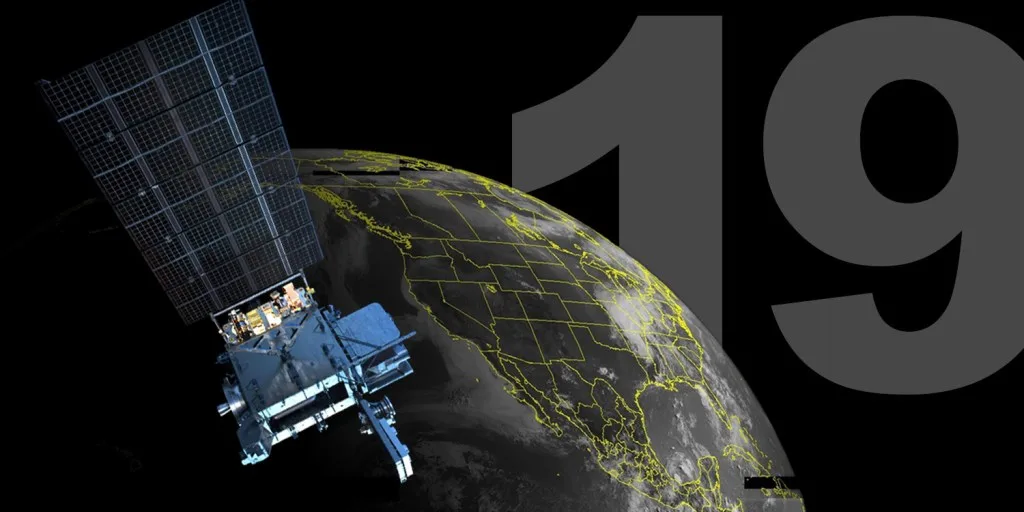
Operated by NOAA, Geostationary Operational Environmental Satellites (GOES) continuously monitor Earth's weather. Their constant stream of images is vital for tracking hurricanes, predicting severe storms, and providing early warnings that save lives and reduce economic damage. (Source: science.nasa.gov)
Space: New riches, new jobs
Space offers vast resources with significant economic potential for Earth. Asteroids, for example, contain precious metals like platinum and gold. They also hold important elements such as nickel and iron. NASA estimates one asteroid, 16 Psyche, could contain quadrillions of dollars worth of iron and nickel. Consider the impact this could have on our planet. Obtaining these materials could ease resource shortages on Earth.
Beyond metals, the Moon and Mars contain substantial water ice. This ice is essential for future space missions. It provides drinking water for astronauts. When split into hydrogen and oxygen, it yields rocket fuel. Companies like Lunar Outpost are already constructing rovers to locate water ice in lunar polar regions. This “in-situ resource utilization” (ISRU) reduces the cost of space operations. It could establish a self-sustaining space economy. This is a transformative factor.
The new space economy already generates jobs and industries. Morgan Stanley predicts the global space industry could exceed $1 trillion annually by 2040. This growth stems from satellite internet, space tourism, and asteroid mining. This new sector will drive technological innovation and numerous opportunities. It represents an unprecedented frontier.
Advancing health and extending human life
Space travel presents challenges to the human body, leading to significant medical understanding. Living in microgravity – very low gravity, like perpetual freefall – causes astronauts to lose bone density and muscle mass. Studying this helps scientists understand and combat osteoporosis and muscle atrophy on Earth. Dr. Scott Parazynski, a former astronaut and physician, frequently states that space medicine research aids patients here on Earth. This is a clear link.
Developing small, robust medical devices for space also benefits us on Earth. Consider portable ultrasound machines or advanced remote diagnosis tools. These are invaluable in remote areas or during disaster relief. For example, the tiny “BodyCap e-Celsius Performance” thermometer, initially created for astronauts, now helps athletes and hospital patients track their core body temperature. This technology transfer improves healthcare access and quality everywhere. It is a mutually beneficial situation.
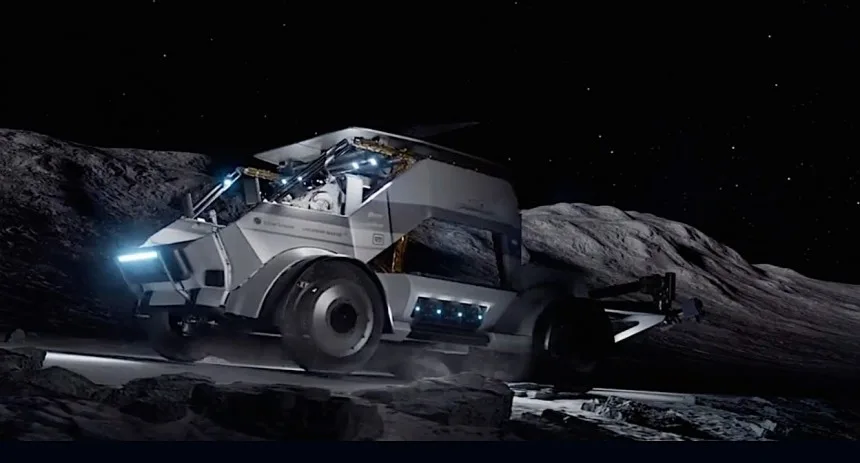
Lunar Outpost's MAPP rover, designed for lunar exploration, represents a key step in 'in-situ resource utilization' (ISRU). These rovers are being constructed to locate vital water ice in the Moon's polar regions, which can be converted into drinking water and rocket fuel for future missions. (Source: autoevolution.com)
Extended space journeys also stimulate new ideas in radiation shielding and regenerative medicine. Understanding how radiation affects us in space is essential for Mars missions. This research could lead to better cancer treatments or improved protection for Earth workers exposed to radiation. The endeavor to live on other planets compels us to address fundamental health challenges. It necessitates innovation.
New manufacturing and energy from space
Making things in microgravity allows us to create materials impossible to produce on Earth. Without gravity, crystals grow larger and purer. This results in better semiconductors for electronics or perfect optical fibers for communication. These super-pure materials could lead to faster computers and more efficient fiber optic networks. The International Space Station (ISS) has already conducted microgravity manufacturing experiments. The potential is significant.
Space-based solar power (SBSP) provides clean, constant energy. Satellites with vast solar arrays could capture sunlight continuously, unimpeded by atmosphere or night. They would then beam this energy wirelessly to Earth. Research by the Japan Aerospace Exploration Agency (JAXA) and Caltech’s Space Solar Power Project demonstrates this concept is feasible. It promises truly renewable energy, far more efficient than ground-based solar farms. This represents a promising energy source.
Developing SBSP technology would also stimulate innovation in related fields. Consider wireless power, lightweight materials, and advanced robotics. Abundant clean energy could eliminate energy poverty and significantly reduce carbon emissions. This represents a major transformation in how we power our world. It offers a clear path to a cleaner future.
Ensuring humanity’s long-term survival
A significant long-term benefit of space travel involves protecting Earth and ensuring humanity’s survival. Asteroids pose a serious threat. In 2022, NASA’s Double Asteroid Redirection Test (DART) successfully demonstrated how to alter an asteroid’s path. This proved we can defend our planet from cosmic impacts. It was humanity’s first test of planetary defense, and it worked.
Establishing human settlements off-Earth provides humanity with an essential contingency plan. Natural disasters, pandemics, or even supervolcano eruptions could severely impact life here. As physicist Stephen Hawking warned, becoming a multi-planetary species guarantees our long-term survival. He stated in 2017, “spreading out into space will be the only way to save us from ourselves.” This is a serious warning.
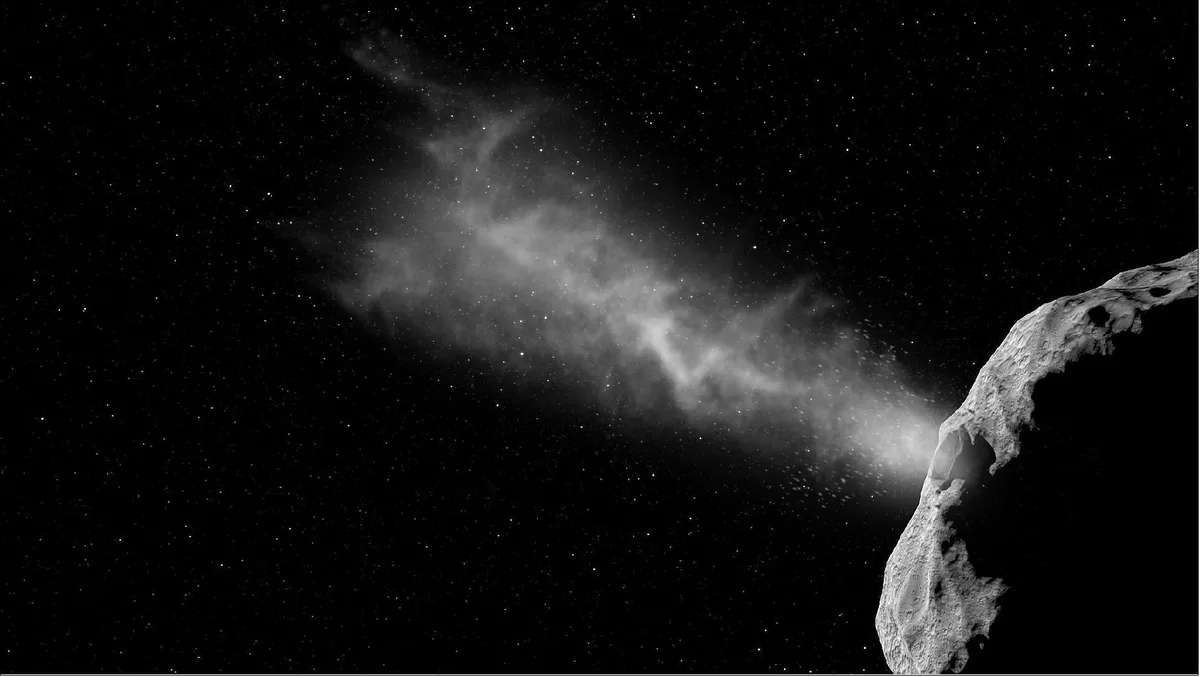
NASA's Double Asteroid Redirection Test (DART) successfully impacted the asteroid Dimorphos in September 2022, demonstrating humanity's first full-scale test of planetary defense technology. This mission proved our ability to alter an asteroid's path, a crucial step in protecting Earth from future cosmic threats. (Source: eoportal.org)
Living on other planets also provides vast new living space and resources. It could prevent future conflicts over Earth’s diminishing resources. Relocating some heavy industries off-world could also reduce pollution and environmental stress on Earth. This bold idea offers humanity a path to a stronger, more sustainable future. It presents a promising outlook.
FAQ
Is space travel truly worth the substantial cost? Yes, the direct costs are high. However, the long-term benefits in technology, medicine, and environmental understanding often justify them. These benefits create new industries, improve health, and foster a better understanding of our planet. Many things we use daily, such as GPS and satellite weather, originated from space investments. We yield significant returns.
When will regular people be able to travel to space? Some people already travel to space, but it remains very expensive. As technology improves and competition increases, costs are likely to decrease significantly. Suborbital flights might become more accessible in the next few decades. Orbital space travel will follow later in the century. Therefore, patience is key.
What about space junk? Is that a problem? Yes, space junk is a growing concern. Old satellites and rocket parts risk collisions. Organizations like ESA and NASA are developing technology to track and remove this debris. Future missions will also incorporate designs that minimize new debris and assist old parts in deorbiting. It is a problem we are diligently addressing.
How does space research directly benefit my daily life? Much everyday technology stems from space research. Consider GPS navigation, accurate weather forecasts, and satellite TV. Additionally, advanced medical imaging, memory foam, and freeze-dried food are examples. Even improved athletic shoes have roots in space programs. Advancing space innovation frequently leads to unexpected applications here on Earth. Its impact is ubiquitous.
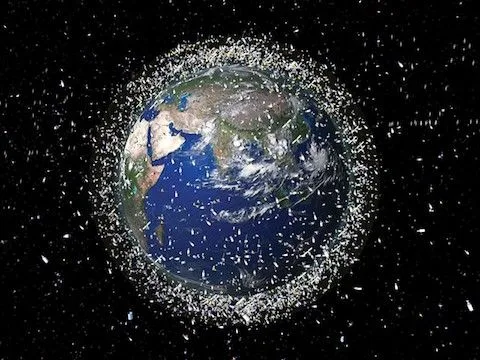
An estimated 100 million pieces of space junk, ranging from tiny paint flecks to defunct satellites and rocket stages, currently orbit Earth. This growing problem poses a significant collision risk to active spacecraft and future missions, prompting organizations like ESA and NASA to develop tracking and removal technologies. (Source: livescience.com)
You might also like:
👉 Space Colonization: The Grand Illusion & Earth’s Real Solutions
👉 The $546 Billion Space Race: Private Money, Global Rivalries