
How US Department of Labor Uses NLP for Real-Time Job Market Insights
AI and NLP are transforming job market analysis, providing real-time insights. The US Department of Labor uses NLP to spot new skills and predict future labor needs, offering a dynamic view.
How AI is changing job market analysis
The job market used to be a black box. Now, AI is shining a light. Natural language processing (NLP) transforms how we understand jobs. It pulls deep insights from huge amounts of text. This gives us real-time information. We can now spot new skills and predict future labor needs. This shift offers a more accurate, dynamic view than old surveys ever could.
The US Department of Labor uses NLP in its economic analysis. Its Bureau of Labor Statistics began piloting NLP tools in 2023. These tools track occupational data. The goal is to capture skill changes much faster. This effort focuses on unstructured data from online job postings.
Old job market analysis relied on government surveys and historical data. These methods often took months or years to compile. For instance, the Occupational Employment and Wage Statistics program surveys twice a year. This lag made quick responses to economic shifts hard. NLP fixes these delays.
Organizations worldwide are adopting these new methods. The European Centre for the Development of Vocational Training (Cedefop) uses NLP. They analyze job ads across EU member states. This helps them spot skill mismatches and new needs in real-time. It gives vital information for educational policy.
What NLP does for labor data
Millions of job postings go online daily. These posts hold rich, unstructured text about roles, skills, and qualifications. NLP algorithms process this huge amount of text. They turn it into structured, measurable information. This is a big change from collecting data by hand.
Named Entity Recognition (NER) is a core NLP technique. NER finds and pulls specific entities from text. This includes job titles, company names, needed skills, and locations. For instance, it can pull “Python,” “Machine Learning,” and “Data Visualization” from one job description. This creates a detailed skill list.
Topic modeling is another key technique. It finds abstract “topics” within large text collections. Researchers use it to spot clusters of related skills or new job categories. For example, topic modeling recently identified “prompt engineering” as a distinct skill set. This came from analyzing AI-related job postings.

The Frances Perkins Building in Washington D.C. serves as the headquarters for the U.S. Department of Labor, which began piloting NLP tools in 2023 to analyze job market data and capture skill changes faster than traditional surveys. (Source: gettyimages.com)
Word embeddings are also important. They represent words as numerical vectors in a multi-dimensional space. Words with similar meanings sit closer together in this space. This helps algorithms understand how different skills relate. It can link “financial modeling” to “quantitative analysis,” for instance.
NLP analysis uses many data sources. These include big online job boards like LinkedIn, Indeed, and Glassdoor. Company career pages also add important data. Researchers process millions of résumés and professional profiles. This builds a huge dataset for labor market insight.
Real-world uses and impact
California policymakers used NLP data in 2022. They needed to fix workforce shortages. The state found high-demand healthcare skills. This information then guided funding for vocational training programs. This direct use of data led to specific educational efforts. It helped prepare workers for open jobs.
Lightcast, once Burning Glass Technologies, leads in providing these insights. Their Skill Architecture maps over 30,000 specific skills. They analyze job postings to find skill needs and career paths. Lightcast data helps universities design courses that match industry needs. This ensures graduates have the right abilities.
For example, Lightcast’s 2023 report showed a 70% increase in demand for “cloud security” skills. This growth beat out many other IT specializations. Such specific data lets schools adapt fast. It ensures students learn the most relevant, marketable skills.
LinkedIn’s Economic Graph offers another strong example. It maps the global economy using member profiles, company pages, and job postings. LinkedIn uses NLP to link skills with job opportunities. Their “Future of Work” reports share insights into new roles. These reports show how skills change across industries.
Employers get big benefits from this analysis. They understand talent pools better. Companies can find skill gaps in their current workforce. This guides training investments and hiring plans. It helps them stay competitive in a fast-changing market.
Academic research also uses NLP for labor market insights. A 2021 study by the National Bureau of Economic Research (NBER) looked at job postings. Researchers checked automation’s impact on skill demand. They found a shift towards “soft skills” in roles automation could affect. This research appeared in the Journal of Labor Economics.

Lightcast, formerly Burning Glass Technologies, is a leading provider of labor market insights. Their Skill Architecture uses natural language processing to map over 30,000 specific skills, helping universities design courses that match industry needs. (Photo: Tom Asito, Pexels)
Job seekers also find these tools valuable. They can spot the most in-demand skills for their chosen careers. Many online platforms now use NLP to suggest skill-building courses. This lets people upskill or reskill smartly. It helps them stay competitive.
What’s next
By 2025, NLP will be even more integrated into labor market intelligence. This growth will focus on smarter predictive models. These models will forecast future skill demand more accurately. This will allow for proactive policy and education.
Data bias remains a key challenge. NLP models learn from historical job data. They can reflect past biases. This might keep gender or racial inequalities alive in hiring. Researchers at Stanford University are creating ways to find and lessen these biases. This work is important for fair employment practices.
NLP will also merge with other AI techniques. Machine learning models can analyze patterns NLP finds. This predicts economic trends or individual career paths. This builds stronger forecasting. It goes beyond simple description.
Privacy concerns also need careful attention. Processing huge amounts of personal data from résumés and profiles raises ethical questions. Organizations must create strict data governance policies. They need to ensure responsible use and protect individual privacy.
Imagine highly personalized career guidance systems. These future tools will use NLP to match your skills with new opportunities. They’ll also recommend custom learning paths. This could completely change career counseling. It means dynamic, data-driven advice for everyone, guiding us into the jobs of tomorrow.
Frequently asked questions
What is NLP in job market analysis? NLP, or Natural Language Processing, is an AI technology. It helps computers understand, interpret, and generate human language. In job market analysis, it processes text from job postings, résumés, and other documents. This pulls structured data about skills, roles, and trends.
Who uses this technology? Many groups use NLP for job market analysis. This includes government agencies like the US Department of Labor. Private companies like Lightcast and LinkedIn also use it. Academic researchers, schools, and individual job seekers benefit too.

Researchers at Stanford University are actively developing methods to identify and mitigate biases in NLP models, a crucial step towards ensuring fair employment practices in the evolving job market. (Source: istockphoto.com)
What are its main benefits? Its main benefits are real-time insights and detailed data. NLP gives a faster, more detailed view of skill demands and labor trends. It helps spot new jobs and skill gaps fast. This supports better decisions for policymakers, educators, and employers.
Are there any drawbacks? Yes, drawbacks include potential data bias. This bias can keep inequalities alive. Privacy concerns also exist because of large-scale personal data processing. Complex models can also make interpretation hard.
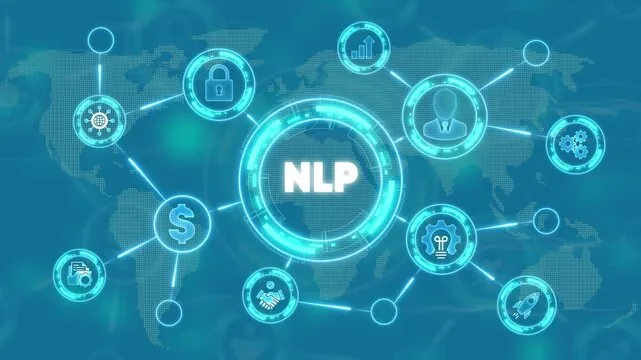
Natural Language Processing (NLP) is a branch of artificial intelligence that enables computers to understand, interpret, and generate human language. It is crucial for analyzing vast amounts of text data to identify trends, such as skill demands and labor market shifts. (Source: stock.adobe.com)
You might also like:
👉 UAE’s AI Gamble: Feeding a Nation with <1% Arable Land