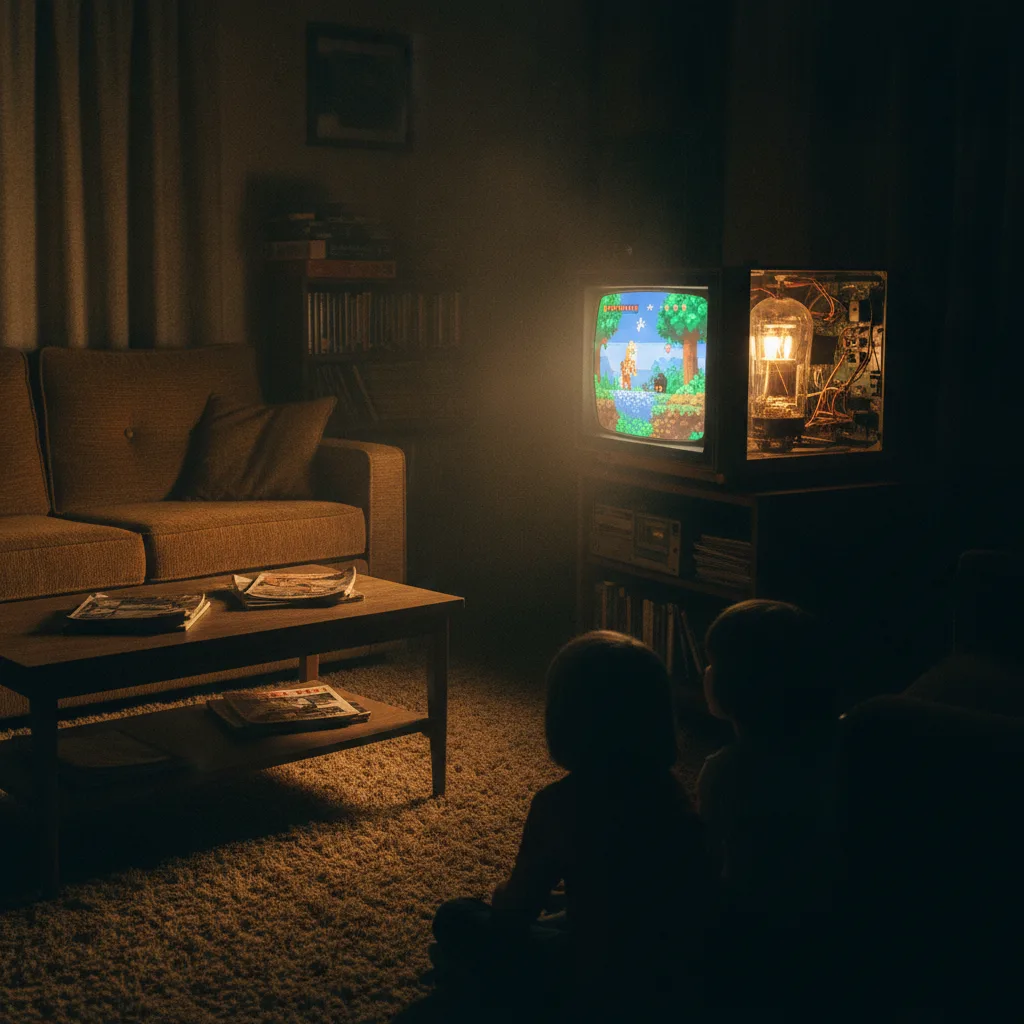
Ferdinand Braun's 1897 CRT: The Invisible Screen's Origin
From Ferdinand Braun's 1897 cathode ray tube, trace the evolution of displays to the invisible screens shaping our digital future.
The Invisible Screen: Display Technology’s Next Frontier
For over a century, screens have been our window into the digital world. On November 15, 1897, in Strasbourg, Germany, Ferdinand Braun published his work on the cathode ray tube (CRT). He described a device that could project an electron beam onto a fluorescent screen. This was a big step in how humans would see electronic information. Every display, at its core, turns electrical signals into patterns of light. This lets us interact with everything digital.
For decades, the CRT was the king of displays. It made images by scanning electron beams across a phosphor-coated glass surface. These devices were bulky, heavy, and guzzled power. They also ran hot. Their size limited where and how people could use them. Scientists and engineers soon looked for something better. They wanted thinner, more efficient, and more versatile ways to show information.
The CRT’s legacy and its successors
In 1929, Vladimir K. Zworykin, an electrical engineer at Westinghouse, filed a patent for a “television system.” This system relied on Braun’s cathode ray tube principles. Zworykin’s kinescope became the heart of television sets for over half a century. These early displays brought moving images into homes worldwide. But their vacuum tubes demanded deep cabinets.
Liquid crystals: A flat future
In 1968, George Heilmeier, then at RCA Laboratories, showed off the first liquid crystal display (LCD). His discovery revealed how electric fields could move liquid crystal molecules. This controlled how light passed through. Unlike CRTs, LCDs didn’t make their own light. They acted like tiny shutters. They needed a separate light source, a backlight, to light up the image.
The first LCDs were simple. They only showed numbers, often in calculators or digital watches. James Fergason at Kent State University built on Heilmeier’s work. He created twisted nematic (TN) liquid crystal cells in 1970. This step allowed for more complex images and broader commercial uses. The active-matrix LCD, with a transistor for each pixel, brought full-color video. This made flat-screen TVs and computer monitors possible. Market research firm Omdia reported that LCDs ruled the display market for decades. They offered a thinner, more energy-efficient option than CRTs. Still, LCDs needed a backlight, which limited true black levels and contrast. This led to the search for self-emissive technologies that could offer perfect contrast.
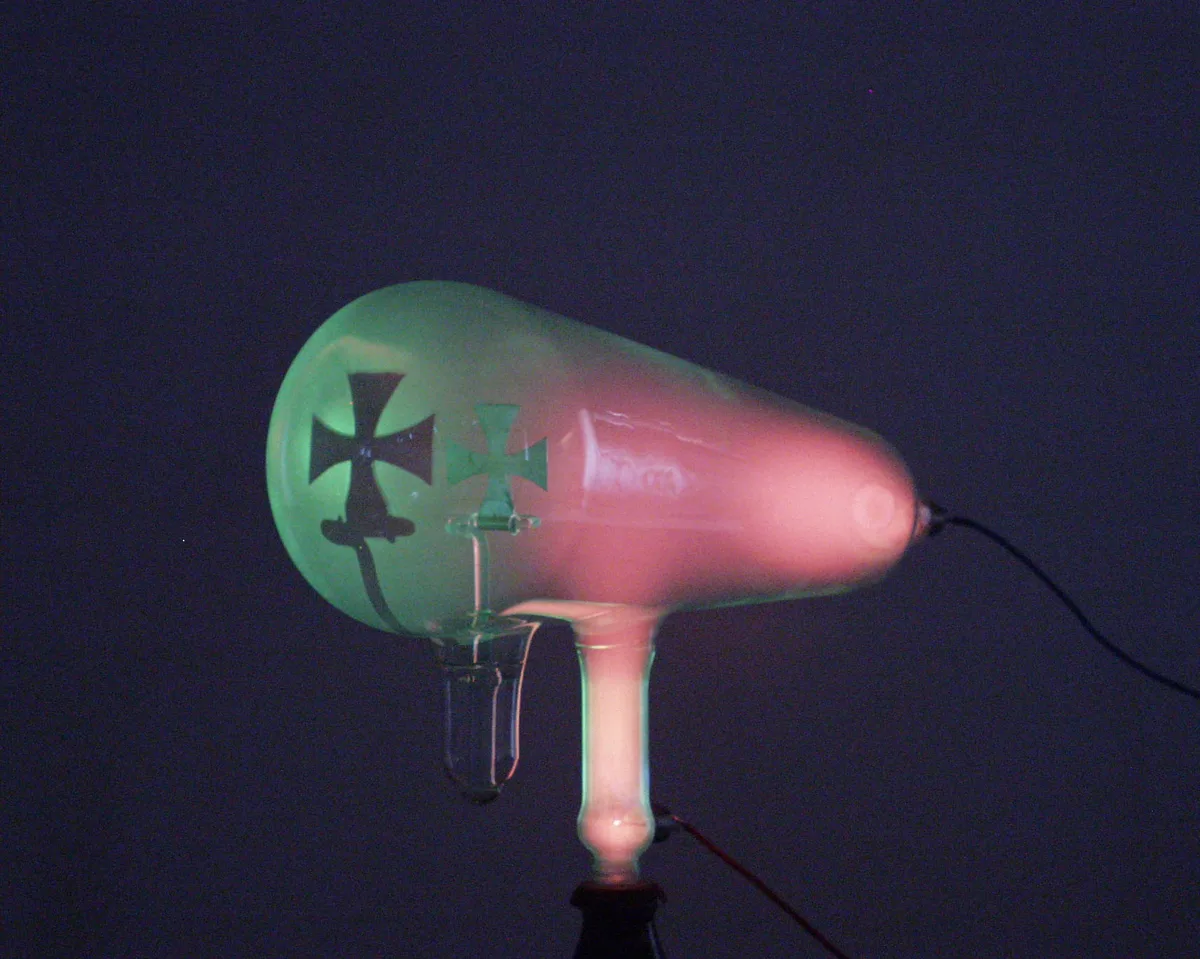
Ferdinand Braun published his work on the cathode ray tube (CRT) on November 15, 1897, in Strasbourg, Germany. This groundbreaking device, which projected an electron beam onto a fluorescent screen, became the 'king of displays' for over half a century, despite its bulky size and high power consumption. (Source: en.wikipedia.org)
OLED and MicroLED: The self-emissive dream
In 1987, Ching W. Tang and Steven Van Slyke at Eastman Kodak developed the first practical organic light-emitting diode (OLED). Their discovery showed that thin films of organic materials could emit light. They did this when an electric current passed through them. Each pixel in an OLED display makes its own light. This means individual pixels can turn completely off. This results in perfect black levels and infinite contrast. OLED technology quickly found its way into premium smartphones and televisions. It offered vibrant colors and wide viewing angles. Display Supply Chain Consultants (DSCC) noted that OLED sales still grow in these high-end segments.
Despite its perks, OLED has some challenges. Organic materials can degrade over time. This can lead to burn-in or color shifts. Manufacturing large OLED panels can also be expensive. This pushed researchers to look at MicroLED technology. MicroLED uses microscopic inorganic LEDs as individual pixels. These tiny LEDs are brighter, last longer, and use less power than OLEDs. Samsung debuted its first consumer MicroLED TV in 2021. But manufacturing MicroLEDs is complex. Placing millions of microscopic LEDs onto a substrate is a huge engineering problem. This makes them currently very expensive. While OLED and MicroLED offer impressive images, they are still flat, two-dimensional screens. The next frontier means going past a fixed viewing surface.
Beyond flat: Augmented and virtual reality
In 2016, the consumer market saw the launch of the Oculus Rift, a virtual reality (VR) headset. This device immersed users in digital environments. VR displays typically use small, high-resolution screens placed close to the eyes. Lenses magnify these images. This creates a wide field of view. Companies like Meta (with its Quest series) and Sony (PlayStation VR) have poured money into this space. They aim to make VR more accessible. VR offers total immersion. But it completely separates the user from their physical surroundings.
Augmented reality (AR) takes a different path. AR overlays digital information onto the real world. Devices like the Microsoft HoloLens, released in 2016, use clever optics called waveguides. These project images directly into the user’s field of vision. Apple’s Vision Pro, launched in 2024, combines high-res micro-OLED screens with cameras. It blends digital content with the user’s surroundings. Researchers at Stanford University, like Gordon Wetzstein, study computational displays. Their work aims to make AR more real and comfortable. They address issues like vergence-accommodation conflict. This means your eyes focus at one depth, but the digital image seems to be at another. AR and VR promise new ways to interact with information. They still require users to wear specialized hardware. The real goal is to make these interfaces disappear.
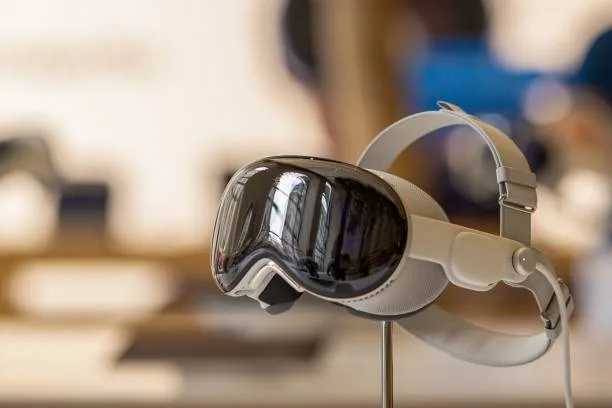
Apple's Vision Pro, launched in 2024, represents a significant step in augmented reality, blending digital content with the user's physical surroundings through high-resolution micro-OLED screens and advanced cameras. (Source: gettyimages.com)
The invisible interface: Displays everywhere
Researchers at companies like Light Field Lab are building holographic displays. These project true three-dimensional images into space. They require no special glasses or headsets. This technology bends light waves to create virtual objects that appear solid. It could change how we use digital content. Imagine a product model floating above your desk. You could walk around it and examine it from all angles.
Further into the future, displays may be built right into our environment. Smart surfaces could turn windows into transparent screens or walls into interactive information panels. Researchers at MIT Media Lab study “ambient intelligence.” This concept suggests that information should be available without us even trying. It adapts to our needs and context. Eventually, display technology could move inside our bodies. Companies like Mojo Vision have worked on smart contact lenses. These project images directly onto the retina. The biggest jump involves brain-computer interfaces (BCIs). While still new, BCIs could skip screens altogether. They could project visual information directly to the visual cortex. This would create a truly invisible interface. Information would appear directly in our minds, adapting instantly to our thoughts.
FAQ
What is the main difference between OLED and MicroLED? OLED uses organic materials that emit light when current passes through them. MicroLED uses microscopic inorganic LEDs for each pixel. MicroLED is brighter and lasts longer, while OLED provides great blacks and contrast.
How do Augmented Reality (AR) displays work? AR displays project digital images onto transparent lenses or waveguides. This overlays virtual content onto the user’s real-world view. Cameras and sensors track the user’s environment and head movements.
What is the biggest challenge for holographic displays? Creating high-resolution, full-color, dynamic holograms remains a huge engineering problem. Generating the complex light fields required for true 3D images needs a lot of computing power and exact optics.
Will traditional screens disappear in the future? New technologies like AR, VR, and displays everywhere will grow. But traditional screens will likely change and stick around. They will work for certain jobs where a dedicated visual surface is still preferred.
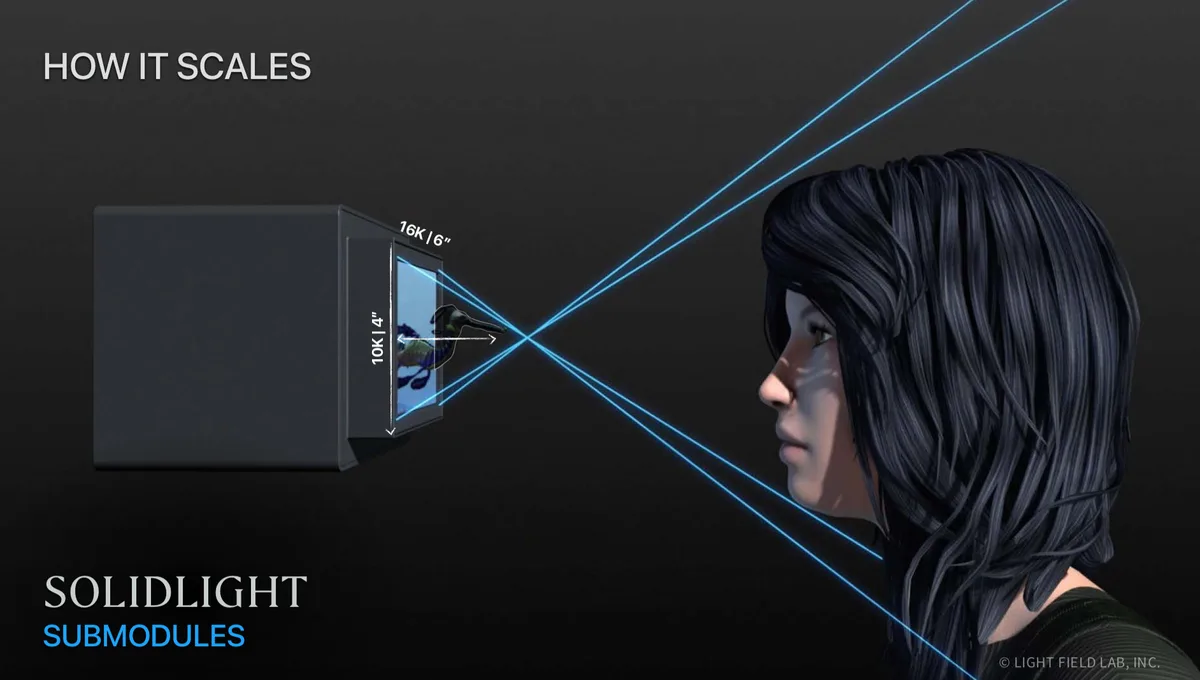
Holographic displays, like those developed by companies such as Light Field Lab, project true three-dimensional images directly into space. This technology bends light waves to create virtual objects that appear solid, allowing users to interact with digital content without the need for special glasses or headsets. (Source: au.pcmag.com)
You might also like:
👉 Virtual Reality Applications: Exploring VR’s Impact Across Industries
👉 Zuckerberg’s 2021 Meta: Why Your Virtual Self Isn’t Free
👉 2018 WHO Warning: Does Social Media Addiction Blur Your Vision?