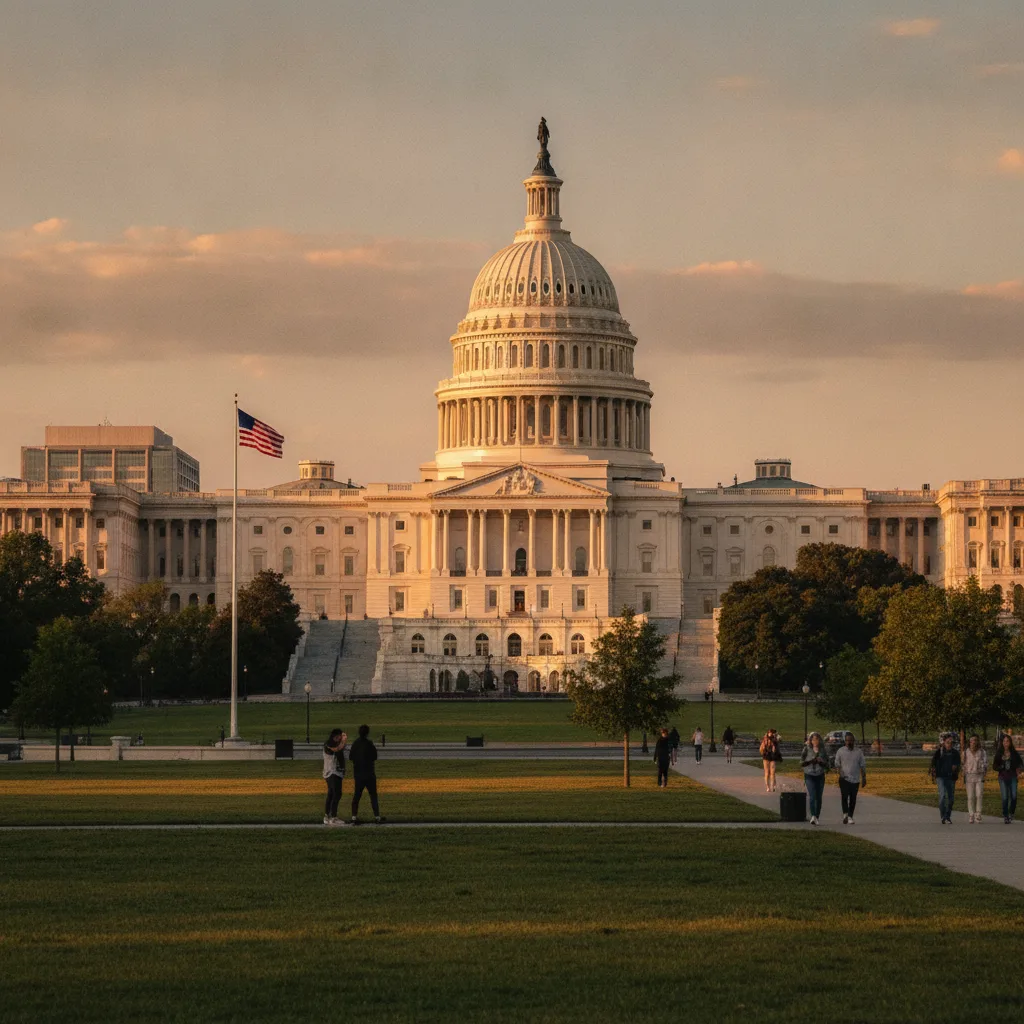
Midterms: How 435 House Seats Shape US Power Every 2 Years
America's political temperature check: voters elect all 435 House members and 1/3 of 100 Senators every two years.
Midterm Elections: A History of Shifting Power
Every two years, America holds a political temperature check. These contests decide who runs the U.S. Congress. They happen halfway through a president’s four-year term. That’s why we call them “midterms.”
Voters elect all 435 members of the House of Representatives. Representatives serve two-year terms. About one-third of the 100 Senators are also chosen. Senators serve six-year terms. Plus, many state and local offices appear on the ballot, like governors, state legislators, and judges.
These elections decide which party controls Congress. That control is vital for getting laws passed. The U.S. Constitution sets these term lengths in Article I, Sections 2 and 3.
This staggered system keeps the legislature running. It stops the entire government from turning over in one election. Presidential elections happen every four years. Midterms are right in the middle.
Midterm results often show how people feel about the current president. Voters use them to approve or disapprove of policies. Historically, the president’s party usually loses seats. This has been true for decades. The Pew Research Center reports the president’s party lost House seats in 19 of the last 22 midterms. This trend goes back to 1934. It’s a brutal reality for the party in power.
How midterms got started
The U.S. Constitution set up different legislative terms from the start. Article I, Section 2 says Representatives serve two years. This makes them answer to voters often. Article I, Section 3 gives Senators six-year terms. This creates more stability and a longer view for lawmaking.
Originally, state legislatures picked Senators. This showed a belief in indirect representation. The 17th Amendment changed that in 1913. It demanded direct popular election for Senators. This gave voters a lot more say in Senate races.
The first real “midterm” election happened in 1790, during George Washington’s first term. Early midterms often focused on local issues. National parties were still just getting started.
Power still shifted, though. The young Federalist Party lost seats in 1792 and 1794. These losses showed growing political divisions. They also proved voters were already reacting to national governance. Historian Sean Wilentz points out how national political contests slowly took shape.
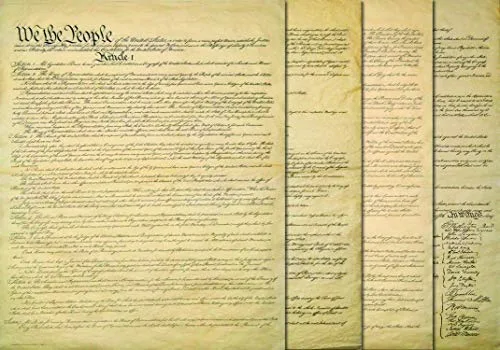
The U.S. Constitution, penned in 1787, established the foundational framework for American governance, including the staggered term lengths for the House of Representatives and Senate that define midterm elections. (Source: amazon.com)
The 1834 midterm election showed early presidential pushback. President Andrew Jackson, a Democrat, faced strong opposition from the Whig Party. His controversial policies, like the war on the Second Bank of the United States, helped the Whigs. The Democratic Party lost 57 House seats that year. This made it much harder for Jackson to pass laws. The election proved midterms could really limit a president’s power.
The 1866 midterm was huge, coming right after the Civil War. President Andrew Johnson, a Democrat, fought with Radical Republicans in Congress. Johnson didn’t want their strict Reconstruction plans. He favored leniency for former Confederate states. Republicans won a supermajority. They got two-thirds of the seats in both chambers. This let them override Johnson’s vetoes. They passed landmark Reconstruction Acts, like the Civil Rights Act of 1866. The House impeached Johnson in 1868, but the Senate acquitted him by one vote. This election deeply shaped post-Civil War America. It put Congress in charge of Reconstruction.
Big midterms that changed everything
The 1894 midterm election completely reshaped politics. President Grover Cleveland, a Democrat, faced a terrible economy. The Panic of 1893 caused huge unemployment and business failures. The Republican Party gained an unheard-of 113 House seats. This was their biggest gain since the Civil War. They also won five Senate seats, taking control of both chambers. This election ended an era of divided government. It kicked off a long period where Republicans were in charge.
The 1934 midterm election famously defied the usual trend of presidential party losses. President Franklin D. Roosevelt, a Democrat, was halfway through his first term. The Great Depression still had the nation in its grip. Roosevelt started his ambitious New Deal programs. Democrats gained nine House seats and nine Senate seats. This was rare public support for a sitting president. Voters backed Roosevelt’s aggressive economic recovery. Programs like the Civilian Conservation Corps were popular and worked. Political scientist Allan Lichtman calls this a rare “referendum election.” The public directly said ‘yes’ to the president’s plans.
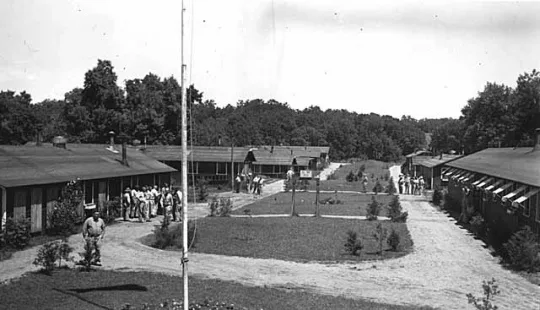
The Civilian Conservation Corps (CCC) was a popular New Deal program during the Great Depression, employing young men in conservation work. Its success, along with other New Deal initiatives, contributed to President Franklin D. Roosevelt's rare electoral gains in the 1934 midterms, defying the typical trend of presidential party losses. (Source: mnhs.org)
The 1946 midterm came after World War II. President Harry S. Truman, a Democrat, faced big post-war problems. High inflation and many labor strikes made people unhappy. Republicans gained 55 House seats and 12 Senate seats. They took control of Congress for the first time since 1930. Truman famously called the 80th Congress the “Do-Nothing Congress.” This caused huge legislative gridlock, with Congress overriding Truman’s vetoes on things like the Taft-Hartley Act.
The 1974 midterms happened under wild circumstances. President Richard Nixon had just resigned two months earlier because of the Watergate scandal. Gerald Ford, a Republican, became president. The scandal destroyed public trust in government. Democrats gained 49 House seats and four Senate seats. This really boosted the Democratic majority in both chambers. It showed the nation was fed up with the Republican Party. It also gave power to a new group of liberal Democrats. They challenged old ways and pushed for government reform.
The 1982 midterms tested President Ronald Reagan’s economic policies. Reagan, a Republican, faced a deep recession. Unemployment hit almost 11 percent, the highest since the Great Depression. Republicans lost 26 House seats. They did keep control of the Senate. Despite these losses, Reagan’s “Reaganomics” reforms mostly continued. The election showed people wanted change, but didn’t completely reject the president. It proved how much economic conditions affect midterm results.
The 1994 midterm election brought another Republican wave. It ended decades of Democratic House control. President Bill Clinton, a Democrat, was two years into his term. His ambitious healthcare reforms had stalled. Republicans, led by future Speaker Newt Gingrich, campaigned on the “Contract with America.” This platform laid out specific goals, like welfare reform and tax cuts. They gained 54 House seats and eight Senate seats. This gave them control of both chambers. Republicans controlled the House for the first time in 40 years. This led to big partisan fights and government shutdowns over budget issues.
The 2010 midterms hit President Barack Obama’s Democrats hard. The Affordable Care Act (ACA) had just passed, igniting huge political debate. The Great Recession still lingered, causing widespread economic worry. Republicans gained 63 House seats. This was the biggest gain for any party since 1938. They also gained six Senate seats. This created a divided government. It made Obama’s legislative efforts for the next two years much harder. The shift really slowed Obama’s agenda. It forced more compromise with Republicans on issues like the debt ceiling.

The Watergate scandal, centered around a 1972 break-in at the Democratic National Committee headquarters in the Watergate Hotel, led to President Richard Nixon's unprecedented resignation. This event profoundly damaged public trust in government and significantly influenced the 1974 midterm elections. (Source: gettyimages.com)
The 2018 midterms saw strong Democratic gains. President Donald Trump, a Republican, had high disapproval ratings. Immigration, healthcare, and the Russia investigation were key issues. Democrats gained 41 House seats, taking back control of the chamber. This was their biggest gain since 1974. Republicans gained two Senate seats. This led to another divided government. The Democratic-controlled House then started many investigations into the Trump administration. The president’s party still commonly loses seats. Data from the Congressional Research Service consistently proves this. These elections show the power of public opinion. They regularly check executive authority.
FAQ
- What are the main offices contested in US midterm elections? Voters elect all 435 members of the House of Representatives. They also choose about one-third of the 100 Senators. Numerous state and local officials are also on the ballot.
- Why do midterms often result in losses for the president’s party? Midterms act as a big test of the sitting president’s performance. Voters often express dissatisfaction with current policies, the economy, or the country’s overall direction. Lower turnout compared to presidential years also shifts outcomes.
- How did the 17th Amendment change midterm elections? Ratified in 1913, the 17th Amendment made Senators directly elected by voters. Before this, state legislatures chose Senators. This change greatly boosted voter influence in Senate races across the nation.
Why midterms still matter
Midterm elections always shape American politics. They’re a core part of the U.S. system. These every-two-year contests set legislative priorities. They decide what happens to presidential agendas. Midterms often create divided government. This forces compromise or causes legislative gridlock.
Control over key congressional committees shifts. This changes how oversight, investigations, and policy develop. The power to confirm judges also changes. This affects the federal judiciary for decades. Future midterms will keep this tradition going. They’ll adapt to new issues and changing populations. Voter turnout and shifting political currents will always influence results. Public opinion remains a powerful force. The balance of power in Washington, D.C., hangs on these regular contests. They are a powerful, consistent check on presidential authority. Ignoring their history means missing how American democracy always adjusts. It’s a constant, often messy, recalibration.
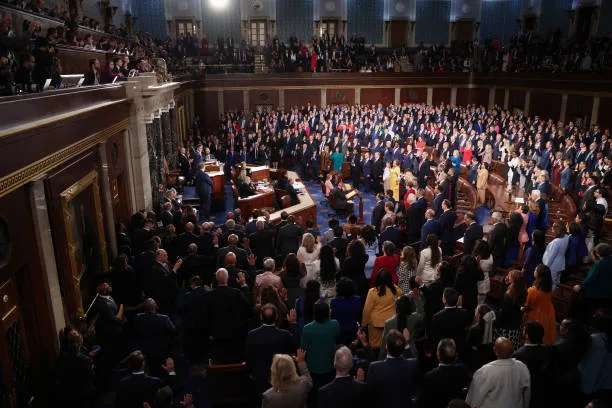
The U.S. House of Representatives chamber, where all 435 members are elected during midterm elections. Control of this chamber frequently shifts during midterms, as seen in 2018 when Democrats gained 41 seats to take control. (Source: gettyimages.com)
You might also like: