
Will Trump's Trade War Tank 3.9% Unemployment?
A second Trump presidency could reshape the US economy. Economists eye potential shifts in trade and taxes, with 3.9% unemployment at stake.
What a second Trump presidency could mean for the economy
A second Donald Trump presidency would bring significant economic policy changes. His plans for trade, taxes, and regulations could alter how the U.S. economy functions. Economists expect these shifts would impact trade practices and domestic financial flows.
Right now, the U.S. economy is strong. Gross Domestic Product grew 3.4% in late 2023. Unemployment was 3.9% in February 2024. Inflation has cooled since its 2022 peak, but the Federal Reserve keeps interest rates high to fight it.
Donald Trump’s first term, from 2017 to 2021, had a clear economic strategy. His team cut taxes with the 2017 Tax Cuts and Jobs Act. They also started big trade fights, hitting Chinese goods with tariffs. These moves had real effects.
A second term would likely continue those strategies. Trump’s campaign advocates for protectionist trade, more tax cuts, and extensive deregulation. Economists are now trying to predict the effects of these plans.
Trade policy: tariffs and global shifts
A second Trump term would bring big tariff hikes. He’s proposed a 10% universal tariff on all imported goods. He also wants tariffs over 60% on products from China. He says this protects American businesses.
The Peterson Institute for International Economics (PIIE) looked at these tariff plans in December 2023. PIIE economists think a 10% tariff would raise U.S. consumer prices. That could add 0.5% to 1.5% to inflation. Imported goods would cost more. Domestic producers might also raise prices without foreign competition.
The PIIE report also predicted big economic problems. It expects U.S. GDP to shrink by 0.5% to 1.5% by 2025. This happens because businesses and consumers pay more. It also accounts for other countries hitting back with their own tariffs.
Retaliation is a big worry for global trade groups. The World Trade Organization (WTO) might face more trouble. Major partners like the European Union and Canada would probably put up their own tariffs. That starts a cycle of protectionism.
The U.S. Chamber of Commerce also worried. Its 2024 brief warned American exporters face risks. Companies using global supply chains would pay more. Farm exports could really suffer from foreign tariffs.
Fiscal policy: tax cuts and national debt
A big part of Trump’s economic plan is extending the 2017 tax cuts. The Tax Cuts and Jobs Act (TCJA) ends in late 2025. Extending these cuts would cost the government trillions in lost revenue. It would also raise the national debt.
The Congressional Budget Office (CBO) estimated the cost of extending these cuts. A 2024 CBO analysis found that extending them fully would add $4.6 trillion to the national debt over 10 years. This figure includes lost revenue and higher interest payments. It does not account for any new spending.
Trump also wants even more tax cuts. His campaign proposed additional cuts for individuals and corporations. These plans would further stress federal finances. They would also increase the deficit.
Moody’s Analytics reviewed Trump’s fiscal plans in 2023. It predicted a significant jump in the national debt-to-GDP ratio. The ratio could exceed 130% by the end of a second term. Such high debt can make government borrowing more expensive.
More government borrowing could mean higher interest rates for you. Mortgage rates and credit card interest could climb. That would hit household budgets. It could also slow down private investment.
Regulations: less oversight, more energy?
Donald Trump has always pushed for less regulation. His team wants to roll back environmental rules. They also want to loosen rules for many industries, including energy, manufacturing, and finance.
The Heritage Foundation, a conservative think tank, supports this deregulation. Its “Project 2025” outlines plans for less federal oversight. This includes making infrastructure permits easier to obtain. It also targets environmental rules from agencies like the EPA.
Deregulation could help some industries. Fossil fuel companies would probably produce more. Oil and gas drilling could increase on federal lands. That might lower energy prices at home.
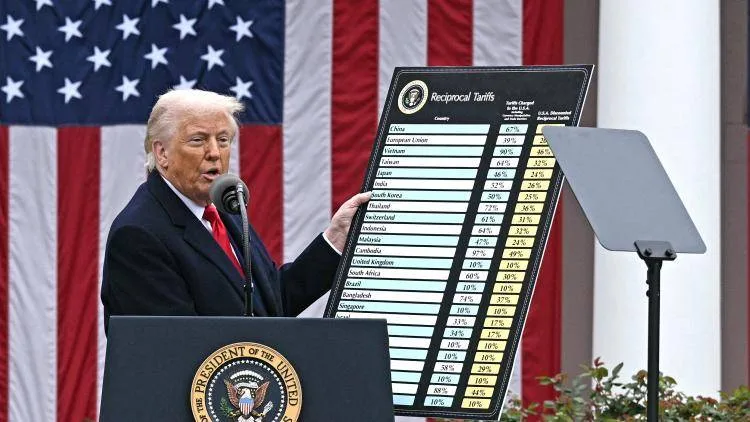
Former President Donald Trump has consistently advocated for extending the 2017 tax cuts and pursuing widespread deregulation, policies that economists predict would significantly impact the national debt and various industries. (Source: chathamhouse.org)
Environmental groups, like the Sierra Club, warn of problems. They point to increased pollution and destroyed habitats. Long-term climate goals could be severely harmed. Future costs from environmental damage might rise.
The financial sector could see rule changes too. The Dodd-Frank Act, a post-2008 crisis law, could get weaker. This might loosen capital requirements for banks. Supporters say this helps lending. Critics warn it could make the financial system riskier.
Monetary policy: the Fed’s independence
A second Trump administration could pressure the Federal Reserve. Presidents appoint Fed governors and the Chair. These choices shape the central bank’s direction. However, the Fed is traditionally meant to be free from political influence.
During his first term, Trump often criticized Fed Chair Jerome Powell. He wanted lower interest rates. This public pressure was unusual for a sitting president. It challenged the Fed’s traditional independence.
Economists like Larry Summers have expressed concern about future Fed independence. Summers, a former Treasury Secretary, emphasized the importance of an apolitical central bank. Political interference could weaken trust in monetary policy.
A less independent Fed might be pushed into lowering interest rates. This could happen even if inflation is still high. Such a move could make the economy less stable. It risks higher, more persistent inflation.
Markets could react badly to any perceived Fed interference. Investors could lose confidence in the U.S. financial system. This might lead to capital leaving the country. It could also weaken the dollar.
The path ahead: an uncertain future
The economy under a second Trump term is full of unknowns. How policies are actually put in place will matter a lot. Congress would also need to cooperate. Markets would react to each policy announcement.
Global economic conditions would also affect the U.S. Events in Europe and Asia could change economic priorities. Energy prices, stable supply chains, and international conflicts are all factors. These outside forces interact with our choices at home.
Economists are still studying different scenarios. Oxford Economics, for example, examines both moderate and more aggressive policy approaches. Each approach shows different growth, inflation, and job projections. The combination of these forces will shape the economic future.
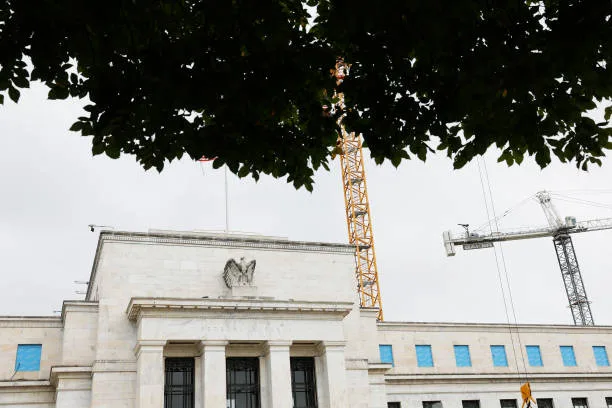
The Marriner S. Eccles Federal Reserve Board Building in Washington D.C. is the headquarters of the Board of Governors of the Federal Reserve System, the central bank of the United States, whose traditional independence from political influence is a key topic in economic discussions. (Source: gettyimages.in)
You might also like:
👉 The Economic & Societal Impact of Government Shutdowns
👉 US-China: $664B Trade Masks Zero-Sum Global Power Struggle