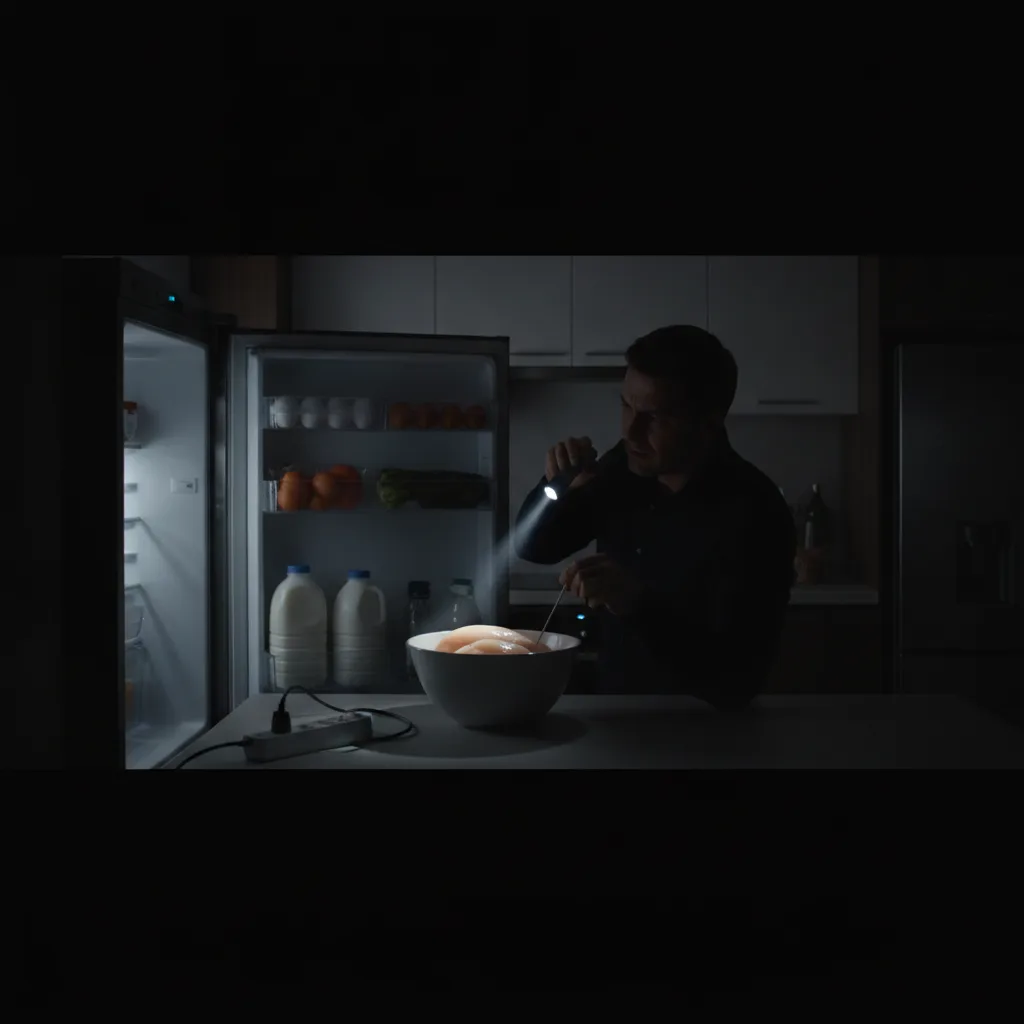
Power Out? USDA's 4-Hour Rule for Food Safety
Over 36 million Americans lost power in 2022. Don't let a power outage lead to foodborne illness; know the USDA's safety rules.
Power Out? Save Your Food (and Your Stomach)
Your fridge dies, and four hours later, your food might too. The USDA says this is a hard rule. If the temperature inside hits 40°F (4.4°C), harmful bacteria multiply rapidly. They multiply fast.
Power outages hit millions of Americans every year. In 2022, over 36 million people lost power at least once, Eaton’s Blackout Tracker reports. These outages risk your household food. Bad food makes people sick. The CDC estimates 48 million foodborne illnesses happen each year.
The “Danger Zone” for bacteria is the temperature range between 40°F (4.4°C) and 140°F (60°C). Bacteria like Salmonella, E. coli, and Listeria love this heat. They make toxins cooking can’t kill. These germs don’t change how food looks or smells.
Many federal agencies give food safety advice. The USDA handles meat, poultry, and eggs. The FDA handles most other foods. Both stress quick action during and after an outage. They want to stop people from getting sick.
Understanding Bacteria Growth
Harmful bacteria multiply fast as food warms. It speeds up in the 40°F to 140°F danger zone. A single bacterium can become millions in just a few hours. This means timing matters during a power loss.
The FDA says food can turn bad long before it smells off. Spoilage bacteria make food smell and feel bad. Pathogenic bacteria are the real danger. They do not give hints. Eating them can make you seriously sick.
Different foods let bacteria grow at different speeds. Raw meats, poultry, fish, and dairy spoil fast. Cooked leftovers and deli items also go bad quick. Fruits and veggies last longer. Still, they can carry germs.
Freezers protect food better than fridges. A full freezer keeps food safe for about 48 hours. A half-full freezer stays cold for 24 hours. This is if you keep the door shut. The USDA gives these numbers.
Blackout! What to Do Right Away
First, and most important: keep your fridge and freezer doors shut during an outage. This keeps things cold inside. Each time the door opens, cold air escapes. Warm air enters, making things thaw faster.
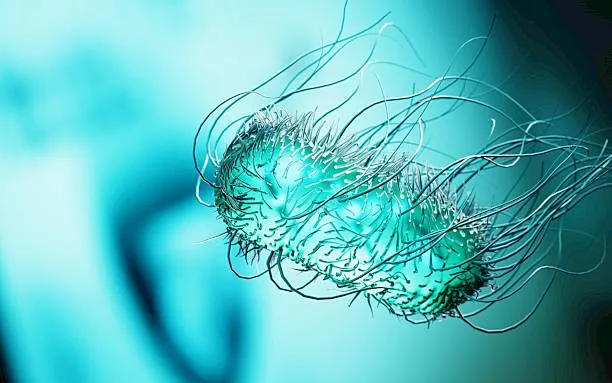
Pathogenic bacteria like Salmonella, E. coli, and Listeria are the invisible culprits behind millions of foodborne illnesses annually, multiplying rapidly in the 'danger zone' between 40°F and 140°F. Unlike spoilage bacteria, these dangerous germs often don't alter food's appearance or smell, making them a silent threat after a power outage. (Source: gettyimages.com)
The USDA says to put a thermometer inside your fridge and freezer. An appliance thermometer gives a true reading. Check it when power returns. Don’t trust your appliance’s internal display.
Use block ice or dry ice to keep food cold. Put them right into your fridge or freezer. Fifty pounds of dry ice can keep a full 18-cubic-foot freezer cold for two days. Always handle dry ice with gloves. Ventilate the room.
Eat highly perishable items first. This means dairy, eggs, and cooked meats. Move them to a cooler with ice if the power stays off. Keep the cooler in the coolest part of your house. This keeps them cold longer.
Throw out anything with mold or a weird smell. Even a short outage can make food bad. When in doubt, throw it out. This simple rule keeps you safe.
Power’s Back: What to Keep, What to Toss
When power comes back, check those thermometers right away. Any perishable food above 40°F (4.4°C) for over four hours goes in the trash. That’s a strict USDA rule. This means meat, poultry, seafood, milk, eggs, and leftovers.
Frozen food needs a different look. Check each package. Food is safe to refreeze if it still has ice. It’s also safe if its temperature is 40°F (4.4°C) or below. The FDA backs this up.
Throw out any frozen food that fully thawed and warmed above 40°F. Don’t taste it to see if it’s safe. A thawed raw steak, for instance, must go if it’s warm. The same applies to thawed ice cream.
Some items have clearer rules. Mayonnaise, salad dressing, and soft cheeses are very sensitive. They go bad fast. Hard cheeses, butter, and most condiments last longer. Still, toss them if they sat in the danger zone too long.
Canned goods and sealed jars are usually safe. Their contents stay good on a shelf. Only toss them if the can bulges, leaks, or dents badly. These signs mean bad bacteria might be inside. Home-canned foods are riskier. Toss them if they hit the danger zone.
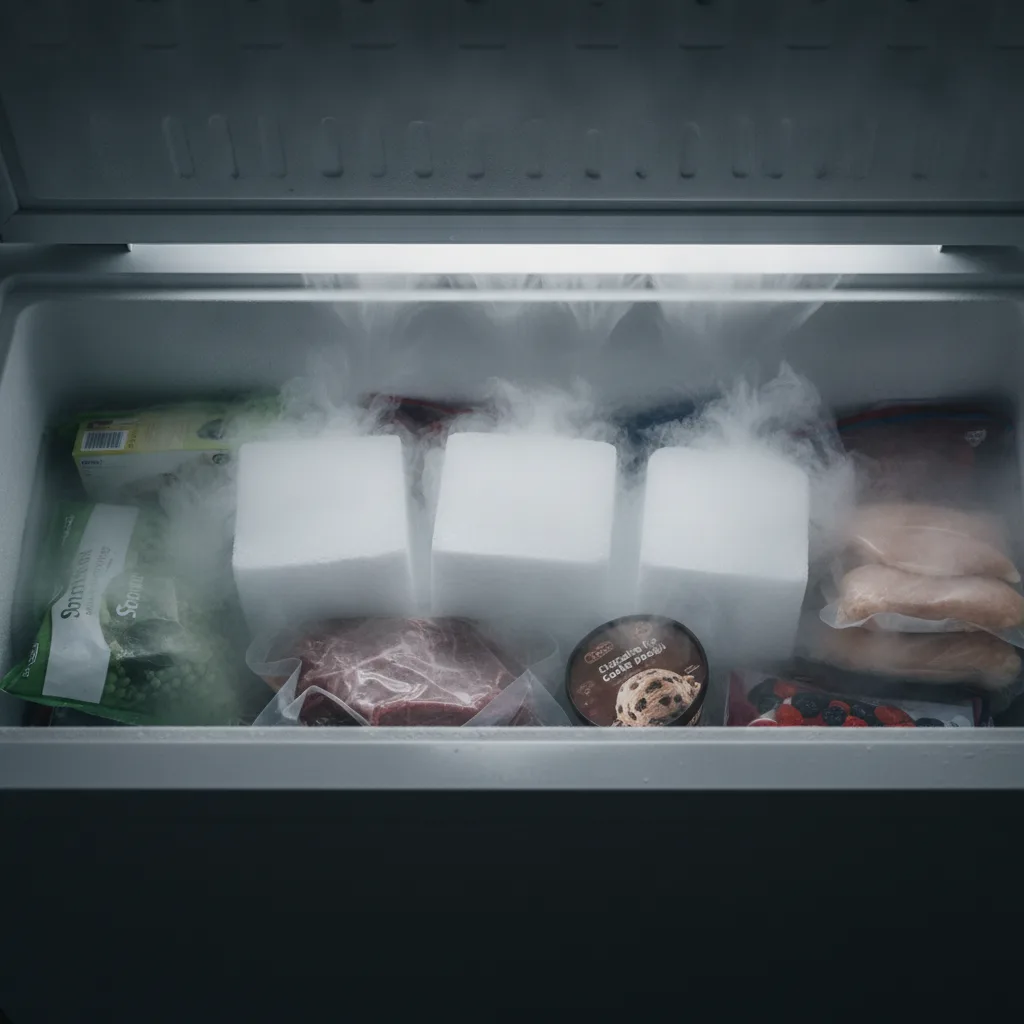
Dry ice, or frozen carbon dioxide, is a powerful refrigerant that can keep food cold for extended periods during a power outage. Fifty pounds can preserve a full 18-cubic-foot freezer for up to two days, but it must be handled with gloves and used in a well-ventilated area due to its extreme cold and CO2 gas release. (AI-generated illustration)
Get Ready for Next Time
Preparing for power outages reduces food waste and health risks. Keep non-perishable foods on hand. Canned goods, dried fruits, and peanut butter are good options. These items don’t need a fridge. The American Red Cross recommends a three-day supply for each family member.
Keep several appliance thermometers in your fridge and freezer. They are inexpensive and important for checking temperatures. Stock up on ice packs or gel packs. Freeze plastic water bottles to use as ice. These can also be drinking water later.
Buy a cooler and some dry ice or block ice. Store them before bad weather hits. Label food items with the date they went into the freezer. This helps you eat older food first.
Community prep matters too. Local emergency agencies often offer help. They can tell you about food banks or cooling centers. These resources are important during long outages. Ready.gov, a federal preparedness website, has full guides.
Future grid plans aim to reduce how often and long outages happen. Still, you need to be ready. Knowing food safety protects your health. It also saves you money on spoiled groceries. This helps families be prepared.
Quick Answers
How long does a refrigerator keep food cold? A fridge stays cold for about four hours if you don’t open it. This is if the power stays off. The temperature rises above 40°F (4.4°C) after this time.
Can I refreeze thawed food? You can refreeze thawed food if it still has ice crystals. Its temperature must also be 40°F (4.4°C) or below. Any food fully thawed and warm should be discarded.
What about opened jars or condiments? Opened jars of condiments like mayonnaise spoil fast. Throw them out if they sat above 40°F for over four hours. Hard cheeses and butter last longer.
Is smelling food enough to tell if it’s safe? No, smelling food isn’t enough. Harmful bacteria often don’t make food smell or look different. Always follow temperature guidelines, not your nose.
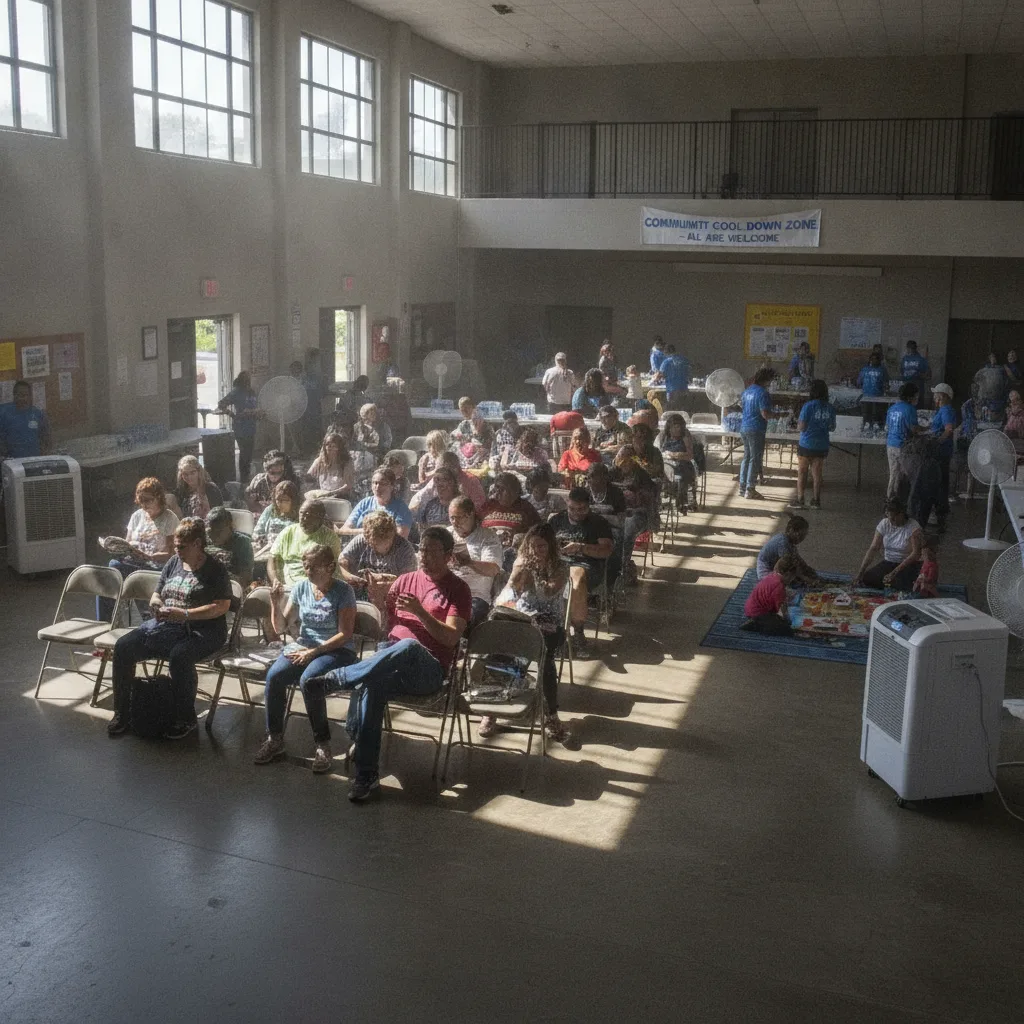
During extended power outages, especially in hot weather, community cooling centers provide a vital refuge for residents, offering air conditioning, water, and a safe place to store temperature-sensitive items like medications or to charge devices. (AI-generated illustration)
You might also like:
👉 Why 1/3 of Food Waste Won’t Feed 735 Million Hungry People
👉 WHO 2019: 1 in 8 Global Mental Disorder. Is it a crisis?
👉 Virtual Reality in Healthcare: Revolutionizing Medicine & Patient Care