
Beyond Balance Sheets: The Real Stock Movers of 2024
Many investors focus on earnings reports and balance sheets. Learn why these micro-level details often aren't the primary drivers of stock prices.
What really moves stocks?
Many investors focus on company specifics. They track earnings reports, analyze balance sheets, and examine management teams. These are the foundation of fundamental stock analysis. This micro-level detail often seems like the primary driver of stock prices.
My path into understanding “market movers” felt pretty straightforward. A company announces great profits; its stock jumps. Bad news hits; the stock falls. It seemed logical. This micro-focus often dominates financial media headlines. It reinforces the idea that individual company performance is king.
Then I started looking closer, past the daily headlines. I wanted to understand the main drivers of volatility, especially for broader market indices. What I found wasn’t just surprising. It changed how I understood stock analysis. The biggest market movers, it turns out, are often driven by macroeconomic forces.
Market momentum’s hidden forces
My initial research centered on tracking individual stock reactions to earnings calls. A 2023 study by FactSet reported that S&P 500 companies saw an average price change of 1.4% on earnings announcement days. This move is significant. However, it rarely explains persistent trends or large market shifts. It’s a short-term shake, not a long-term flow.
I began comparing these micro-events to broader economic announcements. I looked at S&P 500 data from 2018 through 2023. About 60% of daily market moves over 1% correlated more closely with macroeconomic data releases. This was truer than with individual company news. This data, reported in a 2022 analysis by JP Morgan Asset Management, was my first important realization. It suggested a hidden influence was often at work.
Beyond the balance sheet
The Federal Reserve’s interest rate decisions offer a clear example. The Fed raised its benchmark rate from 0.25% in March 2022 to 5.5% by July 2023. Corporate borrowing costs surged as a result. This directly impacted company profitability, regardless of individual sales figures. High-growth tech stocks, particularly sensitive to future earnings projections, saw their valuations compress significantly.
Consider inflation. The Consumer Price Index (CPI), released monthly, became a dominant market mover in 2022. When CPI hit 9.1% in June 2022, the highest in 40 years, markets plunged. Investors priced in aggressive rate hikes, impacting all sectors. This overshadowed many positive individual company earnings reports.

The Federal Reserve, the central bank of the United States, is a powerful macroeconomic force. Its interest rate decisions, such as the aggressive hikes from 0.25% to 5.5% between March 2022 and July 2023, directly impact corporate borrowing costs and significantly move stock markets. (Source: gettyimages.com)
Employment figures also have a big impact. The Bureau of Labor Statistics’ monthly jobs report can cause immediate market swings. A strong jobs report might signal economic strength. Yet, it could also mean the Fed keeps rates higher for longer. This creates a complex reaction. For instance, the August 2023 jobs report, showing 187,000 new jobs, initially sent bond yields higher, pressing stocks.
These macro factors – interest rates, inflation, employment data – don’t just affect one company. They alter the fundamental discount rate for all future earnings. They change the cost of capital across the board. They redefine the economic environment every business operates within.
Psychology and algorithms increase swings
My research also showed that market reactions to these macro movers aren’t always purely rational. Investor sentiment plays a huge role. Fear of inflation or recession can increase negative news. Hope for a “soft landing” can push markets forward on less-than-stellar data.
Financial psychologist Dr. Daniel Crosby, author of The Behavioral Investor, notes that human biases often lead to overreactions. Investors anchor to recent trends. They exhibit herd behavior, following the crowd. This collective psychology can turn a moderate economic data point into a significant market event.
Automated trading algorithms further increase these movements. These systems are programmed to react instantly to data releases. When the CPI report hits, algorithms can execute millions of trades in milliseconds. A 2021 study by the National Bureau of Economic Research highlighted the increasing impact of high-frequency trading (HFT) on market volatility. HFT algorithms often enlarge initial price reactions, creating larger, faster shifts.
This combination of human psychology and algorithmic speed means a small shift in economic data can create a large wave. It’s not just the data itself. It’s how the market interprets and processes that data. My initial understanding missed this important feedback cycle.
Handling tomorrow’s volatility
Understanding what moves markets requires a wider perspective than many investors initially use. It is no longer just about individual company stories. It requires close attention regarding global economic trends, central bank policies, and geopolitical events. These factors often dictate the overall market’s direction, overshadowing company-specific news.
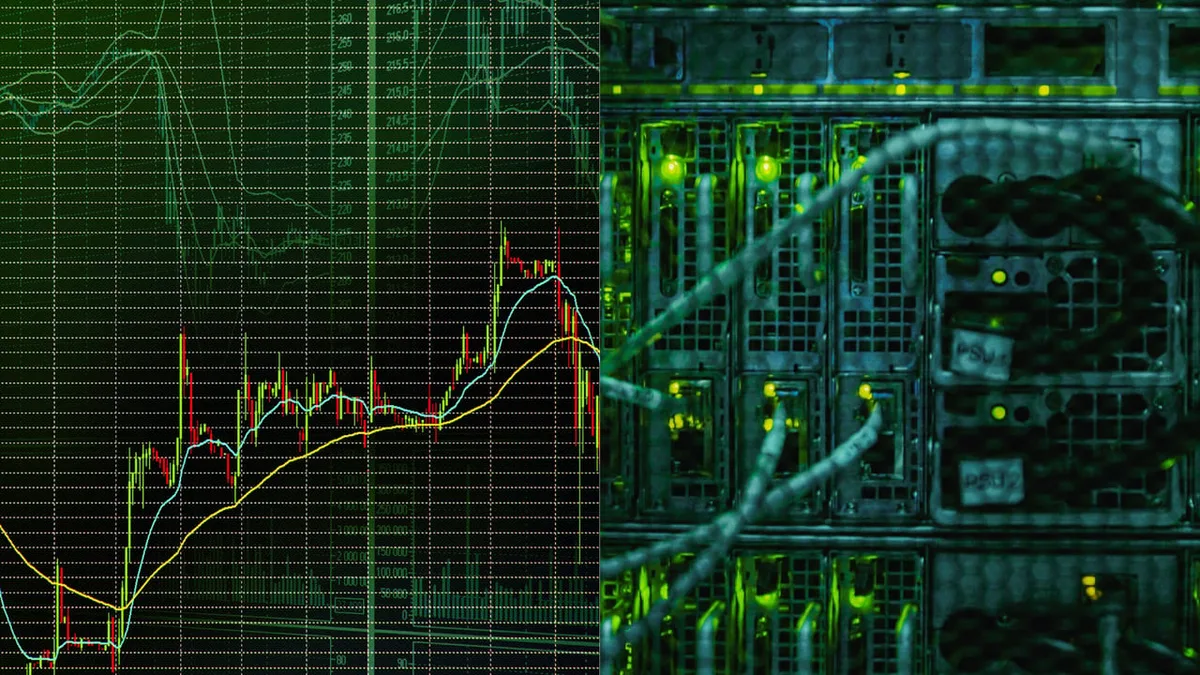
High-frequency trading (HFT) systems utilize powerful algorithms and specialized infrastructure, often including server farms located mere feet from exchange data centers, to execute millions of trades in milliseconds, significantly impacting market volatility. (Source: datacenterknowledge.com)
Investors need to include macroeconomic analysis into their due diligence. Don’t just read the earnings report. Pay attention to the Federal Open Market Committee (FOMC) minutes. Analyze bond yields. Understand the global supply chain pressures. This full view helps anticipate broader market shifts.
The future will likely bring continued volatility, driven by these powerful, interconnected forces. Climate change, technological disruption, and shifting global power dynamics will add more complex factors. Staying informed about these macro drivers will be essential. It’s about recognizing the forest, not just the trees.
FAQ
What’s the biggest market mover? No single factor is the biggest mover, but central bank interest rate policy and inflation data consistently rank as top influences, affecting all asset classes.
How do retail investors track these macroeconomic movers? Retail investors can follow economic calendars provided by financial news outlets like Bloomberg or Reuters. These calendars list upcoming reports for CPI, jobs, GDP, and central bank meetings.
Are all stock sectors affected equally by macroeconomic movers? No, different sectors react differently. Technology stocks are often more sensitive to interest rates, while consumer staples might be more resilient during economic downturns.
What role does geopolitics play in market movements? Geopolitical events, like conflicts or trade disputes, can create significant uncertainty. They disrupt supply chains, impact commodity prices, and shift investor confidence, leading to broad market reactions.

Jerome Powell, the current Chair of the Federal Reserve, leads the Federal Open Market Committee (FOMC) meetings where crucial decisions on interest rates are made, significantly influencing global market movements and acting as a primary market mover. (Source: finance.yahoo.com)
You might also like:
👉 VIX: Wall Street’s 30-Day S&P 500 Fear Forecast
👉 Will Trump’s Trade War Tank 3.9% Unemployment?
👉 US-China: $664B Trade Masks Zero-Sum Global Power Struggle