
Europe's Sneezing Future: From 1979 to a Climate Allergy Crisis
Since March 10, 1979, when Dr. Van der Valk noted early spring allergies in Amsterdam, Europe's pollen seasons have drastically changed. Why?
Europe’s Sneezing Future: How Climate Change Reshapes Allergy Seasons
On March 10, 1979, Dr. Isabelle Van der Valk, a young allergist in Amsterdam, saw a familiar pattern. Her clinic filled with patients reporting itchy eyes and runny noses. These were spring’s early signs, often brought by alder and birch pollen. The season felt predictable then, a brief annual nuisance.
Europe has always had seasonal allergies. Pollen from trees, grasses, and weeds like ragweed routinely bothered millions. For centuries, these cycles stayed stable, tied closely to the seasons’ rhythm. Doctors learned to anticipate these patterns, advising patients on prevention. But this predictable rhythm began to shift. Global temperatures started climbing steadily from the mid-20th century. Scientists, including aerobiologists, soon saw changes in plant life. These observations later connected a warming planet to a worsening allergy problem.
Early signs: longer allergy seasons
By the late 1980s, researchers across Europe noticed subtle changes. In Vienna, Austria, Professor Rudolf Jilek, a pioneer in pollen monitoring, recorded earlier onset dates for several tree pollens. His team’s data showed birch pollen, a major allergen, appearing days earlier. This wasn’t just happening in Vienna.
Other monitoring stations, from Finland to Spain, reported similar trends. Dr. Cristina Galán, working in Madrid, published findings in 1997. Her research detailed an extended grass pollen season in central Spain. It showed an average increase of five days per decade. The spring allergy season wasn’t just arriving earlier; it also lasted longer. Something fundamental was changing European plants’ biological clock. This meant the allergy season slowly grew longer, offering less relief to sufferers.
How climate change fuels allergies
Scientists soon explored the link between climate change and pollen in more detail. They found key mechanisms driving these changes. Rising global temperatures played a central role. Warmer conditions trigger plants to flower earlier. They also keep plants active for longer periods.
More atmospheric carbon dioxide (CO2) also contributes. Studies by Dr. Lewis Ziska at Columbia University, published in 2007, showed that higher CO2 levels can boost pollen production in many plants. Some plants, like ragweed, produced much more pollen. Their pollen also became more allergenic. This meant more pollen in the air, and stronger pollen.
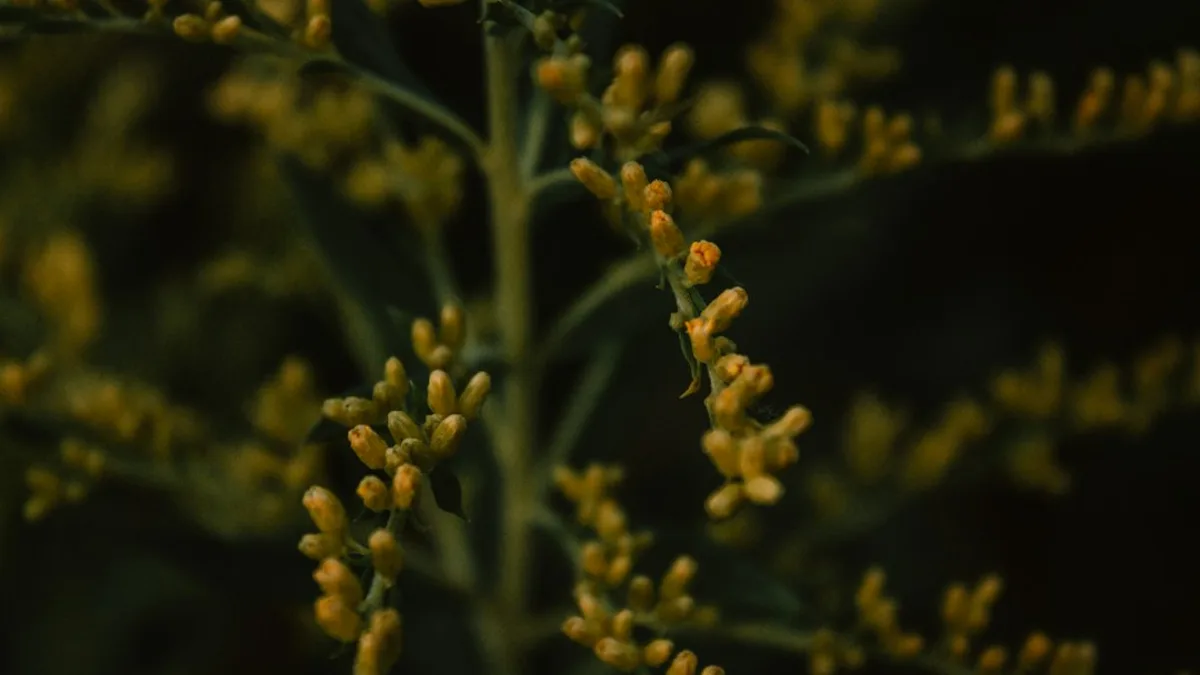
Studies by Dr. Lewis Ziska at Columbia University showed that higher atmospheric carbon dioxide (CO2) levels can significantly boost pollen production in plants like ragweed, making its pollen more abundant and allergenic, thereby worsening allergy seasons. (Photo: Sydney Moore / Unsplash)
Altered precipitation patterns also affect plant growth. Drought stress can reduce pollen, but more rainfall in other areas can increase it. Professor Athanasios K. Priftis, an aerobiologist at the University of Thessaly in Greece, noted in 2015 how local weather extremes impacted specific pollen types. These combined factors worsened the pollen problem.
Ragweed: a new threat
The spread of common ragweed (Ambrosia artemisiifolia) became a major issue. This highly allergenic plant, native to North America, aggressively expanded across Europe in the late 20th century. Ragweed pollen is very strong. It causes severe symptoms even at low concentrations. Its season extends into late summer and autumn, long after most tree and grass pollens have subsided.
In 1990, ragweed mostly stayed in parts of Hungary and the Balkans. Over the next three decades, warmer temperatures and human activity helped it march westward and northward. Dr. Michelle Smith, a botanist at the University of Fribourg, published research in 2018. She mapped its rapid colonization of France, Germany, and parts of Italy. Her team projected further spread into Scandinavia and the UK.
Ragweed’s pollen season typically runs from August to October. Its presence means extended suffering for allergy patients. It often triggers more severe reactions. The European Academy of Allergy and Clinical Immunology (EAACI) warned in a 2020 report. They stated that ragweed now poses a serious public health threat. It’s a new, powerful allergen that adds to Europe’s existing allergy problems.
The human and economic cost
The growing pollen crisis has high human and economic costs. More people are developing allergies. Those already affected experience more severe symptoms. Asthma attacks linked to pollen are becoming more frequent. Children are particularly vulnerable.
A 2023 study in The Lancet Planetary Health estimated a difficult future. Climate change could increase hay fever prevalence by up to 50% in some European regions by 2050. This means millions more people will need medical care. Dr. Luisa V. Lopes, an aerobiologist involved in the study, pointed out the strain on healthcare systems.

As pollen seasons lengthen and intensify, asthma attacks linked to pollen are becoming more frequent, with children identified as particularly vulnerable to these severe allergic reactions. (AI-generated illustration)
The economic cost is high. It includes direct healthcare costs for appointments, medications, and emergency room visits. Indirect costs, like lost work days and reduced quality of life, also add up. The European Allergy and Asthma Federation (EFA) reported in 2021 that pollen allergies already cost the EU billions of euros annually. This is a growing health and economic challenge for the entire continent.
Adapting to more sneezes
Europe now faces a future with longer, more intense, and more diverse pollen seasons. Scientists expect these trends will continue without major climate action. Temperatures will keep rising. CO2 levels will increase. This means earlier springs, later autumns, and plants growing more strongly.
Health organizations and city planners are developing strategies. Early warning systems, like the European Pollen Information (EPI) network, provide daily pollen forecasts. This helps individuals manage their exposure. Urban planning now considers planting low-allergen species in public spaces.
Researchers continue to monitor pollen levels and track invasive plants. They also investigate new treatment options and prevention strategies. Addressing this challenge needs a wide approach. It combines scientific research, public awareness, and policy changes. Europe must adapt to a future where seasonal allergies are a year-round concern, not just a spring sniffle.
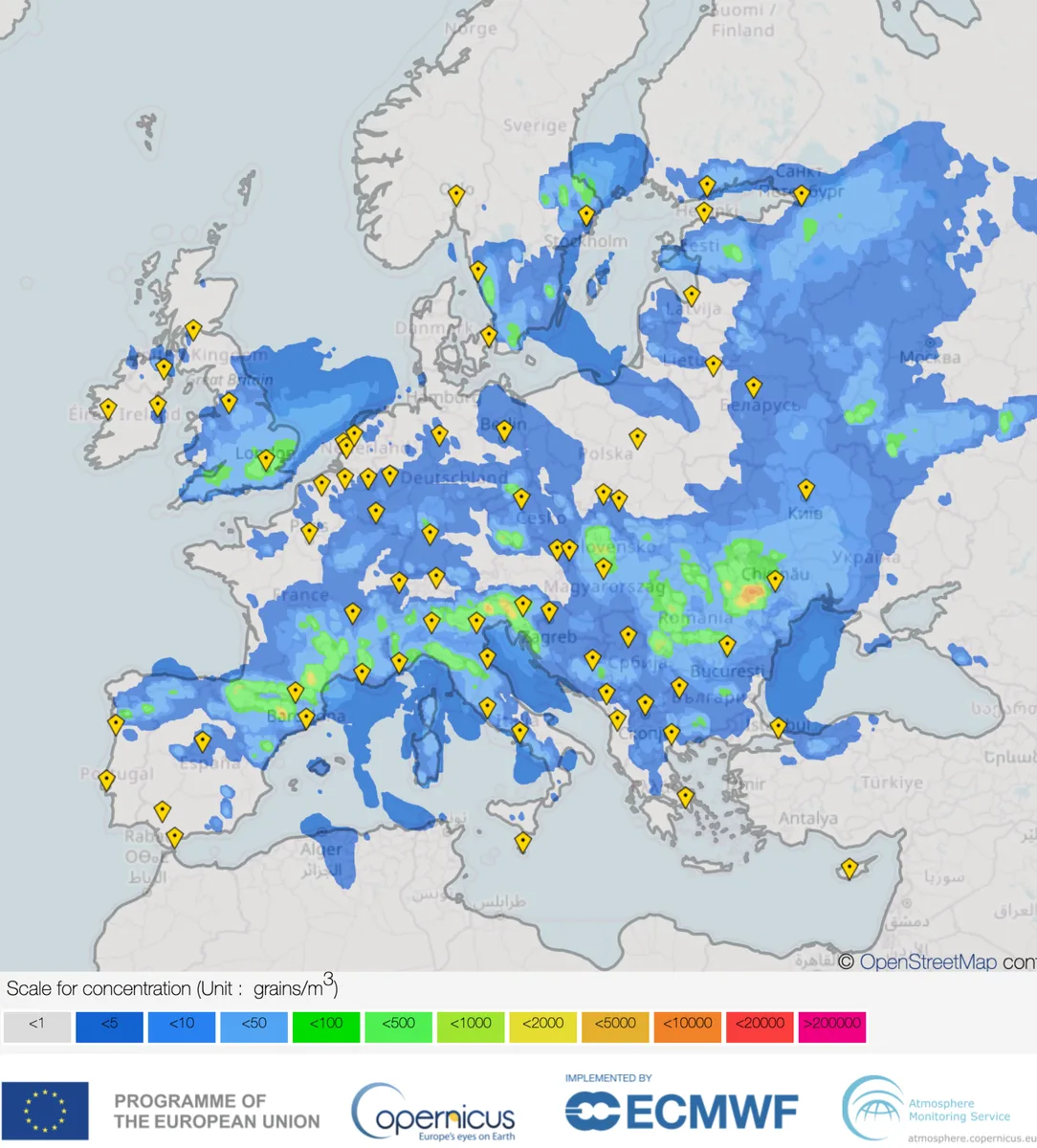
The European Pollen Information (EPI) network provides crucial daily pollen forecasts across Europe, utilizing a vast network of monitoring stations to help millions manage their exposure to allergens and adapt to increasingly intense pollen seasons. (Source: atmosphere.copernicus.eu)
You might also like:
👉 1 Billion Urban Poor: How Cities Fight Climate Shocks
👉 Venus: Why 475°C Hell Holds Earth’s Climate Future
👉 Why 1/3 of Food Waste Won’t Feed 735 Million Hungry People