
Is a 1929-Style 11% Dow Plunge Coming? Economists Fear New Depression
Economists fear a new depression, recalling Black Thursday 1929 when the Dow Jones plummeted 11%. The Great Depression gripped the U.S. for a decade.
Why economists fear depression
Black Thursday, October 24, 1929. Panic hit the New York Stock Exchange. Investors frantically sold shares. The Dow Jones Industrial Average plummeted 11% at the open. This day started a relentless downward spiral.
This crash wasn’t an isolated event. It signaled the start of the Great Depression. This devastating economic period gripped the U.S. and much of the world for a decade. Unemployment soared. Industrial production collapsed. Millions lost their savings and homes. Economists and policymakers still remember this era. They work to prevent a repeat.
An economic depression is a severe, prolonged downturn. It’s much worse than a recession. A depression means Gross Domestic Product (GDP) drops substantially, typically over 10%. Unemployment rates get high, sometimes exceeding 20%. It often includes significant deflation. This dire situation lasts for several years.
A recession, by contrast, is a milder, shorter economic contraction. It usually means two consecutive quarters of negative GDP growth. Unemployment rises but generally stays below double digits. Most post-World War II downturns have been recessions, not depressions. Policymakers learned from the past.
Policymakers globally now actively try to avoid such catastrophic collapses. Central banks and governments use fiscal and monetary tools. Their goal is to stabilize markets and support employment. This persistent effort makes a depression a rare, but constant fear.
2008: a near miss and new models
On September 15, 2008, the old investment bank Lehman Brothers declared bankruptcy. Its collapse sent shockwaves through the global financial system. Credit markets froze instantly. Panic spread from Wall Street boardrooms to Main Street businesses.
Many feared a repeat of the Great Depression. The global economy teetered on the brink. Ben Bernanke, then Chairman of the U.S. Federal Reserve, had closely studied the 1930s crisis. He knew the dangers of inaction. He moved decisively to provide liquidity to banks and prevent a full-scale meltdown.
Governments worldwide launched huge stimulus packages. The U.S. passed the Troubled Asset Relief Program (TARP). European nations recapitalized their banks. These coordinated actions prevented a global financial collapse. They averted another depression.
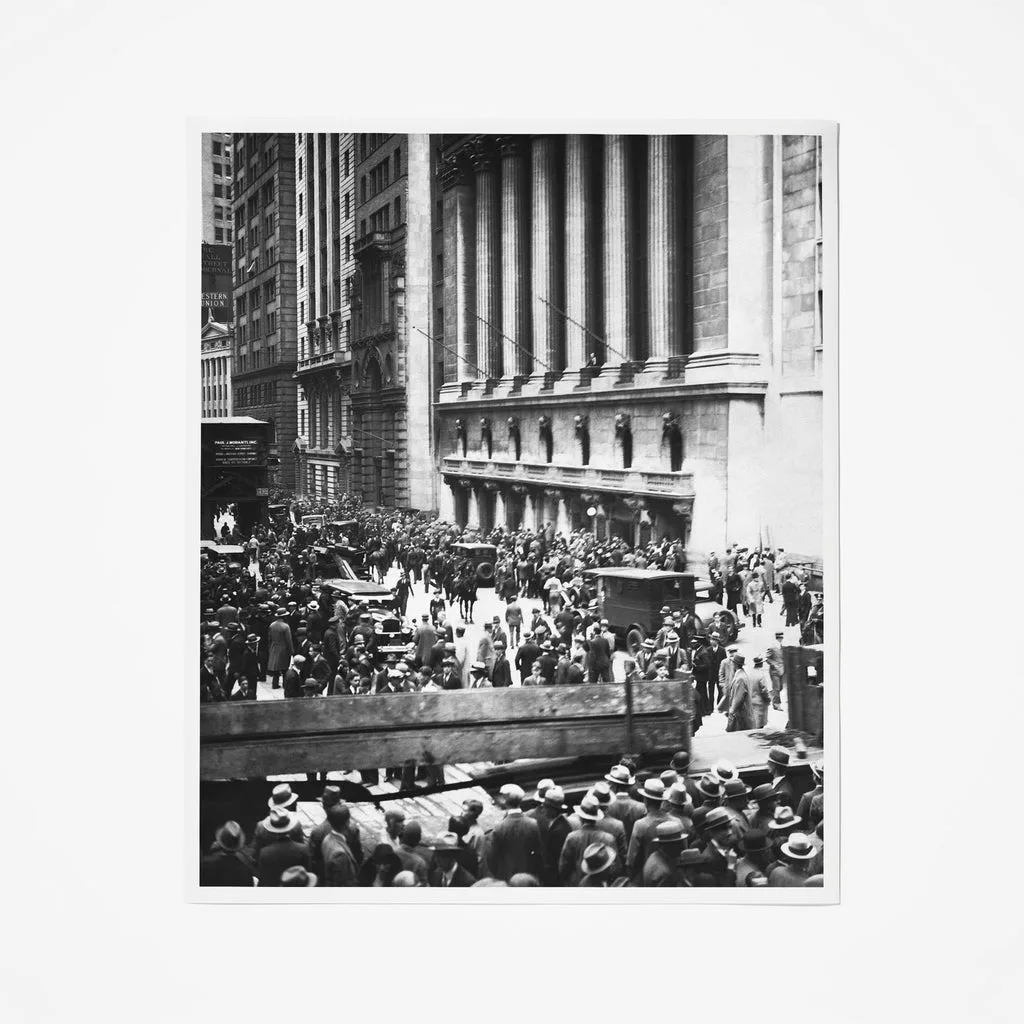
On Black Thursday, October 24, 1929, panic gripped the New York Stock Exchange as investors frantically sold shares, causing the Dow Jones Industrial Average to plummet 11% at the open and signaling the start of the Great Depression. (Source: store.nytimes.com)
This period became known as the Great Recession. It was the most severe economic downturn since the 1930s. U.S. unemployment peaked at 10% in October 2009. GDP declined by 4.3% from peak to trough, according to the Bureau of Economic Analysis. Many economists, including Kenneth Rogoff of Harvard University, argued the recovery was slow. They cited high debt levels as the reason.
The experience of 2008 showed how weak prevailing economic models were. Many failed to predict the housing market crash. They underestimated how global finance connected. This made economists rethink how they forecast and identify systemic risks. It also led to stricter financial regulations.
COVID-19: new threats, swift responses
In March 2020, the world entered a lockdown unlike any before. The COVID-19 pandemic forced businesses to close and supply chains to halt. This shock was different. It combined a public health crisis with an immediate economic shutdown.
Initial forecasts were dire. The International Monetary Fund (IMF) projected a global contraction of 3.3% for 2020. This was stated by its Managing Director Kristalina Georgieva. Governments and central banks responded with incredible speed and size. They launched massive fiscal and monetary interventions.
The U.S. Congress passed the CARES Act, a $2.2 trillion stimulus package. The European Central Bank (ECB) expanded its asset purchase programs. Its President, Christine Lagarde, pledged to do “whatever it takes” to support the Eurozone economy. The Federal Reserve, under Chairman Jerome Powell, slashed interest rates to near zero and bought trillions in bonds.
These measures softened the economic hit. They provided income support for millions. They kept businesses afloat. The global economy avoided a deep, prolonged depression. It instead experienced a sharp, but relatively short, downturn.
But these massive interventions came with a cost. Global public debt soared. Many economies saw supply chain bottlenecks. Demand rebounded quickly, often outstripping supply. This caused inflation to rise, an issue policymakers hadn’t faced in decades.
Inflation spikes, central banks react
In June 2022, the U.S. Consumer Price Index (CPI) hit 9.1%. This was a 40-year high. Inflation raged across developed economies. Central banks, having held interest rates low for years, aggressively raised rates. Their goal was to cool demand and bring prices down.
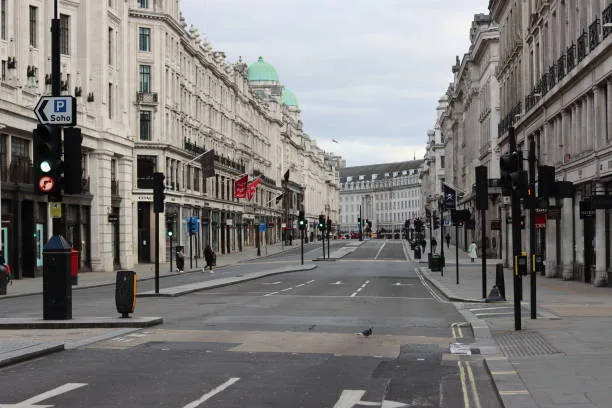
In March 2020, the world entered an unprecedented global lockdown, forcing businesses to close and supply chains to halt. This unique event combined a public health crisis with an immediate economic shutdown, leading to deserted streets and public spaces worldwide. (Source: istockphoto.com)
The Federal Reserve raised its benchmark interest rate eleven times from March 2022 to July 2023. This pushed the federal funds rate to a 22-year high of 5.25%-5.50%. The European Central Bank also increased rates at its fastest pace ever. These actions aimed for a “soft landing,” slowing the economy without triggering a deep recession.
Many economists warned of a harder outcome. Nouriel Roubini, a New York University economist, is known for predicting the 2008 crisis. He warned of a “stagflationary depression.” He pointed to high inflation, slow growth, and rising debt. Roubini, speaking in late 2022, argued that central banks couldn’t fight inflation without causing a severe downturn.
Jamie Dimon, CEO of JPMorgan Chase, also sounded alarms. He spoke of an “economic hurricane” in mid-2022. He pointed to the war in Ukraine, rising inflation, and aggressive monetary tightening as major risks. These warnings showed growing concerns about the unintended consequences of rapid rate hikes.
Bond markets signaled trouble, too. The yield curve inverted multiple times. This means short-term bonds yielded more than long-term ones. Historically, an inverted yield curve often precedes recessions. These indicators fueled fears among analysts that a severe downturn, possibly a depression, was coming.
Future risks: debt, aging, and deglobalization
In 2022, global public debt reached an alarming 92% of GDP, according to the International Monetary Fund. This figure represents $92 trillion. It’s a significant increase from pre-pandemic levels. High debt burdens limit how governments can respond to future crises. Rising interest rates make this debt more expensive to service.
Economists like Carmen Reinhart, formerly of the World Bank, have closely researched the history of financial crises. Her work with Kenneth Rogoff, “This Time Is Different,” shows the dangers of excessive debt. They argue that high debt often leads to slower growth and makes economies more fragile to shocks.
Beyond debt, demographic shifts pose a long-term problem. Major economies, including Japan, China, and much of Europe, face aging populations. Birth rates are declining. The working-age population is shrinking. This reduces labor force growth and strains social security systems. It also slows economic growth. The United Nations Population Division projects a steady decline in working-age populations in many developed countries.
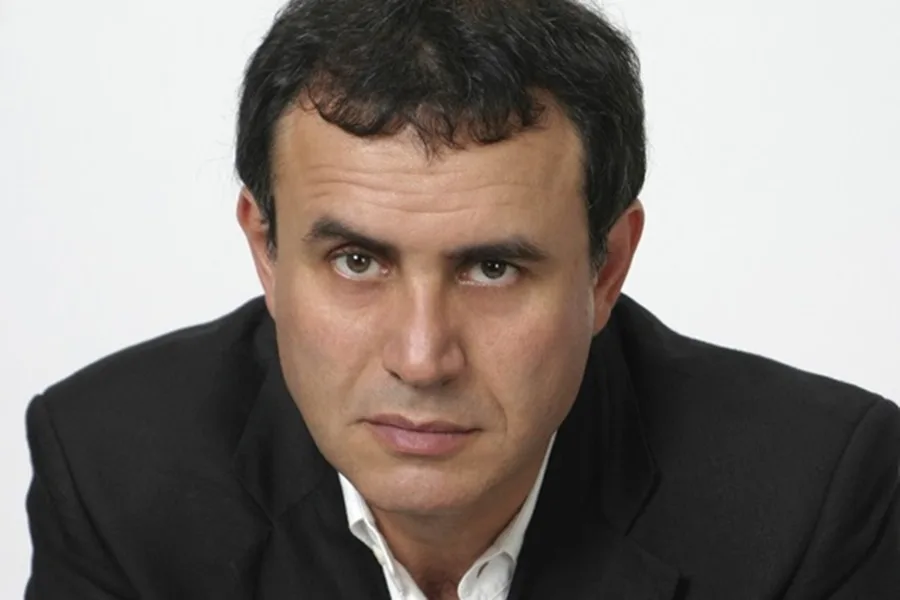
Nouriel Roubini, a New York University economist dubbed 'Dr. Doom' for his accurate prediction of the 2008 financial crisis, warned in 2022 of a coming 'stagflationary depression' due to high inflation, slow growth, and rising debt. (Source: leadingauthorities.com)
Deglobalization trends add another layer of risk. Geopolitical tensions, particularly the war in Ukraine and U.S.-China trade disputes, encourage countries to “reshore” production. They seek to build more resilient, but often less efficient, supply chains. This fragmentation can increase costs and reduce global trade volumes. World Trade Organization (WTO) reports indicate a slowdown in global trade growth compared to previous decades.
These structural forces—high debt, unfavorable demographics, and deglobalization—make the global economy more fragile. They limit policy tools for future downturns. If another major shock hits, these factors could make its effects worse. This makes a prolonged, severe contraction a real risk, more so than in previous decades. Policymakers must now handle these complex, linked challenges.
FAQ
Q: What’s the difference between a recession and a depression? A: A recession is a big drop in economic activity lasting months, typically with negative GDP growth for two consecutive quarters. A depression is a much more severe, prolonged downturn. GDP drops over 10%, unemployment gets very high, and it often lasts years.
Q: Have we experienced a depression since the 1930s? A: No, the world hasn’t seen a depression like the Great Depression since the 1930s. The Great Recession of 2008-2009 was the worst downturn since then. But it didn’t become a full depression because of aggressive policy interventions.
Q: What are the main indicators economists watch for a depression? A: Economists watch for sustained, steep drops in GDP. They look for sharp increases in unemployment (often above 10-15%), big drops in industrial production, and widespread deflation. They also check for severe credit crunches and many business failures.
Q: Can governments prevent a depression? A: Governments and central banks have far more tools and understanding than in the 1930s. They use monetary policy, such as interest rate cuts and quantitative easing. They also use fiscal policy, like government spending and tax cuts, to boost the economy and create stability. These tools worked to lessen the 2008 crisis and the COVID-19 downturn.
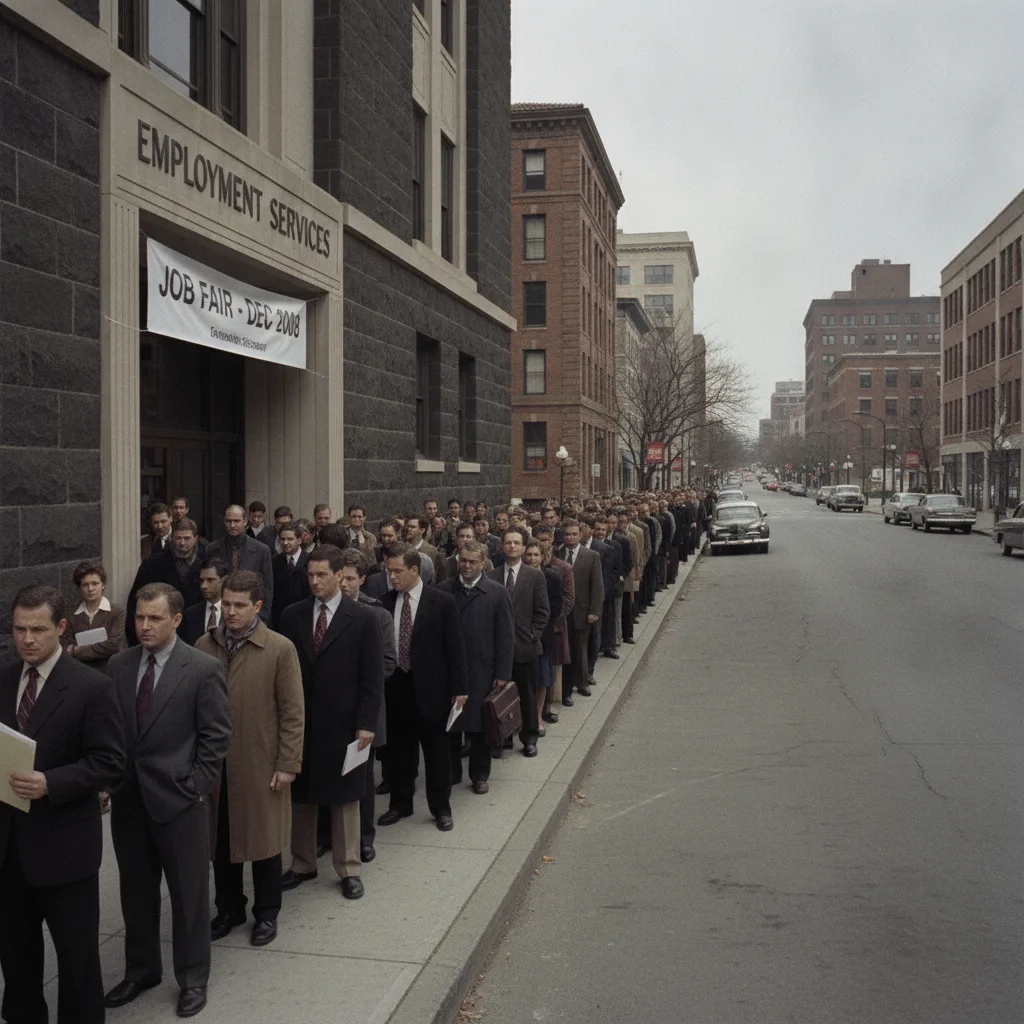
The Great Recession of 2008-2009 was the worst economic downturn since the 1930s, marked by soaring unemployment and a housing crisis, yet aggressive policy interventions prevented it from escalating into a full depression. (AI-generated illustration)
You might also like:
👉 VIX: Wall Street’s 30-Day S&P 500 Fear Forecast
👉 Will Trump’s Trade War Tank 3.9% Unemployment?
👉 US-China: $664B Trade Masks Zero-Sum Global Power Struggle