
COVID-19: How the Richest 1% Profited from the 2020 Pandemic
The COVID-19 pandemic, declared on March 11, 2020, exacerbated global economic inequality, further enriching the wealthiest 1%.
COVID-19: How it Widened Economic Gaps
On March 11, 2020, the World Health Organization declared COVID-19 a global pandemic. This marked a major shift. Life as many knew it began to shut down. Cities worldwide braced for lockdowns within days. People canceled travel plans. Restaurants emptied. Schools closed. This swift change would soon show deep problems in the global economic system.
The world economy had significant inequality even before COVID-19. The richest 1% of people owned more than twice the wealth of 6.9 billion others. This was reported by Oxfam in 2019. Many low-wage service workers lived paycheck to paycheck. They often lacked savings or health insurance.
The global economy had grown for a decade after the 2008 financial crisis. Unemployment was low in many rich nations. However, this period of growth often concealed stagnant wages for the working class. Healthcare and education access remained unequal across different incomes and regions. The coming health crisis would soon challenge these weak points.
Immediate shock, diverging fortunes
Major stock markets dropped on Friday, March 13, 2020. The Dow Jones Industrial Average fell 9.99%. This was its worst day since 1987. Panic spread quickly. Governments issued stay-at-home orders. Businesses considered non-essential, such as restaurants, gyms, and retail stores, closed. Millions of workers lost their jobs right away.
Maria Rodriguez, a waitress in Miami, lost her income overnight. Her restaurant closed with no set reopening date. She joined lines at food banks. Her experience was shared by hospitality workers globally. The International Labour Organization (ILO) reported in April 2020 that 1.6 billion informal economy workers faced immediate danger. This amounted to nearly half the global workforce. Many had no social safety nets.
Other sectors, meanwhile, saw rapid growth. Tech companies did well as remote work became common. E-commerce businesses experienced a large increase in sales. Amazon founder Jeff Bezos’s net worth grew by billions. Stock markets recovered quickly after an initial decline. This created a sharp difference in financial outcomes.
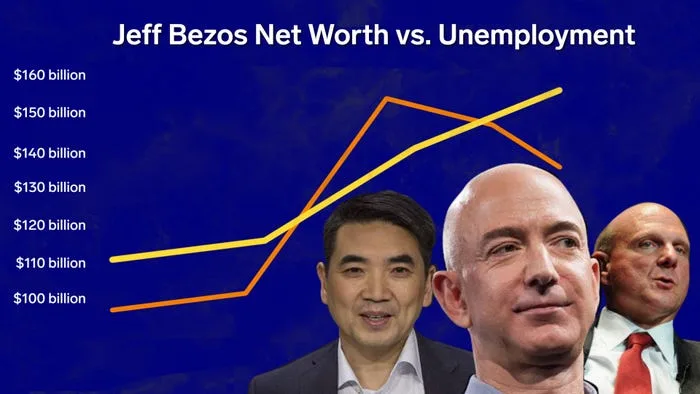
Amazon founder Jeff Bezos saw his net worth increase by billions during the COVID-19 pandemic, as e-commerce surged with global lockdowns. This dramatic rise in wealth highlighted the stark economic divergence between tech magnates and struggling low-wage workers. (Source: businessinsider.com)
The pandemic’s first impact hit low-wage service workers hardest. They often could not work from home. Many did not have sick leave or health benefits. In contrast, white-collar professionals largely worked from home. Their jobs stayed safe. This immediate difference made economic gaps wider.
Government action, varied results
On March 27, 2020, the US Congress passed the CARES Act. This $2.2 trillion stimulus package lessened the economic impact. It sent direct payments to individuals and expanded unemployment benefits. It also helped small businesses. Europe and other wealthy nations followed with similar large spending. Central banks also took strong action.
The Federal Reserve cut interest rates to nearly zero. They started large money injection programs. These actions put trillions of dollars into financial markets. The goal was to stop a money shortage. They also encouraged borrowing and investment. These policies stabilized markets and prevented a deeper recession.
These measures, however, had different effects. Direct payments provided essential help to families in need. Many small businesses found it hard to get Paycheck Protection Program (PPP) loans. Larger, more established companies often secured funding more easily. This difference harmed smaller businesses. They faced a higher chance of closing permanently.
Cheap money caused asset prices to rise. Housing prices went up sharply. Stock markets reached record highs. People who owned assets, like stocks or real estate, saw their wealth increase a lot. Those without many assets, or who lived paycheck to paycheck, did not benefit. This made the wealth gap larger.
A K-shaped recovery, global differences
By late 2020 and early 2021, economic data showed a “K-shaped recovery.” This means some parts of the economy bounced back strongly. Other parts continued to decline or stay flat. High-income earners and the technology sector saw strong growth. Low-wage workers and service industries remained stagnant.
A 2021 Brookings Institution report detailed this difference in the US. Professional and technical services recovered quickly. Leisure and hospitality fell behind. Employment for high-wage workers went above pre-pandemic levels. Low-wage employment remained well below its earlier peak. This showed a clear class divide.
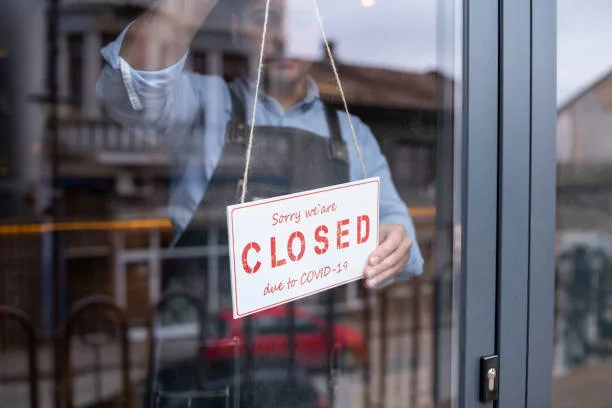
During the COVID-19 pandemic, many small businesses, particularly in the service sector, struggled to secure funding like PPP loans and faced permanent closure, exacerbating economic disparities and illustrating the lower arm of the K-shaped recovery. (Source: gettyimages.com)
The divide was even greater worldwide. Richer nations could afford large-scale vaccine purchases and economic aid. Poorer countries struggled with both. The International Monetary Fund (IMF) noted this in its 2021 World Economic Outlook. Developed economies recovered faster. Developing economies grew more slowly. They also faced increasing debt.
Problems with supply chains added to global economic stress. Factory shutdowns and shipping delays led to shortages. Prices for goods increased. This rise in prices hit low-income households the hardest. They spend a greater portion of their income on basic needs. The K-shaped recovery solidified inequalities both within and between nations.
The aftermath: what comes next
The economic effects of the pandemic continue to change in 2023. Many service sector jobs did not return in their previous form. The move to remote work changed city economies. Downtown areas, which relied on office workers, faced lasting issues. Small businesses, especially those owned by women and minorities, found it harder to recover.
The pandemic also reshaped labor markets. Many workers thought about their job priorities. This led to the “Great Resignation.” Industries found it more difficult to fill low-wage positions. Wages for some essential workers saw small increases. Still, the overall gap between top earners and others continued.
Oxfam’s 2023 “Survival of the Richest” report showed clear data. The richest 1% gained almost two-thirds of all new wealth created since 2020. This amounted to $26 trillion. The remaining 99% received only $16 trillion. The pandemic clearly sped up wealth concentration. The report calls for major policy changes.
Governments now face complex issues. They must address ongoing price increases and growing inequality. Policy talks focus on making social safety nets stronger. Discussions continue about wealth taxes, universal basic income, and education spending. The aim is to build a more stable and fair economy. Future policies need to directly address these deep differences.
FAQ
What is economic disparity? Economic disparity refers to an unequal distribution of income, wealth, and opportunities. Some people or groups have much more than others. The COVID-19 pandemic significantly worsened these differences.

The widespread shift to remote work during the pandemic left many downtown areas deserted, drastically altering city economies and contributing to lasting economic issues for businesses and service sectors that relied on office workers. (Photo: Jonathan Cooper, Pexels)
What is a K-shaped recovery? A K-shaped recovery describes a situation after a recession. Different parts of the economy recover at very different speeds. One group, typically higher-income people and industries like technology, grows quickly. Another group, often lower-income workers and service industries, continues to struggle or decline.
How did monetary policy affect inequality during COVID-19? Central banks lowered interest rates and added money to financial systems. This prevented a market collapse. However, it also pushed up asset prices like stocks and real estate. This helped asset owners. It did little for those without assets, which increased the wealth gap.
What are the long-term impacts of COVID-19 on economic inequality? The pandemic led to more wealth at the top. It caused many job losses in low-wage sectors. It also showed weaknesses in social safety nets. These factors create lasting differences, which means new policies are needed for recovery.
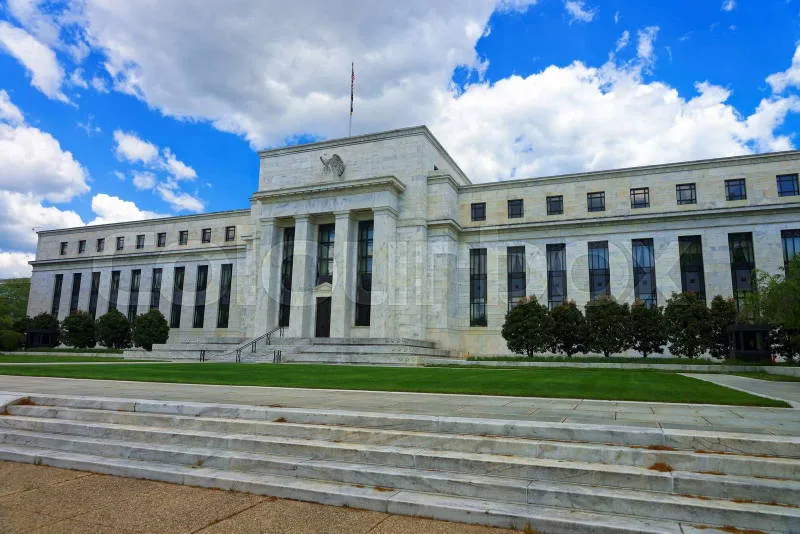
The Marriner S. Eccles Federal Reserve Board Building in Washington D.C. is the headquarters of the U.S. central bank, which played a key role in monetary policy during COVID-19, influencing asset prices and the wealth gap. (Source: colourbox.com)
You might also like:
👉 WHO Warns: 2022’s Record Pandemic Spending Misses Key Threats
👉 Why 1/3 of Food Waste Won’t Feed 735 Million Hungry People