
Fed's 5.50% Rate Pause: What's Next for Global Inflation?
The Federal Reserve held its benchmark rate at 5.25%-5.50% in December 2023 after eleven hikes. Global central banks must now fight inflation without crushing growth.
The world economy: inflation and high rates
The Federal Reserve hit pause in December 2023, holding its benchmark rate at 5.25%-5.50%. This came after eleven hikes since March 2022. Now, central banks everywhere face a tough choice. They must fight inflation without crushing economic growth.
Major central banks include the U.S. Federal Reserve, the European Central Bank (ECB), and the Bank of England (BoE). The People’s Bank of China (PBOC) has its own economic problems. They use tools like interest rates and quantitative easing or tightening. Their decisions change borrowing costs and investment.
Central banks’ inflation battle
Global inflation surged after the COVID-19 pandemic and Russia’s invasion of Ukraine. Supply chain disruptions and energy price spikes played a big part. Consumer price inflation in the U.S. peaked at 9.1% in June 2022, according to the Bureau of Labor Statistics. It was a four-decade high.
Central banks responded by raising interest rates fast. The goal was to cool demand and hit target inflation, typically around 2%. Federal Reserve Chairman Jerome Powell spoke in November 2023. He stated the Fed is “prepared to tighten policy further if that becomes appropriate.” He promised to hit a 2% inflation goal.
The European Central Bank also hiked rates. The ECB’s main refinancing operations rate reached 4.50% by September 2023. This was its highest level since the euro’s inception. ECB President Christine Lagarde affirmed in October 2023 that rates would stay “sufficiently restrictive for as long as necessary.” The Bank of England also raised its policy rate. It reached 5.25% by August 2023.
These rate increases make borrowing more expensive for consumers and businesses. This slows economic activity. It reduces demand for goods and services. Lower demand helps to slow price rises. This strategy aims for a “soft landing,” where inflation falls without a severe recession.
Regional economic divergences
Economic performance varies across major global regions. The United States economy surprised everyone with its strength. Real GDP grew at an annualized rate of 4.9% in Q3 2023, the Commerce Department reported. Strong consumer spending and business investment drove this growth.
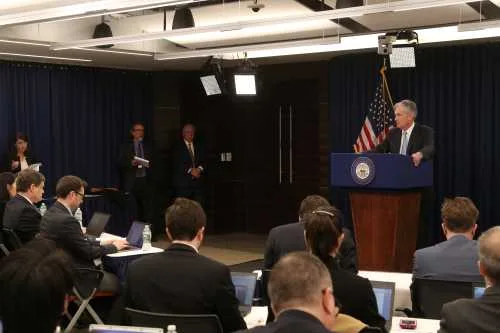
Federal Reserve Chairman Jerome Powell has been a central figure in the global fight against inflation, leading the U.S. central bank through a series of historic interest rate hikes and communicating the Fed's commitment to its 2% inflation target. (Source: brookings.edu)
U.S. inflation has cooled a lot from its peak. The Consumer Price Index (CPI) stood at 3.1% year-over-year in November 2023. This is down from 4.0% in May. Goldman Sachs economists, led by Jan Hatzius, predict a soft landing for the U.S. economy in 2024. They expect continued disinflation.
The Eurozone looks tougher. GDP growth was flat at 0.0% in Q3 2023, Eurostat data showed. High energy prices and tighter financial conditions hurt industrial output. The International Monetary Fund (IMF) sees Eurozone growth at just 0.7% for 2024. This is a lower prediction from earlier forecasts.
Inflation in the Eurozone also declined. Harmonised Index of Consumer Prices (HICP) reached 2.4% in November 2023. This is close to the ECB’s 2% target. Core inflation, which excludes volatile food and energy prices, is still high. This shows prices are still under pressure.
China’s economy has deep problems. Its property market is in trouble, and people aren’t spending. This drags down growth. The People’s Bank of China (PBOC) eased its policy. It cut its benchmark loan prime rates in 2023. This is different from other countries, which tightened policy. China’s GDP grew 5.2% in 2023, according to the National Bureau of Statistics. This was below pre-pandemic trend levels.
The United Kingdom economy has also struggled. Inflation stuck around longer than in other major economies. The Bank of England raised rates more slowly initially. UK CPI inflation was 3.9% in November 2023. The Office for Budget Responsibility forecasts UK GDP growth of 0.6% in 2024. This shows the ongoing pain from high interest rates.
The job market stays strong
Despite aggressive rate hikes, global labor markets stayed surprisingly strong. The U.S. unemployment rate stood at 3.7% in November 2023. This is near a 50-year low, according to the Bureau of Labor Statistics. Strong job creation continued throughout the year. Wage growth, while slowing, is still good.
This tight labor market creates a problem for central banks. Strong wage growth can feed inflation. Workers have more disposable income. Businesses pass higher labor costs onto consumers. Federal Reserve officials closely monitor wage data. They look for signs of overheating.

China's struggling property market, exemplified by vast unfinished developments and 'ghost cities,' has become a significant drag on the nation's economic growth, impacting consumer confidence and investment. This crisis has led to widespread concerns about the stability of the global economy. (Source: loveproperty.com)
The Eurozone unemployment rate hit a record low of 6.5% in October 2023. This shows strong demand for workers, even as the economy stalls. The Bank of England saw a tight job market in the UK. This helped keep service prices high. High employment generally supports consumer spending. It prevents deeper economic downturns.
A strong labor market also makes the inflation fight harder. It suggests demand remains strong. This requires central banks to keep rates high longer. Some economists, like Nobel laureate Paul Krugman, argue that the recent inflation was supply-driven. They believe labor market strength is less of a concern. Central bankers often worry about wage-price spirals.
What’s next for the economy
The global economic outlook for 2024 faces uncertainty. Central banks have a tough balancing act. They must continue to fight inflation. They also need to not cause a deep recession. The IMF sees global growth slowing to 2.9% in 2024. This is down from 3.0% in 2023.
A “soft landing” is still the main hope for many economies. This means inflation hits its target without many people losing their jobs. Federal Reserve forecasts in December 2023 hinted at three rate cuts in 2024. This means they might ease policy. Such moves would depend on continued disinflation.
But risks remain. Geopolitical tensions, particularly in Eastern Europe and the Middle East, might break supply chains. New energy price shocks could start inflation again. Money markets also face risks, especially with so much government and private debt. Christine Lagarde of the ECB has warned about the “risk of fragmentation” in global markets.
Central banks will likely move carefully. They’ll follow the data. They’ll watch inflation, jobs, and wages closely. A stable economy with strong growth isn’t a sure thing. Central bankers continue to monitor the situation closely.
Frequently asked questions
What is the primary goal of monetary policy? The main goal of monetary policy is to keep prices stable. This usually means keeping inflation at a low, stable rate, often around 2%. Central banks also aim for as many people employed as possible.
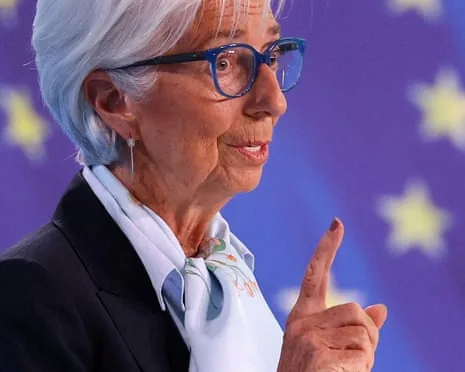
Christine Lagarde, President of the European Central Bank, has warned about the "risk of fragmentation" in global markets. She is the first woman to lead the ECB, overseeing monetary policy for the Eurozone. (Source: theguardian.com)
How do interest rate hikes affect the economy? Interest rate hikes make borrowing more expensive for businesses and consumers. This reduces spending and investment. It slows economic activity, helping to cool demand, which cuts inflation.
What is a “soft landing” in economics? A soft landing occurs when a central bank cuts inflation using its policies. It does so without a deep recession or lots of job losses.
Why is the labor market important for inflation? A strong labor market can push up inflation because of higher wages. Businesses may pass these higher costs to customers through higher prices. This creates a potential wage-price spiral.
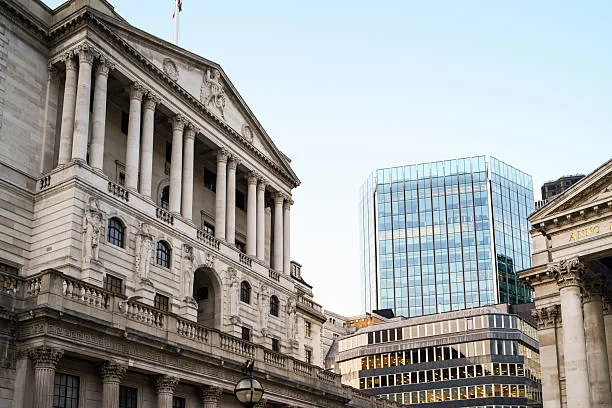
The Bank of England, often dubbed 'The Old Lady of Threadneedle Street,' is the central bank of the United Kingdom. It plays a pivotal role in setting monetary policy, including interest rates, to manage inflation and maintain financial stability. (Source: gettyimages.ca)
You might also like:
👉 The Economic & Societal Impact of Government Shutdowns
👉 US-China: $664B Trade Masks Zero-Sum Global Power Struggle