Tourism's $9.5 Trillion Problem: Beyond the Postcard
The $9.5 trillion tourism industry, a global giant in 2023, often damages the very places it promises to enrich. Uncover its hidden costs and solutions.
Tourism’s Cracks: Beyond the Postcard
Forget the glossy brochures. Tourism, a $9.5 trillion global giant in 2023, isn’t just sunshine and cultural exchange. It supports over 330 million jobs worldwide, says the WTTC. Yet, this appealing picture hides deep problems. The industry often damages the very places it promises to enrich.
Sure, tourism brings money. Places like the Maldives depend almost entirely on international visitors. But this money comes with a cost. Bad development decisions and unchecked growth often damage the places tourists want to see.
The real cost of endless growth
Many think more tourists always mean more money. This idea overlooks the huge burden on local resources and infrastructure. Take Venice, Italy. Before the pandemic, it saw about 25 million tourists each year. Its resident population, meanwhile, shrank to just over 50,000. This created immense pressure.
Venice started charging day-trippers a €5 entry fee in January 2024. This directly fights overtourism. Mayor Luigi Brugnaro said the fee aims to manage visitors, not make money. Barcelona’s Mayor Ada Colau took similar action in 2017. She limited new hotel licenses to address rising housing costs and stop short-term rentals from pushing locals out.
The environment suffers too. A 2017 UNWTO report showed how mass tourism strains water resources. It also burdens waste management systems in popular spots. For example, in Spain’s Balearic Islands, tourism uses about 40% of the islands’ total water. That’s during peak season, according to a 2018 study by the University of the Balearic Islands. This directly hurts local communities.
Money out the door: why locals lose
Many think tourism always makes local communities rich. That’s not always true. Much of what tourists spend often “leaks” out of the local economy. The UNWTO estimates that foreign-owned hotel chains, airlines, and tour operators get up to 80% of tourism revenue in developing countries. Locals see only a tiny fraction of it.
A 2018 study by the Tourism Authority of Thailand showed how much money leaves the country. International hotel chains send a large share of their profits home. This cuts the multiplier effect within the local economy. Imagine a tourist booking an all-inclusive package. They pay a foreign airline, stay in a foreign-owned resort, and eat imported food. Local vendors get little from these deals.
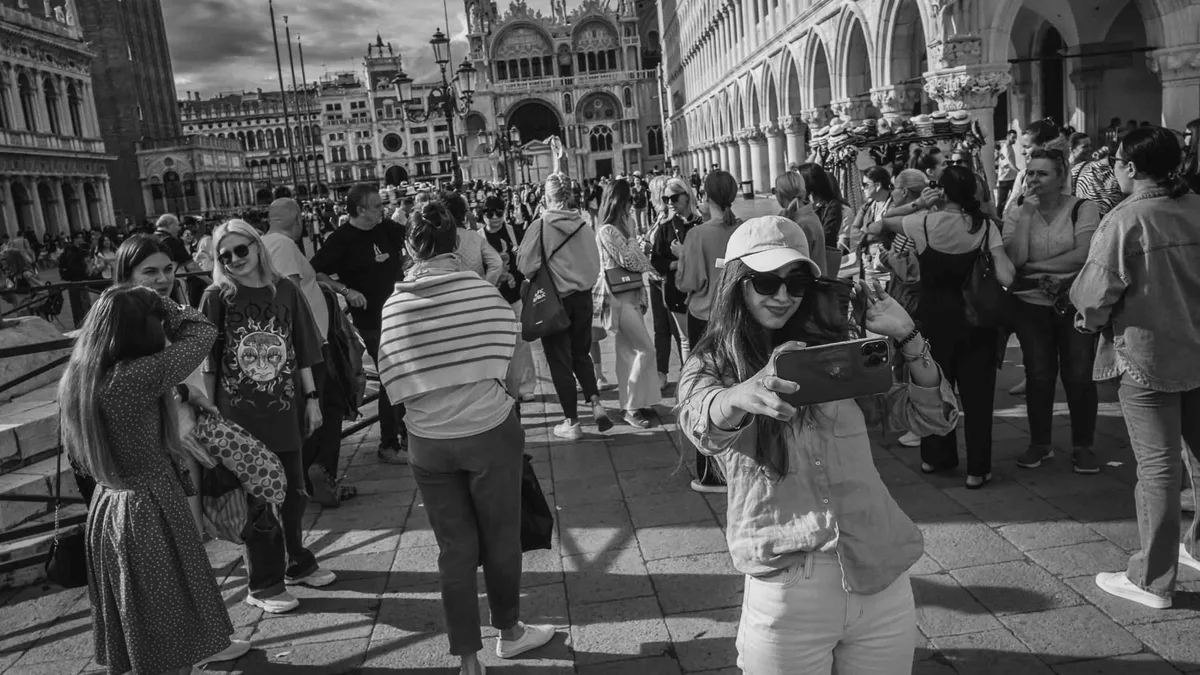
Venice, Italy, a city of just over 50,000 residents, grappled with 25 million tourists annually before the pandemic, leading to immense pressure on its infrastructure. In response, the city introduced a €5 entry fee for day-trippers in January 2024 to manage visitor flow. (Source: adventure.com)
This money drain creates income inequality. Low-wage, seasonal jobs often fill the local job market. The ILO reported in 2022 that hospitality jobs frequently lack social protection. They also offer unstable employment. Workers in popular Mexican resort towns, like Cancún, often face high living costs. Their wages barely cover basic needs.
Culture for sale: losing authenticity
It’s nice to think tourism builds cultural understanding. But the constant hunt for “authentic” experiences can actually turn local cultures into commodities. It distorts them. Indigenous groups are especially vulnerable. The Maasai people in Kenya and Tanzania, for instance, often dance for tourists. These performances make money, but they sometimes lose their connection to daily life and spiritual meaning.
UNESCO’s 2018 report on World Heritage sites warned of “Disneyfication.” This means turning culturally important places into sanitized entertainment. Prague’s Old Town Square, once a lively local center, now mostly serves tourists. Souvenir shops push out essential local services. Residents feel more and more disconnected from their own history.
This commercialization wears down the subtle details of local traditions. Visitors often want a quick look, not a deep connection. This turns rich cultural practices into mere photo ops. Slowly, a place’s unique character disappears. A generic, tourist-friendly facade takes its place.
Travel’s hidden carbon footprint
We praise sustainable tourism for reducing environmental damage. But these local efforts often hide the massive carbon footprint of global travel. Air travel is a huge problem. A 2018 study in Nature Climate Change by Lenzen et al. found a significant impact. Tourism creates about 8% of global greenhouse gas emissions. Air transport adds a large part of this.
Air traffic keeps growing, even with improvements in aviation technology. IATA projects passenger numbers could hit 4 billion by 2024. That’s more than pre-pandemic levels. Reaching net-zero emissions for aviation by 2050, IATA’s goal, needs huge investment. It requires sustainable aviation fuels (SAF) and new technologies. These solutions are still very new.
Environmental damage isn’t just about carbon. Cruise ships, for example, create large amounts of waste and ocean pollution. In 2019, cruise ships emitted four times more sulfur oxides (SOx) than all of Europe’s passenger cars combined. That’s according to a 2022 report by the European Federation for Transport and Environment (T&E). These emissions pollute port cities and hurt ocean life.

The Maasai, an indigenous group in Kenya and Tanzania, often perform traditional dances for tourists. While these performances generate income, they sometimes risk losing their original spiritual meaning and connection to daily life, illustrating the 'culture for sale' problem in tourism. (Source: dreamstime.com)
How to build better tourism
We need strong rules and better ways to manage demand. Venice’s new entry fee, started in April 2024, tries to control visitor numbers directly. Amsterdam’s “Stay Away” campaign, launched in March 2023, targets disruptive young male tourists. It aims to create a more respectful visitor profile. Bhutan’s “High Value, Low Volume” policy is a long-standing example. It charges a $100 per night Sustainable Development Fee for most visitors. This money supports local services and protects the environment. These steps put quality before quantity.
Giving local communities direct benefits is also key. Community-based tourism programs do this. For example, the SNV Netherlands Development Organisation supports such efforts in Vietnam and Laos. These programs make sure money stays in the community. Locals often manage guesthouses, offer tours, and sell crafts. This cuts economic leakage and builds real entrepreneurship.
We must promote real cultural exchange, not just performances for sale. This means encouraging “slow travel” and immersive experiences. Tourists who spend more time in one place, living with locals, help local businesses more. They also understand the culture better, moving past quick interactions. Supporting local guides and artisans directly, bypassing big tour operators, ensures fair pay.
Better labor standards across the industry are a must. Certification schemes like Fair Trade Tourism, active in South Africa, ensure fair wages, safe conditions, and community growth. Governments also need to enforce minimum wage laws. They should provide social protections for seasonal workers. This helps fight the unstable nature of many tourism jobs.
Finally, making travel carbon-free needs large investment and new ideas. Sustainable aviation fuels (SAF) are key for long-haul flights. They aren’t a magic fix, but we need to develop and use them widely. Governments and airlines must work together. For shorter trips, promoting rail travel helps. Investing in electric public transport in destinations also cuts emissions. Travelers can choose lower-impact options and stay longer.
The future of tourism isn’t just about more growth. It’s about seeing the full range of its impacts. We must build an industry that’s resilient, fair, and truly sustainable. If we don’t, we risk destroying the very places we love to visit.
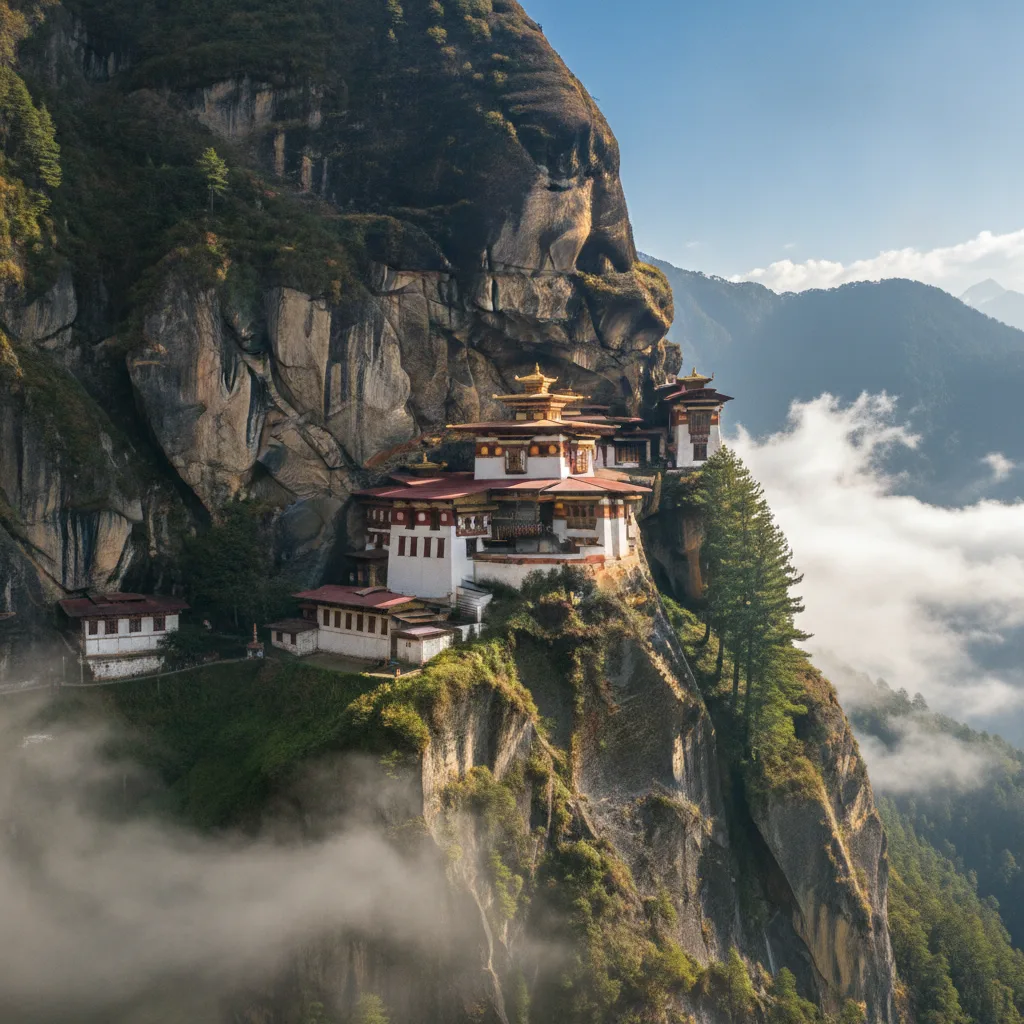
Bhutan is renowned for its 'High Value, Low Volume' tourism policy, which charges visitors a daily Sustainable Development Fee. This fee supports local services and protects the environment, ensuring tourism benefits the nation without overwhelming its culture or natural beauty. (AI-generated illustration)
FAQ
What is overtourism? Overtourism happens when too many visitors overwhelm a destination. It exceeds the capacity of its infrastructure, environment, or local community. This causes problems like congestion, depleted resources, and a worse quality of life for residents.
How does tourism contribute to climate change? Tourism largely adds to climate change through transport emissions, especially from air travel. It also uses energy for hotels, creates waste, and changes land use. This can degrade natural carbon sinks.
What is “leakage” in the tourism economy? Leakage is the money tourists spend that leaves the local economy. This often happens when tourists stay in foreign-owned hotels. They might also use international tour operators or buy imported goods. This means they don’t directly support local businesses.
Can tourism ever be truly sustainable? Truly sustainable tourism tries to cut negative impacts. It also works to maximize benefits for local communities and the environment. It’s a continuous effort. It needs careful planning, smart policies, and conscious choices from both the industry and travelers.

Air travel, particularly commercial airplanes, is a significant contributor to tourism's climate impact, accounting for a large portion of the industry's transport emissions. (Source: gettyimages.com)
You might also like:
👉 The Economic & Societal Impact of Government Shutdowns
👉 Why 1/3 of Food Waste Won’t Feed 735 Million Hungry People